Best Portfolio Support Software for VCs in 2026: 8 Tools Compared
Compare the best portfolio support software for vcs in 2026. We review 8 tools for KPI collection, LP reporting, cap tables and fund operations for firms.
- Editor's choice
 Visible
Founder updates and LP reporting
Starts atFreeVisit visible.vcFull review - Great alternative
 Affinity
Relationship driven deal flow
Starts atSee websiteVisit affinity.coFull review - Also consider
 Carta
Cap tables and fund administration
Starts atSee websiteVisit carta.comFull review
TL;DR:
- Visible is the easiest starting point for a small fund that needs regular founder updates and simple LP reporting without a long setup.
- Standard Metrics and Rundit focus on getting the same KPI definitions from every portfolio company, which makes fund level reporting far less painful.
- Carta is the natural pick when cap table data and fund administration need to stay in one place, while Affinity suits firms where deal flow runs on relationships.
- Most of these tools price by quote for investor plans, so shortlist two or three and ask for a demo price based on your fund count and portfolio size.
- Portfolio support is not one job. Data collection, LP reporting, and fund accounting are different problems, and no single tool leads on all three.
Quick comparison
| Tool | Best for | Starts at | Free plan? | |
|---|---|---|---|---|
| Visible | Founder updates and LP reporting | Free | Yes | Visit |
| Affinity | Relationship driven deal flow | See website | No | Visit |
| Carta | Cap tables and fund administration | See website | No | Visit |
 Standard Metrics | Standardized KPI collection | See website | No | Visit |
 Edda | End to end VC workflows | See website | No | Visit |
 Rundit | LP reporting and portfolio analytics | $299 per month | Free trial | Visit |
 Vestberry | Portfolio analytics and reporting | See website | Free trial | Visit |
 Tactyc | Reserve planning and follow on modeling | See website | No | Visit |
The best portfolio support software for VCs
Venture firms do not struggle to find data. They struggle to collect it in the same format, keep it current, and turn it into reports that limited partners trust. The tools below cover that work from different angles, so pick by your bottleneck.
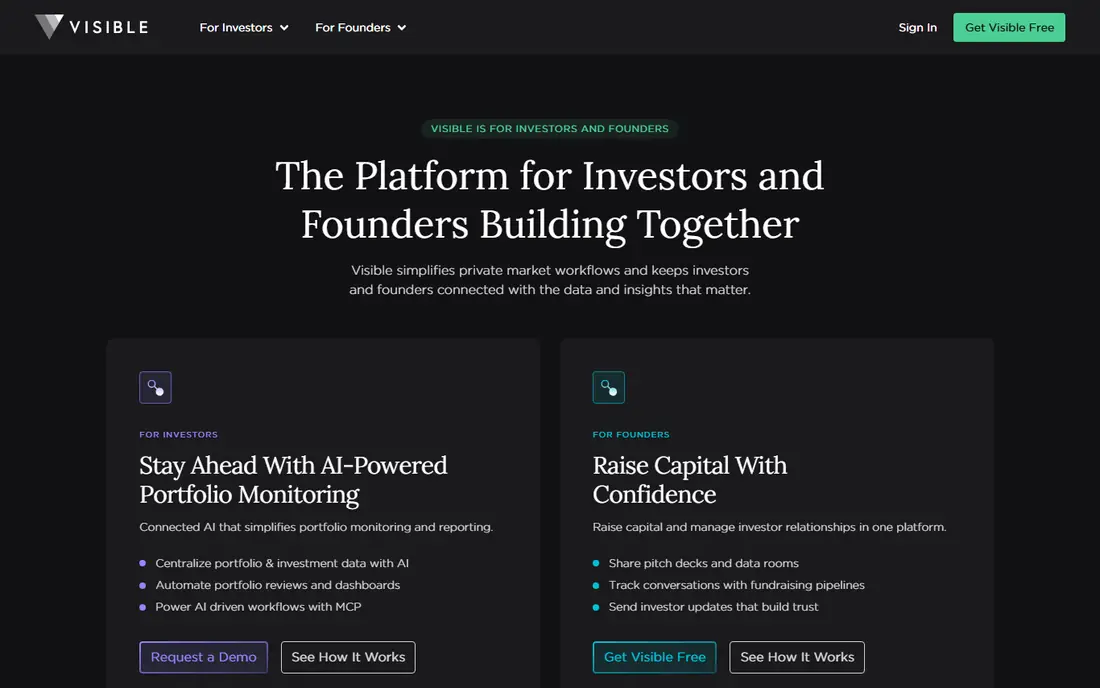
Visible works best for funds that spend too much time chasing portfolio companies for numbers. Founders fill in structured updates on a set schedule, and the fund sees those numbers in dashboards instead of digging through email threads and spreadsheets. That simple loop is why many emerging managers start here.
The trade is scope. Visible handles updates, fundraising pipelines, data rooms, and LP reporting well, but it does not replace fund accounting or a cap table platform. If your main pain is messy quarterly reporting, that focus is a strength. If you need accounting grade fund books, pair it with a fund admin tool.
- Free Starter plan for emerging managers
- Structured update templates that founders can complete quickly
- Dashboards and LP reporting built in
- Investor plans are priced by quote
- It is not a full fund accounting system

Affinity suits firms where the next deal comes from a warm introduction, not a cold list. It pulls activity from email and calendars, builds a picture of your network, and helps partners see the strongest path to a founder. For deal flow, that saves real time and avoids duplicate outreach.
Portfolio support here means keeping deal and portfolio relationships organized, not collecting monthly KPIs in depth. Teams that already use a separate reporting tool often keep Affinity for sourcing and pipeline, and let the reporting tool handle metrics. That split works, as long as you accept two systems.
- Automatic capture of meetings, emails, and introductions
- Relationship graphs that show who knows whom
- Strong pipeline tracking for deal teams
- Pricing is not published in a simple tier list
- It is a CRM first, not a portfolio reporting tool
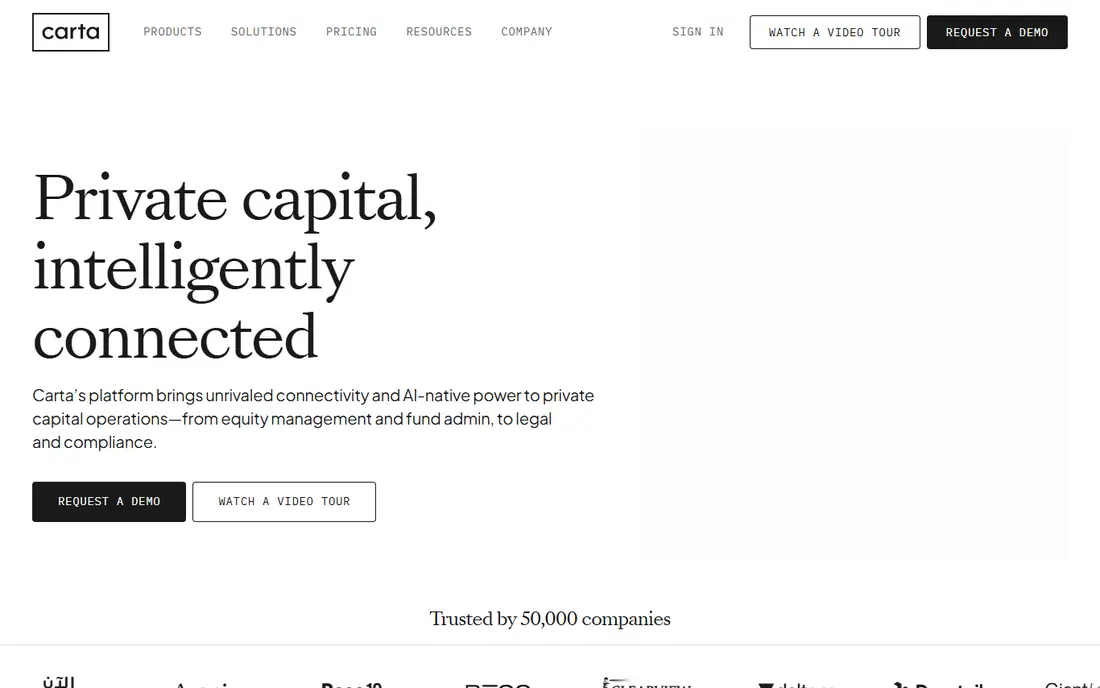
Carta matters for portfolio support because so much portfolio value sits in cap tables. When a portfolio company updates its cap table on Carta, the fund view stays closer to current, and fund administration work has fewer manual steps. That link between company equity and fund records is hard to copy with spreadsheets.
The catch is breadth. Carta is a large platform, and a small fund that only wants KPI dashboards may pay for depth it does not use. It makes most sense when you also need fund administration, investor records, and equity workflows, or when most of your portfolio already runs on Carta.
- Cap table data connects directly to fund operations
- Widely used by startups and investors
- Valuations and equity workflows in one place
- Pricing is quote based for funds
- Smaller firms may find the full platform more than they need
Standard Metrics is built for the fund that has outgrown spreadsheets but still gets a different spreadsheet from every founder. It lets you define metrics once, collect them on a schedule, and compare companies on the same basis. That consistency is what makes portfolio level analysis possible.
The work is front loaded. You need to agree what revenue, burn, runway, and headcount mean for each company, and that conversation takes time. Once it is done, though, quarterly reporting and LP questions become much faster, because the answers come from one structured set of numbers.
- Consistent metric definitions across portfolio companies
- Auditable time series for each company
- Tear sheets and LP ready reporting templates
- Pricing is demo and quote based
- Setup requires agreeing on metric definitions first
Edda tries to cover the whole VC workflow in one place, from first meeting to LP report. That appeals to firms tired of stitching a CRM, a spreadsheet, and a reporting tool together. When deal notes, portfolio data, and investor communications live in one workspace, handoffs between team members get simpler.
The risk with any all in one tool is that one part is weaker than a specialist. A firm with complex fund accounting or deep reserve modeling may still add a specialist tool. For mid size firms that want one core system and a clear LP portal, Edda is a strong shortlist candidate.
- Deal flow, portfolio monitoring, CRM, and investor portal in one workspace
- Collaborative tools for investment teams
- LP portal included
- Pricing is custom
- Smaller funds may not need the full end to end scope
Rundit focuses on turning portfolio data into LP grade reports. It aggregates company metrics, calculates investment returns and related figures, and produces reports that follow familiar reporting guidelines. For a fund that dreads quarter end, that is a concrete benefit.
It also lets teams customize metrics and report templates by company, which matters because early stage and late stage companies do not report the same numbers. The limit is that Rundit is a reporting and analytics tool, not a back office accounting system, so keep that boundary in mind when you scope it.
- LP reports based on common industry guidelines
- Automatic return calculations
- Customizable KPI templates per company
- Starting price may be high for a very small fund
- Fund accounting is not its main job
Vestberry is for funds that want a clear, current view of the whole portfolio. Dashboards show performance, exposure, and company level detail without rebuilding charts each quarter. When data flows in from other systems, the reporting stays fresher than a manual pack.
The honest limit is that analytics only help if the underlying data is clean. Vestberry works best when portfolio companies report on time and in agreed formats. If data collection itself is your problem, start with a collection focused tool and add analytics on top, or confirm that Vestberry covers collection well enough for your companies.
- Portfolio dashboards and analytics in one view
- Data integration that reduces manual entry
- LP reporting built for VC and private equity
- Pricing is quote based
- It is analytics first, not deal sourcing
Tactyc solves a different portfolio question: how much capital should you hold back, and what happens if a company raises at a higher or lower valuation. Partners can model follow on scenarios and see how reserve decisions change fund outcomes. That planning work is easy to get wrong in a spreadsheet.
Tactyc is a specialist, so treat it as one. It pairs well with a reporting tool, but it will not collect monthly KPIs or send LP updates on its own. For firms approaching a new fund or a busy follow on season, it earns its place on the shortlist.
- Scenario modeling for follow on rounds and reserves
- Portfolio construction views
- Helps partners plan capital across funds
- Pricing is quote based
- It does not replace KPI collection or LP reporting
How we picked these
We compared official product pages, pricing pages, and public reviews for tools that serve venture firms, and we kept only tools that are still offered in October 2026 and that handle portfolio support directly. We weighted KPI collection, LP reporting, cap table links, and fund operations, and we favored tools with a clear VC or private equity focus over generic CRMs. We did not claim hands on testing. Prices shown come from vendor pages and public pricing summaries, and quote based tools are marked as See website so you can confirm current terms in a demo.
What to check before you buy
Start with your bottleneck
List the three tasks that eat the most time each quarter. If it is chasing founders, pick a collection tool. If it is building LP packs, pick a reporting tool. If it is reserve decisions, pick a modeling tool. Buying the wrong kind of tool will not fix the bottleneck, even if the demo looks good.
Confirm data collection in practice
Ask each vendor how a founder submits numbers, what happens when a founder is late, and how you handle a company that reports a metric differently. Watch a full cycle in the demo, from request to dashboard to LP report, not just a single screen.
Check pricing by fund and company count
Many VC tools price by funds, portfolio companies, or users, and those models change the total fast. Get a written quote for your actual fund count and portfolio size, including any LP portal or data service fees, before you compare headline prices.
Plan the migration and the exit
Ask how data exports work, what formats you can take with you, and how long onboarding takes for your team and your founders. A tool that locks your history in a closed format creates risk later, even if setup feels easy now.
FAQ
What is portfolio support software for VCs?
It is software that helps a venture firm collect data from portfolio companies, track performance, manage cap table and fund records, and report to limited partners. Some tools focus on one of those jobs, while others try to cover several, so match the tool to the job you need most.
Do small VC firms need a dedicated tool?
A very small fund with a handful of companies can often manage with spreadsheets and a shared drive. Once the portfolio grows past about ten companies, or LP reporting becomes a regular quarterly burden, a dedicated tool usually saves time and reduces errors.
Is Carta enough on its own for portfolio support?
Carta is strong for cap tables and fund administration, but it is not primarily a KPI collection tool. Many funds pair Carta with a reporting tool such as Visible, Standard Metrics, or Rundit to cover both equity records and operating metrics.
How much does VC portfolio software cost?
Prices vary widely. Some tools offer a free starter plan, some start around $299 per month, and many investor plans are priced by quote based on funds, companies, and users. Always get a quote for your actual size before you budget.
What should we ask in a demo?
Ask how founders submit data, how late reports are chased, how LP reports are built, how cap table changes flow in, and how you export your data. Also ask who on the vendor team helps with onboarding, and how long a typical fund takes to go live.