Best Platforms for SEO for Education in 2026: 8 Platforms Compared
Compare the best platform for seo for education in 2026, from Semrush and Ahrefs to BrightEdge and Finalsite, with pricing and the right fit for schools.
- Editor's choice
 Semrush
All-round SEO for larger teams
Starts at$139 per monthVisit semrush.comFull review - Great alternative
 Ahrefs
Backlink and competitor research
Starts at$129 per monthVisit ahrefs.comFull review - Also consider
 Moz Pro
Beginner-friendly SEO for small teams
Starts at$99 per monthVisit moz.comFull review
TL;DR:
- Semrush and Ahrefs are the strongest all-round suites for a school or university with a dedicated marketing team.
- Moz Pro is the friendliest start for a small team that is new to SEO and needs clear guidance.
- BrightEdge and Conductor suit larger institutions that need enterprise reporting, forecasting, and multi-site governance.
- Screaming Frog and Google Search Console cover the technical checks that suites alone do not replace.
- Finalsite is different: it is a school website platform with SEO tools built in, not a standalone SEO suite.
Quick comparison
| Tool | Best for | Starts at | Free plan? | |
|---|---|---|---|---|
| Semrush | All-round SEO for larger teams | $139 per month | Yes | Visit |
| Ahrefs | Backlink and competitor research | $129 per month | Yes | Visit |
| Moz Pro | Beginner-friendly SEO for small teams | $99 per month | Free trial | Visit |
 BrightEdge | Enterprise SEO for universities | See website | No | Visit |
 Conductor | Enterprise content and SEO reporting | See website | No | Visit |
 seoClarity | Large-site SEO and AI visibility | See website | No | Visit |
 Screaming Frog | Technical site audits | $279 per year | Yes | Visit |
 Finalsite | School websites with built-in SEO | See website | No | Visit |
The best platforms for SEO for education
Education SEO has its own shape: programme pages, admissions content, course catalogues, campus news, and local search for open days and visits. The platforms below help a school, college, or university research what prospective students search for, fix technical problems, and report progress to leadership.

Semrush SEO starts at 139 dollars a month, or 117.33 dollars a month billed yearly, with five websites and 500 tracked keywords. For an education marketing team, the value is breadth: keyword research for programme terms, competitor analysis against rival institutions, site audits for a large catalogue, and content tools for admissions pages, all in one place.
The interface can overwhelm a small team, and the suite is easy to overconfigure. A university with a dedicated marketer, or a small team that will use several tools weekly, will get the most from it. A one-person school marketing role may find Moz or a simpler suite easier to run.
- Broad keyword, competitor, and site audit tools in one suite
- 500 tracked keywords and five websites on the SEO plan
- AI search tracking
- Busy interface that takes time to learn
- Pricing climbs for larger teams
- Limits are not always stated clearly on the pricing page
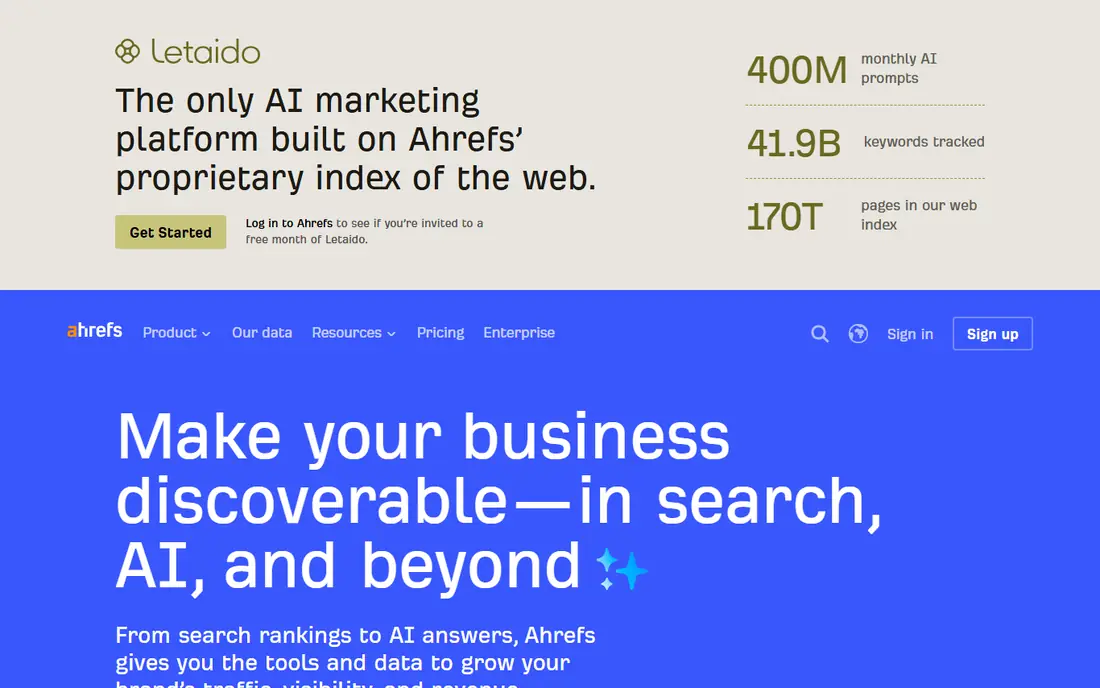
Ahrefs Lite costs 129 dollars a month, with five projects and 750 tracked keywords, plus 1,000 credits a month per user for research tools. Its backlink index is the main draw: you can see which sites link to rival universities, which pages earn links, and where your own programme pages are weak.
For education, that link view helps with outreach to partners, alumni sites, and local organisations, as well as with spotting broken or lost links. The credit system on Lite needs care, because heavy research can use credits quickly. Standard at 249 dollars a month removes that credit limit for teams that research daily.
- Very large backlink index
- Strong competitor and content research
- Free tier for your own sites
- Lite plan uses a credit system that needs watching
- Rank tracking is weekly on Lite
- Higher plans are expensive

Moz Pro Standard costs 99 dollars a month, or 79 dollars a month billed yearly, with three campaigns and 300 tracked keywords. Its strength for education is approachability: the tools are clear, the language is plain, and Moz's learning resources help a non-specialist marketer understand what to fix first.
The limits matter at scale. Standard's 150 keyword queries a month suit light research, not a full programme catalogue. Medium at 179 dollars a month raises that to 5,000 queries. For a small school or a single campus team, Moz Pro is a comfortable, well-supported start.
- Clear guidance and learning resources
- Familiar Domain Authority metric
- Simple rank tracking and site crawl
- Keyword index is smaller than Semrush or Ahrefs
- Standard includes only 150 keyword queries a month
- Less breadth for large teams
BrightEdge is built for large organisations with many sites, many stakeholders, and a need to report SEO in business terms. A university system with several campuses, schools, and programme areas fits that profile, because BrightEdge can roll reporting up to leadership while still giving each team its own view.
Pricing is quoted, and the platform is a commitment, not a quick trial. Small schools should not start here. Large institutions that already treat search as a core enrolment channel, and that need forecasting and governance, will find BrightEdge's depth hard to match in a mid-market suite.
- Enterprise reporting and forecasting for large sites
- Strong for multi-site university systems
- AI search and content tools
- Pricing is quoted, not published
- Implementation and training take time
- More than a small school needs
Conductor pairs SEO monitoring with content workflows, which suits education teams that publish a lot: programme pages, news, blogs, and admissions guides. It helps a team see which content drives enquiries, which pages need updating, and how search performance changes after a site redesign or a new programme launch.
As with BrightEdge, the value appears at scale. A single school with a small site will not need Conductor's workflow depth, and the quoted pricing reflects an enterprise product. A large university or a multi-campus group that coordinates content across teams is the natural buyer.
- Strong content and reporting workflows for large teams
- Good for tracking programme and admissions content
- Enterprise support
- Pricing is quoted
- Setup takes time
- Smaller teams may not use its full workflow depth
seoClarity is designed for sites with thousands of pages, which describes many university websites once programme pages, course catalogues, staff profiles, and news archives are counted. It combines technical analysis, rank tracking, and AI visibility reporting, so a team can see both classic search and AI-answer performance for its key terms.
The platform is quoted and enterprise-oriented, so it is not a first tool for a small school. For a large institution that needs to audit a sprawling site and report on AI search as well as Google, seoClarity is a strong, if pricey, option.
- Built for very large sites with many pages
- AI visibility tracking
- Strong technical and content analysis
- Pricing is quoted
- Learning curve for a large platform
- Overkill for a small school website
Screaming Frog SEO Spider costs 279 dollars per licence a year, with a free version for up to 500 URLs. It crawls a site like a search engine does and reports broken links, redirect chains, missing titles, duplicate content, and other technical problems. For a school website that has grown over years, that audit is often the fastest way to find real fixes.
It is a specialist tool, not a suite. It does not research keywords or track rankings, so pair it with Semrush, Ahrefs, or Moz Pro. Every education SEO team, whatever suite it uses, benefits from a regular Screaming Frog crawl before and after a redesign.
- Deep technical crawl of a whole site
- Free version for up to 500 URLs
- Clear reports on broken links, redirects, and metadata
- Desktop software, not a cloud suite
- No keyword research or rank tracking
- Reports need SEO knowledge to act on
Finalsite is different from every other tool here, because it is not an SEO suite you add to a site. It is the site itself, built for K-12 schools and districts, with SEO controls, page templates, and enrolment tools designed around how schools actually publish. That matters, because many school SEO problems are really website problems: slow pages, poor templates, and programme content that is hard to find.
Choosing Finalsite means choosing a website platform, which is a bigger decision than buying a suite. Schools already on Finalsite, or schools rebuilding their site, should use its built-in SEO tools first and add a suite only for deeper research. Schools on another platform should compare suites, not switch platforms for SEO alone.
- Website platform built for schools and districts
- SEO tools and best practice built into pages
- Enrolment and communications features
- Pricing is quoted
- It is a website platform, not a standalone SEO suite
- Switching website platforms is a large project
How we picked these
We compared official pricing pages, product documentation, and independent SEO comparisons published in 2026, focusing on tools that a school, college, or university can actually use for programme, admissions, and local search. We kept only tools that are actively sold and that cover keyword research, technical audits, reporting, or school website publishing. We mixed all-round suites, enterprise platforms, a technical crawler, and a school website platform, because education SEO needs all four jobs.
How to run SEO for a school without a large team
Start with the pages that drive enquiries: programme pages, admissions, fees, open days, and location pages. Fix titles, headings, and internal links on those pages first, and make sure each programme has one clear page rather than several competing versions. That focused work beats a site-wide audit that no one has time to act on.
Then set a simple monthly routine: check Search Console for errors and queries, check rankings for your top 20 programme terms, and fix the top technical issue from your latest crawl. A small team that does that routine every month will outperform a larger team that buys a suite and only opens it once a quarter.
FAQ
What are the best tools for SEO for education?
Semrush and Ahrefs are the strongest all-round suites, Moz Pro is the friendliest start for small teams, and BrightEdge or Conductor suit large universities. Screaming Frog covers technical audits, and Finalsite covers the school website itself.
What is the best platform for SEO for a small school?
Moz Pro is usually the best start for a small school, because it is clear, well documented, and priced at 99 dollars a month for Standard. Pair it with free Google Search Console and, for larger audits, the free Screaming Frog tier.
Do universities need enterprise SEO software?
Not always. A single university with one site and one marketing team can run well on Semrush or Ahrefs. A multi-campus system that needs consolidated reporting, forecasting, and governance is where BrightEdge, Conductor, or seoClarity earn their quoted price.
How is education SEO different from other SEO?
Education search is driven by programme intent, admissions timing, and local visits, with long decision cycles and many stakeholders. Content must answer specific questions about courses, fees, entry requirements, and outcomes, not just attract broad traffic.
Is Google Search Console enough for a school?
Search Console is essential and free, because it shows real queries, errors, and indexing for your own site. It does not research competitors, track many keywords easily, or audit a site as deeply as a paid suite, so most teams pair it with at least one paid tool.
Should a school switch website platforms for SEO?
Only if the current platform is the problem. Slow templates, poor mobile performance, and hard-to-edit pages are platform problems worth fixing. If the platform is sound, a suite plus better content and technical fixes will help more than a rebuild.