Best Period Tracker App in 2026: 7 Apps Compared
Compare the best period tracker app options in 2026, from Clue and Flo to Natural Cycles, with privacy, predictions, and costs explained before you download.

- Editor's choice
 Clue
Science-focused cycle tracking
Starts atSee websiteVisit helloclue.comFull review - Great alternative
 Flo
Health content and community alongside tracking
Starts atSee websiteVisit flo.healthFull review - Also consider
 Natural Cycles
App-based contraception and fertility planning
Starts atSee websiteVisit naturalcycles.comFull review
TL;DR:
- Clue suits users who want a science-focused tracker with clear privacy practices, while Flo suits users who want a large content library and community.
- Natural Cycles is the only app here cleared as a contraceptive method, and it requires daily temperature data and a paid subscription.
- Privacy policies matter more than design here, so read how each app stores, shares, and deletes health data before you log sensitive details.
- Stardust, Ovia, Glow, and Euki each suit a different need, from shared cycles to local-only storage, so the best pick depends on your priorities.
Quick comparison
| Tool | Best for | Starts at | Free plan? | |
|---|---|---|---|---|
| Clue | Science-focused cycle tracking | See website | Yes | Visit |
| Flo | Health content and community alongside tracking | See website | Yes | Visit |
| Natural Cycles | App-based contraception and fertility planning | See website | No | Visit |
 Stardust | Daily insights and shared cycles | See website | Yes | Visit |
 Ovia | Fertility, pregnancy, and parenting tracking | See website | Yes | Visit |
 Glow | Fertility tracking with community support | See website | Yes | Visit |
 Euki | Local-only privacy-first tracking | Free | Yes | Visit |
The best best period tracker app
Period trackers hold sensitive health data, so the right choice is about trust and fit, not just a pretty calendar. The seven apps below cover science-focused tracking, fertility planning, pregnancy support, and privacy-first design. Read the privacy policy for any app you choose, and talk to a clinician if you are using an app for contraception or fertility decisions, because predictions are estimates, not guarantees.

Clue is the most science-focused tracker in this list, and it shows in the design. You can log periods, symptoms, moods, and other cycle details, and the app shows cycle analysis that helps you see patterns over time rather than only a single predicted date. The language is inclusive, the interface is calm, and the company is based in Berlin under European data rules, which many privacy-conscious users prefer.
Clue is not a contraceptive, and its predictions depend on the data you enter, so irregular cycles or missed logs will make forecasts less reliable. Some deeper insights sit behind a paid plan, which can frustrate users who expect full analysis for free. If you want a steady, well-documented tracker and you are willing to log regularly, Clue is a strong, trustworthy starting point.
- Broad symptom tracking
- Cycle analysis
- Clear privacy approach
- Some insights need a paid plan
- Predictions improve only with regular logging
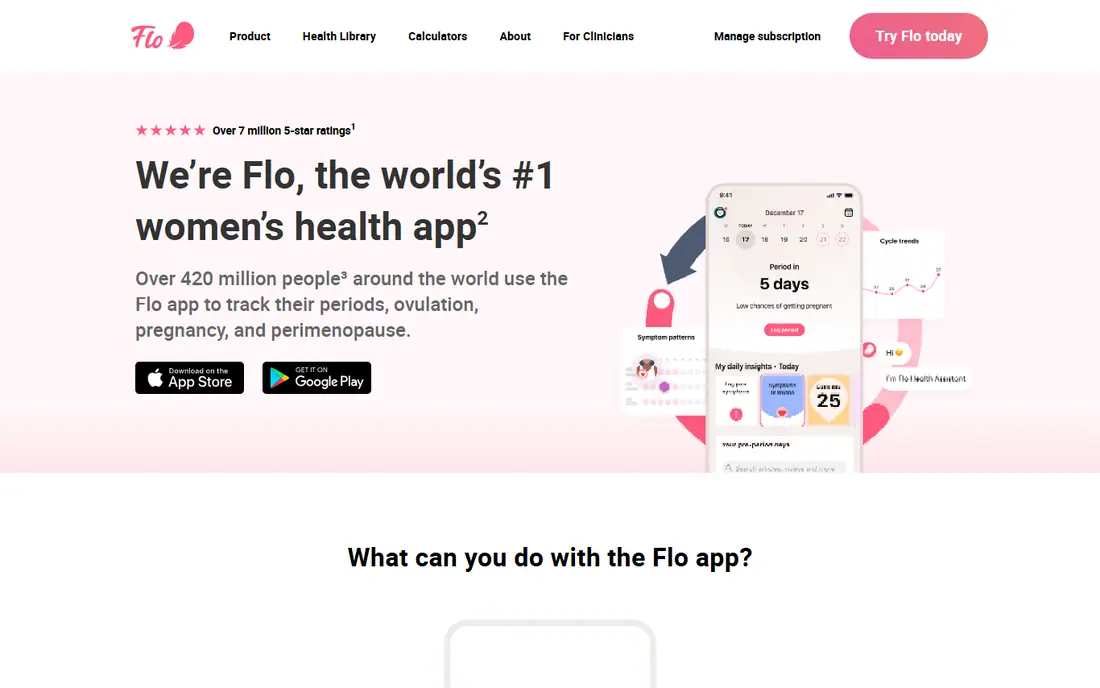
Flo is the largest and most feature-rich tracker here, with cycle tracking plus a deep library of health articles, pregnancy and fertility modes, and community discussions. That breadth suits users who want more than a calendar, because you can read about symptoms, track pregnancy week by week, and compare experiences with others in the app. The interface is polished, and the range of logged symptoms is wide.
Flo has faced privacy scrutiny in the past, and it has since added features such as an anonymous mode, but users should still read the current privacy policy and settings carefully. Many insights and content features also require a Premium subscription, so the free experience is more limited than it first appears. If you want content and community in one app and you are comfortable managing privacy settings, Flo offers the most in one place.
- Large health library
- Pregnancy and fertility modes
- Community features
- Some content and insights need Premium
- Privacy history needs a careful read

Natural Cycles is different from every other app here, because it is cleared by regulators as a contraceptive method when used as directed. It uses daily basal body temperature, entered manually or through a linked wearable, to estimate fertile and non-fertile days. For users who want a hormone-free contraceptive option or a structured fertility plan, that regulatory clearance and temperature-based method set it apart.
Natural Cycles requires discipline and a paid subscription, with no free tier for the contraceptive method. Missing temperature readings lowers accuracy, and it is not suitable for everyone, especially users with irregular cycles or certain health conditions. Talk to a clinician before relying on it for contraception, and read the instructions carefully, because correct daily use is central to how well it works.
- FDA-cleared contraceptive app
- Temperature-based fertility window
- Wearable links
- Paid subscription required
- Daily temperature logging is essential
Stardust suits users who want tracking to feel like a daily habit rather than a clinical log. Each day brings hormone-stage insights, moon-phase content, and a clear view of where you are in your cycle, and you can share your cycle with a partner or friends. That friendly design helps some users log more consistently, which in turn improves predictions over time.
Stardust is a tracker, not a contraceptive, and its predictions should not be used as birth control. The design-forward style will not suit everyone, and some users may prefer a plainer, data-focused app such as Clue. Premium features also require a subscription, so check which daily insights and modes are included free before committing to the app as your main tracker.
- Daily hormone insights
- Cycle sharing with friends
- Pregnancy mode
- Predictions are estimates
- Premium features need a subscription
Ovia is actually a family of apps, with separate versions for fertility, pregnancy, and parenting, and that focus is its strength. If you are trying to conceive, the fertility app tracks cycles, symptoms, and health data with daily fertility scores, while the pregnancy app follows development week by week. The articles and checklists help first-time parents prepare for appointments and milestones.
The range of content can feel busy, and some features depend on employer-sponsored plans, so availability varies. Ovia also covers a lot of ground, which means the period-tracking part alone is less focused than in Clue or Stardust. If you are planning a pregnancy or already pregnant, Ovia is a practical companion, but if you only want simple period tracking, a lighter app may suit you better.
- Separate apps for fertility, pregnancy, and parenting
- Health articles
- Employer plans vary
- Some users find the app busy with content
Glow is a long-running fertility and period tracker with a large community, and that community is a big part of its appeal. You can log periods, symptoms, ovulation tests, and other fertility signs, and the forums let you ask questions and compare experiences with others trying to conceive or tracking cycles. The app also offers partner features, so a partner can follow the cycle and fertility window.
Glow predictions are estimates based on logged data, and they should not replace clinical advice for fertility or contraception. Some useful features sit behind a Premium subscription, and the community forums, while supportive for many, can also include unverified health advice. Use Glow for tracking and peer support, and check important health decisions with a clinician.
- Fertility predictions
- Symptom logging
- Large community forums
- Some features need Premium
- Predictions are estimates, not medical advice
Euki is the privacy-first pick in this list, and its design choice is simple. Your data stays on your device, no account is required, and you do not need to trust a company server with your cycle history. For users in places where reproductive health data carries legal risk, or for anyone who wants minimal data collection, that local-only model is a meaningful advantage over cloud-based trackers.
The trade-off is convenience. Because data stays on your device, you lose easy cloud sync across phones and tablets, and the feature set is smaller than in Flo or Clue. There is no large community or content library, and switching phones requires care to keep your data. If privacy is your top priority and you accept those limits, Euki is the clearest choice here.
- Data stays on your device
- No account needed
- Open approach
- Smaller feature set
- No cloud sync across devices by design
How we picked these
We compared official product pages, privacy policies, app store listings, and regulatory status, and we favored apps that are live and usable in October 2026. We treated contraception claims with special care, noting that only Natural Cycles in this list is cleared as a contraceptive method, while the others are trackers and predictors. We also weighed privacy design, because cycle data is sensitive, and we noted where an app stores data locally, under European rules, or in the cloud. This article is general information only and is not medical advice.
How to choose a period tracker with privacy and accuracy in mind
Decide what the app is for. A simple period calendar, a fertility plan, a pregnancy companion, and a contraceptive method are different jobs. Natural Cycles is the only contraceptive option here, while the others track and predict, so do not use a tracker as birth control unless it is cleared and used exactly as directed.
Read the privacy policy before you log anything sensitive. Check where data is stored, whether it is sold or shared, how to delete it, and whether an anonymous mode or local-only storage is available. A clear policy and easy deletion controls matter more than a nice calendar design when the data is this personal.
Log regularly for better predictions. Predictions improve with consistent data, and they are weakest in the first months and with irregular cycles. Log periods, symptoms, and any fertility signs you track, and treat early forecasts as rough guides, not fixed dates.
Use the app alongside clinical care, not instead of it. Missed periods, severe pain, very irregular cycles, and fertility concerns deserve a clinician conversation. An app can help you bring a clear history to that appointment, with dates, symptoms, and patterns, which makes the visit more useful.
FAQ
What is the best period tracker app overall?
Clue is a strong all-round pick for science-focused tracking and privacy, while Flo suits users who want content and community. If privacy is your top priority, Euki stores data on your device, and if you need a contraceptive method, Natural Cycles is the cleared option here.
Are period tracker apps accurate?
Predictions are estimates based on past cycles and logged data, and they improve with regular logging. Irregular cycles, stress, illness, and missed logs all reduce accuracy, so treat predicted dates as ranges, not certainties.
Is Natural Cycles really birth control?
Natural Cycles is cleared by regulators as a contraceptive app when used as directed, with daily temperature data. It requires a paid subscription and consistent use, and it is not suitable for everyone, so talk to a clinician first.
How do I keep my period data private?
Choose an app with a clear privacy policy, use anonymous mode where offered, limit the data you log, and check deletion controls. Local-only apps such as Euki keep data on your device, which avoids cloud storage altogether.
Can a period tracker help with fertility?
A tracker can show patterns, fertile windows, and symptom history that help you time conception efforts and talk to a clinician. It cannot diagnose fertility problems, and if conception takes longer than expected, seek clinical advice.