Best Performance Management Software in 2026: 9 Tools Compared
Compare the best performance management software for reviews, goals, and feedback, including Lattice, Culture Amp, 15Five, and BambooHR for growing teams.
- Editor's choice
 Lattice
Growing teams and review cycles
Starts atSee websiteVisit lattice.comFull review - Great alternative
 15Five
Weekly check ins and feedback
Starts atSee websiteVisit 15five.comFull review - Also consider
 Culture Amp
Engagement led performance
Starts atSee websiteVisit cultureamp.comFull review
TL;DR:
- The best performance management software for a small team is often simpler than the best tool for a large enterprise with calibration and compensation needs.
- Lattice and 15Five suit continuous feedback and review cycles, while Culture Amp leads when engagement surveys drive the process.
- BambooHR and Rippling suit teams that want performance inside a broader HR system, rather than a standalone tool.
- Quote based enterprise tools require a demo to get a real price, so ask about minimums and contract length early.
- Our pick for most growing teams is Lattice, with 15Five as the pick for weekly check ins and PerformYard for flexible review workflows.
Quick comparison
| Tool | Best for | Starts at | Free plan? | |
|---|---|---|---|---|
| Lattice | Growing teams and review cycles | See website | No | Visit |
| 15Five | Weekly check ins and feedback | See website | No | Visit |
| Culture Amp | Engagement led performance | See website | No | Visit |
 BambooHR | HR system with performance | See website | No | Visit |
 Leapsome | Continuous feedback and learning | See website | No | Visit |
 PerformYard | Flexible custom review workflows | See website | No | Visit |
 Betterworks | Enterprise OKRs and alignment | See website | No | Visit |
 HiBob | Mid sized teams and structured reviews | See website | No | Visit |
 Zoho People | Budget friendly performance | See website | Free trial | Visit |
The best performance management software
We compared these tools on review cycles, goals, feedback, calibration, compensation links, reporting, and ease of use, and the nine below cover small teams through large enterprises.
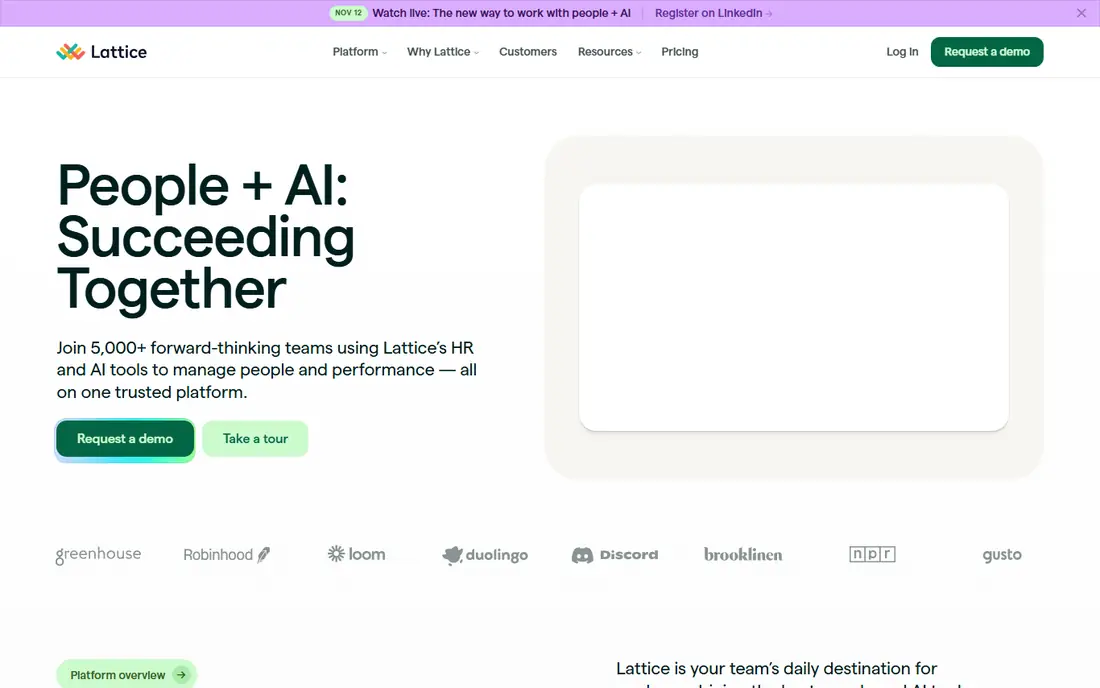
Lattice is a strong all round choice for a growing team that wants reviews, goals, continuous feedback, and engagement surveys without stitching several tools together. Managers get review prompts, 1:1 templates, and feedback tools that encourage regular conversations, rather than a single annual review. Its integrations with HR systems and chat tools help keep performance data in the flow of work. The drawback is cost and scale. Lattice pricing and annual minimums can be a stretch for a very small team, and a full setup with goals, reviews, and surveys takes planning. For a team of 50 or more that wants a serious performance process, it is worth the effort, but a team of ten may find a simpler tool faster to adopt.
- Reviews, goals, feedback, and engagement in one place
- Strong manager tools
- Good integrations
- Pricing and minimums can be high for small teams
- Setup takes planning
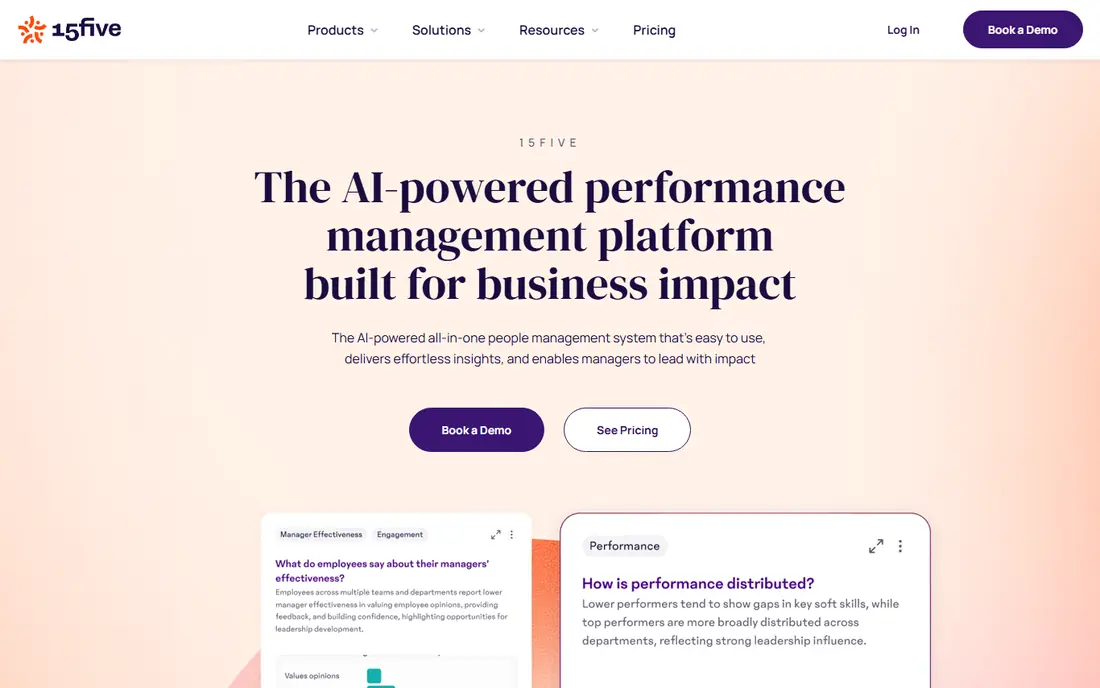
15Five is built around the idea that performance improves through frequent, short conversations, not just annual reviews. Weekly check ins let employees flag wins, blockers, and priorities, while managers can respond quickly and track patterns over time. Pulse surveys and review cycles sit on top of that rhythm, so the annual review feels less like a surprise. The tool is less suited to a team that only wants a once a year review, since its value comes from regular use. Pricing also rises with higher plans, and some plans require annual billing, so a small team should confirm the plan that includes the review features it actually needs before signing.
- Weekly check ins and pulse surveys
- Manager coaching tools
- Clear review cycles
- Full features sit on higher plans
- Annual billing on some plans
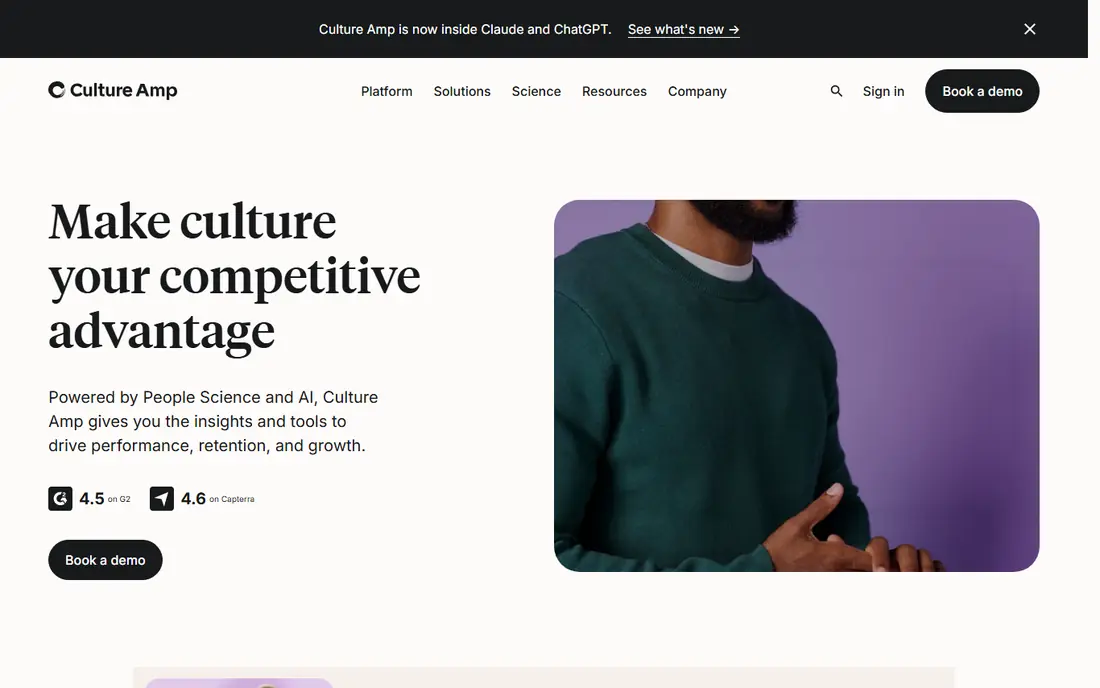
Culture Amp suits organisations that want performance conversations grounded in engagement data. Its surveys, benchmarks, and action planning help leaders see where teams are struggling, while its performance tools support reviews, feedback, and development. For a company that already values survey data, Culture Amp connects that data to performance work in a useful way. Pricing is quoted and annual, which can be a barrier for a small business, and the platform leans more toward engagement than pure review workflow. If your main need is a flexible review builder, PerformYard or Lattice may be simpler, but if engagement is your main lever, Culture Amp remains a leader.
- Science backed engagement surveys
- Strong benchmarking
- 360 feedback tools
- Quote based pricing
- More survey led than review led
BambooHR is a good choice when performance is one part of a broader HR need, including employee records, time off, onboarding, and reporting. Its performance reviews are simple to launch and track, which suits a lean HR team that does not want a separate system for every people process. Employees also benefit from having HR and performance in one place. The limit is depth. BambooHR performance tools are not as flexible as Lattice or PerformYard for complex calibration, 360 feedback, or compensation planning, and full performance features sit on a higher tier. If performance is your main problem, choose a dedicated tool, but if HR is your main problem, BambooHR is a practical bundle.
- HRIS plus performance reviews
- Simple review cycles
- Good for small and growing firms
- Performance depth is below dedicated tools
- Higher tier needed for full features
Leapsome connects performance to learning, which suits teams that want reviews to lead to development plans rather than just ratings. It offers reviews, goals, continuous feedback, surveys, and learning paths, with analytics that help HR see progress across teams. Multilingual support is a plus for international teams. Pricing is quoted and some plans carry a minimum term, so a small team should get a clear quote early. Leapsome is also broader than a pure review tool, which means setup takes time, but for a team that wants feedback, goals, and learning together, that breadth is a strength.
- Reviews, goals, feedback, and learning in one platform
- Multilingual support
- Clear analytics
- Quote based pricing
- One year minimum on some plans
PerformYard is the pick when your review process does not fit a standard template. You can build custom forms, cycles, and approval flows that match how your company actually reviews people, rather than forcing your process into a fixed tool. Its integrations with common HR systems help keep employee data in sync without manual entry. It offers less engagement survey depth than Culture Amp, and its brand is smaller than Lattice, which may matter for a buyer who wants a large vendor ecosystem. For a mid sized team that values workflow flexibility over survey breadth, PerformYard is a strong and often overlooked choice.
- Highly custom review forms and cycles
- Good HRIS integrations
- Simpler pricing than enterprise suites
- Less engagement survey depth
- Smaller brand than Lattice
Betterworks suits enterprises that want to tie individual goals to company objectives and track alignment across teams. Its OKR tools, check ins, and talent insights help leaders see where work is on track and where it is stalling, and its integrations with HR and work tools support larger organisations. For a company that runs on OKRs, Betterworks is a natural fit. For a small team, Betterworks is more system than needed, and its quote based pricing reflects its enterprise focus. Smaller firms should look at Lattice or 15Five first, and consider Betterworks when goal alignment across many teams becomes a central management problem.
- Strong OKR and goal alignment
- Talent insights
- Enterprise integrations
- Quote based pricing
- More system than a small team needs
HiBob, often called Bob, combines a modern HR system with structured performance reviews, goals, and feedback, which suits mid sized teams that want one people platform. Its review cycles are flexible, its employee experience is polished, and its reporting helps HR track completion and trends without a separate tool. That combination can reduce the number of systems a growing company must manage. The trade off is focus. HiBob performance tools are strong, but they sit inside a broader HRIS, so a company that needs deep calibration or compensation planning may still want a dedicated tool. If your main need is a modern HR platform with solid performance features, HiBob is a credible choice.
- Modern HRIS with reviews and goals
- Flexible review cycles
- Good employee experience
- Performance is part of a broader HRIS
- Pricing is quoted
Zoho People is the budget pick for teams already using Zoho tools or for small businesses that need performance features without enterprise pricing. It offers reviews, goals, feedback, and time tracking, with a trial to test the fit, and its integration with other Zoho apps can simplify a small business tech stack. For a cost conscious team, that value is hard to ignore. The interface and depth are not as polished as Lattice or Culture Amp, and some advanced performance features sit on higher plans. Still, for a small team that needs a working review process at a low cost, Zoho People delivers the essentials without a large contract.
- Low cost entry point
- Reviews, goals, and time tracking
- Zoho ecosystem integration
- Less polished than Lattice
- Performance depth varies by plan
How we picked these
We compared official feature pages, pricing pages, product listings, privacy policies, and public reviews, with weight on review flexibility, goal tracking, feedback quality, calibration, compensation links, and ease of adoption. A tool made the list only if it was active in October 2026 and clearly served employee performance management. Where pricing was quoted or varied by plan, we wrote See website rather than repeating an unverified estimate.
How to choose a performance tool that people will actually use
Start with the review cycle you want, not the feature list. A team that reviews once a year needs a different tool from a team that runs quarterly reviews, weekly check ins, and calibration. If managers will not use the tool weekly, a check in heavy tool will fail, no matter how good its features look in a demo.
Test the manager and employee experience separately
Ask for a trial or demo from both sides, since a tool that looks great to HR can feel clunky to managers and employees. Check how long it takes to write a review, give feedback, set a goal, and complete a check in, and whether the tool works well on mobile. Adoption depends on those everyday tasks, not on reporting dashboards.
Decide on calibration and compensation early
If you plan to calibrate ratings across teams or link reviews to pay, confirm that the tool supports those workflows before you buy. Calibration, 360 feedback, and compensation planning are not standard in every tool, and adding them later can be painful. If you do not plan to use them, do not pay for an enterprise tool that centres on them.
Plan the first cycle, not just the purchase
Run a pilot with one team, gather feedback, and adjust forms and timelines before rolling out company wide. Train managers on writing useful feedback and on avoiding bias, since a tool cannot fix a poor review culture on its own. Keep the first cycle simple, then add goals, surveys, or calibration in later cycles once the basics work.
FAQ
What is the best performance management software for small business?
Lattice and 15Five are strong small to mid sized business choices, with Lattice offering broader reviews and goals and 15Five offering stronger weekly check ins. PerformYard suits teams that need custom review workflows, while Zoho People is the budget pick. Start with a trial, test the manager experience, and choose the simplest tool that supports your review cycle.
What is the best software for performance management in a large enterprise?
Betterworks suits enterprises focused on OKRs and goal alignment, while Culture Amp suits engagement led organisations and Lattice suits broader performance and talent work. Large firms should also consider Workday or SAP SuccessFactors when performance must sit inside a full HR suite. Get a demo, check minimums, and test calibration and compensation workflows before committing.
What are the best performance management tools for continuous feedback?
15Five and Leapsome are strong for continuous feedback, thanks to weekly check ins, pulse surveys, and ongoing feedback tools. Lattice also supports continuous feedback alongside reviews and goals, while Culture Amp adds engagement survey context. Choose based on whether you want check ins, surveys, or both, and confirm that managers will actually use the rhythm you pick.
Is BambooHR good for performance management?
BambooHR is good for simple performance reviews inside a broader HR system, especially for small and growing firms that want one platform for HR and reviews. Its performance depth is below dedicated tools such as Lattice or PerformYard, and full features require a higher tier. Use BambooHR when HR is your main need, and a dedicated tool when performance is your main need.
What is the best employee performance management software for goals?
Betterworks is strongest for enterprise OKRs, while Lattice and Leapsome offer solid goal tracking alongside reviews and feedback. 15Five ties goals to weekly check ins, which helps teams track progress regularly. Test goal setting, progress updates, and reporting in a trial, since goal tools vary more in daily use than in feature lists.
How much does performance management software cost?
Costs vary from low cost tools such as Zoho People to quote based enterprise platforms with annual minimums, and most tools charge per user per month. Always ask for the full price, including minimums, implementation, and add ons, and confirm whether billing is monthly or annual. A tool that looks cheap per user can become expensive once minimums and higher tiers are added.