Best PEO for HR Software Services in 2026: 8 Providers Compared
Compare the best PEO providers for HR software services in 2026, with published pricing, IRS certification, benefits, and tips for choosing the right fit.
- Editor's choice
 Justworks
Transparent PEO pricing
Starts at$79 per employee per monthVisit justworks.comFull review - Great alternative
 Rippling
HR plus IT in one platform
Starts atSee websiteVisit rippling.comFull review - Also consider
 TriNet
Industry-specific HR support
Starts atSee websiteVisit trinet.comFull review
TL;DR:
- Justworks is the clearest choice for budgeting, with published PEO pricing starting at $79 per employee per month.
- Rippling suits tech teams that want HR, payroll, and IT in one system, while TriNet suits firms that want industry-specific HR support.
- Most large PEOs price by quote, so collect at least three quotes based on the same headcount, benefits, and state mix.
- Check IRS Certified PEO status, contract terms, and exit terms before signing, since switching a PEO mid-year is disruptive.
Quick comparison
| Tool | Best for | Starts at | Free plan? | |
|---|---|---|---|---|
| Justworks | Transparent PEO pricing | $79 per employee per month | No | Visit |
| Rippling | HR plus IT in one platform | See website | No | Visit |
| TriNet | Industry-specific HR support | See website | No | Visit |
 Deel | US PEO plus global hiring | $125 per employee per month | No | Visit |
 ADP TotalSource | Large-scale PEO benefits | See website | No | Visit |
 Insperity | High-touch HR partnership | See website | No | Visit |
 Paychex PEO | Small business payroll depth | See website | No | Visit |
 Sequoia One | Venture-backed startups | See website | No | Visit |
The best PEO for HR software services
A professional employer organization, or PEO, becomes a co-employer for payroll taxes, benefits, workers compensation, and compliance, while you keep day-to-day control of your team. The software matters because it is where managers run payroll, approve time off, and handle onboarding. We compared published pricing, certification, service models, and platform breadth.

Justworks is our pick for small teams that want to budget without a sales call. Its PEO plans are published at $79 per employee per month for Basic and $124 for Plus, with no base fee, which makes it easy to compare against a quote from another provider. The platform covers payroll, tax filing, benefits administration, and compliance in one dashboard.
The trade-off is depth of advice. Justworks gives you solid self-service tools and support, but it is not built as a dedicated HR consulting firm with a named partner for every client. For teams of roughly 2 to 75 people who want clear pricing and a modern HR platform, that balance is usually right.
- Published flat pricing
- IRS Certified PEO
- Simple onboarding and payroll
- Less hands-on HR consulting than premium PEOs
- Benefits vary by state and plan
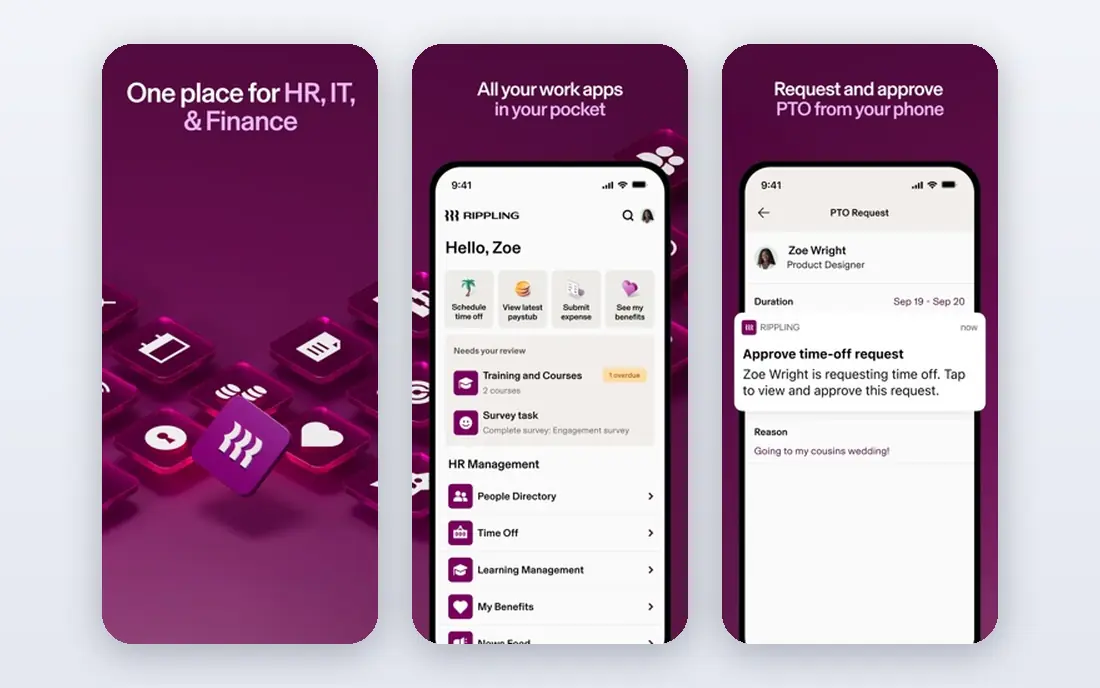
Rippling stands out because it treats HR and IT as one system. When you hire someone, Rippling can set up payroll, benefits, apps, and device access from the same workflow, which cuts the manual steps that pile up in a growing company. Its PEO can also be switched off while you stay on the Rippling HR platform, which is a useful exit path.
PEO pricing is quote-based, so you cannot budget from a public price list. Rippling is also more platform than some small teams need at five employees. For tech-forward teams that already care about device management and app access, it is the strongest combined HR software and PEO option here.
- Unified HR, payroll, and IT
- Strong automation
- Easy to switch off the PEO later
- PEO pricing is quote-based
- Setup can be complex for very small teams
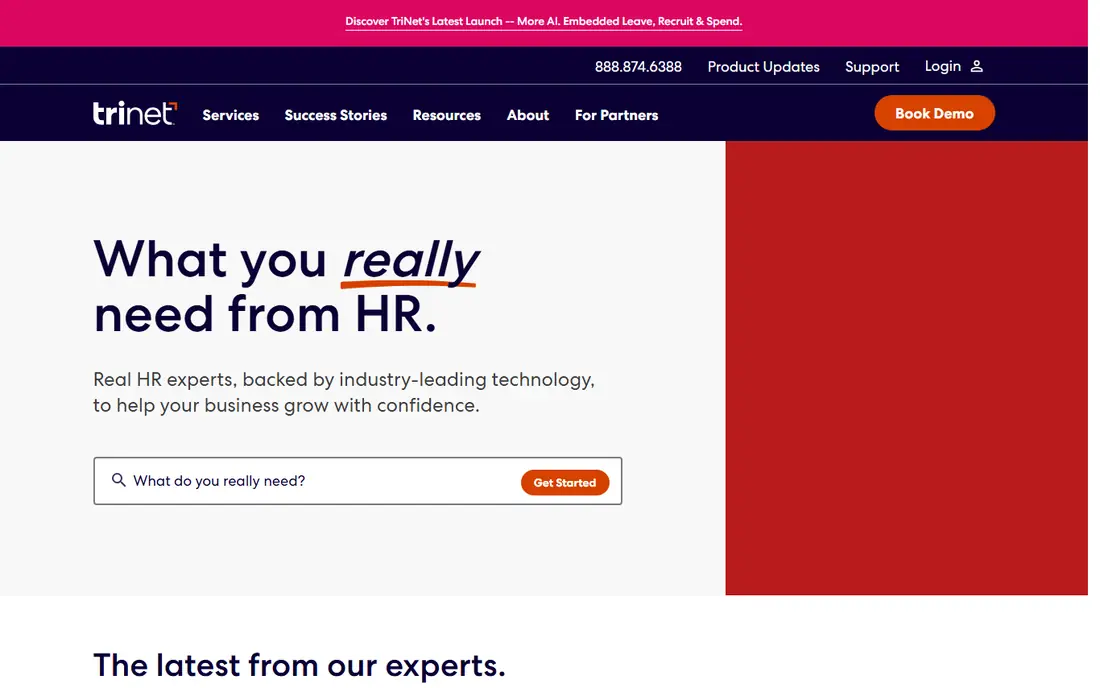
TriNet is built for companies that want HR help shaped to their industry, with dedicated teams for technology, life sciences, financial services, and other sectors. That vertical focus helps with sector-specific compliance, benefits benchmarking, and hiring patterns. Its PEO serves firms from about 5 to 500 employees, and it holds IRS Certified PEO status through a subsidiary.
The drawbacks are pricing transparency and contract terms. TriNet prices by quote, and PEO contracts are typically annual with auto-renewal, so you must read notice periods carefully. For a mid-size firm that values industry expertise over a published price, TriNet remains a strong contender, but get the full fee schedule in writing.
- Deep industry verticals
- IRS Certified PEO subsidiary
- Broad benefits options
- Quote-based pricing
- Annual contracts that auto-renew
- Support quality can vary
Deel is best known for global hiring, and its US PEO fits teams that already hire abroad or plan to. The published US PEO price is $125 per employee per month, which makes it one of only a few PEOs with a public rate you can budget against. The platform handles payroll, benefits, and compliance for both US and international workers in one place.
Deel is not the cheapest US-only PEO, and its global strength is wasted if your whole team is in one US state. For a distributed team that mixes US employees with international contractors or employees, however, Deel avoids the need for two separate systems and two separate support teams.
- Published US PEO price
- Global contractor and employee hiring
- Modern platform
- Higher published PEO price than Justworks
- Month-to-month terms vary by promotion
ADP TotalSource is the large-scale option, and its size shows up in benefits. As the largest PEO in the US by worksite employees, it can offer benefit plans that small firms could not access alone, along with deep payroll tax and compliance support. It is also IRS Certified, which adds a layer of tax accountability that matters when a PEO files under its own employer identification number.
Small teams may find ADP TotalSource more formal and slower to set up than Justworks or Rippling. Pricing is quote-based, set by headcount, risk, and location. For firms with 50 or more employees that want scale, stability, and broad benefits, ADP TotalSource is a serious choice.
- Largest US PEO scale
- Fortune 500 style benefits
- Deep compliance resources
- Quote-based pricing
- Can feel heavy for very small teams
- Implementation takes time
Insperity is the choice for owners who want a person, not just a portal. Clients get a dedicated HR business partner backed by regional service teams, which helps with employee relations, performance issues, and policy questions that software alone cannot answer. Insperity is IRS Certified and typically serves firms from about 10 to 5,000 employees.
Pricing is usually a percentage of payroll and fixed for a year, with 30 days written notice in many cases, so costs rise as salaries rise. That model can be expensive for high-pay teams. For a growing firm that wants hands-on HR guidance alongside payroll and benefits, Insperity offers a service level the self-service platforms do not match.
- Dedicated HR business partners
- IRS Certified PEO
- Strong service model
- Quote-based pricing
- Targets firms from about 10 employees up
- Percentage-of-payroll model can grow with salaries
Paychex PEO suits small businesses that put payroll accuracy first. Paychex has a long payroll history, strong multi-state tax compliance, and local support that some owners prefer to a purely online service. Its PEO band starts at about 5 employees, which makes it accessible to smaller firms than some premium PEOs.
The platform is less modern than Rippling or Justworks, and PEO pricing requires a quote. If your main worry is getting payroll, tax filings, and benefits right with a provider that has deep payroll roots, Paychex PEO is a safe, practical pick. If you want the newest HR software experience, start with Justworks or Rippling instead.
- Deep payroll and tax expertise
- Local support options
- Serves firms from about 5 employees
- Quote-based PEO pricing
- Platform can feel dated next to newer rivals
Sequoia One is built for venture-backed startups that need more than payroll processing. It pairs PEO services with benefits strategy and compensation advice, which helps young companies compete for talent against larger firms. It is IRS Certified, and its team understands equity, fast hiring, and the benefits expectations of tech workers.
That focus is also its limit. A Main Street business with steady headcount will get less value from Sequoia One than from a general small business PEO. Pricing is quote-based and not published. For a funded startup planning rapid growth, Sequoia One is worth a quote alongside Rippling and TriNet.
- IRS Certified PEO
- Benefits and compensation strategy
- Strong for venture-backed teams
- Quote-based pricing
- Less suited to non-venture small businesses
How we picked these
We compared published PEO pricing, IRS Certified PEO status, service models, and HR software breadth in October 2026, using vendor pages and independent PEO comparisons. We favored providers that are still actively selling PEO services in the US, that publish or clearly explain their pricing model, and that pair payroll and benefits with usable HR software. We did not claim hands-on testing, and we treated quote-based prices as quote-based rather than inventing a number.
How to compare PEO quotes fairly
Never compare a PEO quote on the admin fee alone. Ask each provider for the same breakdown: admin fee per employee, benefits premiums, workers compensation, payroll taxes, and any setup or year-end fees. A low admin fee can hide a high benefits premium, and a percentage-of-payroll fee will grow as you raise salaries.
Questions to ask every provider
Ask whether the provider is IRS Certified, what happens to benefits and tax filings if you leave, and how much notice is needed to end the contract. Ask who your day-to-day contact will be, how payroll errors are fixed, and whether the software supports your states, your pay schedules, and your benefits carriers. Get answers in writing before you sign.
When a PEO is not the right move
A PEO may not be worth it under about five employees, or when you already have strong benefits and in-house HR. In that case, a payroll service plus a benefits broker can cost less and keep more control in-house. A PEO earns its fee when compliance, benefits access, and HR support would otherwise take real time from the owner.
FAQ
What is a PEO for HR software services?
A PEO is a professional employer organization that co-employs your workers for payroll taxes, benefits, and compliance, while you keep control of hiring, work, and day-to-day management. The HR software is the platform where you run payroll, onboarding, time off, and benefits. Together, they let a small firm offer large-firm benefits without building an HR department.
Which PEO is best for small businesses?
Justworks is our pick for small businesses that want published pricing and a simple platform, starting at $79 per employee per month. Rippling suits tech teams that want HR and IT together, while Paychex PEO suits firms that value payroll depth and local support. Collect quotes from at least three providers before deciding.
How much does a PEO cost?
Published PEO pricing ranges from $79 per employee per month at Justworks to $125 at Deel, but most large PEOs price by quote. Typical total costs run from about $40 to $200 per employee per month for admin and related fees, before benefits premiums and taxes. Your exact price depends on headcount, industry risk, location, and benefits chosen.
Is Justworks an IRS Certified PEO?
Yes, Justworks is listed as an IRS Certified PEO, which means it meets IRS standards for tax payment and reporting accountability. TriNet, ADP TotalSource, Insperity, and Sequoia One also hold IRS certification. Certification does not guarantee service quality, but it is a useful check when a PEO will file taxes under its own employer number.
Can I leave a PEO if it does not work out?
Yes, but exit terms vary and switching mid-year can disrupt benefits and tax filings. Some providers allow a clean switch to their own HR platform, as Rippling does, while others require notice periods tied to an annual contract. Ask about exit terms, benefits continuation, and W-2 handling before you sign, not after.
What is the difference between a PEO and payroll software?
Payroll software calculates pay and files taxes, but it does not co-employ your workers or sponsor group benefits. A PEO does both, and it takes on defined employer responsibilities for taxes and benefits administration. Payroll software is cheaper and simpler, while a PEO offers broader benefits access and compliance support for a higher fee.