Best PCI Compliance Software in 2026: 8 Tools Compared
Compare the best pci compliance software for PCI DSS readiness, evidence collection and continuous monitoring, with pricing notes and audit guidance for teams.
- Editor's choice
 Vanta
Multi-framework programs
Starts atSee websiteVisit vanta.comFull review - Great alternative
 Drata
Supported compliance teams
Starts atSee websiteVisit drata.comFull review - Also consider
 Secureframe
Guided small-team onboarding
Starts atSee websiteVisit secureframe.comFull review
TL;DR:
- Vanta is our pick for most growing companies because it pairs PCI DSS with other frameworks and a large integration set.
- Secureframe suits smaller teams that want guided onboarding and a lower starting price point.
- Drata fits teams that value support and a clean control monitoring view across several frameworks.
- No tool replaces an auditor: these platforms prepare evidence, while a qualified assessor still performs the assessment.
Quick comparison
| Tool | Best for | Starts at | Free plan? | |
|---|---|---|---|---|
| Vanta | Multi-framework programs | See website | No | Visit |
| Drata | Supported compliance teams | See website | No | Visit |
| Secureframe | Guided small-team onboarding | See website | No | Visit |
 Sprinto | Budget multi-framework teams | See website | No | Visit |
 AuditBoard | Enterprise risk and audit | See website | No | Visit |
 Hyperproof | Control and audit workflows | See website | No | Visit |
 Thoropass | Platform plus audit support | See website | No | Visit |
 Scrut Automation | Smaller teams on a budget | See website | No | Visit |
The best pci compliance software
PCI DSS applies when you store, process, or transmit cardholder data, and even when you outsource payments, you still need to show how card data is handled. The tools below collect evidence, monitor controls, and organize the self-assessment or audit trail.
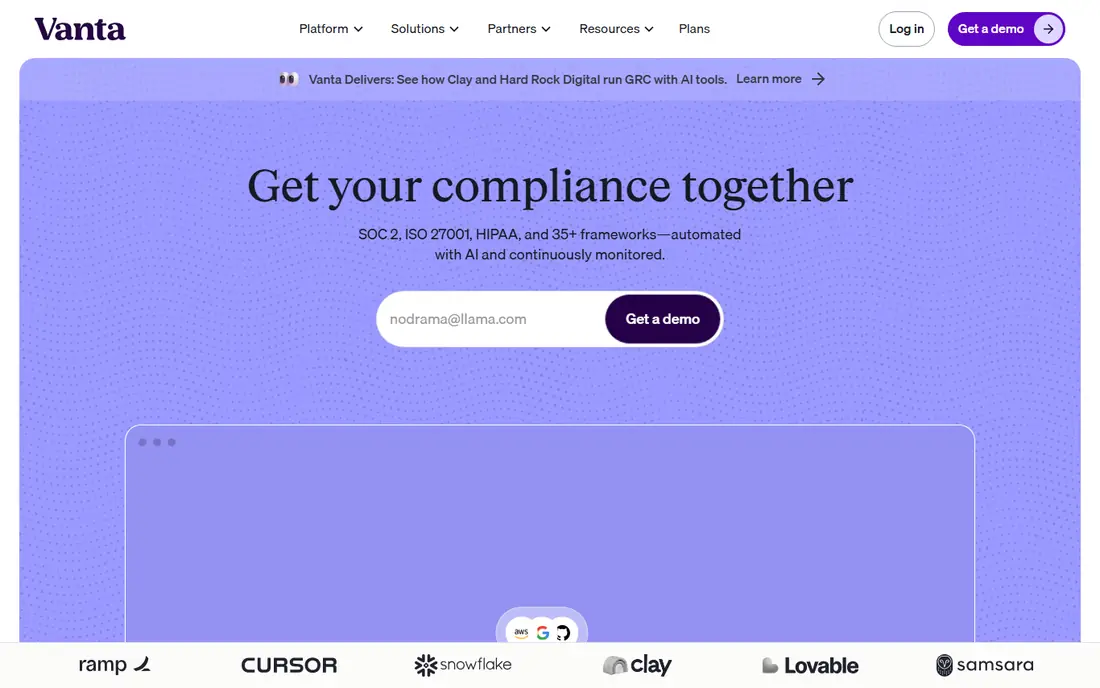
Vanta is the most common choice for SaaS companies that need PCI DSS plus other frameworks in one program. Automated evidence collection connects to cloud services, identity tools, and device management, so controls are monitored over time rather than assembled in a rush before an audit. The trust center lets customers view security posture without a long questionnaire exchange, which helps sales teams close deals with security-minded buyers.
The honest catch is cost and scope. Pricing is quoted by headcount and framework count, and the audit itself is performed by an independent firm and billed separately. A company that needs only PCI DSS, with no other framework, may find a smaller tool cheaper. For a growing company that will add SOC 2 or ISO 27001 soon, Vanta is a sound central platform.
- Large integration set
- PCI DSS alongside SOC 2 and ISO 27001
- Trust center for customer questionnaires
- Quote-based pricing
- Audit is billed separately
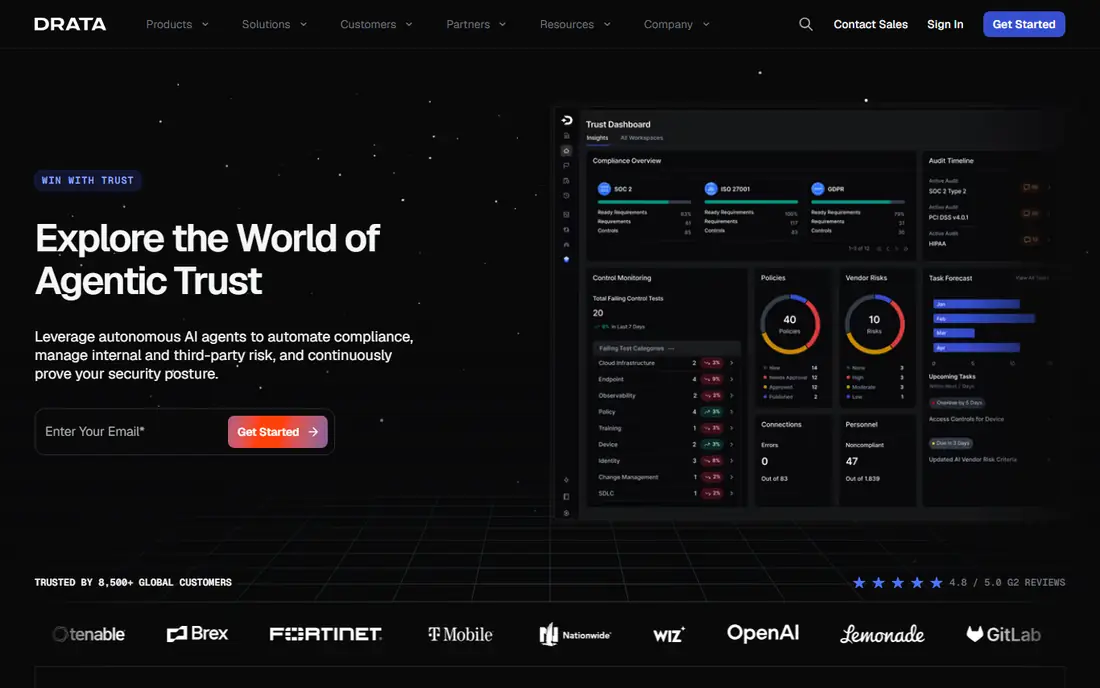
Drata maps PCI DSS controls to evidence from your cloud and business tools, and flags gaps before an auditor does. The control view is easy for a small security or operations team to follow, and support is a consistent strength in public reviews, which matters when a team has no dedicated compliance lead. Drata also handles SOC 2, ISO 27001, HIPAA, and PCI DSS in one program, so a company can grow its framework list without switching platforms.
The trade-off is price. Like Vanta, Drata is quoted, and total cost grows with employees and frameworks. Audit fees sit outside the platform price. If your team wants guided help and a clean monitoring view, and you expect to hold more than one framework, Drata is a strong shortlist entry.
- Continuous control monitoring
- Strong customer support record
- Clear framework mapping
- Quote-based pricing
- Costs rise with frameworks and headcount
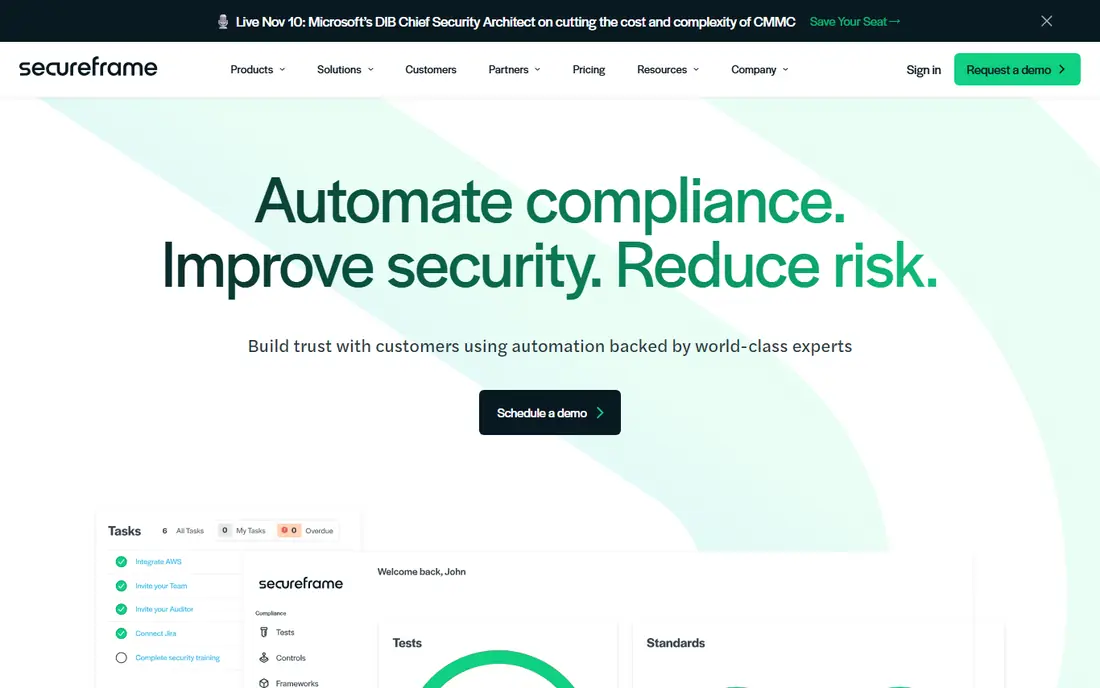
Secureframe suits a first-time compliance buyer. Onboarding is guided, policies and controls are templated, and the platform walks a small team through PCI DSS readiness step by step. Marketplace listings have shown entry pricing around 7,500 dollars per year for a fundamentals tier, though your quote will depend on headcount and frameworks. That guided approach reduces the risk of a team stalling on its first framework.
The limit is add-on pricing. Trust center and questionnaire tools may cost extra, so price the full set you need rather than the entry tier alone. The audit is also separate. For a small team that wants hand-holding through its first PCI DSS program, Secureframe is a good fit.
- Guided onboarding
- Published entry tier in marketplace listings
- Broad framework coverage
- Some features are add-ons
- Audit billed separately
Sprinto is worth a look when budget is tight but automation still matters. Marketplace listings have shown starter pricing around 7,500 dollars per year plus a first framework fee, which undercuts some larger rivals for small teams. Automated checks monitor controls, policies are templated, and PCI DSS sits alongside SOC 2, ISO 27001, and other frameworks, so a startup can start small and add frameworks later.
The catch is breadth. The integration set is smaller than Vanta, and some advanced features sit on higher tiers. A company with a complex cloud stack should check integration coverage before committing. For a budget-conscious team that needs solid PCI DSS readiness without enterprise cost, Sprinto is a practical option.
- Lower entry pricing in marketplace listings
- Automated evidence checks
- Multi-framework support
- Smaller integration set than Vanta
- Audit billed separately
AuditBoard fits large companies that treat PCI DSS as one part of a wider risk and internal audit program. Control management, risk registers, audit workflows, and executive reporting are stronger here than in startup-focused tools, and the platform can serve internal audit, compliance, and risk teams together. For a company with several frameworks, multiple entities, and a formal audit function, that breadth is valuable.
The drawback is scale. Pricing is enterprise level, setup takes planning, and a small team will find the platform heavy. If your PCI DSS work is driven by an internal audit team and a board-level risk program, AuditBoard is a serious candidate. If you are a 20-person startup, start with a smaller tool.
- Strong risk, audit, and control management
- Suits large programs
- Good reporting for leadership
- Enterprise pricing and setup
- More than a small team needs
Hyperproof organizes controls, owners, tasks, and evidence in a way that suits teams that already know their framework and want clean audit workflows. Controls map across frameworks, so evidence collected for PCI DSS can support SOC 2 or ISO 27001 where the requirements overlap. That reuse saves real time for a team managing several programs at once.
The limit is transparency and automation depth. Pricing requires a quote, and some evidence collection is less automated than the leaders, so expect more manual work in places. For a mid-size team that values control ownership and audit readiness over hands-off automation, Hyperproof is a solid choice.
- Clear control ownership and task tracking
- Audit evidence organization
- Multi-framework mapping
- Pricing is not published
- Less automation depth than Vanta or Drata in some areas
Thoropass combines a compliance platform with an audit firm, which can simplify planning for a team that wants one partner for readiness and assessment. The platform tracks controls and evidence, while the affiliated firm can handle the assessment, reducing handoffs between vendors. Marketplace listings have shown platform pricing from around 8,700 dollars per year, with audit fees on top depending on scope.
The catch is that bundled does not mean cheap, and audit scope must be agreed in writing. A company should still confirm auditor independence rules for its assessment type and compare the audit fee against independent firms. For a team that wants a single guided path from readiness to report, Thoropass is worth quoting.
- Platform plus audit firm under one roof
- Guided readiness
- Multi-framework coverage
- Pricing is not published
- Audit scope needs careful scoping
Scrut Automation serves smaller teams that need PCI DSS and other frameworks without enterprise pricing. Continuous monitoring, policy templates, and evidence collection cover the core readiness work, and quotes for small teams have been reported at lower levels than the largest rivals. For a startup or small SaaS company, that price gap can be the deciding factor.
The trade-off is footprint. Scrut is less widely known in the US than Vanta or Drata, so check customer references in your industry and confirm integration coverage for your stack. If price matters most and the integrations fit, Scrut is a credible budget pick.
- Lower entry pricing in some quotes
- Multi-framework support
- Continuous monitoring
- Smaller vendor footprint in the US
- Pricing varies by quote
How we picked these
We compared official feature pages, framework coverage, integration sets, and published or marketplace pricing for tools that support PCI DSS. We favored tools that monitor controls over time, map evidence across frameworks, and are actively sold in 2026. We left out point tools that only scan networks or only fill in a questionnaire, because PCI DSS readiness needs control management, evidence, and audit preparation together. This article is general information, not legal or compliance advice, and your assessor should confirm your scope.
What to check before you buy
Start with scope. Confirm whether you store card data, use a payment processor that tokenizes it, or only use hosted payment pages, because that changes your PCI DSS level and questionnaire type. A tool cannot fix a scope problem, and a vendor that promises compliance without scoping should be treated with caution. Ask each vendor to show PCI DSS control mapping, evidence collection for your cloud tools, and how gaps are flagged.
Price the full program, not the platform alone. Add the audit or assessor fee, penetration testing where required, and any framework or add-on fees. Check contract length, renewal terms, and whether you can export evidence if you leave. Finally, ask who owns each control in your company, because a platform with no internal owner will drift between audits.
FAQ
What is PCI compliance software?
PCI compliance software helps a company meet the Payment Card Industry Data Security Standard, known as PCI DSS, by organizing controls, collecting evidence, monitoring gaps, and preparing for a self-assessment or an audit. It does not by itself make a company compliant, and an independent assessor still performs formal assessments where required.
Does a small business need PCI compliance software?
It depends on how you take card payments. A business that uses a hosted payment page and never touches card data may complete a short self-assessment with help from its processor. A business that stores or processes card data, or runs its own payment system, usually benefits from a platform that tracks controls and evidence.
What is the best PCI compliance software?
Vanta is our pick for most growing companies because it pairs PCI DSS with other frameworks and a large integration set. Secureframe and Sprinto suit smaller or budget-conscious teams, while AuditBoard fits large enterprise risk programs.
How much does PCI compliance software cost?
Entry platform pricing in marketplace listings has ranged from around 7,500 dollars per year for small teams to higher quotes for larger companies, with audit fees billed separately. Always ask for a quote that includes every framework, add-on, and the audit or assessor fee.
Can PCI software replace a PCI audit?
No. These platforms prepare evidence and track controls, but a qualified security assessor performs formal assessments, and a self-assessment still requires honest answers about your controls. Treat any vendor that claims its software alone grants compliance with skepticism.
What is the difference between PCI DSS and SOC 2?
PCI DSS focuses on protecting cardholder data, while SOC 2 covers broader security, availability, and privacy controls for service providers. Many companies hold both, and the tools in this list map overlapping controls so evidence can support more than one framework.