Best Payments Orchestration Software in 2026: 9 Platforms Compared
Compare the best payments orchestration software for routing, vaulting, and multi-provider checkout, with pricing notes and honest tradeoffs in 2026 today.

- Editor's choice
 Primer
Enterprise multi-provider routing
Starts atSee websiteVisit primer.ioFull review - Great alternative
 Spreedly
Provider-agnostic card vault
Starts atSee websiteVisit spreedly.comFull review - Also consider
 Hyperswitch
Open-source control
Starts atFreeVisit hyperswitch.ioFull review
TL;DR:
- Payment orchestration connects several payment providers behind one checkout, so you can route each transaction to the provider most likely to approve it.
- Primer and Spreedly are the clearest orchestration-first picks, while Hyperswitch suits teams that want open-source control and self-hosting.
- Most enterprise orchestration pricing is by quote, so budget for a sales process and ask for the total fee at your volume.
- Token vaulting matters as much as routing, because a portable vault lets you switch providers without asking customers to re-enter card details.
Quick comparison
| Tool | Best for | Starts at | Free plan? | |
|---|---|---|---|---|
| Primer | Enterprise multi-provider routing | See website | No | Visit |
| Spreedly | Provider-agnostic card vault | See website | No | Visit |
| Hyperswitch | Open-source control | Free | Yes | Visit |
 IXOPAY | White-label orchestration | See website | No | Visit |
 BridgerPay | Broad provider network | $1,000 per month | No | Visit |
 Checkout.com | High-volume global payments | See website | No | Visit |
 Stripe | Developer-friendly payments with routing | 2.9% + $0.30 per transaction | No | Visit |
 Adyen | Global enterprise commerce | See website | No | Visit |
 CellPoint Digital | Travel and airline payments | See website | No | Visit |
The best payments orchestration software
These platforms cover routing, vaulting, checkout, and reporting, with different fits for startups, mid-size merchants, and global enterprises.
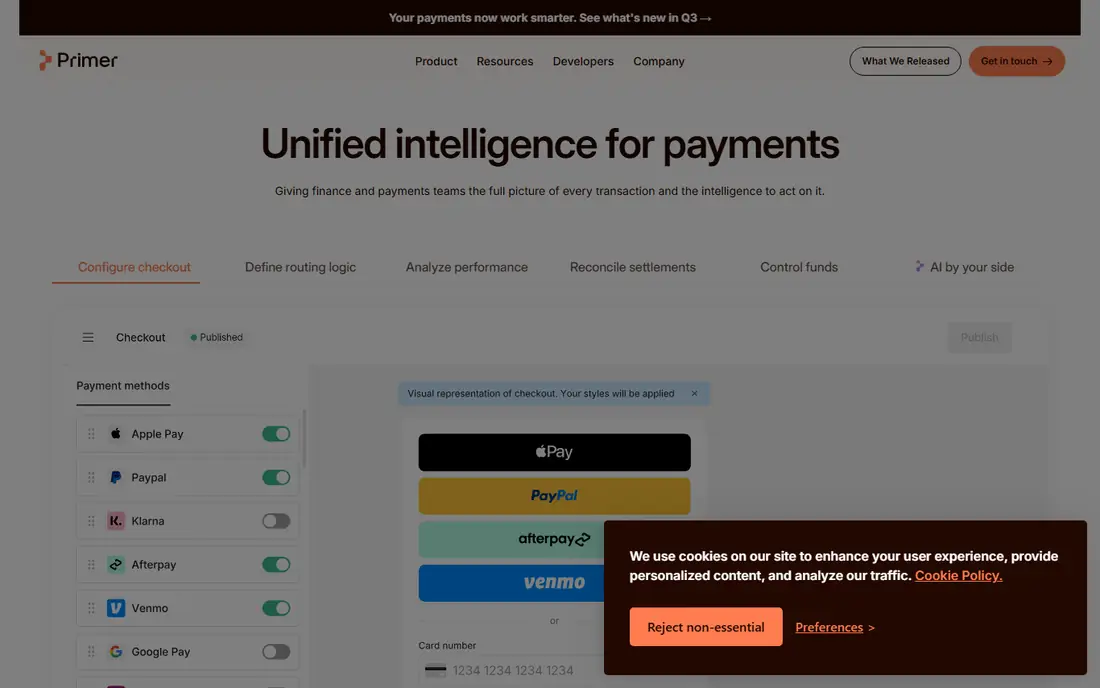
Primer is the orchestration-first pick for a business that already uses, or plans to use, several payment providers. Its universal checkout and workflow builder let a payments team set routing rules, retries, and fallbacks without rebuilding the checkout for each provider. That control can lift approval rates, especially for international sales where one provider performs better in one country than another.
The catch is access. Pricing is custom, and the platform makes most sense once volume justifies a dedicated payments setup. Smaller merchants may find the sales process heavy for their needs. If you process across countries and providers, and approval rates directly affect revenue, Primer belongs at the top of your shortlist.
- Universal checkout
- Visual workflow builder
- Wide provider connections
- Pricing is by quote
- Best value needs meaningful volume
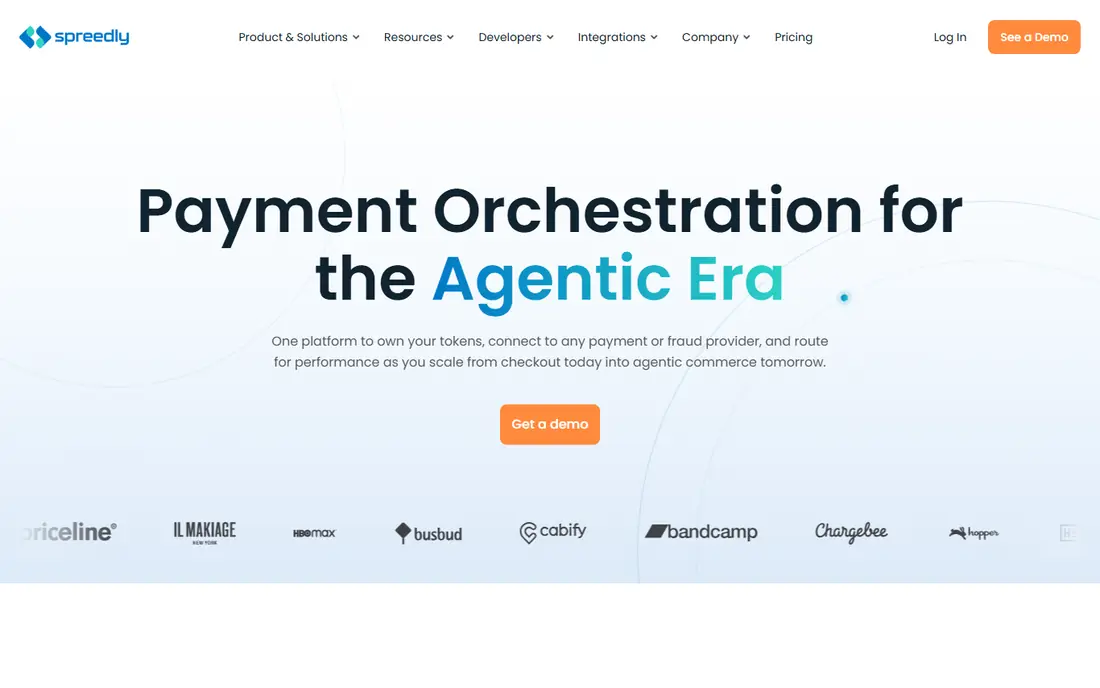
Spreedly solves a different problem first: keeping card data in a vault you control, rather than locked inside one gateway. With a portable vault, you can add or switch providers, run backups, and test new routes without asking customers to re-enter payment details. That freedom is valuable when a provider raises prices, changes terms, or performs poorly in a market.
Routing and checkout tools exist, but the visual workflow experience is less central than in Primer. Pricing is also by quote, so you will need a conversation to compare total cost. If vault portability and provider freedom matter most, Spreedly is the pick. If you want a drag-and-drop routing builder first, start with Primer.
- Portable card vault
- Many gateway connections
- Reduces lock-in
- Pricing is by quote
- Routing features are less visual than Primer
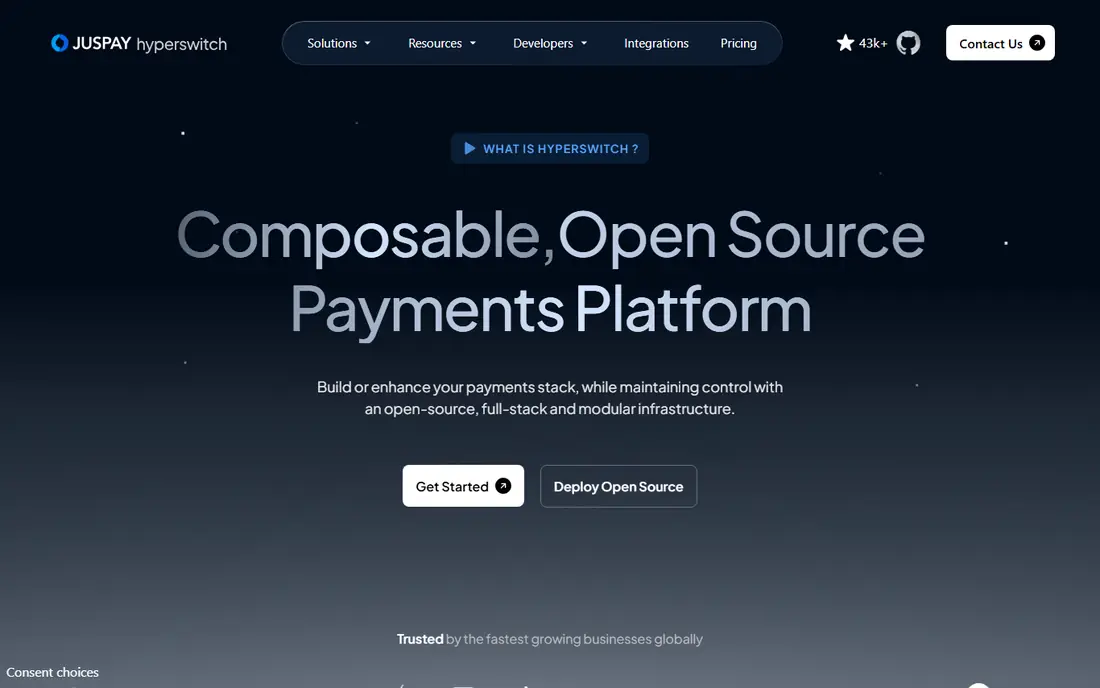
Hyperswitch is the open-source option, and it appeals to teams that want full control over their payments stack. You can self-host the platform, inspect the code, and avoid being locked into one vendor's pricing or roadmap. For startups with engineering talent and a tight budget, the free self-hosted tier is a genuine advantage.
Control comes with work. Self-hosting means your team owns uptime, updates, security, and provider integrations, and the provider list, while growing, is smaller than on Primer or Spreedly. If you have developers who can run it and you value independence over a managed service, Hyperswitch is a strong choice. If you want a vendor to run payments for you, pick a managed platform instead.
- Open-source and self-hostable
- No vendor lock-in
- Growing provider list
- Needs engineering time to run
- Support depends on plan and community
IXOPAY suits payment facilitators, ISOs, and larger merchants that need white-label orchestration. Multi-acquirer routing, tokenization, and reporting cover complex setups, and the white-label option lets a facilitator offer orchestration under its own brand. For businesses that resell payments, that branding control matters.
Small merchants will likely find IXOPAY heavy, and pricing requires a quote. It is not a quick self-serve signup for a single store. If you run a payments business or a large multi-acquirer operation, IXOPAY is a serious option. If you run one store, a simpler processor or a lighter orchestration tool fits better.
- White-label option
- Multi-acquirer routing
- Suited to facilitators and ISOs
- Pricing is by quote
- Enterprise focus can feel heavy for small merchants
BridgerPay stands out for the breadth of its provider network, which helps businesses that sell internationally and need many local payment methods. Workflow automation, multi-currency support, and routing tools cover complex global checkout needs, and the platform is used across retail, travel, and other sectors.
The starting price, from $1,000 per month, puts it firmly in the mid-size and enterprise range, and the breadth of options can overwhelm a small team. Ask for a clear total at your volume, including any per-transaction fees, before you compare it with quote-based rivals. If global coverage is your main problem, BridgerPay earns its place.
- Very broad provider network
- Workflow automation
- Multi-currency support
- High starting price
- Complexity can overwhelm small teams
Checkout.com is a processor with a strong orchestration layer, rather than a pure orchestration vendor. Intelligent acceptance optimization, global acquiring, and detailed reporting help high-volume merchants improve approval rates without managing many separate provider contracts. For a global store with serious volume, that combination is efficient.
Pricing is custom, and the platform is built for scale, so small merchants may find the onboarding process heavy. If you already process at volume and want better global acceptance from a single main provider with orchestration features, Checkout.com is a top choice. If you need many small providers, a pure orchestration platform may fit better.
- Intelligent acceptance tools
- Global acquiring
- Strong reporting
- Pricing is by quote
- Enterprise focus
Stripe is the default online payments choice for many teams, and it now offers routing and optimization features that cover lighter orchestration needs. The API, documentation, checkout tools, billing, and invoicing are the strongest in this list for developers, and pricing is clear at 2.9 percent plus $0.30 for domestic cards, with no monthly fee. A team can accept a first payment in a day.
The limit is provider freedom. Stripe is primarily its own processor, so true multi-provider independence is weaker than on Primer or Spreedly, and flat-rate pricing gets expensive at high volume compared with interchange-plus deals. If you want one excellent processor with good optimization tools, Stripe is hard to beat. If you want to route freely across many processors, add a dedicated orchestration layer.
- Best developer experience
- Clear flat pricing
- Huge toolset for billing and checkout
- Flat rate gets expensive at scale
- Orchestration is less provider-agnostic than Primer
Adyen serves global enterprises that need online, in-store, and marketplace payments on one platform. Its data tools, risk management, and global acquiring help large merchants manage payments across countries and channels without stitching together many vendors. For omnichannel retail and platforms, that unity is a real advantage.
Pricing is custom, and onboarding is geared to larger merchants, so small stores will find it a heavy first choice. If you run a global business with multiple channels and need one payments partner at scale, Adyen is a leading option. If you are still small, start with Stripe or a lighter orchestration tool and revisit Adyen as volume grows.
- Single platform for online, in-store, and global payments
- Strong data tools
- Pricing is by quote
- Onboarding suits larger merchants
CellPoint Digital is the specialist pick for airlines, travel sellers, and hospitality businesses. Its orchestration covers multi-tender payments, where a booking may split across methods, and travel-specific flows that general platforms handle less well. For an airline or large travel merchant, that focus can improve approval and customer experience in ways a generic tool cannot.
Outside travel, the specialization is a limit, and pricing is by quote. A general retailer gains little from travel-specific features and may find a broader platform simpler. If travel payments are your business, CellPoint Digital deserves a detailed demo. If not, choose a general orchestration platform from earlier in this list.
- Travel-specific orchestration
- Multi-tender payments
- Airline and hospitality focus
- Pricing is by quote
- Narrow focus outside travel
How we picked these
We compared official product pages, provider coverage, routing and vault features, and published pricing for orchestration-first platforms and processors with strong orchestration layers. We favored tools with real multi-provider support, token vaulting, and reporting, and we kept both open-source and managed options. We did not claim hands-on testing, and we left out single-gateway tools that do not route across providers.
What to check before you buy
Start with your approval problem, not the feature list. If one provider fails in a country, routing matters most. If you fear lock-in, vault portability matters most. If checkout conversion is the issue, a universal checkout matters most.
Ask for the total cost at your volume
Most enterprise pricing here is by quote, so compare the same volume, the same countries, and the same payment methods across vendors. Ask about monthly fees, per-transaction fees, vault fees, and support costs, and get the total in writing.
Test routing on real traffic, not just in a demo
A demo with perfect traffic tells you little. Run a pilot on a share of real transactions, watch approval rates by provider and country, and check how fallbacks behave when a provider fails. Measure the lift before you move all traffic.
Plan for failure and switching
Confirm how retries, fallbacks, and vault export work before you sign. A good orchestration platform should make a provider failure invisible to customers and make switching providers possible without re-collecting card details. If export is hard, that is a warning sign.
FAQ
What is payments orchestration software?
It is software that connects several payment providers behind one checkout, then routes each transaction, retries failures, and manages card tokens. The goal is higher approval rates, lower costs, and less dependence on any single provider. It is different from a single payment gateway, which usually relies on one provider.
Do small businesses need payment orchestration?
Most small stores do not. A single good processor, such as Stripe, covers early needs well. Orchestration pays off when you sell internationally, use several providers, face approval problems in specific countries, or want freedom to switch providers without losing card data.
How much does payment orchestration cost?
Pricing varies widely. Hyperswitch offers a free self-hosted tier, BridgerPay starts from $1,000 per month, and most enterprise platforms price by quote. Stripe charges 2.9 percent plus $0.30 per domestic card transaction with no monthly fee. Always ask for a total at your volume.
What is a payment vault, and why does it matter?
A vault stores card tokens securely so customers do not have to re-enter card details. A provider-agnostic vault, such as Spreedly, lets you use those tokens across providers. That portability protects you if a provider raises prices or performs poorly, and it makes switching far easier.
Is payment orchestration safe?
Reputable platforms use PCI-compliant vaulting, encryption, and fraud tools, and they reduce the card data your own systems must handle. Check PCI scope, data residency, and incident response during procurement, and confirm who holds the card data before you sign. This is general information, not financial advice.