Best Overall Cloud Platforms in 2026: 8 Platforms Compared
Compare the best overall cloud platform options in 2026, from AWS, Azure, and Google Cloud to simpler hosts, on price, services, and support for your team.
- Editor's choice
 Amazon Web Services
Overall breadth
Starts atSee websiteVisit aws.amazon.comFull review - Great alternative
 Microsoft Azure
Microsoft ecosystems
Starts atSee websiteVisit azure.microsoft.comFull review - Also consider
 Google Cloud
Data and AI
Starts atSee websiteVisit cloud.google.comFull review
TL;DR:
- AWS is our pick for overall breadth, because no other cloud matches its service range, regions, and partner ecosystem.
- Google Cloud leads for data and AI heavy work, while Azure leads for firms already invested in Microsoft tools.
- Smaller hosts such as DigitalOcean and Linode win on simplicity and clear pricing for straightforward apps.
- Overall best depends on your stack, since the right cloud is the one your team can run well, not just the largest one.
Quick comparison
| Tool | Best for | Starts at | Free plan? | |
|---|---|---|---|---|
| Amazon Web Services | Overall breadth | See website | Free trial | Visit |
| Microsoft Azure | Microsoft ecosystems | See website | Free trial | Visit |
| Google Cloud | Data and AI | See website | Free trial | Visit |
 DigitalOcean | Simple apps | $4 per month | No | Visit |
 IBM Cloud | Regulated enterprise work | See website | Free trial | Visit |
 Oracle Cloud | Database led firms | See website | Yes | Visit |
 Alibaba Cloud | Asia Pacific reach | See website | Free trial | Visit |
 Linode | Predictable hosting | $5 per month | No | Visit |
The best overall cloud platforms
Overall cloud strength is a mix of services, reliability, regions, pricing clarity, and support. A platform can lead on one measure and lag on another, so this list balances all of them. We start with the three hyperscalers, then cover strong alternatives for simpler or more specialised needs.
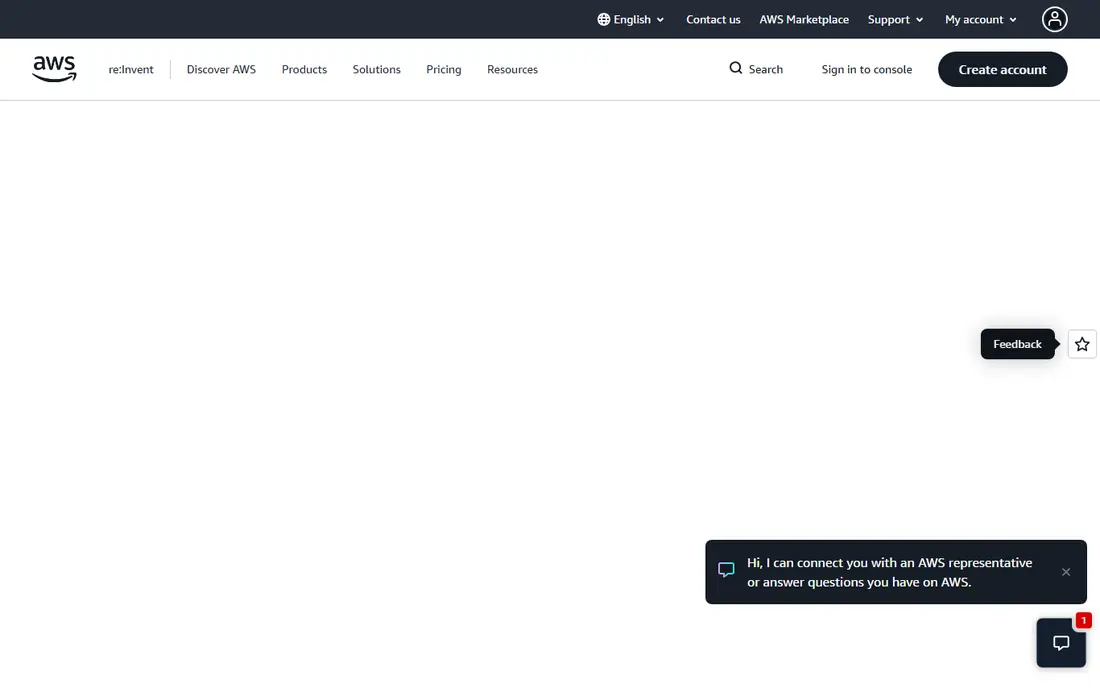
AWS offers the widest range of cloud services in this list, from compute and storage to databases, machine learning, analytics, and Internet of Things tools. Its global region footprint and partner network make it a safe default for firms that expect to grow into many kinds of workloads. Compliance coverage is also among the strongest available.
That breadth brings complexity. Pricing has many dimensions, and new teams can build costly setups by accident. AWS offers a free tier for learning and small tests, but production planning needs budgets, alerts, and cost reviews. For overall capability, though, AWS still sets the standard others are judged against.
- Largest service catalog
- Many regions
- Deep partner ecosystem
- Complex pricing
- Learning curve for newcomers

Azure is the strongest overall choice for firms already running Microsoft 365, Windows Server, or Active Directory. Identity, productivity, and cloud resources share one management story, which cuts friction for IT teams. Hybrid tools also help firms that keep some systems in their own data centres.
The portal can feel crowded, with overlapping services that confuse first time users. Pricing also varies widely, so a small test with real workloads is wise before a large migration. For Microsoft centred firms, the integration value often outweighs those drawbacks.
- Microsoft 365 and identity integration
- Hybrid cloud
- Enterprise controls
- Crowded portal
- Pricing varies by service and region
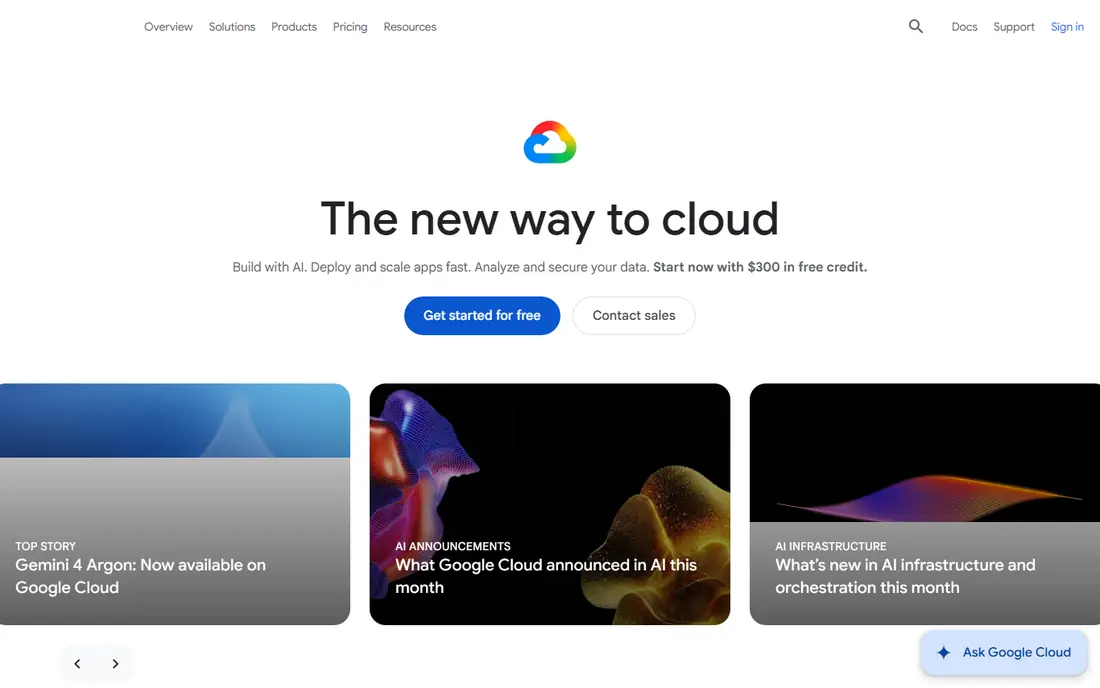
Google Cloud stands out for data and AI work. BigQuery, its data warehouse, and its AI services are well integrated, and its network is built for global, low latency traffic. Kubernetes, which Google helped create, runs naturally here, which appeals to container focused teams.
For general enterprise workloads, the catalog is smaller than AWS, and some firms miss the depth of partner services. Support on lower tiers is also more limited. If your roadmap centres on data, analytics, or AI, Google Cloud deserves the top slot on your shortlist.
- Strong data, analytics, and AI
- Global network
- Kubernetes roots
- Smaller enterprise service catalog than AWS
- Support tiers cost extra
DigitalOcean trades breadth for clarity. Droplets, managed databases, and App Platform cover the needs of most small apps, blogs, and SaaS products, with flat monthly caps that are easy to budget. Its documentation is clear, and its control panel stays focused.
Large firms with complex compliance or specialised AI needs may outgrow it, or use it beside a hyperscaler. For a small team that wants to ship fast without a cloud architect, DigitalOcean is often the most pleasant overall experience in this list.
- Clear flat pricing
- Excellent docs
- Managed databases and Kubernetes
- Narrower catalog
- No full free tier
IBM Cloud focuses on enterprise and hybrid workloads, especially in regulated industries such as finance and health care. It offers tools for running workloads across public cloud and on site systems, plus Watson AI services for firms already in the IBM ecosystem.
The developer community is smaller than for AWS, Azure, or Google Cloud, so finding public guides and third party integrations can take longer. Pricing also needs a sales conversation for many setups. For regulated enterprise work, though, its compliance and hybrid story is a real strength.
- Enterprise and hybrid focus
- Strong for regulated industries
- Watson AI tools
- Smaller developer community than the big three
- Pricing is less transparent
Oracle Cloud Infrastructure is the natural home for firms running Oracle databases and enterprise apps. Its always free tier includes small compute, storage, and database resources within limits, which suits learning and small projects. Enterprise controls and database performance are core strengths.
General app hosting feels less streamlined than on the big three or DigitalOcean, and the catalog is narrower for newer developer tools. If your firm is database led and Oracle based, the fit is strong. If not, a general cloud may serve you better.
- Always free tier
- Strong Oracle database support
- Enterprise controls
- Less polished for general app hosting
- Service range is narrower
Alibaba Cloud is a major cloud in Asia Pacific, with many regions across China and nearby markets. Its catalog covers compute, storage, databases, AI, and content delivery, and its pricing in region can be competitive. Firms expanding into Asia often choose it for latency and local compliance reasons.
US teams may find the platform less familiar, and support quality can vary by region. It is not the best default for a US only firm, but for Asia Pacific growth, it is an essential shortlist candidate. Check data residency rules for each region before migrating.
- Strong Asia Pacific regions
- Large service catalog
- Competitive pricing in region
- Less familiar to US teams
- Support and docs vary by region
Linode, now part of Akamai, offers virtual servers with flat monthly pricing and generous transfer allowances. Its plans suit personal projects, small business sites, and growing apps that need predictable bills. Managed Kubernetes and databases cover the next step up from a single server.
It lacks the wide managed AI and enterprise catalog of the hyperscalers, so very large or specialised workloads may need another cloud. For straightforward hosting with clear pricing, Linode is a dependable overall pick, and its performance per dollar is strong.
- Flat pricing
- Good value
- Managed Kubernetes and databases
- Part of Akamai, so branding varies
- Fewer managed AI services
How we picked these
We compared official service catalogs, pricing pages, region lists, and public documentation for major clouds in October 2026. We weighed breadth, data and AI strength, enterprise controls, pricing clarity, and ease of use for small teams. We did not claim hands-on testing. Where a vendor does not publish one simple starting price, we wrote See website rather than inventing a figure.
How to choose an overall cloud platform
Start with your current stack and your next two years of work. A Microsoft firm, a data heavy firm, and a small SaaS firm will reasonably pick different clouds, even though all three clouds can host a website. List the services you must have, such as a specific database, AI tool, or compliance certification, and shortlist only clouds that meet them.
Next, test total cost, not just compute price. Include storage, data transfer, managed databases, support, and staff time. A cheaper compute price can be wiped out by transfer fees or by a team that needs weeks to learn a new platform. Finally, check exit options. Use containers, standard databases, and infrastructure as code where you can, so a future move stays possible.
FAQ
What is the best overall cloud platform?
AWS is our pick for overall breadth, with the largest service catalog and region footprint. Google Cloud leads for data and AI, Azure leads for Microsoft firms, and DigitalOcean leads for simplicity. The best overall choice for your firm follows your stack, budget, and team skills.
Is AWS better than Azure and Google Cloud?
AWS leads on breadth and ecosystem, but not on every measure. Azure integrates best with Microsoft tools, and Google Cloud leads on data and AI for many teams. Price for a like for like virtual server is often close across the three, so service fit matters more than small price gaps.
Do I need a hyperscaler for a small business website?
No. A small business website often runs well on DigitalOcean or Linode for $4 to $5 per month, with far simpler billing. A hyperscaler makes sense when you need many managed services, global scale, or specific compliance coverage. Start simple and move up only when you need to.
How much does cloud hosting cost per month?
It ranges from $4 to $5 per month for a small virtual server to hundreds or thousands per month for managed databases, large apps, and data platforms. Pay per use billing means your bill follows real usage, so set alerts and review idle resources monthly.
Can I use more than one cloud platform?
Yes, many firms use more than one cloud, often a hyperscaler for core work plus a simpler host for side projects. Multi cloud adds complexity in networking, identity, and billing, so it pays only when each cloud serves a clear purpose. For most small firms, one well run cloud is simpler.