Best Modern Architecture in Data Integration Platforms: 8 Tools Compared
Best modern architecture in data integration platforms for 2026. We compare integration platforms on connectors, ELT, CDC, governance and pricing for teams.
- Editor's choice
 Fivetran
Managed ELT with low maintenance
Starts atFreeVisit fivetran.comFull review - Great alternative
 Airbyte
Open source ELT with control
Starts atFreeVisit airbyte.comFull review - Also consider
 Matillion
Cloud native data pipelines
Starts atSee websiteVisit matillion.comFull review
TL;DR:
- Fivetran and Airbyte lead for teams that want managed ELT pipelines into a cloud warehouse, with Fivetran favouring low maintenance and Airbyte favouring open source control.
- Matillion, Hevo Data and Stitch suit teams that need cloud native pipelines with less infrastructure work, while Talend and Informatica suit larger enterprises with complex governance needs.
- Pricing models differ sharply, from usage based monthly active rows to flat plans, so model cost on your actual row volume and connector count.
- Change data capture, transformation support and destination coverage matter more than connector count alone, so test your top three sources before committing.
Quick comparison
| Tool | Best for | Starts at | Free plan? | |
|---|---|---|---|---|
| Fivetran | Managed ELT with low maintenance | Free | Yes | Visit |
| Airbyte | Open source ELT with control | Free | Yes | Visit |
| Matillion | Cloud native data pipelines | See website | No | Visit |
 Hevo Data | No code pipelines for smaller teams | See website | No | Visit |
 Stitch | Simple ELT for small teams | See website | No | Visit |
 Talend | Enterprise data integration | See website | No | Visit |
 Informatica | Enterprise cloud data management | See website | No | Visit |
 Workato | Integration plus automation | See website | No | Visit |
The best data integration platforms built on modern architecture
We frame this article as data integration platforms built on modern architecture, because modern data teams usually mean cloud native ELT, change data capture, and pipelines that load data into a warehouse or lakehouse before transforming it. The platforms below all operate today and support that approach, with different trade offs on control, cost and governance.
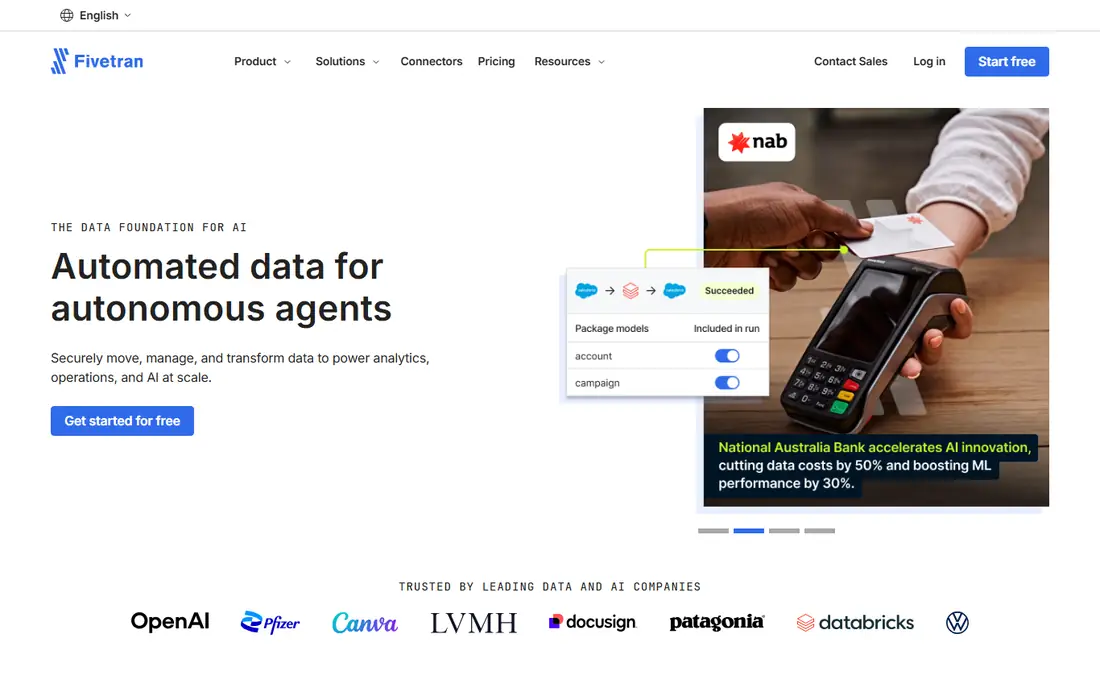
Fivetran is our first pick for a data team that wants pipelines to just work. Connectors are fully managed, schema changes are handled automatically in many cases, and data lands in a warehouse such as Snowflake, BigQuery or Databricks for transformation with dbt or SQL. That low maintenance model saves engineering time, which is often the real cost of a data pipeline.
The catch is usage based pricing. Fivetran charges by monthly active rows, with a $5 minimum per standard connection in paid plans, so costs can grow quickly as sources and row volumes grow. Model your row volume and connector count carefully, and use the free plan to test your main sources first.
- Fully managed connectors with automatic schema handling
- Free plan up to 500,000 monthly active rows
- Strong destination coverage for major warehouses
- Usage based pricing can rise sharply with row volume
- Some enterprise databases and fastest sync speeds require higher tiers
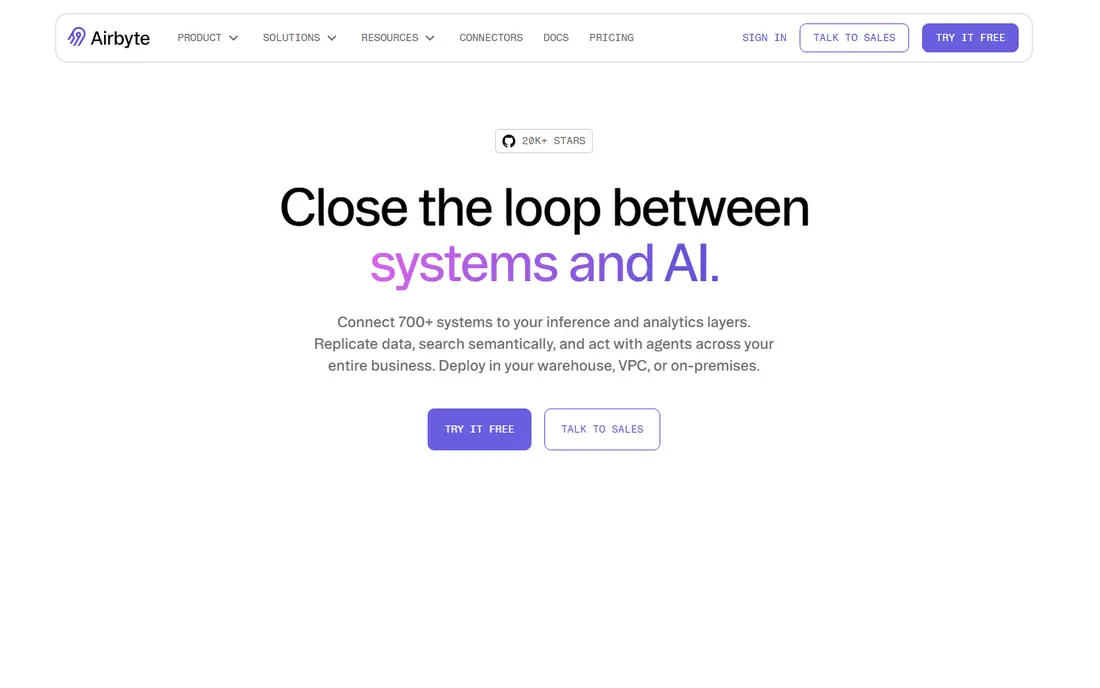
Airbyte suits teams that want control over their pipelines and data. The open source version can be self hosted, which helps with data residency and custom connector work, while Airbyte Cloud offers managed pipelines for teams that do not want to run infrastructure. The connector catalogue is large, and the community contributes new connectors regularly.
The trade off is effort. Self hosting means your team owns upgrades, monitoring and scaling, so the free software is not free in engineering time. Cloud pricing also needs modelling on volume, so compare total cost, including engineering time, with Fivetran before you choose.
- Open source core with a large connector catalogue
- Self hosting option for control and data residency
- Cloud option for managed pipelines
- Self hosting requires engineering effort to run and upgrade
- Cloud pricing and capacity need careful planning at scale
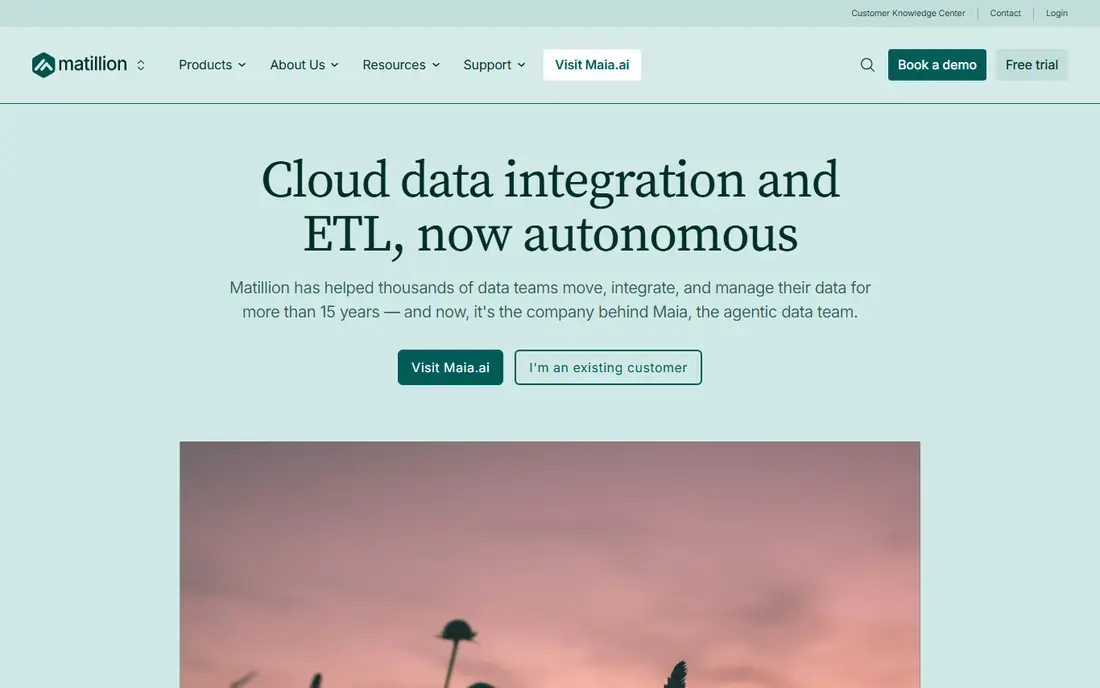
Matillion fits analytics teams that build pipelines directly in a cloud warehouse environment. The visual builder, transformation components and orchestration tools let data analysts and engineers design, test and schedule pipelines without writing all code by hand. It works well when the warehouse is the centre of the data stack.
The weakness is cost and complexity for small teams. Custom pricing means you need a quote, and the platform is more than a small team may need for a few simple sources. Larger teams with many pipelines and transformation needs will get more value from it.
- Visual pipeline builder designed for cloud warehouses
- Strong transformation and orchestration features
- Good for analytics teams
- Pricing is custom and can be costly for small teams
- Learning curve for complex pipeline design
Hevo Data is a practical pick for a smaller data team that wants pipelines without a large engineering effort. Sources can be connected through a no code interface, schemas are managed automatically, and basic transformations run inside the platform before data reaches the warehouse. That simplicity helps a team move from spreadsheets and manual extracts to reliable pipelines.
The limit is enterprise depth. Governance, security and complex transformation features are less extensive than at Informatica or Talend, so a regulated enterprise may need a different tool. For a startup or mid size company, Hevo offers a good balance of ease and coverage.
- No code pipeline setup for many sources
- Automatic schema management
- Transformation options inside the platform
- Free trial is time limited rather than a permanent free plan
- Advanced enterprise governance features are thinner than Informatica or Talend
Stitch suits a small team that needs a simple, reliable ELT pipeline for standard sources such as Salesforce, Google Ads or a Postgres database. Setup is straightforward, pipelines run on a schedule, and data lands in a warehouse for analysis. The model is easy to explain to non technical stakeholders, which helps when a team is just starting with centralised data.
The weakness is breadth. Teams with many niche sources or real time needs may find the connector range limiting, and pricing is less transparent than a simple public price list. Test your exact sources during a trial, and confirm sync frequency before committing.
- Simple ELT setup with a clear pipeline model
- Owned by Talend, with enterprise support options
- Good for standard sources
- Connector range is narrower than Fivetran or Airbyte
- Pricing and plan details require a quote for many teams
Talend fits a large organisation with complex sources, including on premises databases, legacy systems and cloud apps, plus strict data quality and governance rules. The platform covers integration, data quality, master data and governance in one family of tools, which helps enterprises standardise on a single vendor. That breadth is valuable when data must be cleaned and governed before analysis.
The trade off is implementation effort. Talend is not a quick self serve tool for a small team, and it needs skilled engineers to design, run and maintain pipelines. Pricing is custom, so only larger teams with a clear enterprise need should shortlist it.
- Broad integration, data quality and governance tools
- Strong for hybrid cloud and on premises sources
- Large enterprise customer base
- Implementation can be heavy and requires skilled staff
- Pricing is custom and typically enterprise level
Informatica is the enterprise answer for cloud data management at scale. Its cloud platform covers integration, quality, governance and master data, with connectors for a wide range of enterprise systems. Organisations with regulated data, complex lineage needs and many source systems benefit most from that depth.
The weakness is cost and complexity. Small and mid size teams will find Informatica more platform than they need, and the learning curve is steep without dedicated data engineers. It belongs on this list because, for large enterprises, it remains one of the most complete data integration platforms built on a cloud architecture.
- Intelligent Data Management Cloud with broad connectors
- Strong governance, quality and master data tools
- Large enterprise scale
- Pricing is custom and enterprise level
- Platform complexity requires dedicated data staff
Workato closes the list because many modern data teams also need app to app integration and automation, not just warehouse loading. Recipes connect SaaS apps, trigger workflows and move data between systems with low code tools, which helps operations teams automate processes without waiting for engineering. Governance and security features support enterprise use.
The catch is fit. If your main job is loading large volumes into a warehouse for analytics, Fivetran or Airbyte will usually be a better and clearer fit. Workato shines when the job is connecting apps and automating business processes, with analytics loading as a secondary need.
- Low code recipes for app integration and automation
- Strong for business process workflows, not just warehouse ELT
- Good governance for enterprise use
- Not a pure warehouse ELT tool, so analytics pipeline pricing and features differ
- Custom pricing for most teams
How we picked these
We compared official product and pricing pages for platforms operating in October 2026, and we favoured tools with cloud native ELT support, change data capture or scheduled sync, destination coverage for major warehouses, and a clear pricing or trial route. We did not claim hands-on testing. We checked connector counts, sync frequency claims and pricing models, because those details decide whether a platform fits a team budget and data volume.
We included open source, mid market and enterprise tools, because a startup with three sources and a bank with three hundred sources do not need the same platform. Match the tool to source count, row volume and governance needs, not to vendor size alone.
How to choose a data integration platform
Start with your destinations and top sources. List the warehouse or lakehouse you use, the three to five sources that matter most, and whether you need near real time sync or daily batches are enough. A platform that covers your top sources well beats a platform with a larger total connector count but weak support for your main source.
ELT, CDC and transformations
Confirm whether the platform uses ELT, loading raw data first and transforming in the warehouse, and whether it supports change data capture for databases. CDC reduces load and keeps data fresher than full reloads, which matters for large tables. Also check transformation support, whether through dbt, SQL or a visual builder, and whether transformations run in the warehouse or in a separate engine.
Cost, governance and operations
Model cost on monthly active rows or events, connector count and transformation runs, not just the entry price. Check security features such as encryption, access controls, audit logs and data residency options, and confirm how monitoring, alerting and schema change handling work. A pipeline that fails silently is worse than a pipeline that costs a little more but alerts you quickly.
FAQ
What is modern architecture in data integration?
Modern architecture usually means cloud native ELT, where data is loaded into a warehouse or lakehouse first, then transformed with SQL or dbt, often using change data capture for databases. It replaces older ETL tools that transformed data before loading and required more on premises infrastructure.
Is Fivetran better than Airbyte?
Fivetran is better for teams that want fully managed pipelines with minimal maintenance, while Airbyte is better for teams that want open source control and self hosting. Compare total cost, including engineering time, and test your main sources in both before deciding.
How much does a data integration platform cost?
Costs vary widely, from free open source or free tiers to usage based pricing by monthly active rows and custom enterprise contracts. Fivetran offers a free plan up to 500,000 monthly active rows, while paid plans scale with row volume and connector count, so model your actual volume first.
What is change data capture?
Change data capture, or CDC, tracks inserts, updates and deletes in a source database and applies only those changes to the destination. It keeps data fresher and reduces load compared with reloading full tables, and it is important for large operational databases.
Do I still need dbt with Fivetran or Airbyte?
Often yes, because Fivetran and Airbyte focus on loading data, while dbt handles transformation, testing and documentation in the warehouse. Some platforms include basic transformations, but dbt remains the standard for complex warehouse modelling for many teams.
Can a small team use an enterprise platform such as Informatica?
Technically yes, but cost and complexity usually make it a poor fit for a small team. Start with Fivetran, Airbyte or Hevo Data, and move to an enterprise platform only when governance, scale or source complexity clearly requires it.