Best mobile app development companies in 2026: 8 firms compared
Compare the best mobile app development companies in 2026 for enterprise, consumer, and startup apps, with services, strengths, and honest limits in detail.
- Editor's choice
 WillowTree
Enterprise digital products
Starts atSee websiteVisit willowtreeapps.comFull review - Great alternative
 Fueled
Design led consumer apps
Starts atSee websiteVisit fueled.comFull review - Also consider
 Intellectsoft
Enterprise mobile and integrations
Starts atSee websiteVisit intellectsoft.netFull review
TL;DR:
- Enterprise buyers should start with WillowTree, Intellectsoft, and Appinventiv, which handle large, integrated apps and long term support.
- Design led consumer brands fit Fueled, Blue Label Labs, and ArcTouch, where product design and user experience carry more weight than sheer team size.
- Smaller teams and founders should look at Chop Dawg and Designli, which are set up for clearer scopes, faster starts, and closer client contact.
- Project pricing is almost always custom, so a short brief, a budget range, and a timeline will get a more useful proposal than a generic enquiry.
- Check recent client work in your own sector, and ask who will actually work on your app day to day, not only who sells the project.
Quick comparison
| Tool | Best for | Starts at | Free plan? | |
|---|---|---|---|---|
| WillowTree | Enterprise digital products | See website | No | Visit |
| Fueled | Design led consumer apps | See website | No | Visit |
| Intellectsoft | Enterprise mobile and integrations | See website | No | Visit |
 ArcTouch | Multi platform and connected apps | See website | No | Visit |
 Appinventiv | Large scale cross platform apps | See website | No | Visit |
 Chop Dawg | Founders without a product team | See website | No | Visit |
 Designli | Startup apps with a clear scope | See website | No | Visit |
 Blue Label Labs | Startups to enterprise AI apps | See website | No | Visit |
The best mobile app development companies
We compared official service pages, published client work, app store listings for shipped apps, and public reviews to find firms that cover enterprise, consumer, and startup needs without repeating the same offer eight times.
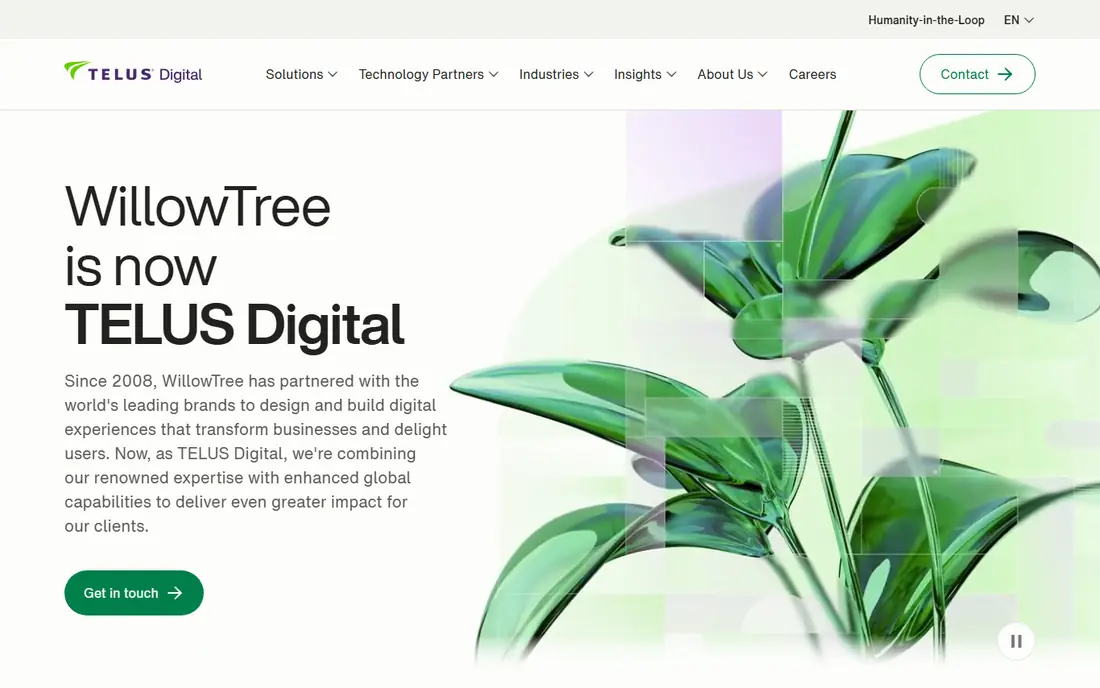
WillowTree, now part of TELUS Digital, is a good first call for a large organisation that needs an app to work as part of a wider digital product, not as a standalone build. Its teams cover strategy, research, design, and engineering, which helps when an app must connect to existing systems, meet accessibility standards, and hold up under heavy use. That breadth matters for retail, media, and other consumer brands with large audiences.
The trade off is fit. A small startup with a single screen idea may find the process slower and more formal than it needs, and project costs are typically at enterprise levels. WillowTree suits buyers who have a clear business case, internal stakeholders, and a need for support after launch, rather than buyers who only need a quick prototype.
- Strong product strategy, design, and engineering under one roof
- Experience with high traffic consumer brands
- Focus on accessibility and performance
- Enterprise scale pricing and process may be heavy for a small app
- Longer discovery phases suit larger budgets

Fueled is known for apps where look, feel, and flow matter as much as code. Its work covers consumer products, brand apps, and digital platforms, and its process puts product strategy and design exploration early, before engineering locks in a direction. That helps teams that need to stand out in a crowded store category, or to turn a brand idea into an app people keep using.
Design led work comes at a premium, and Fueled is best for clients who value that polish and can fund it. If your app is mainly a form, a booking tool, or an internal utility, a leaner firm may deliver the same result for less. For a consumer launch where first impressions drive downloads and retention, Fueled is a strong shortlist name.
- Strong design first approach
- Consumer app experience with major brands
- Product strategy and workshops before build
- Premium pricing for design led work
- May be more than a simple utility app needs
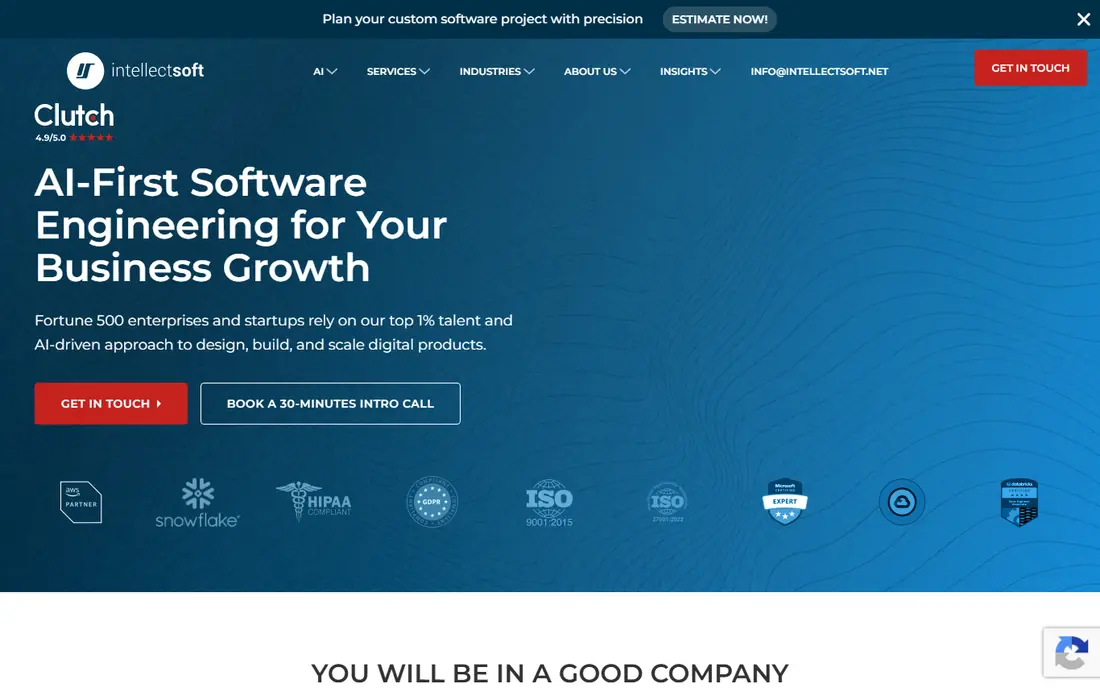
Intellectsoft focuses on enterprise mobile apps that must fit into wider systems, from customer platforms to internal tools. Its teams work across native and cross platform development, cloud services, and integrations, which is useful when an app is only the front end of a larger business process. Clients in regulated or complex sectors often value that engineering depth.
The firm is less suited to a founder who wants a single developer and daily informal contact. With a larger delivery organisation, clear requirements, a named contact, and a staged plan help keep the project close to the original goal. Ask for examples in your sector, and for the team structure, before you judge the proposal on price alone.
- Enterprise engineering and integration experience
- Global delivery teams
- Work across mobile, cloud, and emerging tech
- Large firm process can feel distant for very small clients
- Scoping needs care to avoid an oversized build
ArcTouch builds mobile apps for phones and tablets, and also works on connected products such as TV, voice, and wearable experiences. That range helps when a product needs to live on more than one screen, or when a mobile app controls a device. Its portfolio includes consumer brands and media apps, where performance and design consistency across platforms matter.
For a simple single platform app, that breadth may be more than you need, and a specialist small team could move faster. ArcTouch fits best when you plan to launch on iOS and Android together, or when you expect the app to grow into other devices over time. Check how the firm handles shared code, platform specific design, and long term updates in its proposal.
- Native and cross platform mobile work
- Connected device and TV app experience
- Long track record with shipped apps
- Mid to large project focus
- Smaller one off builds may not be the best fit
Appinventiv is a large global vendor that handles complex, large scale mobile projects, including apps with payments, real time features, and backend systems. Its size lets it staff a project with designers, developers, testers, and backend engineers at once, which can shorten a big build compared with hiring those roles one by one. Sector experience in finance, health, and commerce is a plus for buyers in those areas.
Size also brings a management task. A client who cannot give regular feedback, or who has no product owner on their side, may find a large team harder to steer than a small studio. Appinventiv works best for organisations with a funded roadmap, a clear release plan, and someone internal who can make product decisions each week.
- Large engineering capacity for complex apps
- Experience across fintech, health, and commerce
- Cross platform and native options
- Large team model needs strong client side product ownership
- Smaller budgets may get less senior attention
Chop Dawg is a useful option for founders and small teams who have an idea but no in house product team. The firm covers design, development, and launch support, and its published work includes many startup and growth stage apps. That full service model helps when you need guidance on scope, not only code, since a smaller scope done well often beats a large scope that never ships.
The limit is scale. A multinational rollout with deep legacy integrations may stretch a studio of this size, and enterprise buyers may prefer a larger vendor. For a first version, a second version, or a focused consumer app, Chop Dawg offers a balance of senior attention and practical process that larger firms sometimes lose.
- Full service work for startups and growing firms
- Clear process from idea to launch
- US based team with close client contact
- Smaller scale than enterprise vendors
- Very large enterprise integrations may need a bigger partner
Designli works with startups and growing businesses that need a well defined app, rather than an open ended build. Its process stresses a product solution, with user flows and a clear scope, before development starts in earnest. That can reduce the common startup problem of building features that users never ask for, and it gives founders a clearer budget picture.
The approach needs client time up front. If you want code on day one with no discussion of users or scope, Designli may feel slow at the start, even though that early work often saves time later. It is a good fit for founders who want a partner to challenge the idea, not only to build whatever is handed over.
- Startup friendly process
- Design and development in one team
- Emphasis on a defined product solution before build
- Less suited to huge enterprise programmes
- Clients need to commit to the discovery and definition stage
Blue Label Labs builds mobile and digital products for startups through to larger companies, with recent work that includes AI features inside apps. Its strength is combining product thinking with engineering, so an AI feature, such as smart search or personalisation, is tied to a user need rather than added as a novelty. That matters now, when many briefs mention AI without a clear job for it.
The catch is cost and focus. A studio of this kind is priced above a freelance build, and AI work can expand scope quickly if the use case is vague. Blue Label Labs fits clients who have a funded product, a clear audience, and a specific problem that AI or a polished mobile experience can solve. Ask for a phased plan, so the core app ships before optional AI features are added.
- Product design and engineering for startups and larger firms
- AI and emerging tech work alongside core mobile
- New York based team
- Premium studio pricing
- AI features need a clear use case to avoid added cost without benefit
How we picked these
We compared official service pages, published client work, app store listings for shipped apps, and public reviews for firms that were active in 2026 and that covered different buyer types. We looked for a mix of enterprise, design led, and startup friendly firms, and for coverage of iOS, Android, and cross platform work. We did not test these firms as clients, and we did not rank them by claimed project counts alone, since those figures are self reported and hard to compare. Pricing is custom for almost every firm here, so we used See website rather than inventing a project figure.
How to choose a mobile app development company
Start with a one page brief before you contact any firm. State the audience, the core job the app must do, the platforms you need at launch, and a budget range. Firms give far better proposals when they can see the scope, and you can compare those proposals on the same basis instead of on sales style alone.
Check shipped work, not only slides
Ask for apps you can download, and test them on your own phone. Look at load time, navigation, and how the app handles a poor connection. Ask who built the app, whether the firm still supports it, and what happened after launch, since maintenance often costs more over time than the first build.
Agree on team, process, and ownership
Confirm who will work on your project, how often you will review progress, and who owns the code, designs, and accounts at the end. Agree on a staged plan, with a first release that covers the core job, and later phases for extra features. That structure protects both sides, and it makes it easier to change direction if early user feedback points another way.
FAQ
What is the best mobile app development company in the USA?
There is no single best firm for every project. WillowTree and Intellectsoft suit large enterprise apps, Fueled suits design led consumer apps, and Chop Dawg and Designli suit startups that need close guidance. The best choice depends on budget, scope, platforms, and whether you need integration with existing systems.
How much does it cost to hire a mobile app development company?
Most firms on this list price projects on a custom basis, and costs vary widely with scope, platforms, design depth, and integrations. A simple single platform app costs far less than a large app with payments, accounts, and backend systems. Share a budget range early, and ask for a phased estimate so you can see what the first release covers.
Should I choose native or cross platform development?
Native iOS and Android apps can offer the best performance and platform feel, while cross platform tools such as Flutter and React Native can share code and lower cost for many apps. The right choice depends on performance needs, device features, and long term maintenance. Ask each firm to explain the trade off for your specific app, not in general terms.
How long does it take to build a mobile app?
A focused first version often takes several months, while a large app with integrations can take much longer. Discovery, design, development, testing, and store review all add time, and changes mid build add more. A firm that gives a staged timeline, with review points, is usually more reliable than one that promises a fixed date with no detail.
Do these companies help after launch?
Most firms on this list offer post launch support, updates, and further development, but terms vary. Confirm support hours, response times, app store update handling, and who fixes bugs found after release. Budget for maintenance from the start, since operating system updates and store rules change every year.
What should I ask before signing a contract?
Ask about team members, ownership of code and designs, payment stages, change handling, testing, security practices, and exit terms. Ask for references from clients in a similar sector, and for a sample report or review meeting format. Clear answers on those points matter more than a polished pitch deck.