Best Meditation Apps in 2026: 8 Apps Compared
Compare the best meditation apps for beginners, anxiety, and sleep, including free libraries, guided courses, prices, and what each app does best today.
- Editor's choice
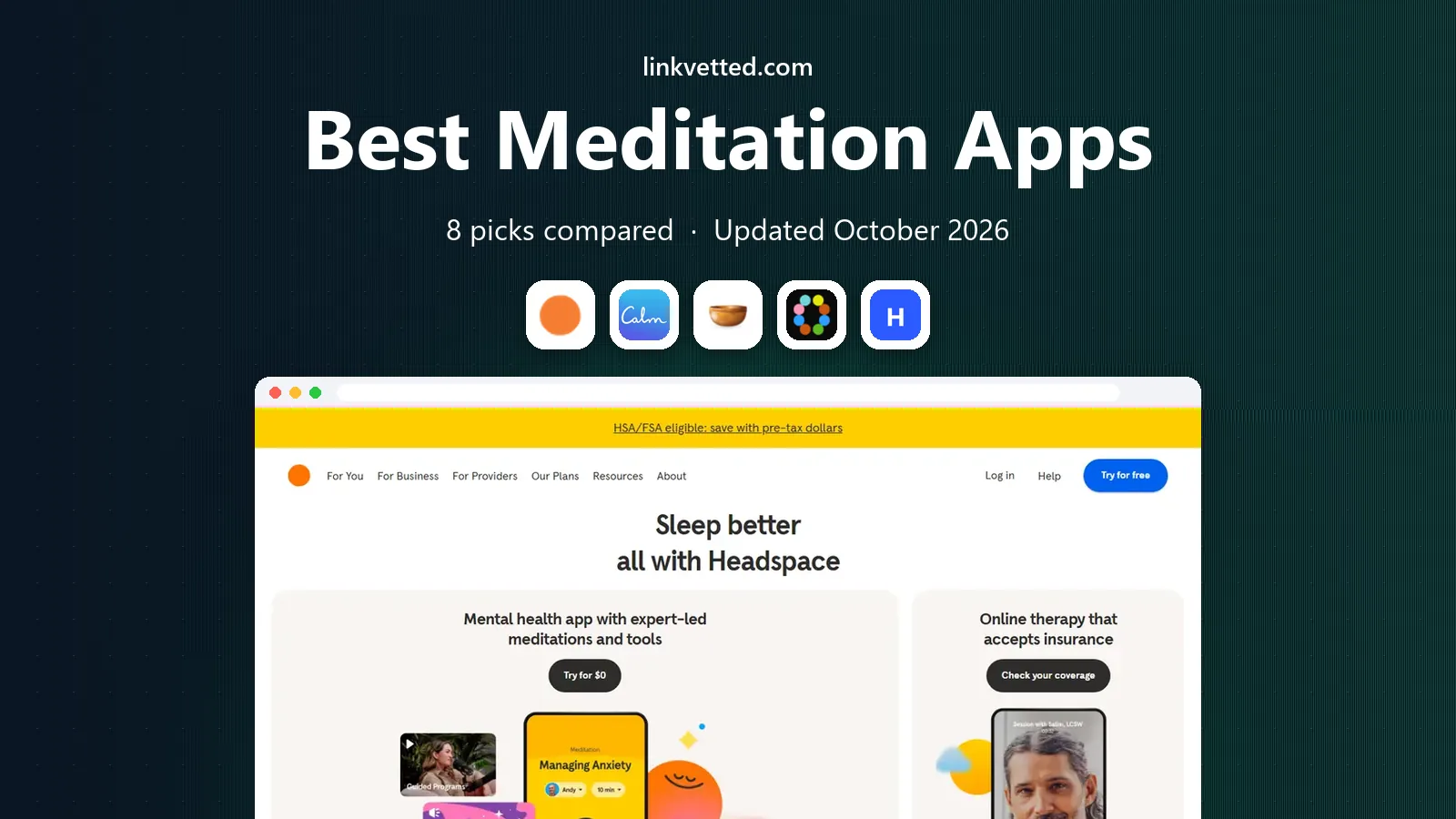
 Headspace
Structured beginner courses
Starts at$12.99 per monthVisit headspace.comFull review - Great alternative
 Calm
Sleep stories and soundscapes
Starts at$14.99 per monthVisit calm.comFull review - Also consider
 Insight Timer
Large free library
Starts at$9.99 per monthVisit insighttimer.comFull review
TL;DR:
- Headspace suits structured beginners, Calm suits sleep, and Insight Timer suits people who want a large free library.
- Balance and Happier offer more personal guidance, while Waking Up suits people who want theory alongside practice.
- Medito is fully free, so it is a strong starting point if cost is a barrier.
- A short daily session you enjoy will help more than a long session you avoid, so pick a voice and style you like.
Quick comparison
| Tool | Best for | Starts at | Free plan? | |
|---|---|---|---|---|
| Headspace | Structured beginner courses | $12.99 per month | Free trial | Visit |
| Calm | Sleep stories and soundscapes | $14.99 per month | Yes | Visit |
| Insight Timer | Large free library | $9.99 per month | Yes | Visit |
 Balance | Personalized daily plans | $11.99 per month | Yes | Visit |
 Happier | Practical teacher-led sessions | $14.99 per month | Free trial | Visit |
 Waking Up | Depth and theory | See website | Free trial | Visit |
 Medito | Fully free meditation | Free | Yes | Visit |
 Aura | Personalized daily picks | $11.99 per month | Yes | Visit |
The best meditation apps
We compared official feature and pricing pages for apps that offer guided meditation, sleep content, breathing exercises, and mindfulness courses. This guide covers the best app for meditation for beginners, the best meditation app for anxiety, and the best free sleep meditation apps options.
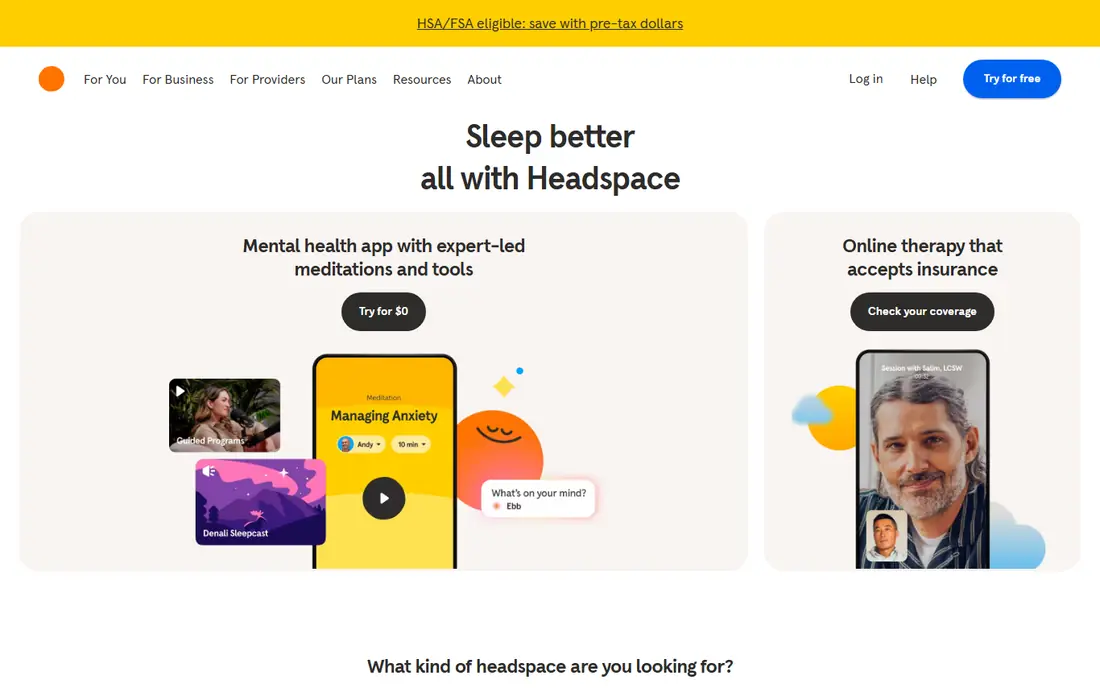
Headspace is our pick for complete beginners because it teaches one skill at a time and tells you what to do next. The Basics course explains breathing, posture, and attention in short sessions, which helps if meditation has felt vague or confusing before. That structure makes it easier to build a daily habit in the first month.
After the trial, most content requires a subscription, so Headspace is a paid commitment if you want the full library. We think it fits people who want guidance and structure, and who prefer a calm, consistent teaching style over a huge library of unrelated sessions.
- Clear step-by-step courses
- Friendly guidance for beginners
- Sleep and focus content alongside meditation
- Little content remains free after the trial
- Sessions are capped in length on some plans

Calm is best known for sleep, and that reputation is earned. Sleep Stories, soundscapes, and breathing tools help many people wind down at night, even if they meditate only briefly during the day. The Daily Calm gives regular users a short, guided session to return to each morning.
For anxiety-focused practice, Calm offers series on stress and overthinking, but it is less structured than Headspace for learning meditation step by step. We recommend Calm for people whose main goal is better sleep and relaxation, with meditation as part of a broader wind-down routine.
- Large sleep story library
- Soundscapes and music for relaxation
- Daily Calm ritual for regular practice
- Meditation content can feel buried among sleep and music
- Free content is limited

Insight Timer is our pick for value and variety. Most guided content is free, which means you can practice daily without a subscription and explore many teachers, styles, and lengths. The timer is also excellent for silent practice, with ambient sounds and interval bells you can adjust.
The downside is choice. With so many teachers, you may need to try a few sessions to find voices you like. Member Plus adds offline listening and full courses, but it is optional for a rich daily practice. We think Insight Timer suits experienced meditators and budget-conscious beginners who want variety.
- Very large free guided library
- Customizable timer for silent practice
- Live events and community groups
- Quality varies across teachers
- Sheer choice can feel overwhelming at first
Balance builds a daily meditation plan around your answers about experience, goals, and time available. That personal plan helps if a large library feels overwhelming, because the app tells you what to practice today. Over time, the plan adapts as you gain experience, which keeps sessions relevant.
Balance often offers a free first year promotion, but pricing can change, so check the current offer before you rely on it. We recommend it for people who want a guided, personalized path rather than browsing a library, and who will follow a daily plan for several weeks.
- Daily plan adapts to your experience and goals
- Clear progress tracking
- Sleep and focus sessions included
- Library is smaller than Insight Timer
- Full value depends on regular use of the daily plan
Happier, formerly known as Ten Percent Happier, suits people who feel skeptical about meditation or who want plain, practical instruction. Its teachers explain why a practice works, what to expect, and how to handle a wandering mind without jargon. That tone helps beginners who want honesty rather than vague promises.
The app is less focused on sleep stories than Calm, and most content is paid after a trial. We think Happier fits busy professionals and skeptics who want short, clear sessions and a teacher-led course structure, rather than ambient soundscapes alone.
- Conversational, practical teaching style
- Courses for skeptics and busy people
- Daily guidance from known teachers
- Full library needs a subscription
- Fewer sleep stories than Calm
Waking Up suits people who want to understand meditation, not just follow a voice. Its introductory course combines guided practice with short lessons on attention, consciousness, and related ideas. That depth appeals to readers and thinkers who want context for what they are doing.
The price is higher than most rivals, though the app offers free access if you cannot afford a subscription, which is worth noting. We recommend Waking Up for experienced or curious meditators who enjoy theory, and for people who want a structured course with intellectual depth.
- Introductory course with theory and practice
- Lessons from a range of teachers
- Free access if you cannot afford it
- Most expensive annual option in this list
- Theory-heavy style may not suit everyone
Medito is a nonprofit app that offers meditation free, with no subscription and no ads in the core experience. It includes beginner courses, sleep sessions, and daily practices that cover the basics well. That makes it an excellent starting point if cost, ads, or subscriptions are barriers.
The library is smaller than Insight Timer or Calm, and it lacks the celebrity voices and large sleep catalog of paid apps. We think Medito fits anyone who wants a clean, free practice, and it pairs well with Insight Timer if you later want more variety.
- Completely free with no paywall
- Structured beginner courses
- No account required for basic use
- Smaller library than paid apps
- English only for much of the content
Aura uses a short daily check-in to suggest meditations, sleep content, and breathing exercises that fit your mood and goals. That personal touch helps when you do not want to browse, and short sessions make it easier to practice on busy days. The app also includes life coaching content for some users.
Free content is limited, so most users will need a subscription for full access. We recommend Aura for people who like a daily recommendation and a mix of meditation, sleep, and mood content in one app, rather than a single-purpose meditation library.
- Daily personalized recommendations
- Short sessions for busy days
- Sleep, focus, and mood content
- Free content is limited
- Coaching features may cost extra
How we picked these
We compared official feature pages, pricing pages, and app listings, and we favored apps that work today, offer guided meditation or a timer, and cover beginners, anxiety, or sleep. We looked at free content, course structure, teacher variety, sleep tools, and price, and we included fully free options alongside paid leaders. We did not rank based on claims about health outcomes alone.
Meditation apps are for general wellbeing and learning, and they are not a substitute for medical or mental health care. If you have anxiety, depression, trauma, sleep problems, or another health concern, talk with a clinician about care options, and seek urgent help if you feel unsafe.
How to choose a meditation app that you will use
Start with your goal. For learning, choose Headspace, Balance, or Happier. For sleep, choose Calm or Insight Timer. For free practice, choose Medito or Insight Timer. For depth, choose Waking Up. A clear goal narrows a large market to two or three apps quickly.
Next, test voices and session lengths for a week. A teacher you enjoy matters more than a large library, because you will return to a familiar voice. Try a 5 or 10 minute session at the same time each day, such as after waking or before bed, and note whether you look forward to it. If an app feels like a chore, try another one before you pay for a year.
Building a simple daily practice
Pick one time, one length, and one course to start. Sit in the same place when possible, set a timer, and accept that your mind will wander. That wandering is part of practice, not failure. After a few weeks, you can add a sleep session at night or a longer course on weekends, but keep the daily habit small enough to maintain.
FAQ
What is the best meditation app for anxiety?
Headspace and Happier offer structured anxiety-related courses, while Insight Timer offers many free anxiety sessions from different teachers. Try a short session from each, and choose the teacher and style that calms you most.
What are the best free sleep meditation apps?
Insight Timer and Medito offer free sleep content, while Calm offers limited free sleep sessions with a larger paid library. Insight Timer is the strongest free option for variety, and Medito is the simplest fully free option.
What is the best meditation app for beginners?
Headspace is the clearest beginner course, Balance offers a personalized daily plan, and Medito offers a free beginner path. Start with Headspace if you want structure, and start with Medito if you want a free option.
How long should I meditate each day?
Five to 10 minutes most days is a good start, and you can add time as the habit feels stable. Consistency matters more than length, especially in the first month.
Do meditation apps help with sleep?
They can help with a wind-down routine, sleep stories, and relaxation, but they do not treat sleep disorders. If sleep problems persist, talk with a clinician about causes and treatment options.