Best meditation apps for mental health in 2026: 9 apps compared
Compare 9 meditation apps for mental health in 2026, from Headspace, Calm and Insight Timer to Happier, Balance, Waking Up, Aura, Smiling Mind and Medito.
- Editor's choice
 Headspace
Structured courses for beginners
Starts at$12.99 per monthVisit headspace.comFull review - Great alternative
 Calm
Sleep stories and daily calm
Starts at$14.99 per monthVisit calm.comFull review - Also consider
 Insight Timer
Huge free meditation library
Starts atFreeVisit insighttimer.comFull review
TL;DR:
- Headspace is the clearest beginner path, while Calm is strongest when sleep is the main problem.
- Insight Timer, Smiling Mind, and Medito give real free practice without a trial deadline.
- Balance personalises daily plans, and Waking Up adds theory for users who want deeper understanding.
- Meditation apps support wellbeing but are not a substitute for professional help for mental health conditions.
Quick comparison
| Tool | Best for | Starts at | Free plan? | |
|---|---|---|---|---|
| Headspace | Structured courses for beginners | $12.99 per month | Free trial | Visit |
| Calm | Sleep stories and daily calm | $14.99 per month | Free trial | Visit |
| Insight Timer | Huge free meditation library | Free | Yes | Visit |
 Happier | Practical meditation for sceptics | $14.99 per month | Free trial | Visit |
 Balance | Personalised daily meditation plans | $11.99 per month | Free trial | Visit |
 Waking Up | Deep theory and mindful living | See website | Free trial | Visit |
 Aura | Quick personalised relief sessions | See website | Free trial | Visit |
 Smiling Mind | Free evidence-based programs | Free | Yes | Visit |
 Medito | Fully free, simple meditation | Free | Yes | Visit |
The best meditation apps for mental health
We compared official feature pages, pricing pages, app store listings, and privacy policies for each app. The list below covers structured courses, sleep content, free libraries, and personalised plans. A short note on care: these apps can support daily wellbeing and stress habits, but they are not a substitute for professional help. If you are struggling with anxiety, depression, or another mental health condition, please seek support from a qualified professional.
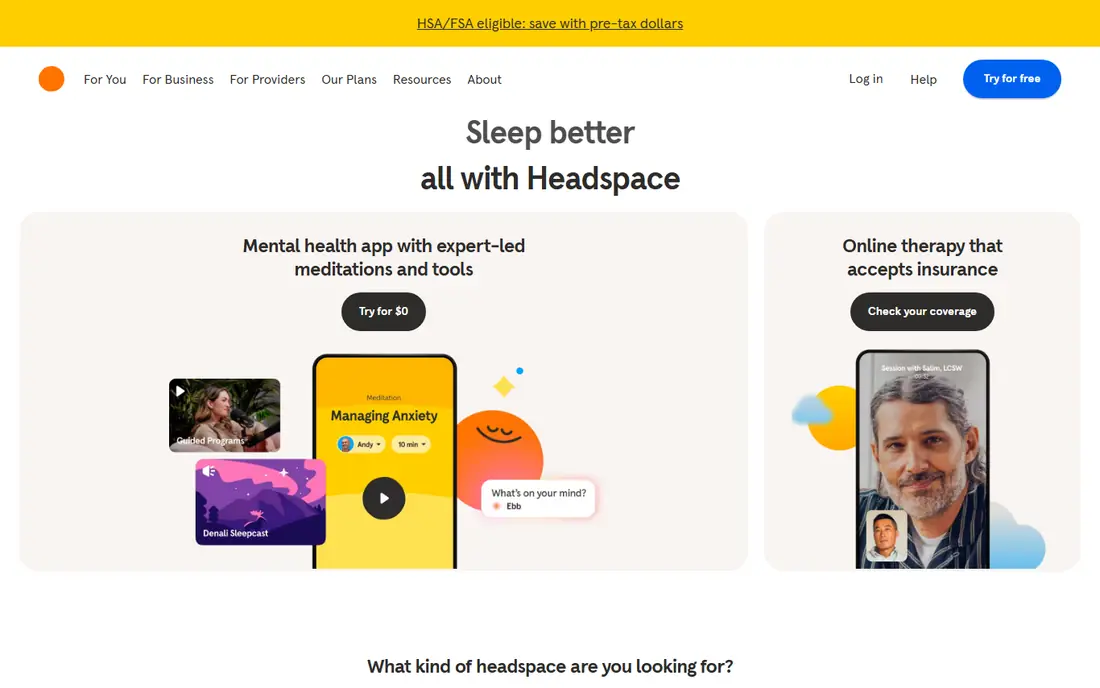
Headspace is the easiest first app for someone new to meditation. Short courses teach one skill at a time, starting with brief sessions that build over days.
The structure removes guesswork. You open the app, follow the next lesson, and do not need to browse a huge library to decide what to try.
The catch is the paywall. After the trial, most content needs a paid plan, so try the basics course first and see whether the teaching style fits you.
- Clear beginner courses and short sessions
- Sleepcasts and soundscapes
- Mood and habit tracking tools
- Most content needs a subscription after the trial
- Library can feel guided rather than open
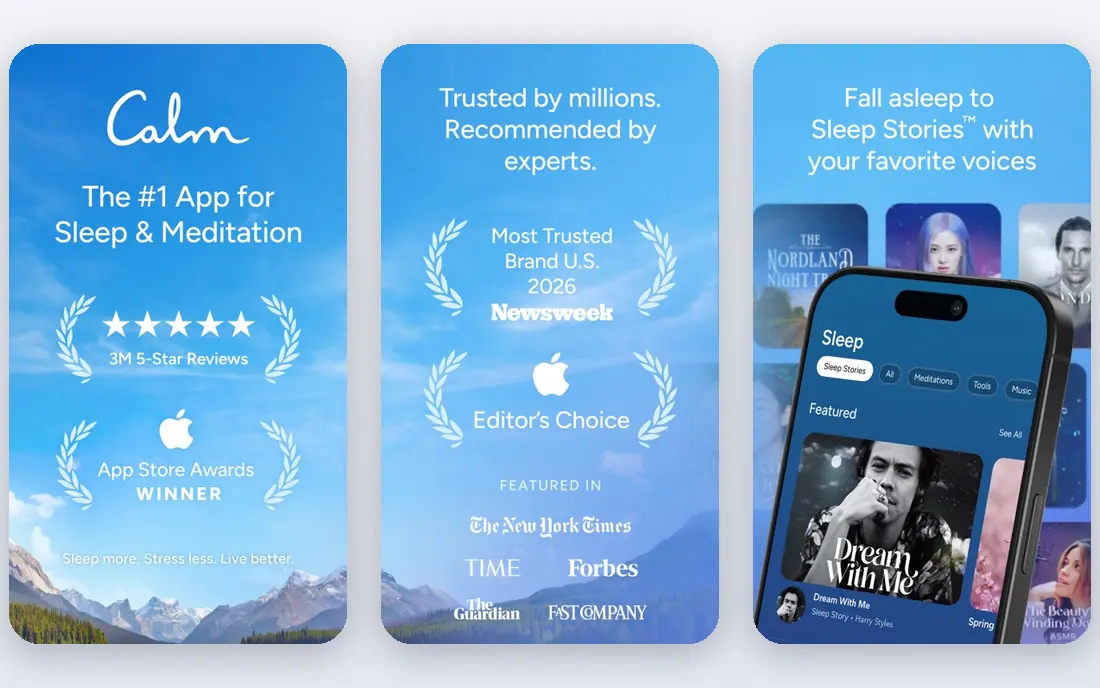
Calm is the pick when sleep is the main goal. Its sleep stories, soundscapes, and wind-down sessions form a bedtime routine that many users return to nightly.
The Daily Calm gives a short morning anchor too. That mix of sleep and daytime content makes Calm feel like a daily habit app rather than a single-purpose tool.
The downside is free access. Only a small set of sessions stays free, so most users will need a subscription to use it as a daily practice.
- Large sleep story library
- Daily Calm sessions
- Breathing tools and soundscapes
- Free content is limited
- Meditation can sit behind sleep and music content
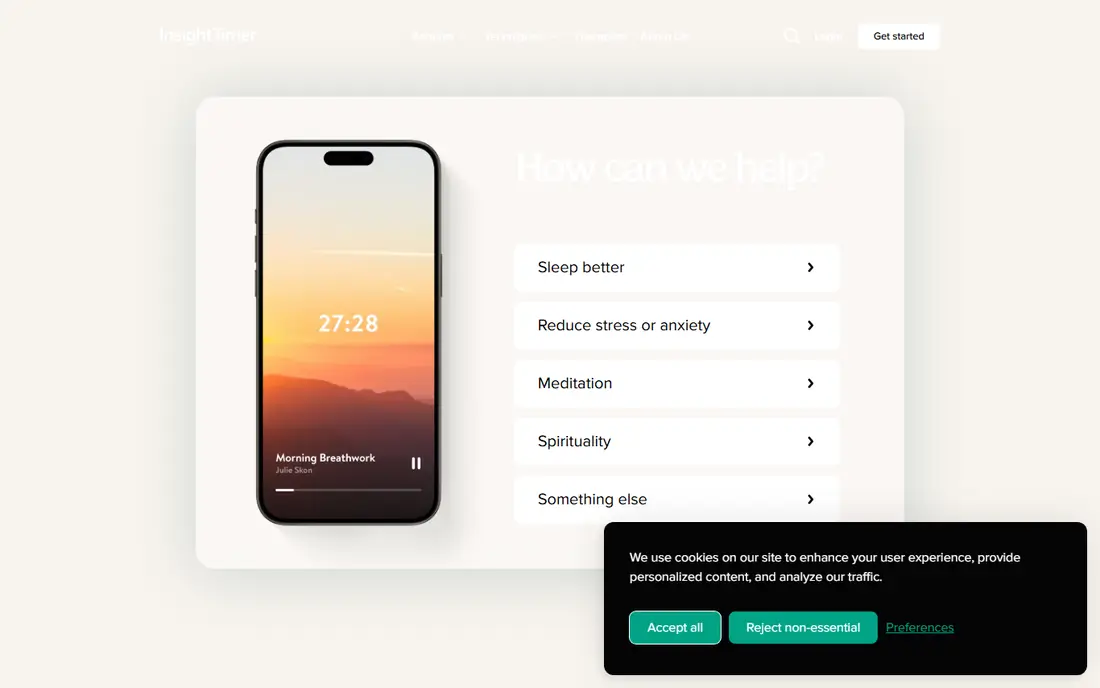
Insight Timer is the best free-first option here. Its library includes thousands of guided sessions, talks, and courses, with a large share available without paying.
That variety helps once you know what you like. You can follow a teacher, try a course, or use the timer for silent practice.
The catch is choice overload. Beginners should start in the Courses tab or with a single teacher, rather than searching the whole library on day one.
- Very large free library from many teachers
- Timer and courses
- Community features and live sessions
- Quality varies across teachers
- Library size can overwhelm beginners
Happier, formerly Ten Percent Happier, suits people who feel put off by mystical language. Its teaching is direct, practical, and focused on everyday stress.
Courses explain what to do and why it might help, in plain terms. That tone helps sceptics stick with practice longer than a more abstract style might.
The limit is breadth. Sleep content exists, but Calm and Headspace offer deeper sleep libraries. Pick Happier for teaching quality over sleep variety.
- Plain-language teaching
- Courses from experienced teachers
- Practical approach without heavy jargon
- Full library needs a subscription
- Smaller sleep library than Calm
Balance builds a daily plan around your goals, experience, and feedback. Each session adapts as you rate what worked, so the plan changes with you.
That personal touch helps people who get bored with fixed courses. The app asks about your day and mood, then picks a session to match.
The catch is that offers change. A first-year deal may not reflect the long-term price, so check the current plan page and set a reminder before renewal.
- Personalised plans that adapt over time
- First-year offers have been common
- Short and long session options
- Personalisation needs regular use to shine
- Full price applies after offers end
Waking Up is for users who want to understand meditation, not just follow a voice. Its introductory course pairs practice with short lessons on attention and awareness.
That depth appeals to curious learners. You learn why a technique is used, which makes it easier to adapt practice to daily life.
The trade-off is pace. It is slower and more thoughtful than a quick-relief app, and some users will prefer shorter, simpler sessions instead.
- Introductory course plus theory lessons
- Conversations on mind and attention
- Free access on request for those who cannot afford it
- Theory-heavy style is not for everyone
- Price sits at the higher end
Aura is built for short, in-the-moment sessions. A quick check-in leads to a brief meditation matched to your mood, which suits busy days.
The app covers sleep, focus, and stress in one place, so you do not need separate tools for each need. Sessions are short enough to fit into a break.
The limit is free depth. A few sessions are free, but regular daily use will likely need a paid plan. Try the free sessions first to test the personalisation.
- Short personalised sessions
- Mood check-ins
- Sleep, focus, and anxiety content in one app
- Free sessions are limited
- Subscription needed for the full library
Smiling Mind is a nonprofit app with free programs for adults and children. Its structured programs cover mindfulness basics, stress, sleep, and classroom use.
The free model removes the trial pressure found in paid apps. You can build a habit without worrying about a renewal date.
The catch is variety. It does not match Calm for sleep stories or Insight Timer for teacher choice, but for free, structured practice it is hard to beat.
- Completely free programs
- Age-based programs for kids and adults
- Nonprofit background
- Smaller library than paid rivals
- Less sleep story variety
Medito is a nonprofit app that is free in full, with no subscription or ads blocking content. Its curated courses give beginners a clear starting path.
The simplicity is a strength. There is no upsell screen pushing you toward a plan, so practice stays the focus.
The limit is scale. The library is smaller than Insight Timer, and content is mainly in English. For a free, calm starting point, though, it is an excellent pick.
- 100 percent free with no paywall
- Curated beginner courses
- Offline downloads and simple design
- Smaller library
- Mainly English content
How we picked these
We compared official feature pages, pricing pages, app store listings, and privacy policies for each app. We did not claim hands-on testing we did not do. We checked what free content exists, how courses are structured, whether sleep content is included, and how pricing works after any trial. We favoured apps that were still available in October 2026 and clearly described their content. Where pricing was unclear, we wrote See website rather than guessing. We also looked at how each app handles beginners who miss days. A forgiving design, with short sessions and no guilt-driven streak pressure, is more likely to support a steady habit than a strict daily target that feels punishing after a break.
How to choose a meditation app that you will actually use
Think about time of day as well as content. A short morning session, a midday breathing break, or a bedtime wind-down can each anchor a habit, so pick the slot you are most likely to keep.
Start with your main need
Sleep problems point to Calm or Headspace, while a need for structure points to Headspace or Happier. Budget concerns point to Insight Timer, Smiling Mind, or Medito. Naming the need first stops you paying for features you will not open.
Keep sessions short at first
Five or ten minutes most days beats a long session you dread. Pick an app whose shortest sessions feel doable, then build length slowly. Consistency matters more than session length in the early weeks.
Check the renewal terms
Free trials and first-year offers end, and prices vary by platform. Read the renewal price on the vendor or app store page, and set a reminder before the trial ends so you choose deliberately.
FAQ
What is the best meditation app for beginners?
Headspace is the safest beginner pick because its courses teach one skill at a time with a clear next step. Insight Timer and Medito are strong free alternatives if you want to start without paying.
Are free meditation apps good enough?
Yes, for many people. Insight Timer offers a huge free library, Smiling Mind offers free structured programs, and Medito is free in full. Paid apps mainly add structure, sleep stories, and personalisation.
Which meditation app is best for sleep?
Calm is best for sleep stories and wind-down content, with Headspace close behind for sleepcasts and soundscapes. If sleep problems persist, talk to a healthcare professional rather than relying on an app alone.
Can meditation apps help with anxiety?
They can support daily coping habits, such as breathing, grounding, and short guided sessions. They are not a replacement for therapy or medical care, and anyone with ongoing anxiety should seek professional support.
How long should I meditate each day?
Start with five to ten minutes a day. Short, regular practice is easier to keep than occasional long sessions, and you can add time once the habit feels steady.