Best Marketing Attribution Software in 2026: 8 Tools Compared
Best marketing attribution software compared: 8 tools for tracking leads, revenue and campaigns, with CRM fit, pricing notes and model guidance for teams.
- Editor's choice
 HubSpot
Teams already on HubSpot
Starts atSee websiteVisit hubspot.comFull review - Great alternative
 Dreamdata
B2B account attribution
Starts atSee websiteVisit dreamdata.ioFull review - Also consider
 Ruler Analytics
Lead-to-revenue tracking
Starts atSee websiteVisit ruleranalytics.comFull review
TL;DR:
- Attribution only works when CRM, ad and website data are clean, so fix tracking before buying an expensive platform.
- HubSpot suits teams already on HubSpot, while Dreamdata and HockeyStack suit B2B teams with long sales cycles.
- Ruler Analytics and WhatConverts suit smaller teams and agencies that need lead-to-revenue reporting without enterprise cost.
- Triple Whale and Northbeam suit ecommerce brands that need ad-level attribution plus incrementality testing.
- No single model is correct for every business, so compare first-touch, last-touch and multi-touch views before shifting budgets.
Quick comparison
| Tool | Best for | Starts at | Free plan? | |
|---|---|---|---|---|
| HubSpot | Teams already on HubSpot | See website | Yes | Visit |
| Dreamdata | B2B account attribution | See website | Yes | Visit |
| Ruler Analytics | Lead-to-revenue tracking | See website | No | Visit |
 HockeyStack | Enterprise B2B revenue teams | See website | No | Visit |
 Triple Whale | Ecommerce attribution | See website | Yes | Visit |
 WhatConverts | Agencies and lead tracking | See website | No | Visit |
 CallRail | Call-heavy businesses | See website | No | Visit |
 Northbeam | Ecommerce media measurement | See website | No | Visit |
The best marketing attribution software
Marketing attribution software connects marketing touches to leads, pipeline and revenue, so teams can see which channels and campaigns actually drive results. The tools below differ in CRM fit, model type, price and target market, from small agencies to enterprise B2B teams. The right tool depends less on feature lists and more on your CRM, your sales cycle and whether you sell to businesses or consumers.
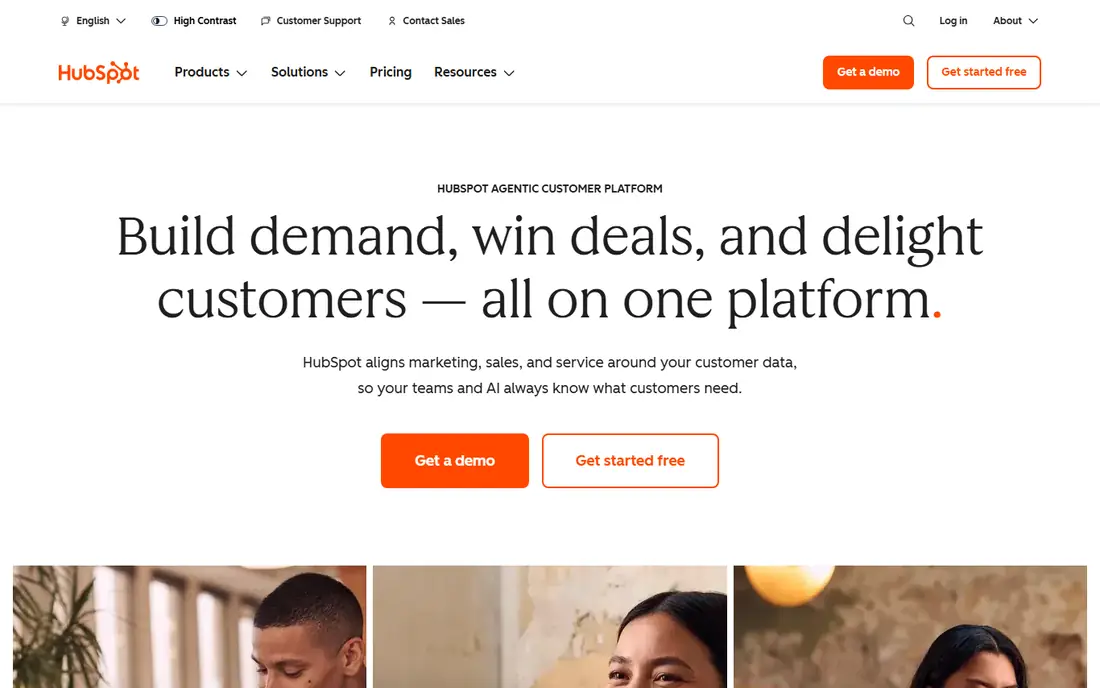
HubSpot is the natural attribution choice for teams already running its CRM and Marketing Hub, because attribution reports sit on top of the contact, deal and ad data the team already collects. That integration removes much of the data plumbing that standalone tools require, and it lets marketers tie campaigns to deals without exporting data to another system. For a HubSpot shop, that convenience is hard to beat.
The honest catch is cost and fit. Attribution reporting is not in the free CRM; it needs a paid Professional or Enterprise tier, and total cost rises with seats and hubs. Teams on Salesforce or another CRM will get less value. HubSpot suits marketing teams that already live in HubSpot and want attribution without adding a separate platform.
- Attribution reports inside the CRM
- Ads, email and deal data in one place
- Free CRM to start
- Attribution reports need Professional or Enterprise tiers
- Cost rises with seats and hubs
- Weaker for non-HubSpot stacks

Dreamdata is a B2B attribution platform that tracks whole buying accounts, not just single leads, which matters when several people from one company research, attend webinars and talk to sales over months. It connects CRM, ad and website data to show which touches influenced pipeline and revenue, with multi-touch models that spread credit across the journey. A free tier lets smaller B2B teams start without a large contract.
The trade-off is data discipline. Dreamdata's results depend on clean CRM stages, consistent campaign naming and proper tracking, and paid pricing is quoted rather than published. It suits B2B SaaS and service firms with a real sales cycle, a CRM they maintain well, and a need to defend marketing spend to sales and finance.
- Free tier for smaller teams
- Account-level B2B attribution
- Multi-touch models with CRM integration
- Paid pricing is quote based
- Setup needs clean CRM data
- Best for B2B SaaS, not ecommerce

Ruler Analytics tracks each visitor's journey across calls, forms and live chat, then connects those leads to closed revenue in the CRM. That closed-loop view suits agencies and small to mid-size businesses that need to prove which campaigns produced paying customers, not just leads. Call tracking is a particular strength for businesses where the phone still closes deals.
The honest catch is price and polish. Ruler is quote based and aimed at businesses willing to pay for revenue reporting, and some users report slow dashboards and sync delays. It suits lead-generation businesses and agencies that report on revenue, and that have the time to set up tracking and CRM mapping properly.
- Links calls, forms and chats to closed revenue
- Visitor-level journey tracking
- CRM integrations
- Pricing is quote based
- Dashboard speed has drawn criticism
- Setup needs tracking code and CRM mapping
HockeyStack is an enterprise B2B attribution and revenue platform that unifies web, ad, CRM and product usage data into account-level journeys. It suits revenue teams with long sales cycles, multiple stakeholders and a RevOps function that can maintain data and act on reports. Lift reports compare exposed and unexposed accounts, which helps teams judge whether campaigns actually changed behavior rather than just correlating with it.
The trade-off is cost and complexity. HockeyStack is quote based at enterprise levels and needs skilled owners to deliver value. Small teams and short-cycle businesses will find it heavy. It suits larger B2B companies that want one source of truth from first touch to closed-won revenue.
- Unified B2B revenue data
- Account journeys across web, ads, CRM and product
- Lift and pipeline reporting
- Pricing is quote based and high
- Needs a RevOps team to get full value
- Overkill for small teams
Triple Whale is an ecommerce operating system that combines attribution with marketing mix modeling and incrementality testing, built around Shopify stores. It pulls ad, order and site data together to show which channels drive profitable orders, not just clicks, and its testing tools help brands check whether an ad channel truly causes extra sales. A free tier lets smaller stores start before committing to a paid plan.
The honest catch is fit and cost. Triple Whale is built for ecommerce, so B2B lead-generation teams should choose a different tool, and pricing scales with store size. It suits Shopify brands spending meaningfully on ads that want attribution, forecasting and testing in one platform.
- Ecommerce attribution plus MMM and incrementality
- Shopify integration
- Free tier available
- Pricing rises with order volume
- Best for Shopify stores
- B2B teams should look elsewhere
WhatConverts tracks every lead type a local or service business receives, including calls, forms, chats and online orders, and attributes each lead to its marketing source. Agencies like it because reporting is client-ready and contracts are month-to-month, which lowers the risk of trying it for a client. That breadth makes it a practical choice for businesses where leads arrive through several channels at once.
The limit is depth. WhatConverts is a lead attribution tool first, not an enterprise revenue platform, so complex B2B account journeys are better served by Dreamdata or HockeyStack. It suits agencies, local businesses and service firms that need clear lead-source reporting without enterprise cost or contracts.
- Tracks calls, forms, chats and ecommerce leads
- Month-to-month contracts
- Agency-friendly reporting
- Attribution depth is lower than enterprise B2B tools
- Interface is functional
- Setup needs tracking code
CallRail is a call tracking and attribution platform for businesses that win work by phone, such as home services, healthcare, legal and auto dealers. It assigns tracking numbers to campaigns, records and transcribes calls, and shows which ads and keywords produced calls that became customers. Form and text tracking add coverage for businesses that also take online enquiries.
The honest catch is focus. CallRail's strength is calls, so businesses whose leads are mainly online forms or ecommerce orders may get more from WhatConverts or Triple Whale. It suits phone-heavy businesses and agencies that need to prove call-driven revenue to clients or owners.
- Strong call tracking and recording
- Form and text tracking
- Integrations with ads and CRM
- Attribution is call-centered
- Pricing scales with usage
- Full journey reporting needs higher plans
Northbeam is an ecommerce media measurement platform that combines multi-touch attribution with incrementality testing, using first-party data to estimate the true impact of ad spend across channels. It suits larger ecommerce brands that spend heavily on Meta, Google, TikTok and other platforms and need to allocate budgets with more confidence than platform-reported conversions alone allow. Media planning and forecasting tools help teams test budget shifts before making them.
The trade-off is price and scale. Northbeam is quote based and aimed at brands with significant ad spend, so smaller stores should start with Triple Whale's free tier or WhatConverts. Northbeam suits established ecommerce brands that want rigorous media measurement and have the data and budget to use it.
- Ecommerce media attribution with incrementality
- First-party data approach
- Media planning tools
- Pricing is quote based and high
- Aimed at larger ecommerce brands
- Setup needs ad and order data integration
How we picked these
We compared official vendor pages, CRM and ad integrations, attribution models, pricing transparency and public user reviews for attribution tools active in 2026. We favored tools with a clear model, a published integration list and a defined target market, and we covered B2B, ecommerce and agency use cases rather than only one segment. We excluded tools that only report ad platform conversions without connecting to leads or revenue, because that is reporting, not attribution.
Making attribution useful instead of just impressive
An attribution dashboard that no one trusts will not change a budget. Trust comes from clean data, a model the team understands and regular checks against real revenue.
Fix tracking and CRM hygiene first
Confirm that every form, call number and ad campaign uses consistent naming, that CRM stages are defined and used, and that offline conversions are imported where possible. Test a lead end to end, from first click to closed deal, and check that each step appears in the tool. If that test fails, fix tracking before buying a more expensive platform, because a new tool will only report the same broken data faster.
Use more than one model, and test big shifts
Compare first-touch, last-touch and multi-touch views for the same period, and look for channels that matter in all three rather than chasing a single model's winner. For large budget shifts, run a holdout or geo test where possible, because attribution models estimate influence and cannot prove cause on their own. Use the tool to guide tests, not to replace them.
FAQ
What is the best marketing attribution software?
HubSpot suits teams already on HubSpot, Dreamdata and HockeyStack suit B2B teams with long sales cycles, and Triple Whale and Northbeam suit ecommerce brands. Ruler Analytics and WhatConverts suit smaller teams and agencies that need lead-to-revenue reporting. The right tool depends on your CRM, sales cycle and whether you sell to businesses or consumers.
What is the best marketing attribution tool for B2B?
Dreamdata is the best starting point for most B2B teams, thanks to account-level attribution and a free tier. HockeyStack suits larger B2B revenue teams with a RevOps function, while HubSpot suits teams already on HubSpot CRM. Choose based on CRM fit and sales cycle length, not feature count alone.
What is the best marketing attribution platform for ecommerce?
Triple Whale suits Shopify brands that want attribution plus incrementality testing, while Northbeam suits larger ecommerce brands with significant ad spend. Both go beyond platform-reported conversions by using first-party order data. Smaller stores should start with Triple Whale's free tier before paying for an enterprise platform.
How does marketing attribution software work?
Attribution software collects website, ad, CRM and order data, links touches to a person or account, and applies a model to share credit for a lead or sale across those touches. First-touch gives all credit to the first interaction, last-touch to the final one, and multi-touch spreads credit across the journey. No model is perfect, so compare models and test budget changes.
How much does marketing attribution software cost?
Prices range from free tiers and low monthly plans for small tools to quote-based enterprise pricing for platforms such as HockeyStack and Northbeam. Mid-market tools often cost several hundred dollars a month, scaling with traffic, contacts or order volume. Confirm total cost including implementation and data limits before signing.