Best Local AI Image Generation Tools in 2026: 8 Apps Compared
We compared the best local ai image generation tools in this guide: 8 free apps that run on your own computer, keep prompts private, and need no subscription.
- Editor's choice
 ComfyUI
users who want node-based workflows
Starts atFreeVisit github.comFull review - Great alternative
 Fooocus
beginners who want quick local results
Starts atFreeVisit github.comFull review - Also consider
 AUTOMATIC1111
users who want many settings in one panel
Starts atFreeVisit github.comFull review
TL;DR:
- Our pick for most people is ComfyUI, because it balances a clear starting point with a fair free or trial option.
- The best best local ai image generation software choice depends on your volume, your device, and how much setup you are willing to do.
- Start with a free plan or trial, check the real limits on exports, volume, or credits, and pay only when a limit keeps blocking your work.
- Check official pricing and terms before you buy, since plans and limits change during the year.
Quick comparison
| Tool | Best for | Starts at | Free plan? | |
|---|---|---|---|---|
| ComfyUI | users who want node-based workflows | Free | Yes | Visit |
| Fooocus | beginners who want quick local results | Free | Yes | Visit |
| AUTOMATIC1111 | users who want many settings in one panel | Free | Yes | Visit |
 Invoke | creators who want a polished local studio | Free | Yes | Visit |
 Stability Matrix | users who want one installer for several tools | Free | Yes | Visit |
 DiffusionBee | Mac users who want a simple local app | Free | Yes | Visit |
 Draw Things | iPhone, iPad, and Mac users | Free | Yes | Visit |
 Easy Diffusion | Windows and Linux users who want one-click install | Free | Yes | Visit |
The best local AI image generation tools
Local image tools run models on your own computer, so prompts and images do not need to leave your machine. You will need a reasonably capable graphics card for good speed, and the right interface depends on how much control you want.
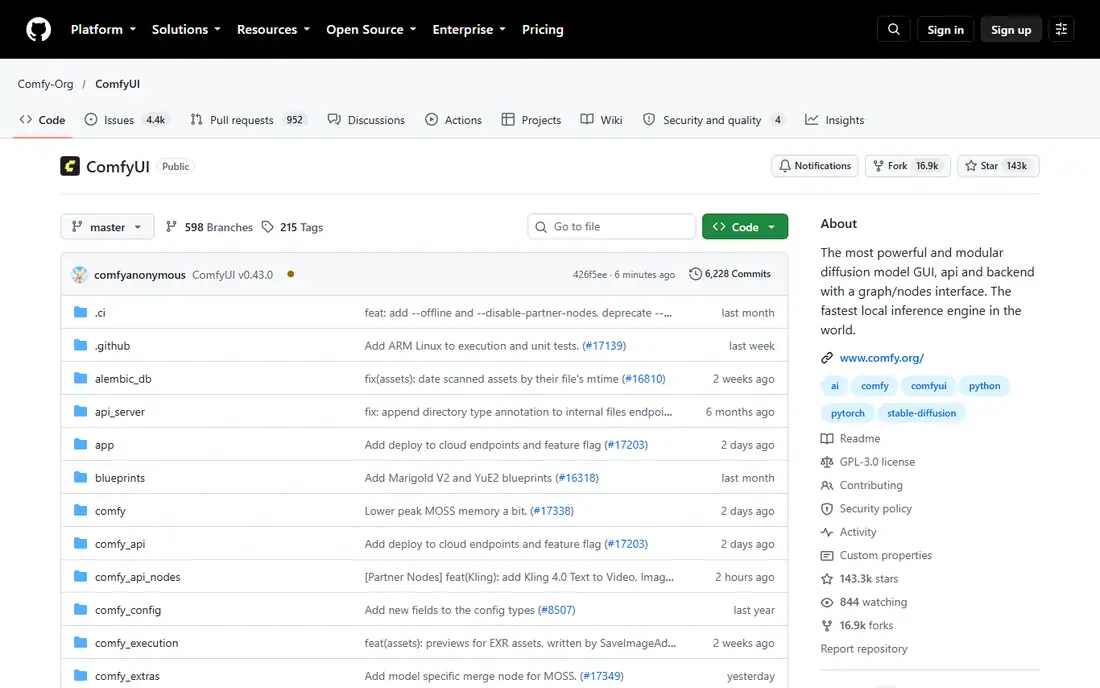
ComfyUI is a good match for users who want node-based workflows. Node workflows that are easy to save and repeat. Wide extension and model support That combination matters because it keeps the first job simple, whether that job is a first edit, a first report, or a first check of a result. We compared official feature pages, pricing pages, and public documentation for this list, and we weighed ease of use beside the limits that appear after the free plan ends. In daily use, ComfyUI also offers strong community guides. The honest trade-off is that interface can look complex at first. Setup needs more steps than a simple app That does not make it a poor choice, but it does mean you should test the exact workflow you need during a trial, rather than judging the tool from its homepage alone. If that workflow feels clear and the price fits your volume, it is a sound shortlist pick.
- Node workflows that are easy to save and repeat
- Wide extension and model support
- Strong community guides
- Interface can look complex at first
- Setup needs more steps than a simple app

Fooocus is a good match for beginners who want quick local results. Very simple prompt box with sensible defaults. Good image quality without manual tuning That combination matters because it keeps the first job simple, whether that job is a first edit, a first report, or a first check of a result. We compared official feature pages, pricing pages, and public documentation for this list, and we weighed ease of use beside the limits that appear after the free plan ends. In daily use, Fooocus also offers runs common stable diffusion models. The honest trade-off is that fewer fine controls than comfyui. Mac setup can be more involved That does not make it a poor choice, but it does mean you should test the exact workflow you need during a trial, rather than judging the tool from its homepage alone. If that workflow feels clear and the price fits your volume, it is a sound shortlist pick.
- Very simple prompt box with sensible defaults
- Good image quality without manual tuning
- Runs common Stable Diffusion models
- Fewer fine controls than ComfyUI
- Mac setup can be more involved

AUTOMATIC1111 is a good match for users who want many settings in one panel. Broad settings, extensions, and script support. Inpainting, upscaling, and LoRA support That combination matters because it keeps the first job simple, whether that job is a first edit, a first report, or a first check of a result. We compared official feature pages, pricing pages, and public documentation for this list, and we weighed ease of use beside the limits that appear after the free plan ends. In daily use, AUTOMATIC1111 also offers long history of guides. The honest trade-off is that development has slowed next to newer tools. Interface can feel crowded for new users That does not make it a poor choice, but it does mean you should test the exact workflow you need during a trial, rather than judging the tool from its homepage alone. If that workflow feels clear and the price fits your volume, it is a sound shortlist pick.
- Broad settings, extensions, and script support
- Inpainting, upscaling, and LoRA support
- Long history of guides
- Development has slowed next to newer tools
- Interface can feel crowded for new users
Invoke is a good match for creators who want a polished local studio. Clean canvas and workflow interface. Support for current diffusion models That combination matters because it keeps the first job simple, whether that job is a first edit, a first report, or a first check of a result. We compared official feature pages, pricing pages, and public documentation for this list, and we weighed ease of use beside the limits that appear after the free plan ends. In daily use, Invoke also offers good for iterative editing. The honest trade-off is that needs a capable graphics card for best speed. Some features need familiarity with model types That does not make it a poor choice, but it does mean you should test the exact workflow you need during a trial, rather than judging the tool from its homepage alone. If that workflow feels clear and the price fits your volume, it is a sound shortlist pick.
- Clean canvas and workflow interface
- Support for current diffusion models
- Good for iterative editing
- Needs a capable graphics card for best speed
- Some features need familiarity with model types
Stability Matrix is a good match for users who want one installer for several tools. Installs and updates several interfaces from one place. Simple model management That combination matters because it keeps the first job simple, whether that job is a first edit, a first report, or a first check of a result. We compared official feature pages, pricing pages, and public documentation for this list, and we weighed ease of use beside the limits that appear after the free plan ends. In daily use, Stability Matrix also offers good for trying tools side by side. The honest trade-off is that windows focus may limit some mac or linux users. Still needs capable hardware That does not make it a poor choice, but it does mean you should test the exact workflow you need during a trial, rather than judging the tool from its homepage alone. If that workflow feels clear and the price fits your volume, it is a sound shortlist pick.
- Installs and updates several interfaces from one place
- Simple model management
- Good for trying tools side by side
- Windows focus may limit some Mac or Linux users
- Still needs capable hardware
DiffusionBee is a good match for mac users who want a simple local app. Simple Mac app with no complex setup. Runs locally on Apple silicon That combination matters because it keeps the first job simple, whether that job is a first edit, a first report, or a first check of a result. We compared official feature pages, pricing pages, and public documentation for this list, and we weighed ease of use beside the limits that appear after the free plan ends. In daily use, DiffusionBee also offers good for quick experiments. The honest trade-off is that mac only, so windows and linux users need another tool. Model choice is narrower than open interfaces That does not make it a poor choice, but it does mean you should test the exact workflow you need during a trial, rather than judging the tool from its homepage alone. If that workflow feels clear and the price fits your volume, it is a sound shortlist pick.
- Simple Mac app with no complex setup
- Runs locally on Apple silicon
- Good for quick experiments
- Mac only, so Windows and Linux users need another tool
- Model choice is narrower than open interfaces
Draw Things is a good match for iphone, ipad, and mac users. Runs on Apple devices including phones and tablets. No account needed for local generation That combination matters because it keeps the first job simple, whether that job is a first edit, a first report, or a first check of a result. We compared official feature pages, pricing pages, and public documentation for this list, and we weighed ease of use beside the limits that appear after the free plan ends. In daily use, Draw Things also offers supports several model types. The honest trade-off is that speed depends heavily on the apple device. Small screens limit detailed workflow work That does not make it a poor choice, but it does mean you should test the exact workflow you need during a trial, rather than judging the tool from its homepage alone. If that workflow feels clear and the price fits your volume, it is a sound shortlist pick.
- Runs on Apple devices including phones and tablets
- No account needed for local generation
- Supports several model types
- Speed depends heavily on the Apple device
- Small screens limit detailed workflow work
Easy Diffusion
Best for: Windows and Linux users who want one-click install
Easy Diffusion is a good match for windows and linux users who want one-click install. Simple installer with a clean browser interface. Good for first-time local users That combination matters because it keeps the first job simple, whether that job is a first edit, a first report, or a first check of a result. We compared official feature pages, pricing pages, and public documentation for this list, and we weighed ease of use beside the limits that appear after the free plan ends. In daily use, Easy Diffusion also offers supports common models and loras. The honest trade-off is that fewer advanced workflow options than comfyui. Large models still need good hardware That does not make it a poor choice, but it does mean you should test the exact workflow you need during a trial, rather than judging the tool from its homepage alone. If that workflow feels clear and the price fits your volume, it is a sound shortlist pick.
- Simple installer with a clean browser interface
- Good for first-time local users
- Supports common models and LoRAs
- Fewer advanced workflow options than ComfyUI
- Large models still need good hardware
How we picked these
We compared official product pages, pricing pages, and public documentation for each tool, and we checked that each product exists and works in October 2026. We looked for a clear fit with the topic, a usable free plan or trial where one is claimed, and honest limits that a reader should know before paying. We left out products that did not fit the topic, even when they were well known in a nearby category. We also weighed who each product suits, not just how many features it lists. A tool with fewer features can be the right pick when it is easier to learn, cheaper at your volume, or clearer in its reports. Prices in this article come from vendor pages or public pricing guides where vendor pages were unclear, and we wrote See website where a price could not be verified cleanly. Check the live price before you buy, since plans change.
How to pick local image software for your computer
Check your graphics card memory first, since that decides which models run well and how large an image you can make. Start with a simple interface such as Fooocus if you want quick results, and move to ComfyUI when you want repeatable workflows and fine control. Download models only from sources you trust, and check the license for each model before you use images for commercial work. Keep your prompts and settings saved with each image, so you can repeat a good result later. Local generation gives you privacy and control, but it also puts updates, storage, and troubleshooting in your hands.
What to check before you pay
Check the limits that matter for your work, such as export quality, keyword volume, credit limits, or data retention. Confirm whether a free plan is truly free or a time-limited trial, and whether extra users, seats, or volume add a separate charge. Read the privacy and data terms for tools that handle your content, your logs, or your search data, and keep a note of the cancellation terms.
FAQ
What is the best local ai image generation software for beginners?
Fooocus is a strong starting point because it hides most technical settings and still gives good results. ComfyUI suits users who want full control, while AUTOMATIC1111 sits between the two. Beginners should start simple and add complexity only when a limit appears.
Do I need a graphics card for local image generation?
A dedicated graphics card with enough memory gives much faster results than a processor alone. Some tools run on Apple silicon or integrated graphics, but they are slower and may limit image size. Check each tool's hardware notes before you install a large model.
Are local AI images private?
Yes, in the sense that generation happens on your own machine and does not require sending prompts to a hosted service. That does not make every model license free for commercial use, and images you later upload are governed by the service you upload them to. Read the model license before commercial use.
Is local image generation really free?
The software in this list is free, and many open models are free to download. Costs can still appear in hardware, electricity, and storage, and some models carry licenses that limit commercial use. There is no monthly fee for the tools themselves.
Why do local tools need model downloads?
A local tool is an interface, while the model is the trained file that actually creates images. You download a model once, then the tool loads it on your computer for each generation. Different models give different styles, so trying two or three models is a normal part of learning.