5 Load Balancing Software Worth Shortlisting in 2026
Weighing the best load Balancing software? We lined up 5 products by cost, free access and fit. Weaknesses are named for every tool. Built for quick decisions.
- Editor's choice
 Cloudflare Load Balancing
Multi-cloud traffic management
Starts at$7 a monthVisit cloudflare.comFull review - Great alternativeBarracuda Load Balancer ADC
Application delivery control appliance
Starts atSee websiteVisit barracuda.comFull review - Also considerAmazon Elastic Load Balancing
AWS-native application traffic distribution
Starts atSee websiteVisit aws.amazon.comFull review
Direct answer
This list puts Cloudflare Load Balancing first for multi-cloud traffic management. Listed starting prices: Cloudflare Load Balancing from $7 a month. Barracuda Load Balancer ADC is better for application delivery control appliance, and Amazon Elastic Load Balancing is better for AWS-native application traffic distribution. All 5 tools are compared below on price, free plan and limits.
TL;DR:
- This list starts with Cloudflare Load Balancing, which is built for multi-cloud traffic management.
- Cloudflare Load Balancing has the lowest monthly starting price in this list: $7 per month.
- NGINX Plus is the one to check for software load balancing with web serving.
- Check the limits for Cloudflare Load Balancing before you commit: depends on Cloudflare's network.
Last checked November 2026. Prices and plan details were read from the vendors' own pages in November 2026; vendors change plans often, so confirm the current price on the vendor site before you buy.
Quick comparison
| Tool | Best for | Starts at | Free plan? | |
|---|---|---|---|---|
| Cloudflare Load Balancing | Multi-cloud traffic management | $7 a month | Yes | Visit |
| Barracuda Load Balancer ADC | Application delivery control appliance | See website | Free trial | Visit |
| Amazon Elastic Load Balancing | AWS-native application traffic distribution | See website | Yes | Visit |
| Azure Load Balancer | TCP and UDP balancing on Azure | See website | Free trial | Visit |
 NGINX Plus | Software load balancing with web serving | See website | Not stated | Visit |
Our 5 picks for load Balancing software
LinkVetted compared 5 tools for load Balancing software. The goal is a practical shortlist: published prices, free plan facts, best-fit use cases and honest limits for every entry.
Cloudflare Load Balancing works best for multi-cloud traffic management. Organizations needing deep local control may prefer self-managed software.
From a buyer's view, pick Cloudflare when multi-cloud failover and global routing are the central goals. On cost, Cloudflare Load Balancing starts like this: $7 per month. Cloudflare Load Balancing includes a free tier.
What to check first: Depends on Cloudflare's network.
- Near-instantaneous global failover
- Intelligent traffic routing across environments
- Advanced routing needs careful configuration
Barracuda Load Balancer ADC
Best for: Application delivery control appliance
Pick Barracuda Load Balancer ADC if this describes you: application delivery control appliance. Barracuda Load Balancer ADC is an application delivery controller that merges load balancing with application delivery features.
Watch-outs: Appliance-oriented approach.
This comparison lists no price for Barracuda Load Balancer ADC; ask the vendor. As for free access: Free trial.
- Load balancing combined with application delivery control
- Suits organizations wanting a dedicated ADC
- Less suited to purely cloud-native stacks
Amazon Elastic Load Balancing
Best for: AWS-native application traffic distribution
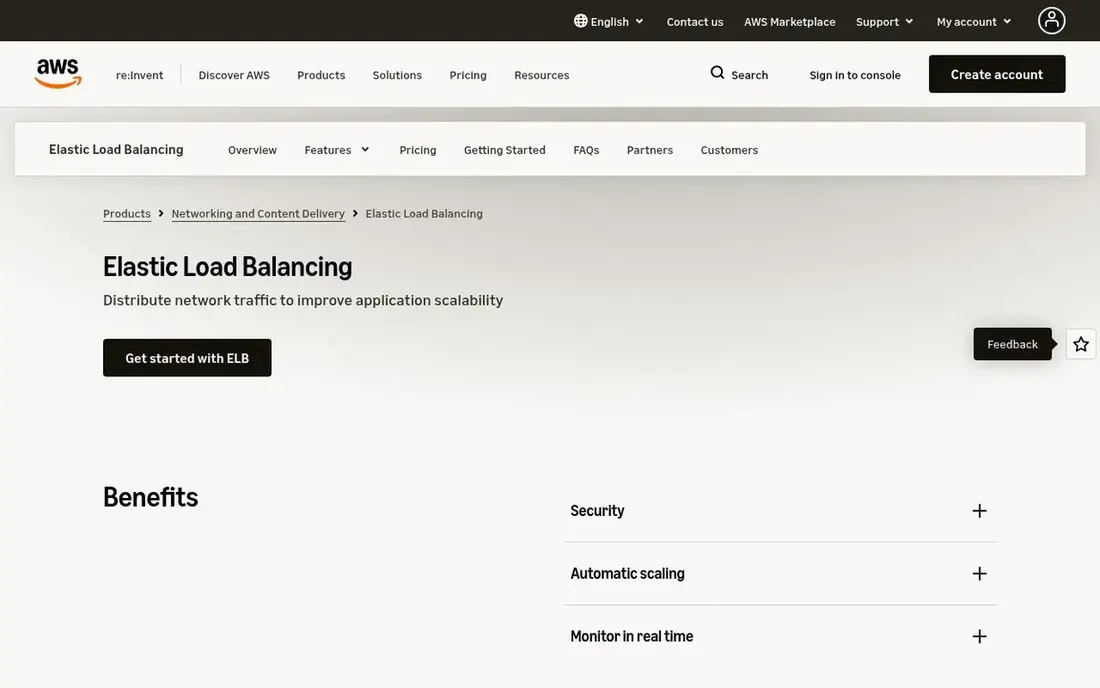
Pick Amazon Elastic Load Balancing if this describes you: AWS-native application traffic distribution. Amazon Elastic Load Balancing automatically distributes incoming application traffic across several targets and virtual appliances in one or more Availability Zones.
Points against: Needs familiarity with AWS services.
Its value is most solid inside AWS; multi-cloud or on-premises estates may need extra tooling. On top of that, choose ELB when your applications already live on AWS. Check the vendor site for Amazon Elastic Load Balancing pricing; none is listed in this comparison. Amazon Elastic Load Balancing includes a free tier.
- Spans several Availability Zones
- Automatically distributes traffic across targets
- Tied to the AWS ecosystem
Azure Load Balancer
Best for: TCP and UDP balancing on Azure
Azure Load Balancer works best for TCP and UDP balancing on Azure. As a cloud-native service, its appeal is concentrated in Azure deployments.
Where it is weaker: Protocol coverage is not application-layer rich.
Teams needing advanced application-layer routing may combine it with other Azure offerings. Check the vendor site for Azure Load Balancer pricing; none is listed in this comparison. Free plan details: Free trial.
- HTTPS and SMTP traffic
- Supports TCP and UDP based protocols
- Best value within Azure environments

NGINX Plus serves software load balancing with web serving. NGINX Plus is a commercial product from F5 that bundles high-performance load balancing with web serving and API gateway capabilities. In practice, teams already standardized on a cloud provider's native load balancing may find that choice more straightforward.
Choose NGINX Plus when you want portable software control. Since it is a full application delivery product, setup and tuning take more effort than a managed cloud balancer. No starting price is listed for NGINX Plus here; confirm pricing on the vendor site. Free options: Not stated.
Limits to weigh: Configuration needs networking knowledge.
- Merges load balancing with web server and API gateway features
- Suited to modern application delivery
- Overlaps with cloud-native balancers
Selection criteria
For each of the 5 tools we noted price, free plan or trial, fit for load Balancing software and the main limit, using vendor pages and documentation. Figures are shown as the vendors publish them. Billing terms, seat minimums and add-ons can change the real cost. The order reflects how well each tool fits the most common buying scenario for load Balancing software, then price clarity, then free plan access. It is a starting point, not a verdict.
A buyer's checklist
- Get a written quote from Barracuda Load Balancer ADC, Amazon Elastic Load Balancing, Azure Load Balancer and NGINX Plus; the list shows no starting price for them.
- Check what the free option really includes: Cloudflare Load Balancing and Amazon Elastic Load Balancing offer a free plan, and usage caps differ.
- Use real work to test the free trial from Barracuda Load Balancer ADC and Azure Load Balancer, rather than a demo project.
- Before choosing Cloudflare Load Balancing, weigh its main limit: depends on Cloudflare's network.
- Check whether Barracuda Load Balancer ADC bills monthly or annually, and what cancelling early costs.
- Find out what support NGINX Plus includes on your plan, and whether onboarding help costs extra.
FAQ
What should I look for in load balancing software?
Start with where your applications run and which protocols they use. Then compare deployment choices, failover behavior and how much operational effort the tool requires from your team.
What is the cheapest option for load Balancing software in this list?
On published monthly entry prices, Cloudflare Load Balancing is the lowest here at $7 per month. Entry price is only part of the cost, because seats, add-ons and billing terms can change the total.
Is Cloudflare Load Balancing the right pick for everyone comparing load Balancing software?
No single tool suits every team. Cloudflare Load Balancing comes first because it fits multi-cloud traffic management, while Barracuda Load Balancer ADC suits application delivery control appliance and Amazon Elastic Load Balancing suits AWS-native application traffic distribution. Match the tool to your own size, budget and workflow before deciding.
Do these tools publish their prices?
Not all of them. Barracuda Load Balancer ADC, Amazon Elastic Load Balancing, Azure Load Balancer and NGINX Plus publish no starting price, so expect a quote request for those. The rest, Cloudflare Load Balancing included, show a starting price, though seats and billing terms still change the final cost.
When does multi-cloud load balancing make sense?
Multi-cloud routing helps when applications span providers or when quick global failover is a priority. Cloudflare Load Balancing is built around that scenario, whereas other tools may need extra configuration to match it.
How are the tools for load Balancing software ordered?
Cloudflare Load Balancing sits first and NGINX Plus last because the order follows typical fit for load Balancing software, then price clarity and free access. It is a judgement call, so read each profile for fit and limits.
Sources
- https://www.cloudflare.com/load-balancing
- https://www.barracuda.com/products/loadbalancer
- https://aws.amazon.com/elasticloadbalancing
- https://azure.microsoft.com/en-us/products/load-balancer
- https://www.nginx.com/products/nginx