Best LLM Visibility Optimization Tools in 2026: 8 Tools Compared
We compared the best LLM visibility optimization tools for tracking brand mentions and citations in ChatGPT, Perplexity, Gemini, and other AI answers.
- Editor's choice
 Profound
Enterprise AI search intelligence
Starts atSee websiteVisit tryprofound.comFull review - Great alternative
 Peec AI
Readable AI visibility reports for marketing teams
Starts at$95 per monthVisit peec.aiFull review - Also consider
 Otterly.AI
Budget AI visibility tracking
Starts at$29 per monthVisit otterly.aiFull review
TL;DR:
- Profound is the strongest enterprise option, with deep citation analytics and wide engine coverage.
- Peec AI gives the clearest reports for marketing teams that need to share results with stakeholders.
- Otterly.AI is the best budget start, with daily tracking from $29 a month on core engines.
- Tracking alone does not improve visibility, so pick a tool that also shows which pages to fix.
- Prices change often in this category, so confirm the current plan and engine list before you buy.
Quick comparison
| Tool | Best for | Starts at | Free plan? | |
|---|---|---|---|---|
| Profound | Enterprise AI search intelligence | See website | Free trial | Visit |
| Peec AI | Readable AI visibility reports for marketing teams | $95 per month | Free trial | Visit |
| Otterly.AI | Budget AI visibility tracking | $29 per month | No | Visit |
 Scrunch AI | AI visibility plus site and crawler insight | $250 per month | No | Visit |
 AthenaHQ | Broad model coverage with an action layer | $295 per month | Yes | Visit |
 Goodie AI | AI visibility for commerce and larger brands | See website | No | Visit |
 Semrush | AI visibility inside an existing SEO toolkit | $99 per month | No | Visit |
 Ahrefs | AI brand tracking for existing Ahrefs users | $199 per month | No | Visit |
The best LLM visibility optimization tools
More buyers now get answers from ChatGPT, Perplexity, and Gemini before they ever visit a website. If those answers never mention your brand, you lose the sale before your site gets a chance. The tools below track whether large language models mention and cite you, which pages they cite, and how that visibility changes over time.
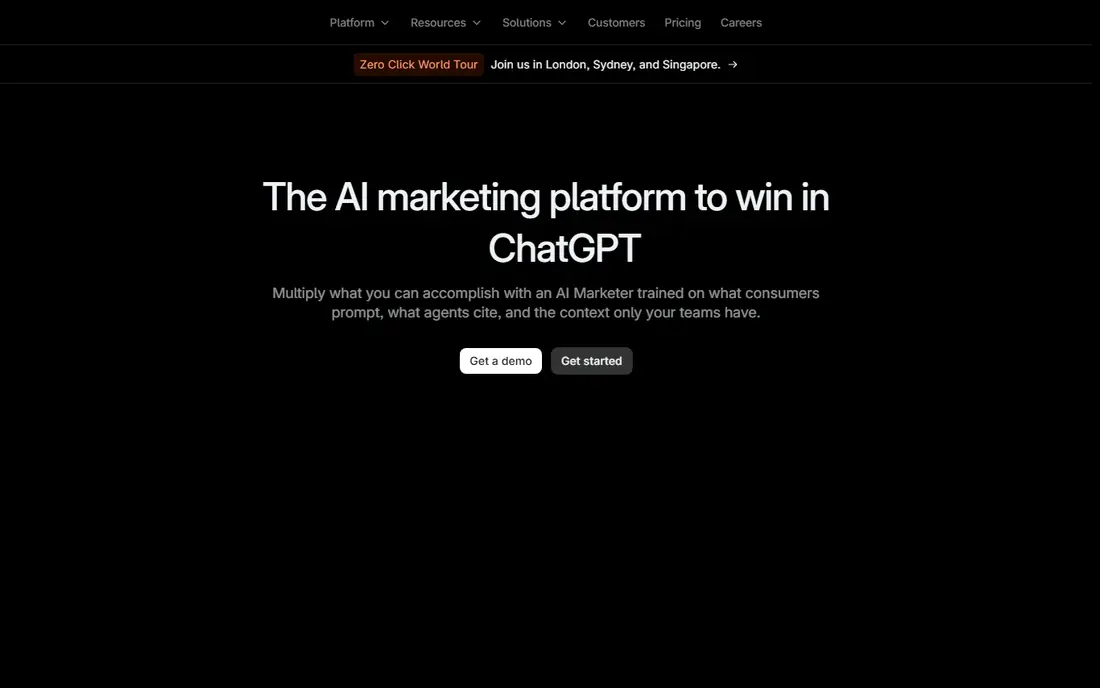
Profound is the enterprise name in AI visibility, built for brands that need large prompt libraries and stakeholder-ready reporting. It tracks how answers mention and cite your brand across major AI engines.
Depth is the strength. Prompt-level analytics, citation tracking, and agent analytics show not just whether you appear, but which pages get cited and how AI crawlers read your site.
Cost and complexity are the catches. Pricing is custom on enterprise plans, and small teams may find the platform more than they need. Start with the trial and confirm which engines your plan covers.
- Tracks up to nine answer engines on enterprise plans
- Deep citation and prompt analytics
- SOC 2 controls
- Enterprise pricing is custom and high for small teams
- Entry trial limits prompts and exports
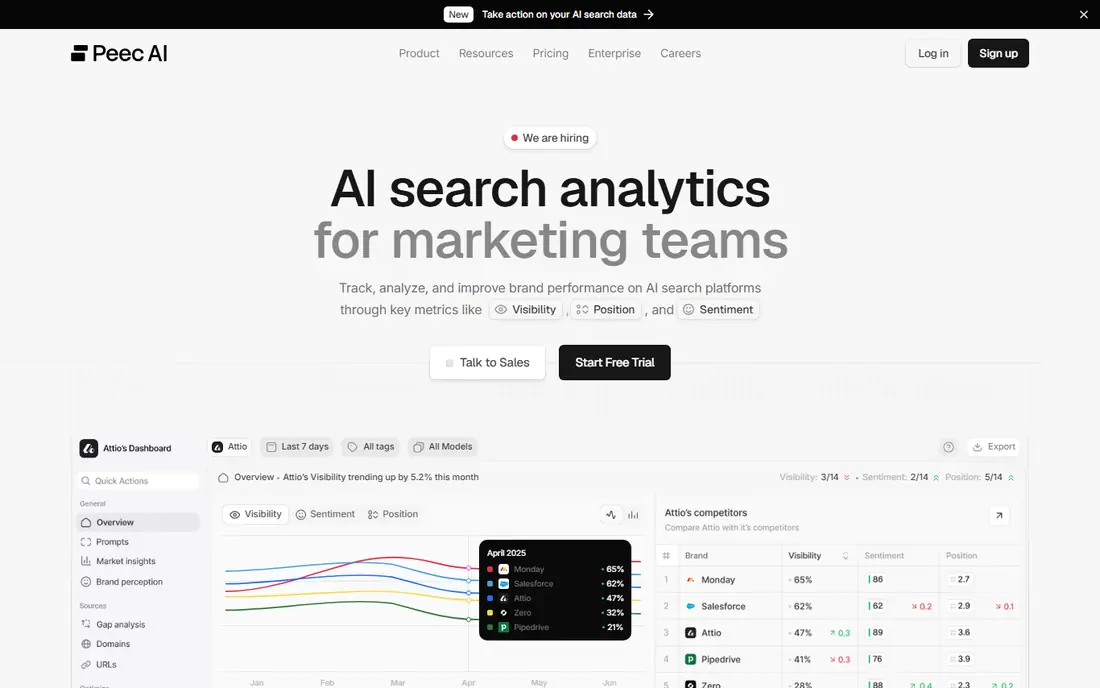
Peec AI is a strong mid-market choice because its reports are easy to read and share with non-technical stakeholders. It tracks brand mentions, citations, and sentiment across several AI engines.
The distinction between citation rate and retrieval rate helps teams diagnose problems. If you are retrieved but not cited, your content may need clearer facts or better structure, and Peec AI makes that gap visible.
Starter limits matter. The entry plan covers 50 prompts and three models of your choice, so larger brands will need a higher tier. Confirm the dollar price, since some pages show euros.
- Separates citation rate from retrieval rate
- Multi-country reporting
- Looker Studio connector
- Starter plan limits prompts and models
- Prices shown in euros on some pages
Otterly.AI is the budget entry point for small teams that want to know whether AI engines mention them at all. The Lite plan tracks ChatGPT, Google AI Overviews, Perplexity, and Copilot for a low monthly price.
Simplicity helps here. Daily checks, unlimited team members, and a readiness audit give a small team a clear baseline without enterprise setup. It is easy to run alongside traditional SEO tools.
Engine coverage is the limit. Gemini, AI Mode, and Claude cost extra on Lite, so if Google AI Mode is your priority, check the add-on total before you compare prices.
- Lowest entry price in this list
- Daily tracking on core engines
- GEO readiness audit
- Gemini, AI Mode, and Claude are paid add-ons on Lite
- No API on the entry plan
Scrunch AI suits teams that care how AI systems read their site, not just whether they appear in answers. It combines visibility tracking with insight into crawler behavior and content gaps.
Persona tracking is a useful extra. You can see how answers differ for different audience types, which helps content teams write pages that serve real buyer questions rather than generic keywords.
The price puts it out of reach for solo marketers. Scrunch makes sense when you have a content team ready to act on the findings, not when you only need a weekly mention count.
- Shows how AI crawlers parse your site
- Persona tracking
- Content guidance alongside monitoring
- Entry price is high for small teams
- Some features sit on higher tiers
AthenaHQ is worth a look if you want broad model coverage and recommendations, not just charts. It tracks many AI models and pairs visibility data with actions your team can take next.
The action layer is the draw. Instead of leaving you with a score, AthenaHQ points to pages and topics that need work, which helps smaller SEO teams prioritize without hiring a specialist.
Budget is the barrier. The paid plan starts around $295 a month, and the free tier caps monthly answers. Try the free tier to test coverage, then judge whether the action layer justifies the price.
- Covers many models on paid plans
- Action recommendations
- Unlimited team members
- Paid price is high
- Free tier limits answers per month
Goodie AI fits brands that sell products and want to see how AI answers handle product questions. It tracks brand visibility across many models and adds commerce features for product-level tracking.
Competitor comparison helps merchandising teams. You can see which rivals AI answers cite for a product query, and which product pages those answers pull from, which is hard to get from a generic rank tracker.
Pricing transparency is weaker here. Higher tiers are demo-gated, and SKU tracking may need a Pro plan, so get a written quote for your exact prompt and product count before you budget.
- Tracks many models
- Commerce and SKU-level features on higher tiers
- Competitor comparison
- Pricing is demo-gated on higher tiers
- Entry plans may not include commerce features
Semrush suits teams that already use Semrush for SEO and want AI visibility in the same dashboard. The toolkit tracks prompts, surfaces real AI search queries, and audits pages for AI readiness.
Workflow is the benefit. You can move from a traditional ranking report to an AI visibility report without learning a new platform, and the conversation explorer shows the actual questions people ask AI tools.
Cost stacking is the caution. The toolkit price sits on top of a Semrush subscription and is charged per domain, so multi-domain teams should total both costs before comparing with a dedicated tool.
- Adds AI tracking to familiar SEO workflows
- Conversation explorer for real AI queries
- Site audit for AI readiness
- Price is per domain on top of a Semrush plan
- Engine coverage is narrower than dedicated tools
Ahrefs Brand Radar fits SEO teams that already pay for Ahrefs and want AI data next to backlinks and rankings. It offers a database of pre-collected prompts plus custom tracking for your brand.
Research depth is the plus. You can explore how AI engines treat a whole category, not just your own prompts, which helps with content planning and competitor analysis in one place.
Pricing is layered. The index add-on and custom prompt packages add to the base Ahrefs cost, so the total can climb quickly. Check which platforms your add-on covers before you sign up.
- Large prompt database for brand research
- Tracks AI Overviews, AI Mode, ChatGPT, and more
- Strong SEO data alongside
- Add-on pricing varies by platform
- Custom prompts cost extra
- Needs an Ahrefs base plan
How we picked these
We compared official pricing pages, product documentation, and independent 2026 comparisons for each tool. We looked for engines tracked, prompt limits, daily versus weekly checks, citation and sentiment data, competitor comparison, and whether the tool offers actions or only reports. We also noted where pricing is custom or demo-gated, since that affects how easy it is to budget.
How to optimize for LLM visibility
Start with a prompt list that mirrors real buyer questions, not just your brand name. Include comparison questions, best-of questions, and problem questions, since those are where AI answers recommend brands. Track the same prompts over time so you can see whether content changes move the needle.
Fix the pages AI answers cite
AI engines cite pages that answer a question clearly, with facts, steps, and direct comparisons. Add concise answers at the top of key pages, use clear headings, and keep pricing and feature facts current. If a tool shows you are retrieved but not cited, tighten the page structure and add the missing facts rather than writing more generic content.
Measure what matters
Watch mention share, citation share, and sentiment together. A rise in mentions without citations may mean your brand is named but not trusted as a source. A rise in citations from weak pages may still send little traffic. Review competitors too, since AI visibility is relative, and a gain can still leave you behind a rival that improved faster.
FAQ
What are LLM visibility optimization tools?
These tools track how large language models mention, cite, and describe your brand in answers. They run your prompts across engines like ChatGPT, Perplexity, and Gemini, then report mention share, citation sources, and sentiment. Some also suggest content fixes to improve those results.
How is LLM visibility different from SEO?
Traditional SEO tracks where your pages rank in search results. LLM visibility tracks whether AI answers mention and cite you, even when no click happens. Both matter, since AI answers often draw on search-indexed pages, but the metrics and fixes differ.
What is the best LLM visibility tool for small businesses?
Otterly.AI is a good start for small teams because it costs $29 a month and covers core engines with daily tracking. Peec AI is a step up for teams that need clearer reports and competitor data. Start small, prove the value, then upgrade.
Do these tools improve my AI rankings automatically?
No. They measure visibility and point to gaps, but you still need to fix content, structure, and facts on your site. Tools with an action layer help prioritize fixes, yet the content work remains yours. Expect weeks, not days, for changes to show in AI answers.
How many prompts should I track?
Start with 20 to 50 prompts that cover your main products, comparisons, and buyer problems. That range fits most entry plans and gives a clear baseline. Add prompts only when you have content ready to support them, since tracking questions you cannot answer well adds noise.