Best Lead Enrichment Tools in 2026: 8 Tools Compared
We compare the best lead enrichment tools for 2026, from Apollo and Clay to ZoomInfo and Cognism, covering pricing, accuracy, credits and CRM fit in detail.
- Editor's choice
 Apollo
All in one prospecting and enrichment
Starts at$49 per user per monthVisit apollo.ioFull review - Great alternative
 Clay
Waterfall enrichment workflows
Starts at$185 per monthVisit clay.comFull review - Also consider
 ZoomInfo
Enterprise B2B intelligence
Starts atSee websiteVisit zoominfo.comFull review
TL;DR:
- The best lead enrichment tools for most teams are Apollo for value and Clay for workflow control, while ZoomInfo suits large enterprise teams.
- Waterfall enrichment, which checks several data providers in sequence, fills more fields than any single source on its own.
- HubSpot users get a special case in Breeze Intelligence, formerly Clearbit, which enriches forms and records inside HubSpot itself.
- European prospecting needs extra care on consent and data law, and Cognism is built with that market in mind.
- Credits burn fast on phone data, so check how many credits each lookup costs before you pick a plan.
Quick comparison
| Tool | Best for | Starts at | Free plan? | |
|---|---|---|---|---|
| Apollo | All in one prospecting and enrichment | $49 per user per month | Yes | Visit |
| Clay | Waterfall enrichment workflows | $185 per month | Yes | Visit |
| ZoomInfo | Enterprise B2B intelligence | See website | No | Visit |
 Cognism | European and phone verified data | See website | No | Visit |
 Lusha | Quick individual lookups | See website | Yes | Visit |
 Hunter | Email finding and verification | $34 per month | Yes | Visit |
 Snov.io | Budget enrichment plus outreach | $39 per month | Yes | Visit |
 Breeze Intelligence | HubSpot native enrichment | See website | No | Visit |
The best lead enrichment tools
These are the best lead enrichment software and platforms we found for 2026, covering single-source databases, waterfall tools and CRM native options.
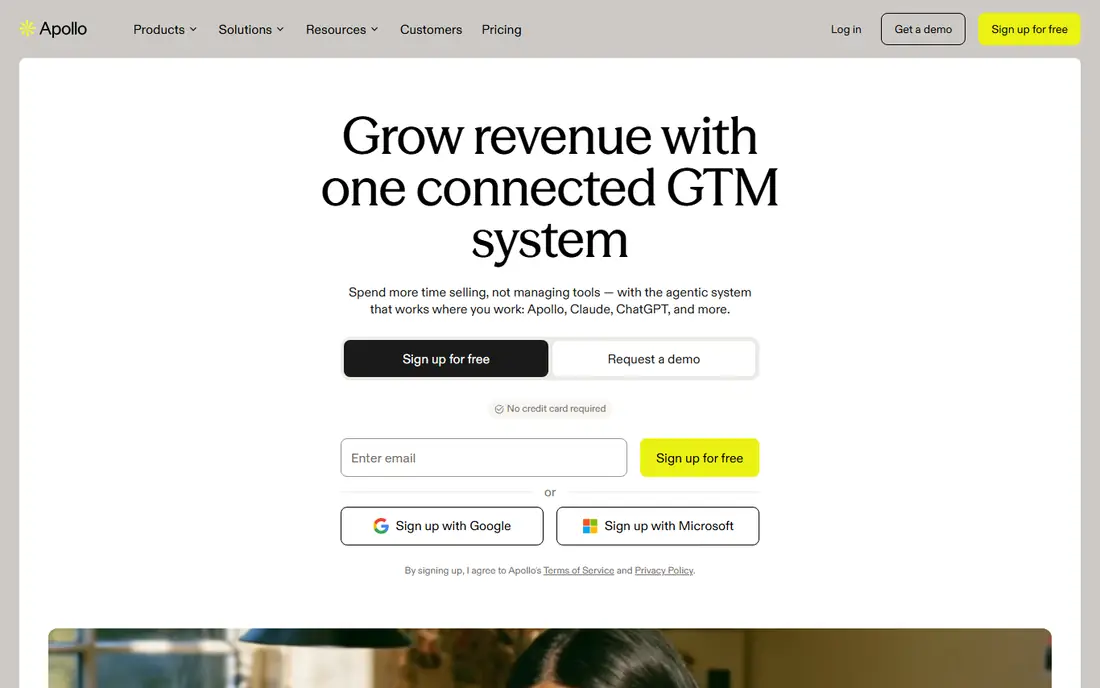
Apollo is our pick for most small and mid-size sales teams because it combines a large database, enrichment and outreach in one subscription. You can find contacts, enrich existing records, and run email sequences without stitching three tools together. The free plan also lets a small team test list quality before paying.
The honest catch is credit math. Phone numbers cost far more credits than emails, so a calling heavy team can burn through a monthly allowance quickly. Test Apollo on your own target accounts first, and compare bounce rates against your current data before moving your whole list over.
- Large contact database with built in sequences
- Free plan for getting started
- CRM sync included
- Phone data costs extra credits
- Accuracy varies by industry and region

Clay is built for revenue operations teams that want control over how enrichment happens. Instead of trusting one provider, you build a waterfall that tries several sources in order until a field is filled, then verifies the result. That approach fills more records and gives you a clear view of which provider earned each data point.
The trade-off is complexity and cost. Clay starts at $185 per month, and building good tables takes time and testing. Teams that only need occasional lookups will find Apollo or Lusha simpler, but teams enriching thousands of records a month will value the control.
- Waterfall enrichment across many providers
- Flexible tables and AI agents
- Strong automation options
- Higher entry price
- Setup takes more thought than a simple lookup tool

ZoomInfo remains the enterprise standard for B2B data, with deep firmographics, technographics, intent signals and organizational charts. Large sales teams use it to build account lists, spot buying signals and route accounts to the right reps. Its integrations with major CRMs keep enriched data flowing into daily workflows.
Small teams should pause before buying. ZoomInfo does not publish pricing, and buyer reports put annual contracts in five figures. If your team is under ten reps, test a cheaper tool first and only move up when list quality becomes the bottleneck.
- Deep company and contact database
- Intent signals and org charts
- Broad integrations
- Quote only pricing
- Entry cost is high for small teams
Cognism is the pick for teams selling into Europe or relying on phone outreach. Its Diamond Data set is phone verified, which matters when a wrong number wastes a rep's hour, and its data handling is designed around European privacy rules. That compliance focus also helps legal and data teams sign off on the purchase.
The price is quoted rather than published, and buyer reports again point to five figure annual contracts. North American only teams may get similar email coverage cheaper elsewhere, so weigh the phone and European strengths against your actual market mix.
- Phone verified mobile numbers
- Strong European coverage
- Compliance focused data handling
- Quote only pricing
- Less depth for some North American segments
Lusha fits individual reps who find prospects on LinkedIn and need contact details in seconds. The browser extension shows emails and phone numbers beside a profile, and the workflow is far simpler than building an enrichment pipeline. That speed is why many reps keep Lusha even when their company buys a larger platform.
For bulk work, Lusha is less strong. Enriching a list of thousands is not its main job, and credit packs add up for heavy users. Use it as a rep level tool, and pick Clay or Apollo when you need list wide enrichment.
- Fast browser extension for LinkedIn lookups
- Simple to use
- Free credits to start
- Best for one by one lookups, not bulk enrichment
- Credit limits can frustrate larger teams
Hunter does one job well, which is finding and verifying business email addresses. You can search by domain, find the pattern a company uses, and verify addresses before sending, which keeps bounce rates down. Published pricing starting at $34 per month makes it easy to budget for a small team.
Hunter is not a full enrichment platform. It will not give you deep firmographics, technographics or phone numbers at the same depth as ZoomInfo or Cognism. Pair it with a CRM enrichment tool when you need more than verified emails.
- Clear email finder and verifier
- Domain search for company contacts
- Published pricing
- Email focused, with limited phone or firmographic depth
Snov.io suits small teams that want enrichment and outreach without paying for two tools. It finds and verifies emails, enriches records, and runs drip campaigns from the same account, and the $39 per month entry price is among the lowest here. A free tier lets you test accuracy on your own lists.
The database is smaller than Apollo or ZoomInfo, so match rates may be lower in niche industries. Email deliverability also depends on domain setup and sending habits, so warm up new domains and keep lists verified before large sends.
- Enrichment, finder and email campaigns in one tool
- Low entry price
- Free credits to test
- Database depth trails larger rivals
- Deliverability needs careful setup
Breeze Intelligence, formerly Clearbit, is the natural choice if your team already runs on HubSpot. It enriches contacts and companies as they enter the CRM, fills firmographic fields automatically, and lets you shorten web forms since the system fills in company details itself. That native fit saves the sync work other tools require.
The limit is the ecosystem. Breeze Intelligence only works inside HubSpot, so Salesforce or Pipedrive teams cannot use it. Pricing is sold as a HubSpot add-on with credit packs, so confirm the monthly credit cost against your inbound lead volume before adding it.
- Enriches HubSpot contacts and companies in real time
- Shortens forms
- Works inside existing HubSpot workflows
- Requires HubSpot
- No standalone product for other CRMs
How we picked these
We compared official feature and pricing pages, plus public comparisons of match rates and credit models, for the top lead enrichment software platforms. We favored tools that are still actively sold in October 2026, that cover both contact and company data, and that offer a clear path from a free trial or free plan to a paid tier. We also weighed database depth, phone coverage, compliance handling and CRM fit, since the best tool for a HubSpot team is not always the best tool for a Salesforce team.
How to choose lead enrichment software
Start with where your leads live. If they sit in a CRM, pick a tool with a native sync for that CRM, since manual imports go stale fast. If you start from scratch lists, a database tool like Apollo or ZoomInfo matters more than a CRM add-on. Next, test match rate on your own data, not on a vendor demo list, because accuracy varies sharply by industry and country.
Then study the credit model. Some tools charge per lookup, some per field, and phone numbers often cost many times more than emails. Finally, check data handling and consent rules for your markets, especially in Europe, and make sure your team has a lawful basis for outreach before sending a single email.
Single source or waterfall
A single source tool is simpler and cheaper, and it works when one provider covers your market well. A waterfall tool like Clay costs more and needs setup, but it fills gaps that any single source misses. Teams with high value deals usually justify the waterfall, while teams with broad, low value prospecting often do fine with a single source.
A final practical point is to test enrichment on a sample of your own target accounts before buying at scale. Pick fifty records that mirror your ideal customer profile, run them through each shortlisted tool, and measure how many fields come back filled and how many emails bounce. That sample tells you more than any vendor accuracy claim, since coverage varies by industry and region. Also confirm how credits are counted for phone numbers and company data, because those rules decide the real monthly cost once your team starts using the tool daily.
FAQ
What is the best lead enrichment software for small teams?
Apollo is the most complete value pick, since it combines a database, enrichment and sequences with a free plan. Hunter or Snov.io are cheaper when you only need verified emails.
What is the best lead enrichment platform for enterprise sales?
ZoomInfo is the usual enterprise pick for database depth, intent data and org charts. Cognism is the stronger choice when European markets and verified phone numbers matter most.
How does waterfall enrichment work?
A waterfall tool checks several data providers in a set order until a field is filled, then verifies the result. This fills more records than any one provider alone, at the cost of more setup and higher prices.
Is lead enrichment legal?
Enrichment tools sell business contact data, but outreach rules still apply, including consent and opt out requirements that vary by country. Check the rules for your market and your vendor's data sources before prospecting.
How accurate is enriched lead data?
Accuracy varies by provider, field and market, and no vendor fills every record perfectly. Test a sample of your own target accounts, measure bounce rates, and keep verifying emails before large campaigns.