Best Laboratory Management Software in 2026: 9 Tools Compared
We reviewed the best laboratory management software for sample tracking, compliance, and lab workflows, from enterprise LIMS platforms to tools for small labs.

- Editor's choice
 LabWare LIMS
Enterprise QA and QC labs
Starts atSee websiteVisit labware.comFull review - Great alternative
 STARLIMS
Multi industry regulated labs
Starts atSee websiteVisit starlims.comFull review - Also consider
 LabVantage LIMS
Enterprise lab informatics and analytics
Starts atSee websiteVisit labvantage.comFull review
TL;DR:
- Enterprise LIMS platforms such as LabWare, STARLIMS, and LabVantage suit regulated QA and QC labs, but they need long implementations and quote based pricing.
- Research teams often prefer Benchling or SciNote, which combine lab notebooks, sample tracking, and collaboration in a more modern interface.
- Small labs can start with LabCollector, Labguru, or CloudLIMS, which offer published pricing and faster setup than enterprise systems.
- Compliance features such as audit trails, electronic signatures, and instrument integration matter more than a long feature list, especially for regulated work.
- Always pilot with your own sample types, workflows, and instruments before signing, since configuration effort is usually the largest hidden cost.
Quick comparison
| Tool | Best for | Starts at | Free plan? | |
|---|---|---|---|---|
| LabWare LIMS | Enterprise QA and QC labs | See website | No | Visit |
| STARLIMS | Multi industry regulated labs | See website | No | Visit |
| LabVantage LIMS | Enterprise lab informatics and analytics | See website | No | Visit |
 Benchling | Biotech and pharma research teams | See website | Yes | Visit |
 SciNote | Academic and government research labs | See website | Free trial | Visit |
 CloudLIMS | SaaS LIMS for testing labs | See website | No | Visit |
 LabCollector | Affordable research lab management | $35 per user per month | Free trial | Visit |
 Labguru | Small and mid size research labs | See website | Free trial | Visit |
 QBench | Modern configurable LIMS for growing labs | See website | Free trial | Visit |
The best laboratory management software
Laboratory management software tracks samples, tests, results, inventory, and compliance from intake to reporting. The tools below span enterprise LIMS, research platforms, and SaaS options for smaller labs.
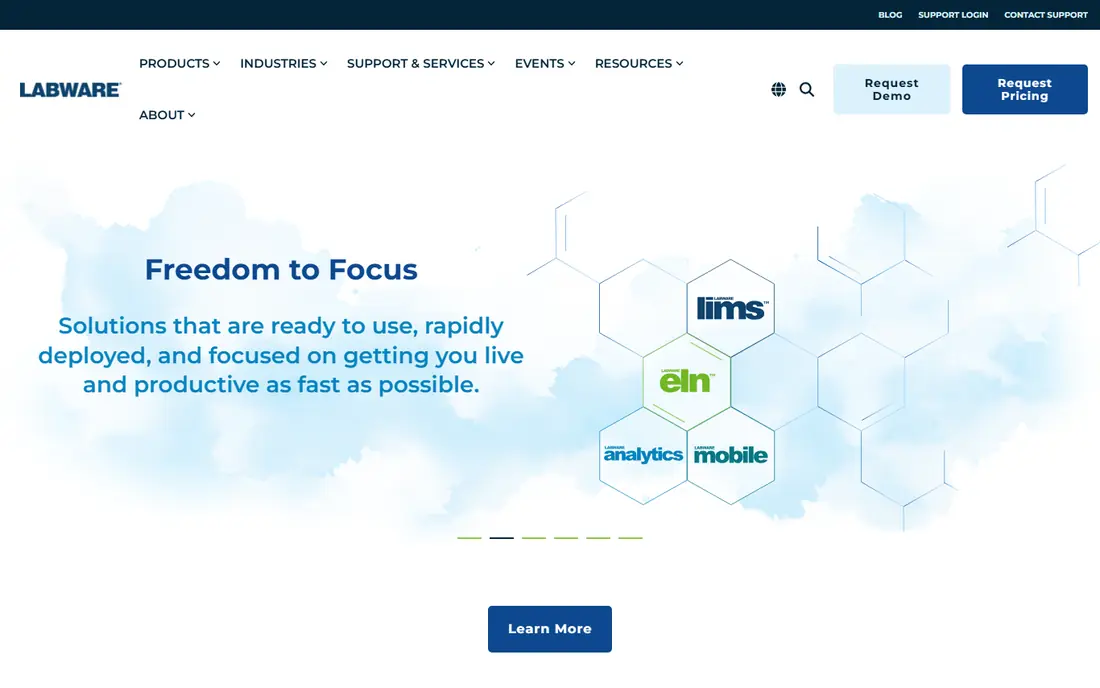
LabWare LIMS is a long established enterprise platform for pharmaceutical, food, environmental, and manufacturing labs. It tracks samples through login, testing, review, and reporting, with audit trails, role based access, and instrument integration. For labs that must prove chain of custody and data integrity to regulators and customers, that depth is the core reason to choose it.
The cost is not just the licence. Implementation, validation, instrument interfacing, and training can take months and add substantial services fees. Small labs should not start here unless they already have enterprise scale and regulatory pressure. For large QA and QC operations, LabWare remains a safe and proven choice.
- Deep configurability for regulated workflows
- Strong sample and results management
- Wide industry use
- Expensive and complex to implement
- Needs trained administrators
- Overkill for small labs
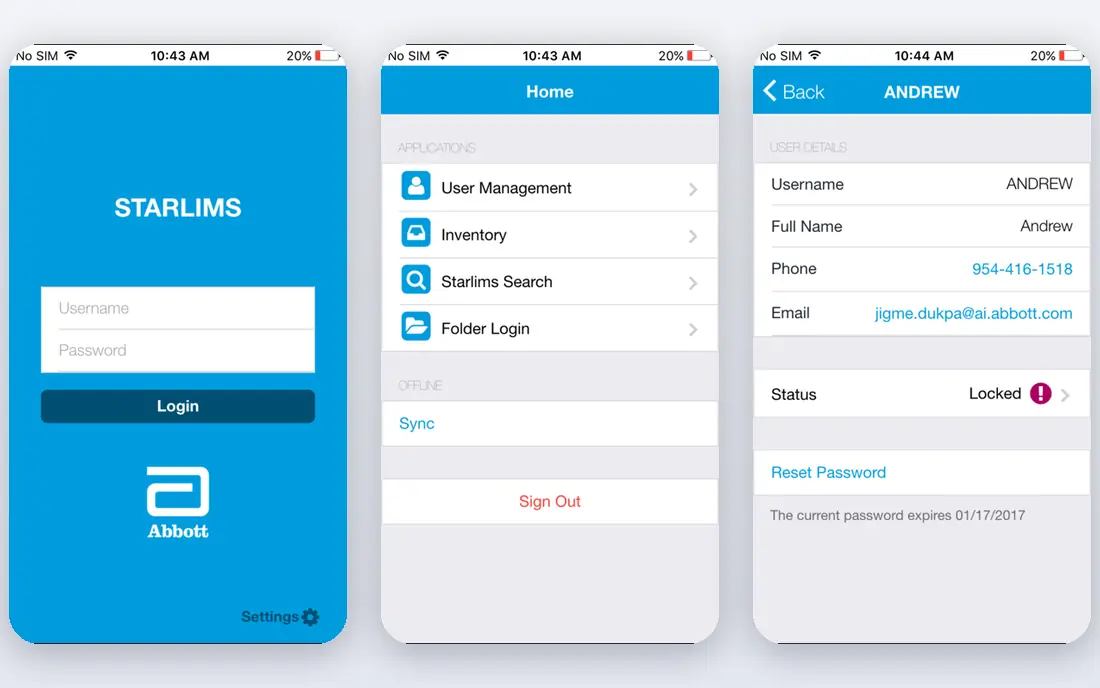
STARLIMS, now part of Abbott Informatics, serves clinical, public health, pharma, food, and environmental labs with a full informatics platform. It combines LIMS, electronic lab notebook, and scientific data management features, so labs can manage samples, experiments, and reports in one system. Its compliance tools, including audit trails and electronic signatures, suit labs working under strict quality rules.
As with other enterprise LIMS, STARLIMS is expensive and takes time to configure well. Reviewers often note high licensing and maintenance fees, and smaller labs may find the platform larger than they need. For a multi site lab that needs one governed system across departments, STARLIMS offers breadth that smaller SaaS tools cannot match.
- Broad informatics platform
- Strong compliance tools
- Configurable workflows
- High licence and maintenance costs
- Long implementation
- Needs specialist support
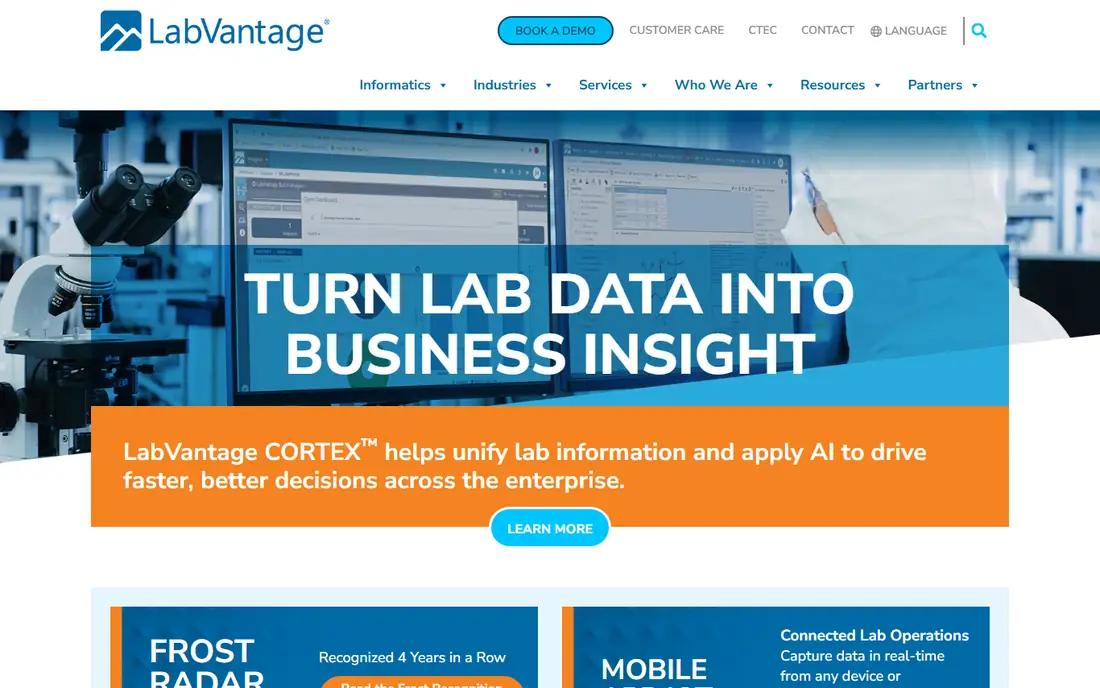
LabVantage combines LIMS, electronic lab notebook, and laboratory execution features on one platform, with analytics for lab performance and sample trends. It handles complex sample hierarchies, biobanking, and multi site operations, which suits biopharma and clinical research organisations with large sample volumes. The platform also supports compliance workflows for regulated environments.
LabVantage is not a plug and play tool. Configuration, integration, and validation need planning and skilled staff, and pricing is quote based. Labs that only need basic sample tracking will find it heavy. For enterprise labs that want one platform for samples, experiments, and analytics, LabVantage is a strong contender.
- Unified LIMS, ELN, and analytics
- Strong biobanking support
- Cloud or on premise options
- Complex implementation
- Enterprise pricing
- Not suited to simple lab needs
Benchling is a cloud platform for life sciences research that combines an electronic lab notebook, LIMS style sample tracking, molecular biology tools, and workflow management. Scientists can design sequences, register molecules, track samples, and record experiments in one place, with collaboration and version history built in. That unified approach reduces the need for separate notebook, spreadsheet, and sample tools.
Benchling offers a free academic tier, which makes it accessible for university labs and small research teams. Larger commercial teams face custom pricing, and classic manufacturing QA labs may prefer a traditional LIMS with stronger batch and stability testing workflows. For biotech research, Benchling is often the most modern and scientist friendly option here.
- Modern research platform
- Molecular biology tools built in
- Strong collaboration
- Enterprise pricing for larger teams
- Less suited to classic QA and QC workflows
- Configuration still needed
SciNote is an electronic lab notebook with inventory management, protocol templates, and compliance features for academic, government, and startup labs. It helps teams document experiments, track reagents and samples, manage tasks, and keep audit trails for regulated research. Its interface is approachable for students and researchers who need structure without enterprise complexity.
SciNote is not a full replacement for a large enterprise LIMS in a high volume QA lab. It is strongest where research documentation, collaboration, and inventory matter more than complex batch release workflows. For a university lab or small research group that needs order and compliance at a reasonable cost, SciNote is a practical choice.
- Accessible ELN with inventory and compliance features
- Good for academic teams
- Structured protocols
- Less enterprise LIMS depth than LabWare or STARLIMS
- Pricing is quote based for larger plans
- Some advanced features need higher tiers
CloudLIMS is a cloud based LIMS for testing, clinical, and research labs that want SaaS delivery without managing servers. It covers sample login, test assignment, results entry, reporting, and audit trails, with configurable workflows for common lab types. Because it is delivered as a service, small and mid size labs can get started faster than with an on premise enterprise platform.
Pricing is published per user in many listings, which helps budgeting, but larger teams should still model total cost as users grow. CloudLIMS will not match the deep configurability of LabWare or LabVantage for unusual workflows. For a testing lab that wants a real LIMS without a large IT project, it is a sensible middle option.
- Pure SaaS delivery
- Published per user pricing in past listings
- Fast setup for a LIMS
- Per user costs rise with team size
- Customisation is more limited than enterprise LIMS
- Needs internet access
LabCollector is a research focused LIMS with sample, inventory, equipment, and data management modules that labs can add as needed. It suits academic and small commercial labs that need real sample tracking without enterprise budgets. The published starting price makes it easier to budget than quote only rivals, and the choice of cloud or on premise hosting helps labs with data control rules.
The interface is functional rather than modern, and the full cost depends on which modules and users you add. Teams should trial it with their own sample types and check which modules their workflows actually need. For a cost conscious research lab, LabCollector offers a good balance of function and price.
- Published low starting price
- Modular add ons
- Cloud or on premise options
- Interface feels older than newer SaaS tools
- Modules can add cost
- Setup still needs planning
Labguru combines an electronic lab notebook, LIMS, and inventory management for research labs that want one system for experiments, samples, and stocks. Researchers can write protocols, track samples, manage reagents, and share results with the team, which cuts reliance on spreadsheets and paper notebooks. It is designed for small and mid size labs rather than large enterprise QA operations.
Pricing is not fully published, so small labs should request a quote for their team size and modules. Labguru also needs to be checked for specific instrument integrations and compliance requirements before purchase. For a growing research lab that wants notebook, sample, and inventory work in one place, Labguru is a strong and approachable option.
- Combines ELN, LIMS, and inventory
- Approachable for small teams
- Good protocol and stock tools
- Pricing is quote based
- Less enterprise scale than LabWare
- Advanced integrations need checking
QBench is a modern, cloud based LIMS built for growing testing and research labs. It offers configurable sample workflows, customer portals, reporting, and integrations, with an interface that feels closer to current SaaS software than legacy LIMS. Labs can adapt workflows, fields, and reports without the long coding projects that older platforms often require.
QBench is newer than LabWare or STARLIMS, so labs with very complex regulatory or multi site needs should pilot it carefully and check references in their industry. Pricing is quote based, so request a full quote including implementation. For a growing lab that wants a modern LIMS without enterprise weight, QBench is worth a trial.
- Modern SaaS interface
- Configurable without heavy coding
- Good for growing testing labs
- Newer and smaller than enterprise vendors
- Pricing is quote based
- Very complex workflows may need custom work
How we picked these
We compared official feature and pricing pages, public reviews, and industry comparisons for laboratory management software in October 2026. We favoured tools with current support, clear sample tracking and compliance features, and a realistic fit for either enterprise, research, or small lab use. We noted where pricing was quote based, and we did not claim hands-on testing. Where a price was published in a vendor or comparison listing, we reported it with care and advised readers to confirm it before budgeting.
What to check before you choose a LIMS
Start with your sample journey. Map how a sample arrives, is logged, tested, reviewed, reported, and stored, and note every instrument, approval, and report format along the way. Ask vendors to build that journey in a pilot, including a failed result, a retest, and an audit trail export. That exercise will show whether the tool fits your lab or only looks good in a demo.
Compliance, instruments, and data control
For regulated work, confirm electronic signatures, audit trails, access controls, and data retention in writing, and ask for validation documentation that matches your rules. Check instrument integration for your actual models, not just a general claim, since interfacing often drives implementation time. Also confirm data export and ownership, so your lab can retrieve complete records if you later change systems.
FAQ
What is the best laboratory management software?
It depends on lab type. Enterprise QA and QC labs often choose LabWare, STARLIMS, or LabVantage, while research labs often prefer Benchling or SciNote. Small labs should look at LabCollector, Labguru, CloudLIMS, or QBench. Pilot your own workflows before you decide.
What are the best laboratory management software reviews saying about pricing?
Reviews consistently note that enterprise LIMS pricing is quote based and that implementation can cost as much as licences. Smaller SaaS tools publish clearer per user prices, which helps small labs budget. Always get implementation, training, and integration costs in writing.
What is the difference between a LIMS and an ELN?
A LIMS tracks samples through testing workflows, from login to results and reporting. An ELN documents experiments, protocols, and observations for research. Testing and QC labs usually need a LIMS, research labs usually need an ELN, and many labs need both, which is why some platforms combine them.
Can a small lab afford a LIMS?
Yes, at the low end. Tools such as LabCollector and CloudLIMS offer published per user pricing and faster setup than enterprise platforms. Small labs should start with a focused pilot, limit customisation, and only add modules they will actually use.
How long does a LIMS implementation take?
SaaS tools for small labs can be live in weeks, while enterprise platforms often take six to eighteen months including workflow design, instrument interfacing, validation, and training. The interfacing and validation work, not the software install, usually takes the most time.