Best Laboratory Information System Software in 2026: 8 Tools Compared
The best laboratory information system software, compared on sample tracking, compliance, instrument links, and lab-type fit in 2026 before you choose.

- Editor's choice
 LabWare LIMS
Enterprise regulated labs
Starts atSee websiteVisit labware.comFull review - Great alternative
 LabVantage LIMS
Enterprise biopharma labs
Starts atSee websiteVisit labvantage.comFull review - Also consider
 Benchling
Life science research
Starts atSee websiteVisit benchling.comFull review
TL;DR:
- LabWare and LabVantage lead for large, regulated labs that need deep configuration and multi-site control.
- Benchling suits life science research teams that want LIMS plus electronic notebook tools in one system.
- QBench and Scispot are strong modern options for growing labs that want faster cloud setup.
- STARLIMS and Thermo SampleManager fit regulated pharma and clinical labs with strict compliance needs.
- The best laboratory information software must match lab type first, since clinical, QC, and research needs differ sharply.
Quick comparison
| Tool | Best for | Starts at | Free plan? | |
|---|---|---|---|---|
| LabWare LIMS | Enterprise regulated labs | See website | No | Visit |
| LabVantage LIMS | Enterprise biopharma labs | See website | No | Visit |
| Benchling | Life science research | See website | Free trial | Visit |
 STARLIMS | Regulated quality labs | See website | No | Visit |
 Thermo Scientific SampleManager | Pharma and clinical labs | See website | No | Visit |
 QBench | Growing flexible labs | See website | Free trial | Visit |
 Scispot | Modern biotech labs | See website | Free trial | Visit |
 Lockbox LIMS | Salesforce-based labs | See website | Free trial | Visit |
The best laboratory information system software
A laboratory information management system tracks samples from intake to result, links instruments and results, and keeps an audit trail that a regulator can follow. The right system depends heavily on lab type. A clinical diagnostic lab, a manufacturing QC lab, and a research lab may all use the term LIMS, but they need very different workflows, compliance controls, and instrument links.
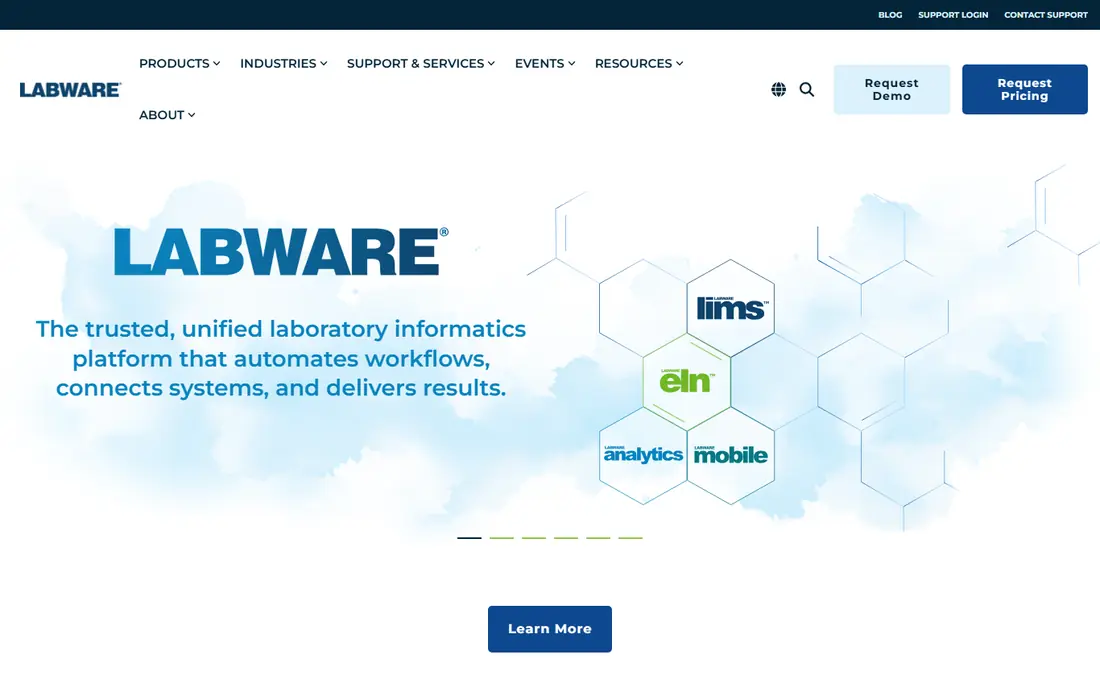
LabWare is the name that appears first in most enterprise LIMS discussions, and its installed base explains why. Its platform combines LIMS and electronic notebook tools, with configurable workflows, instrument connections, and compliance controls for regulated manufacturing, pharma, food, and environmental labs. Multi-site labs can standardize methods, results, and reporting across locations.
The trade-off is implementation time and skill. LabWare is a platform to configure and validate, not a tool to try in an afternoon, and pricing is quoted for the full project. Large, regulated organizations with the staff to run it will get the most value. Smaller labs may find it larger than they need.
- Deep configurability
- Strong compliance and instrument support
- Large installed base
- Long implementation
- Needs trained administrators
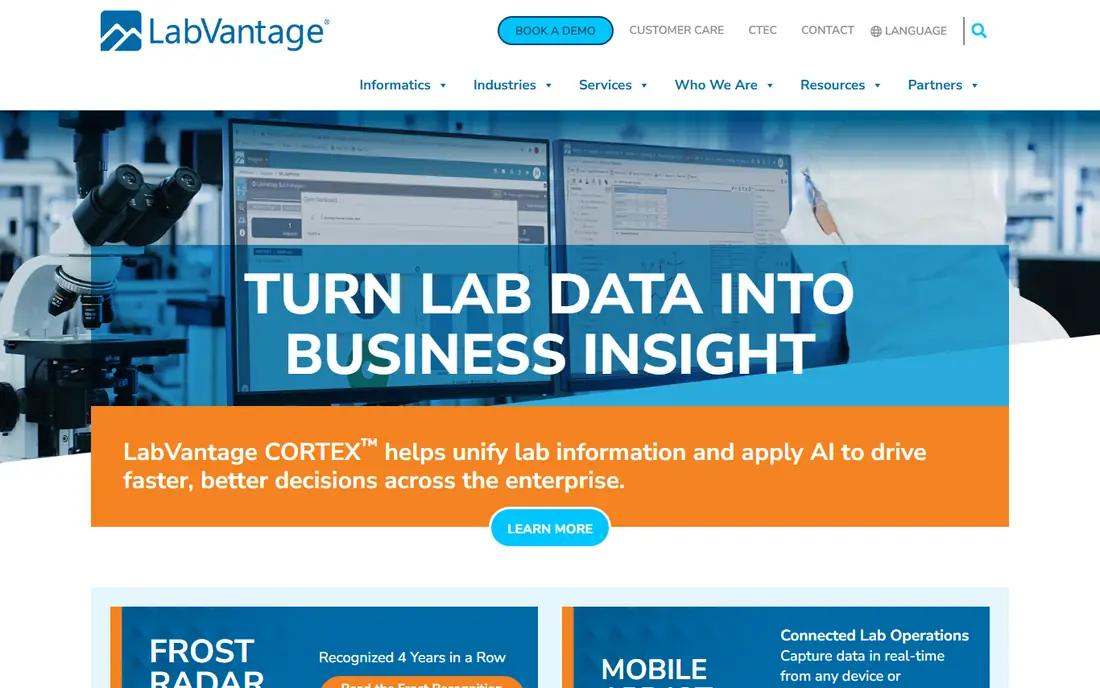
LabVantage covers more than sample tracking, bringing LIMS, electronic notebook, and laboratory execution tools into one platform. That breadth suits biopharma and clinical research organizations that need sample management, experiment records, and quality workflows to stay connected. Cloud, SaaS, and on-premise deployment options give IT teams flexibility on hosting and validation.
As with LabWare, breadth brings complexity and cost. A lab should pilot its core workflows, especially sample intake, result entry, and reporting, before committing to a full rollout. For large organizations coordinating informatics across several lab functions, LabVantage is a strong shortlist candidate.
- Broad informatics platform
- LIMS plus notebook and execution tools
- Cloud or on-premise deployment
- Enterprise cost and timeline
- Configuration complexity

Benchling is built for life science research, where samples, sequences, plasmids, and experiment notes must stay linked. Its LIMS tools sit alongside an electronic notebook and molecular biology tools, so a research team can track a sample from design through experiment to result without switching systems. The modern interface also helps adoption among researchers who dislike older LIMS tools.
High-volume clinical or manufacturing QC labs may find Benchling less focused on their throughput and compliance workflows than LabWare or STARLIMS. For biotech and research labs, though, the research-first design is a clear advantage, and a trial with real research workflows is the best test.
- Strong molecular biology and research tools
- Notebook tightly linked to samples
- Modern interface
- Less suited to high-volume clinical diagnostics
- Enterprise pricing for larger teams
STARLIMS, part of Abbott Informatics, serves regulated quality, pharma, and public health labs with configurable sample management, quality control, and reporting tools. It supports compliance-oriented workflows, audit trails, and instrument connections that regulated labs need for inspections. Public health and food safety labs often cite its fit for high-volume testing and standardized methods.
Implementation still requires planning, validation, and training, and the interface reflects its enterprise roots. Labs that need strict quality workflows and proven regulatory support will value that depth. Smaller research labs may prefer a lighter, cloud-first tool.
- Strong quality and compliance workflows
- Configurable for pharma and public health
- Broad lab coverage
- Implementation effort
- Interface feels enterprise rather than consumer-simple
Thermo Scientific SampleManager is a LIMS for large pharma, clinical, and regulated labs that need validated workflows and strong instrument integration. It supports sample tracking, quality control, and compliance controls for FDA-regulated work, including electronic records and signatures where required. Integration with Thermo Fisher instruments and enterprise systems helps labs that already use that ecosystem.
Cost and deployment time reflect its enterprise scope, and validation planning should start during selection. Labs with simpler needs may find it heavy. For regulated labs that need a proven, deeply integrated system, SampleManager remains a credible leader.
- Strong regulated workflow support
- Deep instrument and enterprise integration
- Thermo Fisher ecosystem
- Enterprise pricing and deployment
- Needs validation planning
QBench is a modern cloud LIMS for labs that need configurable workflows without a long enterprise project. Worksheets, calculations, control charts, and report templates can be set up without code, which helps labs whose methods and customer requirements change often. Materials testing, manufacturing QC, and third-party testing labs are a natural fit.
Enterprise labs with very complex multi-site and validation needs may still need LabWare or LabVantage depth. For a growing lab that wants to go live quickly and adjust workflows itself, QBench offers a strong balance of flexibility and speed, and a trial with real sample types is worthwhile.
- Configurable no-code workflows
- Fast cloud setup
- Strong for materials and QC testing
- Less enterprise depth than LabWare
- Newer vendor footprint
Scispot targets high-growth biotech and genomics labs with an API-friendly platform and a no-code workflow builder. Samples, workflows, instruments, structured data, and reporting sit in one system that a lab team can adjust as methods change, without waiting for vendor developers for every small change. That adaptability suits labs that scale fast and add new assays often.
As a newer platform, buyers should check references in their exact lab type and confirm compliance, instrument, and reporting coverage for their work. For a modern biotech lab that values speed and configurability over a decades-old installed base, Scispot is a promising option to trial.
- API-friendly design
- No-code workflow builder
- Good for genomics and biotech growth
- Newer platform, check references in exact lab type
- Some enterprise features still maturing
Lockbox LIMS, from Third Wave Analytics, is built on the Salesforce platform for life science, biotech, research, and QC labs. It covers sample management, materials, protocols, and instrument management, with support for regulated workflows including 21 CFR Part 11, CAP and CLIA, HIPAA, and ISO 17025 where applicable. Salesforce familiarity can shorten training for teams already using that platform.
Labs that do not use Salesforce may find the platform choice a barrier, and they should weigh that against the faster deployment Lockbox offers for smaller specialty labs. For a Salesforce-based lab that needs a compliant, user-friendly LIMS without a long enterprise project, Lockbox is a strong pick.
- Built on Salesforce
- Fast deployment for QC and specialty labs
- Strong compliance support
- Best inside a Salesforce setup
- Less suited to labs avoiding that platform
How we picked these
We compared official product pages, vendor documentation, and public LIMS comparisons, and we weighed sample tracking, workflow configurability, instrument integration, compliance support, deployment style, and lab-type fit. We favored systems that are actively sold and supported, and that clearly serve labs rather than general data tools. Where pricing was not published, we used See website.
We also separated lab types. A research LIMS and a regulated QC LIMS can both be excellent, but they are not interchangeable, so we judged each system against the lab type it serves best.
What to check before you buy
Map the sample journey first
Write down every step from sample intake to result reporting, including instruments, approvals, retests, and customer reports. Test that full journey in a trial, not just a demo of sample login, since gaps usually appear at handoffs and reporting.
Confirm instrument and compliance coverage
List every instrument, method, and regulation the lab must support, and get written confirmation for each one. Instrument drivers, electronic signatures, audit trails, and validation support decide whether a LIMS survives an inspection, not the general feature list.
Plan validation and migration time
Sample history, methods, and results must migrate cleanly, and regulated labs must validate the system before go-live. Start both plans during selection, and test a sample of real history before committing to a launch date.
FAQ
What is the best laboratory information system software for a small lab?
QBench, Scispot, and Lockbox LIMS are strong starting points for smaller labs, because they offer faster cloud setup and configurable workflows without a full enterprise project. Trial each one with the lab's real sample types before deciding.
What are the best laboratory information software options for regulated pharma labs?
LabWare, LabVantage, STARLIMS, and Thermo SampleManager lead for regulated pharma labs, thanks to compliance controls, audit trails, instrument integration, and validation support. The choice often turns on existing systems, validation needs, and multi-site scope.
How much does LIMS software cost?
Most enterprise LIMS vendors quote pricing based on users, modules, deployment, and implementation, so public prices are rare. Budget for licenses plus implementation, validation, migration, training, and ongoing support, and ask for a total first-year figure in writing.
What is the difference between a LIMS and an electronic lab notebook?
A LIMS tracks samples, tests, results, and compliance, while an electronic notebook records experiments, methods, and observations. Some platforms, like Benchling and LabWare, combine both, which helps research teams keep samples and experiment records linked.
Can a LIMS connect to lab instruments?
Yes, most systems in this list connect to instruments for direct result capture, which cuts manual transcription errors. Confirm the exact instrument models and drivers for the lab, since instrument support varies by vendor and version.
How long does LIMS implementation take?
Timelines range from weeks for a focused cloud LIMS to many months for a large enterprise system with validation and data migration. The main drivers are workflow complexity, instrument count, data quality, validation needs, and the number of sites going live.