Best KYC Onboarding Software in 2026: 8 Platforms Compared
Find the best kyc onboarding software for fintechs and regulated teams, with ID checks, AML screening, pricing notes and honest trade-offs included now.
- Editor's choice
 Sumsub
All-in-one KYC and AML
Starts atSee websiteVisit sumsub.comFull review - Great alternative
 Entrust Identity Verification (Onfido)
Global document checks
Starts atSee websiteVisit entrust.comFull review - Also consider
 Jumio
Enterprise identity verification
Starts atSee websiteVisit jumio.comFull review
TL;DR:
- The best KYC onboarding software depends on whether you need document checks, sanctions screening, or both in one platform.
- Sumsub and Persona suit teams that want ID verification plus AML screening without stitching vendors together.
- ComplyAdvantage is a screening specialist, not an ID verification tool, so pair it with an IDV provider when needed.
- Most enterprise KYC pricing is quote based, so budget by check volume and country coverage, not by a list price alone.
Quick comparison
| Tool | Best for | Starts at | Free plan? | |
|---|---|---|---|---|
| Sumsub | All-in-one KYC and AML | See website | Free trial | Visit |
| Entrust Identity Verification (Onfido) | Global document checks | See website | Free trial | Visit |
| Jumio | Enterprise identity verification | See website | No | Visit |
 Veriff | Fast document and biometric checks | See website | Free trial | Visit |
 Persona | Custom onboarding workflows | See website | Free trial | Visit |
 ComplyAdvantage | AML and sanctions screening | $99 per month | No | Visit |
 Trulioo | Global data coverage | See website | Free trial | Visit |
 Alloy | Identity decisioning and orchestration | See website | No | Visit |
The best KYC onboarding software
Onboarding is where compliance and conversion collide. A slow or confusing check loses customers, while a weak check invites fraud and regulator trouble. These eight picks are our shortlist for the best KYC onboarding software in 2026, from all-in-one platforms to focused screening tools.

Sumsub is our pick for teams that want one vendor for most of the onboarding stack. It covers identity verification, business verification, sanctions and PEP screening, adverse media checks and transaction monitoring, with workflows that can step up checks for higher-risk users. That breadth helps fintechs and crypto platforms that would otherwise manage several vendors and contracts.
The downside is pricing transparency. Costs are quoted by volume and modules, so you need a sales conversation to get a firm number. Smaller teams with a single, simple check may also find the platform more than they need. For a growing regulated product, though, the combined stack is a real time saver.
- Combines KYC, KYB, AML screening and transaction monitoring
- Broad document coverage
- Workflow builder for different risk levels
- Quote-based pricing makes budgeting harder
- Smaller teams may find the platform broad for a simple use case
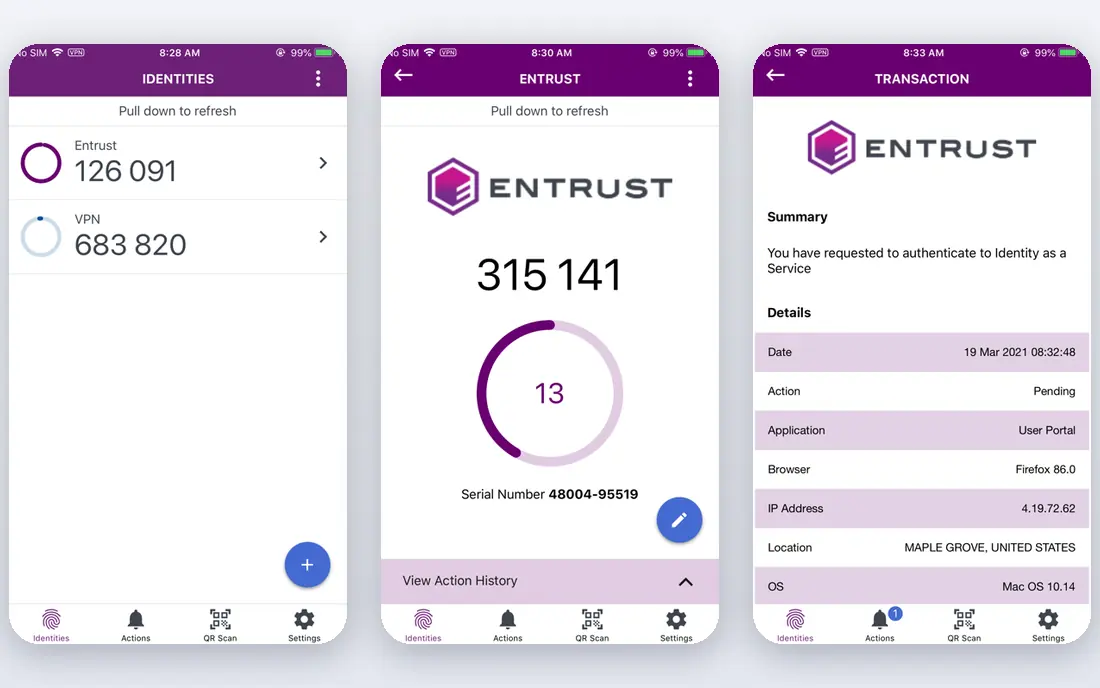
Entrust Identity Verification, built on Onfido technology after Entrust acquired Onfido, is a strong choice for global document verification. It supports a large range of document types, adds selfie and liveness checks, and offers a workflow builder for teams that do not want to code every flow from scratch. SDKs cover web and mobile, which helps product teams ship onboarding quickly.
Pricing is the main frustration, since Entrust quotes rather than publishes prices. Some reviewers also report slow support responses, so enterprise buyers should test support during a trial. If you need business verification as well, you will need a second vendor or a platform that bundles KYB.
- Document checks across many countries
- Liveness and biometric checks
- No-code workflow builder
- No published pricing
- Support responsiveness draws mixed reviews
- No KYB product of its own
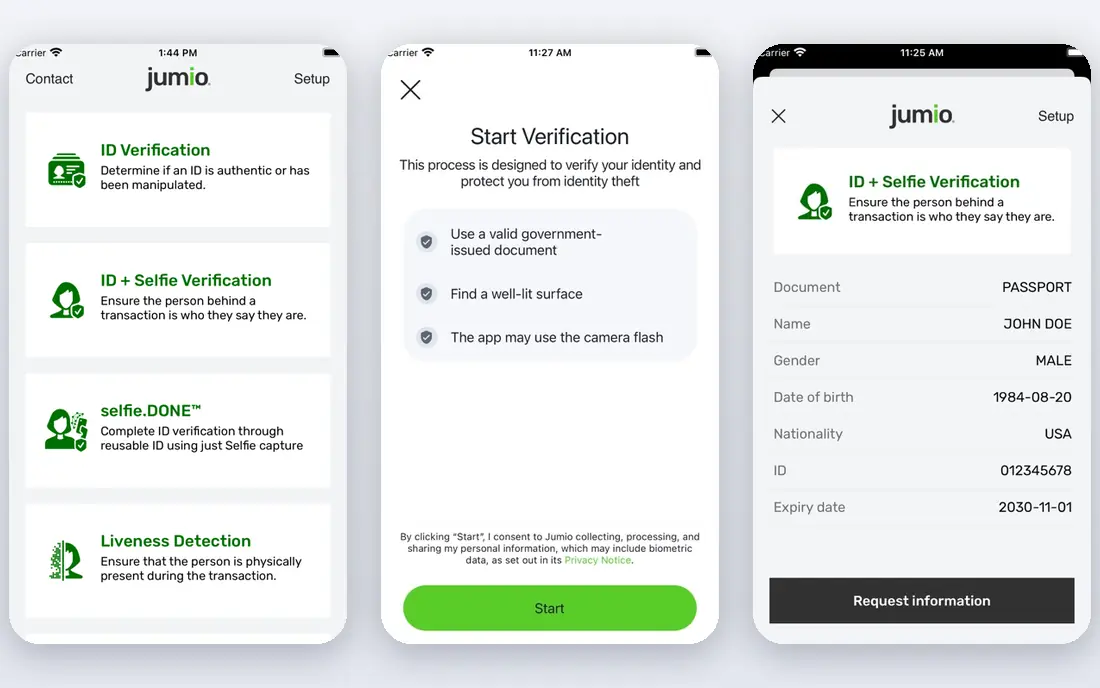
Jumio is the enterprise end of this list, aimed at large teams that need deep coverage and strong fraud controls. It verifies thousands of ID types across many countries and territories, adds biometric liveness checks, and layers orchestration, risk scoring and ongoing monitoring on top of onboarding. That makes it a fit for banks, large fintechs and platforms with serious fraud pressure.
Smaller teams should think twice. Pricing is quote only, and the integration work is heavier than a simple hosted link, so you need developer time to get the most from it. For a large, high-volume programme, the depth is worth that effort.
- Very broad ID document coverage
- Liveness tested to a high standard
- Orchestration and risk scoring add-ons
- Quote-only pricing
- Heavier integration lift for teams without dedicated developers
Veriff focuses on fast, AI-driven identity checks that feel light for the end user. Users photograph an ID and take a selfie, and Veriff authenticates the document, checks the face match and screens for fraud signals. The flow works through a hosted link or SDKs, so teams can start with a simple integration and add depth later.
Pricing is quoted, which is normal in this market but still annoying for budgeting. The platform is also built for scale, so a very small team with low volume may pay for more capability than it uses. For consumer fintechs and marketplaces that care about drop-off, the speed of the flow is a genuine advantage.
- AI-driven document authentication
- Biometric verification and fraud checks
- Clear hosted and SDK options
- Quote-based pricing
- Enterprise features can raise the total cost for small teams
Persona suits teams whose onboarding is not one-size-fits-all. Its workflow builder lets you branch checks by country, product, risk score or user type, and its case tools help compliance teams review edge cases without leaving the platform. It also covers identity lifecycle management and AML integrations, so it can grow from a simple KYC flow into a fuller compliance hub.
That flexibility has a cost in setup time. You will spend longer designing flows than with a fixed hosted check, and pricing is quoted by use. If your onboarding rules change often, or differ by market, that effort pays off. If you want a single fixed flow, a simpler vendor may be faster.
- Highly customisable workflows
- Identity lifecycle and case management
- Developer-friendly API and integrations
- Flexibility needs configuration time
- Pricing is quote based and can grow with modules
ComplyAdvantage is different from the rest of this list, and that difference matters. It is an AML screening and financial-crime data platform, not an identity verification vendor. It screens people and companies against sanctions lists, watchlists, PEP lists and adverse media, with ongoing monitoring as risk changes. The Starter plan is published from $99 per month with annual billing, which is rare clarity in this market.
Do not buy it expecting ID checks, because it does not perform document or biometric verification. The best setup pairs it with an IDV provider such as Sumsub, Veriff or Entrust. Transaction monitoring and payment screening also sit on Enterprise plans, so check the plan details before you commit.
- Published starter price
- Strong sanctions, PEP and adverse media data
- Ongoing monitoring included
- No document or biometric ID verification
- Transaction monitoring sits on Enterprise plans
Trulioo is the pick when your users are spread across many countries and your main problem is data coverage. It connects to a wide set of international data sources for identity and business verification, plus AML screening, which helps teams onboard users in markets where document checks alone are thin. That coverage is why global fintechs and payment firms use it alongside, or instead of, a document-first vendor.
The trade-off is complexity. Global coverage means more configuration, more data source choices and a quote-based price that depends on volume and markets. Teams with a single-country user base will not need this depth. Teams onboarding worldwide will find it hard to replace.
- Broad international data sources
- Individual and business verification
- AML screening options
- Quote-based pricing
- Setup can be complex for teams new to global compliance
Alloy is less a single check and more a decision layer for onboarding. It pulls together identity, fraud and compliance data sources, runs them through rules you set, and returns a clear approve, review or decline decision with an audit trail. That orchestration helps banks and fintechs that already use several vendors and want one place to manage risk logic.
It is not the simplest first KYC tool. Pricing is quote only, and the value shows most when you have multiple data sources to coordinate. Smaller teams may prefer an all-in-one vendor that bundles the checks. For a maturing compliance programme, Alloy brings order to a messy vendor stack.
- Orchestrates many data vendors behind one decision
- Fraud and compliance checks in one flow
- Clear audit trail
- Quote-only pricing
- Best suited to US-focused teams with existing vendor relationships
How we picked these
We compared official product pages, pricing pages and documentation, plus independent reviews, for platforms that are live and supported in October 2026. We looked for real identity or AML capability, coverage that matches the markets readers serve, and a clear distinction between document verification, business verification and screening. We excluded vendors with no working homepage and tools that only offer a single narrow check with no onboarding flow.
How to choose the right KYC stack
Start with the check you actually need
List the checks your regulator and risk team require before you shortlist vendors. Document verification, biometric liveness, sanctions screening, PEP checks, adverse media and business verification are separate capabilities, and few vendors do all of them equally well. A platform that looks complete on a sales page may still need a partner for one of those checks.
Test conversion, not just accuracy
Run a trial with real users in your main markets and watch where people drop out. A check that is accurate but confusing, slow or fails on common phones will cost you customers. Test low-light selfies, older devices and the ID types your users actually hold, and ask the vendor how failures are reviewed.
Price by volume and market, not by headline
Most KYC pricing is quote based, so compare vendors on the same basis: checks per month, countries covered, modules included and overage rates. Ask what counts as a billable check, what a retry costs, and whether ongoing monitoring is included. A low per-check price with expensive retries can cost more than a higher flat rate.
FAQ
What is the best KYC onboarding software for a small fintech?
Sumsub or Veriff are good starting points, since both bundle the checks a small fintech usually needs and offer trials to test conversion. Persona suits teams that need custom flows by market or risk level. If your main need is screening rather than ID checks, ComplyAdvantage at a published starter price is a useful complement.
How does the best KYC onboarding software handle AML checks?
The best KYC onboarding software usually combines identity verification with sanctions, PEP and adverse media screening, and some platforms add transaction monitoring after onboarding. All-in-one vendors bundle these checks, while screening specialists focus on the AML side and pair with an IDV vendor. Ask whether screening is continuous, since a one-time check misses risk changes later.
Is KYC software pricing published or quoted?
Mostly quoted, with ComplyAdvantage a notable exception at its published starter tier. Vendors price by check volume, countries, modules and contract length, so two teams can pay very different amounts for the same product. Request a quote on identical volumes and ask about retry, overage and monitoring costs before you compare.
What is the difference between KYC and KYB software?
KYC verifies individual people, while KYB verifies businesses, their owners and their control structure. Some platforms cover both, while document-first vendors may only cover individuals. If you onboard companies, confirm KYB coverage, ultimate beneficial owner checks and registry data for your markets before you sign.
How long does KYC onboarding take to implement?
A hosted link or simple SDK integration can go live in days, while a custom workflow with multiple vendors, risk rules and case management can take weeks. The main delays are usually compliance sign-off, testing across ID types and markets, and data agreements. A trial that includes your real ID types will surface most problems early.
Do these tools store customer ID data?
Yes, vendors store verification results and, depending on settings, ID images and biometric data, under their privacy and data retention policies. Ask where data is hosted, how long it is kept, how deletion works, and which certifications the vendor holds. Your own privacy policy should explain this clearly to users.