Best Keyword Research Tool for SEO in 2026: 8 Tools Compared
Looking for the best keyword research tool for seo? We compare 8 SEO keyword research tools, prices, databases, limits, and picks for small teams in 2026.

- Editor's choice
 Ahrefs
Backlink and keyword depth
Starts at$129 per monthVisit ahrefs.comFull review - Great alternative
 Semrush
All-in-one SEO and PPC
Starts at$139 per monthVisit semrush.comFull review - Also consider
 Moz Pro
Beginners and authority metrics
Starts at$99 per monthVisit moz.comFull review
TL;DR:
- Ahrefs and Semrush are the professional standards for SEO keyword research, with Ahrefs stronger for backlinks and Semrush stronger as an all-in-one suite.
- SE Ranking is the strongest mid-market pick, while Mangools and Ubersuggest are the honest budget picks for freelancers and small sites.
- Google Keyword Planner remains the best free starting point, since its volume data comes straight from Google.
- Compare limits, not just databases, since monthly queries, tracked keywords, and report rows decide what you can actually do each month.
Quick comparison
| Tool | Best for | Starts at | Free plan? | |
|---|---|---|---|---|
| Ahrefs | Backlink and keyword depth | $129 per month | Yes | Visit |
| Semrush | All-in-one SEO and PPC | $139 per month | Free trial | Visit |
| Moz Pro | Beginners and authority metrics | $99 per month | Free trial | Visit |
 SE Ranking | Mid-market all-in-one | $129 per month | Free trial | Visit |
 Mangools | Clean, simple keyword research | $29.90 per month | Free trial | Visit |
 Ubersuggest | Cheapest usable research | $12 per month | Yes | Visit |
 Serpstat | Research plus rank tracking | $69 per month | Free trial | Visit |
 AnswerThePublic | Questions people ask | $20 per month | Yes | Visit |
The best keyword research tool for seo options
We compare tools by database, limits, and fit, since the best SEO keyword research tool for an agency is not the same as the best tool for a small blog.

Ahrefs is our pick for keyword discovery depth. Keywords Explorer draws on a large database across many countries, with search volume, difficulty, clicks, and parent topic data for each term. Site Explorer shows which keywords competitors rank for, which pages drive traffic, and which backlinks support those pages, so you can find gaps rather than guessing topics. The Lite plan costs $129 per month, with 750 tracked keywords and 1,000 credits per user per month, while a Starter plan at $29 per month covers lighter use for your own sites.
The Lite limits matter. Reports stop at 2,500 rows, history covers six months, and credits are shared across research tools, so heavy users hit limits quickly. Standard at $249 per month removes the credit limit, but that price suits agencies and larger teams. For SEOs who live in keyword and backlink data, Ahrefs is still the depth leader, even at the higher price.
- Very large keyword database
- Strong Keywords Explorer and Site Explorer
- Good SERP analysis
- Lite plan limits credits and history
- Price is high for small sites
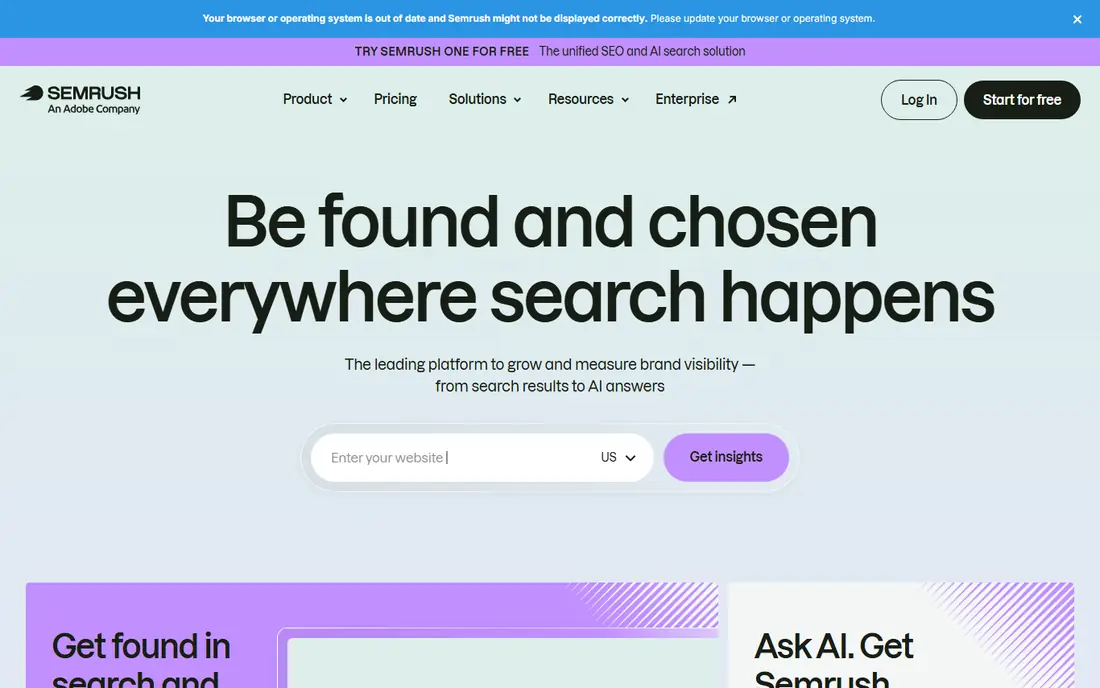
Semrush is the all-in-one alternative to Ahrefs, and the better pick if you also run ads or content marketing. Its keyword database is similarly large, with intent labels that show whether a searcher wants information, navigation, or a purchase. Beyond research, Semrush covers rank tracking, site audits, backlink analysis, PPC research, social tools, and content templates, so a marketing team can run most SEO work in one subscription. The Pro plan costs $139 per month, with a 7-day free trial in many regions.
The breadth is also the drawback. The interface packs many tools into one dashboard, and new users can spend weeks learning where each report lives. Pricing also rises quickly if you need Guru or Business tiers for more keywords, history, or API access. Choose Semrush when you need SEO plus PPC and content in one place, and choose Ahrefs when keyword and backlink depth alone matter most.
- Large keyword database
- Intent labels
- Strong PPC and content tools in one suite
- Expensive
- Interface is busy and takes time to learn

Moz Pro suits beginners and local teams who want clear metrics without a steep learning curve. Keyword Explorer is simple to use, Domain Authority gives a familiar benchmark for comparing sites, and the dashboard explains issues in plain language. The Standard plan costs $99 per month billed monthly, or less billed yearly, with 300 tracked keywords and three campaigns. A free trial and a free Moz Community account let you test the basics first.
The limits are real. Standard includes only 150 keyword queries per month, which suits light research but not daily agency work, and the keyword database is smaller than Ahrefs or Semrush. Medium and Large tiers raise query limits sharply, but at higher prices. Moz is a good starter tool and a useful benchmark, but teams that outgrow it usually move to Ahrefs, Semrush, or SE Ranking for deeper data.
- Friendliest for beginners
- Domain Authority is widely used
- Clear keyword tool
- Smaller keyword database than Ahrefs or Semrush
- Standard limits queries to 150 per month
SE Ranking is the strongest mid-market pick in this list. It bundles keyword research, rank tracking, site audits, backlink checks, and reporting without the add-on maze found in larger suites. The Core plan costs $129 per month, with a 14-day trial that needs no credit card, and rank tracking limits are generous for the price. For agencies and in-house teams that need solid research plus daily rank data, SE Ranking gives most of what Semrush offers at a similar or lower total cost.
The trade-offs are database size and PPC depth. SE Ranking keyword database is smaller than Semrush, and it lacks full PPC research, so teams that buy ads heavily may still need Semrush for that work. For core SEO tasks, including research, tracking, and audits at moderate depth, SE Ranking matches the larger suites well and is easier to budget for.
- Research, rank tracking, and audits in one plan
- Generous rank tracking
- 14-day trial
- Keyword database smaller than Semrush
- PPC research is limited
Mangools, built around KWFinder, is our pick for freelancers and small sites that want simple, clean keyword research. KWFinder shows volume, difficulty, and SERP results for a term in a clear layout, without the clutter of a full suite. SERPChecker, SERPWatcher, LinkMiner, and SiteProfiler add rank tracking and basic backlink checks, so you get a small suite for $29.90 per month on the Basic plan, with a free trial that allows a few lookups per day.
Mangools will not replace Ahrefs for deep competitor or backlink work, and it lacks a full site audit. Lookup limits also matter for heavy users, since free and Basic tiers cap daily searches. For a blogger, freelancer, or small business that needs real keyword data without a $129 monthly bill, Mangools is the most pleasant budget tool in this list.
- Very easy to use
- KWFinder is strong for long-tail terms
- Clean interface
- No site audit depth
- Smaller database than Ahrefs
- Limits on lookups per day
Ubersuggest is the cheapest usable keyword research tool here, with plans from $12 per month for individuals and a free tier with limited searches. It gives keyword volume, difficulty, content ideas, and basic site audit data, which is enough for a small site to plan posts and track a handful of terms. A lifetime license option has also been offered in the past, which appeals to buyers who dislike monthly bills, though you should check current availability on the pricing page.
Data depth is thinner than Ahrefs or Semrush, and difficulty scores can differ from other tools, so use Ubersuggest as a planning aid, not a sole source for competitive decisions. For a new blog, a local business, or a freelancer on a tight budget, Ubersuggest gives real data at a price that is easy to justify. For competitive niches, pair it with Google Search Console data and, when budget allows, a deeper tool.
- Very low price
- Free limited searches
- Keyword ideas plus content and audit basics
- Data depth is thinner than Ahrefs
- Interface and limits change by plan
Serpstat bundles keyword research, rank tracking, site audits, and backlink analysis from $69 per month, with a free trial to test. That price sits below Ahrefs, Semrush, and SE Ranking, while still covering the core SEO workflow for agencies and in-house teams. Rank tracking and audit tools are solid, and the platform supports multiple projects, which helps agencies managing several clients.
The interface is less polished than Ahrefs or Semrush, and database coverage varies by country, so check your target market before you commit. Serpstat is not the depth leader in any single area, but it is a strong value all-rounder for teams that need research plus tracking without paying top-tier prices. Test it on your own niche keywords during the trial to judge data quality for your market.
- Research, rank tracking, and audit in one lower tier
- Good for agencies on a budget
- Interface takes learning
- Database smaller than top rivals in some regions
AnswerThePublic answers a different question from the rest of this list: what questions do people ask about a topic? Enter a seed term and get visual maps of questions, prepositions, and comparisons, such as what, how, why, and versus phrases. That output is ideal for blog posts, FAQs, and video topics, since it mirrors real search language. Plans start at $20 per month, or $13.33 billed yearly for Starter, with limited free searches.
AnswerThePublic is not a full SEO suite. It does not track rankings, audit sites, or analyze backlinks, so use it alongside a research tool like Mangools, Ubersuggest, or Ahrefs. For content teams that struggle with topic ideas, it is the best complement in this list, and its low price makes it easy to add to an existing stack.
- Shows questions and phrases around a topic
- Great for content ideas
- Low price
- Not a full keyword tool
- No rank tracking or backlink data
How we picked these
We compared official pricing pages, database claims, and limit tables for keyword research tools, and we checked free tiers, trial terms, and starting paid prices. We favored tools with a live US price, clear query and tracking limits, and a track record with SEOs, and we noted where a vendor counts keywords or backlinks differently, so database sizes are a rough guide rather than a ranking. Where prices differ by billing period, we state the monthly price and note yearly savings where relevant.
How to pick a keyword tool for your site size
Start with your monthly research volume, not the database size. A blogger publishing four posts a month needs far fewer queries than an agency researching 50 clients, so a $29.90 Mangools plan or a $12 Ubersuggest plan may cover real needs. A growing site with 20 target pages needs rank tracking and audits too, which points to SE Ranking or Moz Pro. An agency or competitive niche needs Ahrefs or Semrush depth, even at $129 or more per month, since better data pays for itself in fewer wasted posts.
Next, test tools on your own keywords. Run the same ten seed terms through two tools during free trials, and compare volume, difficulty, and SERP results for your niche. A tool that looks strong for US tech terms may be weaker for local, non-English, or niche B2B terms. Finally, check limits that affect daily work: queries per month, tracked keywords, report rows, and seats. A cheap plan that caps queries at 150 per month will frustrate a team that researches daily, while a higher plan with generous limits may cost less per usable query.
FAQ
Which SEO tool is best for keyword research?
Ahrefs is best for keyword and backlink depth, while Semrush is best as an all-in-one suite that also covers PPC and content. SE Ranking is best for mid-market teams, Mangools is best for simple budget research, and Google Keyword Planner is best for free volume data. The right pick depends on your budget, team size, and whether you need tracking and audits too.
What is the best free keyword research tool for SEO?
Google Keyword Planner is the best free starting point, since it shows volume data from Google with a free Ads account. Google Search Console is also free and shows queries your site already ranks for. Among paid tools, Ubersuggest and AnswerThePublic offer limited free searches that help with ideas before you pay.
Is Ahrefs or Semrush better for keyword research?
Ahrefs is better for keyword discovery depth, backlink analysis, and SERP detail, while Semrush is better for intent labels, PPC research, and all-in-one marketing work. Many agencies use both, but most small teams should pick one based on whether backlinks or PPC matter more, since both cost over $129 per month.
How much should I pay for a keyword research tool?
Small sites can start free with Google tools, or pay $12 to $29.90 per month for Ubersuggest or Mangools. Growing sites usually pay $69 to $129 per month for Serpstat, SE Ranking, or Ahrefs Lite. Agencies in competitive niches often pay $249 or more for higher tiers, plus seats for team members.
What does keyword difficulty mean?
Keyword difficulty is an estimate of how hard it is to rank for a term, based on the strength of pages already ranking. Each tool scores difficulty differently, so compare scores within one tool rather than across tools. Use difficulty alongside volume, intent, and SERP type to pick terms you can realistically rank for with your site authority.