Best Inventory Forecasting Software in 2026: 8 Tools Compared
Compare the best inventory forecasting software for demand planning, reorder points and stock levels, with pricing, ERP fit and setup advice explained.
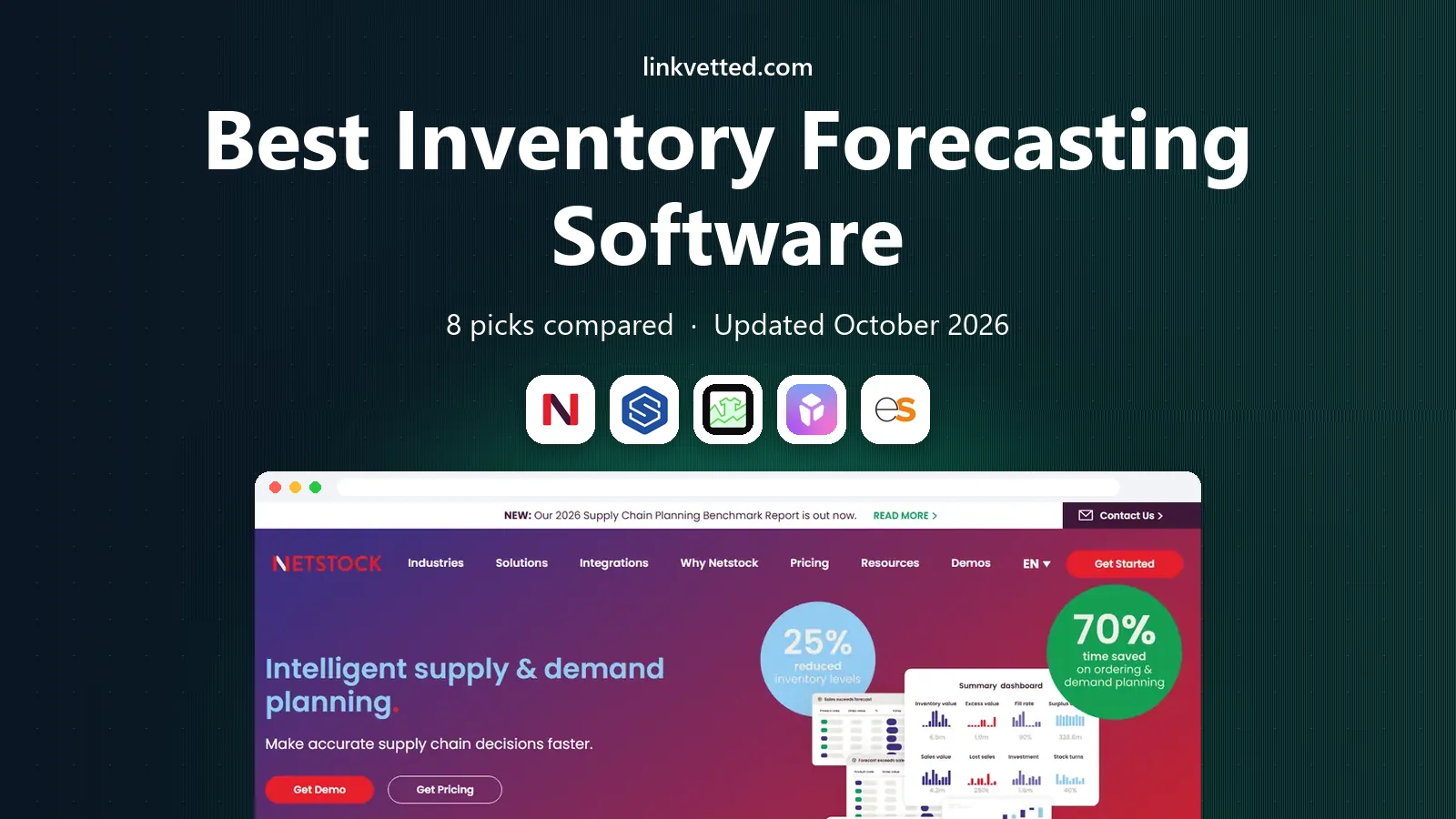
- Editor's choice
 Netstock
ERP-driven mid-market planning
Starts atSee websiteVisit netstock.comFull review - Great alternative
 StockTrim
SMB demand forecasting
Starts atSee websiteVisit stocktrim.comFull review - Also consider
 Inventory Planner
Ecommerce replenishment
Starts atSee websiteVisit inventory-planner.comFull review
TL;DR:
- Netstock suits mid-market firms that already run an ERP and want forecasting tied to live stock and order data.
- StockTrim and Prediko are easier entry points for smaller firms and Shopify sellers that need forecasts fast.
- Lokad fits data-led teams that want programmable, probability-based forecasting rather than a fixed app.
- RELEX, EazyStock and Slimstock handle larger, multi-location networks, but expect a quote and a longer rollout.
- Forecast quality depends on clean sales, lead time and promotion history, so fix data before you judge a tool.
Quick comparison
| Tool | Best for | Starts at | Free plan? | |
|---|---|---|---|---|
| Netstock | ERP-driven mid-market planning | See website | No | Visit |
| StockTrim | SMB demand forecasting | See website | Free trial | Visit |
| Inventory Planner | Ecommerce replenishment | See website | Free trial | Visit |
 Prediko | Shopify demand forecasting | See website | Free trial | Visit |
 EazyStock | Distributor replenishment | See website | No | Visit |
 Lokad | Programmable forecasting | See website | No | Visit |
 RELEX Solutions | Enterprise retail planning | See website | No | Visit |
 Slimstock | Multi-channel demand planning | See website | No | Visit |
The best inventory forecasting software
Inventory forecasting turns past sales, seasonality and lead times into a clear answer: how much to order, and when. The tools below differ in size, ERP fit and method, from simple demand forecasts for a small store to probability-based planning for a large network. We focused on tools that forecast demand, set reorder logic and help turn a forecast into a purchase order.

Netstock is built for companies that already run an ERP and want planning that stays in step with it. Forecasts draw on sales history, lead times and current stock, then highlight items that are overstocked, understocked or at risk of running out. That ERP link matters, because a forecast that lives in a spreadsheet will drift from what the warehouse actually holds.
For a mid-market distributor or manufacturer, the dashboards help planners focus on exceptions rather than reviewing every SKU by hand. The trade-off is cost and setup. Expect a quote, an implementation phase and time spent cleaning item data, supplier lead times and pack sizes. If your ERP data is messy, fix the basics first or the forecast will repeat those errors at scale.
- Ties forecasts to ERP stock and order data
- Clear dashboards for excess and at-risk stock
- Strong fit for NetSuite and Sage users
- Quote-based pricing puts it out of reach for very small firms
- ERP setup needs clean item and supplier data

StockTrim aims at the gap between spreadsheets and enterprise planning. It forecasts demand by SKU and location, suggests order quantities, and helps small and mid-size teams avoid both stockouts and piles of slow-moving stock. Multi-location support is useful for firms with more than one warehouse or store, because demand rarely moves the same way in each place.
The interface is simpler than a large suite, which helps a small planning team get value in weeks rather than months. That simplicity has a limit. If you run a large network with complex constraints, promotions and supplier capacity rules, you may need a deeper tool later. For many SMBs, though, StockTrim is a practical first serious forecasting step.
- Accessible for smaller wholesale and ecommerce teams
- Multi-location forecasting in one view
- Order planning links forecasts to purchase orders
- Less depth than enterprise planning suites
- Complex networks may outgrow it over time
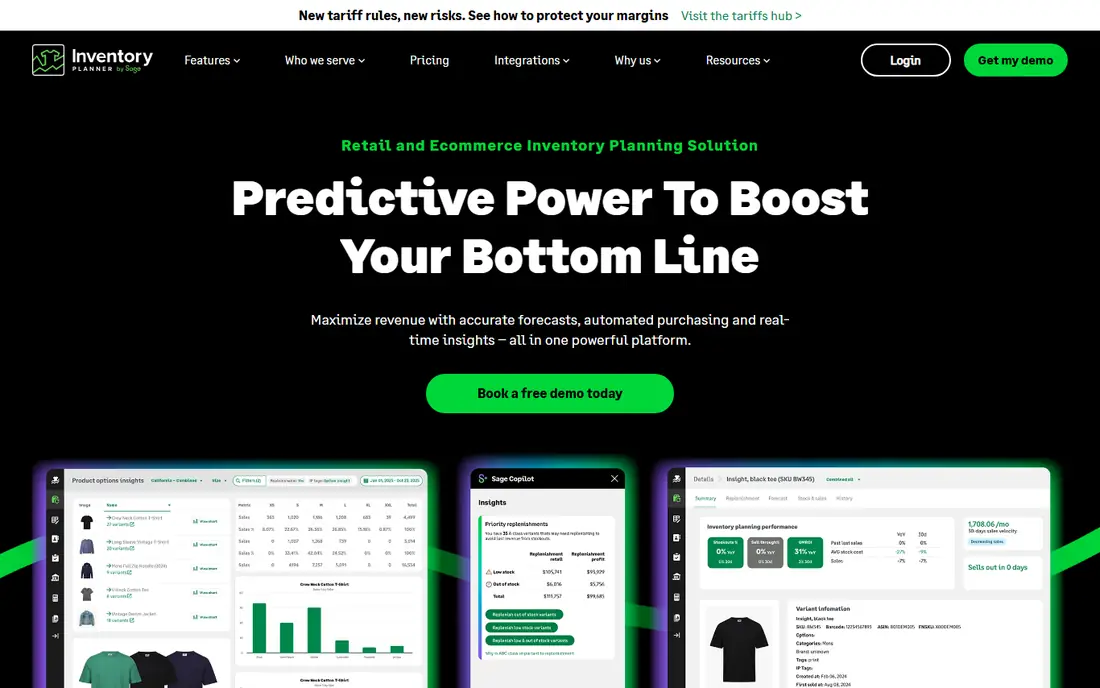
Inventory Planner, now part of Sage, is aimed at ecommerce sellers who sell across several channels and need one view of demand. It forecasts by product and variant, tracks stock across warehouses, and turns forecasts into purchase orders with supplier details. That link from forecast to order saves the manual step where many spreadsheet plans break down.
Channel connections help keep stock data current, which is vital when the same product sells on a website, a marketplace and a retail store. The main limit is history. A new store with only a few months of sales will get a rough forecast, and seasonal products need enough cycles to show a pattern. Use the trial to test forecast accuracy on your top sellers before you commit.
- Built for multi-channel ecommerce sellers
- Automates replenishment and purchase orders
- Connects to major ecommerce and accounting tools
- Pricing is quote-based for many sellers
- Forecast quality falls if sales history is short or messy
Prediko is a focused choice for Shopify brands that need demand forecasting without buying an enterprise suite. It connects to Shopify, forecasts demand, and helps plan purchases and stock transfers. For a brand that has outgrown spreadsheet ordering but is not ready for a full planning department, that focus is a strength.
Setup is quicker than an ERP planning project, because the data model is built around Shopify products, variants and orders. The limit is scope. If you also sell heavily through wholesale, Amazon or an ERP outside Shopify, check how Prediko handles those channels before you rely on it alone. For a Shopify-first brand, it is one of the simplest ways to get a credible forecast.
- Made for Shopify, so setup is fast
- Clear demand forecasts and purchase planning
- Lower entry cost than enterprise tools
- Shopify focus limits fit for other ERPs
- Smaller firms may still need help interpreting forecasts
EazyStock is a cloud replenishment tool for distributors and mid-market firms that want to balance service levels with stock investment. It forecasts demand by pattern, sets inventory targets for a chosen service level, and suggests purchase orders to hit those targets. That service-level framing helps a distributor explain why some items carry more safety stock than others.
ERP connections keep forecasts linked to actual stock, orders and supplier data, which reduces manual re-entry. The rollout still needs care, because lead times, order multiples and supplier calendars shape every suggestion. EazyStock fits a distributor that is ready to move from manual ordering to a system that recommends orders, and that will review those recommendations rather than accept them blindly.
- ERP-connected replenishment for distributors
- Demand forecasting tied to service-level targets
- Automated purchase order suggestions
- Quote-based pricing
- Implementation needs supplier and lead time data in good shape
Lokad is the outlier on this list, and that is the point. Instead of a fixed forecasting app, it offers a programmable platform where a supply chain team can build probabilistic forecasts and optimise ordering decisions. A probability forecast shows the range of likely demand, so a planner can weigh the cost of a stockout against the cost of holding extra stock.
That power suits teams with data skills and a complex supply chain, where a single average forecast hides too much risk. It is not the right pick for a small team that wants a dashboard in a day. If you have analysts or engineers who can work with Lokad scripting and data feeds, it can become a core planning engine. If not, a packaged tool will deliver value faster.
- Probability-based forecasts show risk, not only a single number
- Programmable approach suits data-led teams
- Strong for optimisation beyond simple forecasting
- Needs technical skill to get full value
- Not a simple app for a non-technical planner
RELEX Solutions serves large retail and consumer goods firms that plan across many stores, warehouses and suppliers. It brings demand forecasting, inventory optimisation and related planning into one platform, so a forecast change can flow through to replenishment and promotion planning. That unified view helps when a promotion in one region affects stock in another.
The scale comes with a serious project. Expect a quote, a phased rollout and change management for planning teams. RELEX is not a tool to buy on a whim for a small shop. It fits a retailer or manufacturer with a network complex enough that spreadsheet planning and small tools no longer hold together, and with a team ready to own the system.
- Unified demand, inventory and pricing planning
- Strong for retail networks with many stores
- Scenario tools help planners test choices
- Enterprise pricing and long implementation
- Overkill for a small single-location firm
Slimstock, through its Slim4 platform, helps firms forecast demand across channels and turn those forecasts into inventory policy. It is used by distributors, wholesalers and manufacturers that sell through more than one route and need a consistent view of demand. Channel differences matter, because a product can sell steadily through wholesale and in bursts through ecommerce.
The platform covers forecasting, replenishment and inventory optimisation, so planners can move from a demand number to an order suggestion without switching tools. Like other enterprise options here, pricing is by quote and a rollout needs data work and training. Slimstock fits a mid-market or larger firm that wants a proven planning platform and is ready to invest in getting it set up well.
- Demand sensing across channels
- Slim4 platform covers forecasting and inventory optimisation
- Suits firms with varied sales channels
- Quote-based pricing
- Setup and training take time for a full rollout
How we picked these
We compared official product pages, pricing pages and app listings, plus public reviews for tools that focus on inventory or demand forecasting. We kept tools that forecast at SKU level, support reorder or purchase order planning, and work with an ERP, ecommerce platform or data feed in 2026. We left out general inventory trackers with only basic reorder alerts, because they do not forecast demand in a meaningful way.
What to check before you buy
Start with your data. A forecasting tool needs sales history by SKU and location, lead times, supplier order rules and promotion history. If that data is incomplete, the forecast will be incomplete too, no matter how advanced the model claims to be. Run a backtest on past data where possible, and compare forecast error on your top sellers.
Match the tool to your network size
A Shopify brand, a distributor and a national retailer do not need the same tool. Small teams should favour fast setup and clear forecasts, while larger networks need multi-location logic, constraints and scenario planning. Buying a large suite early can slow you down, while buying a small tool late can force a painful migration.
Test forecast to order, not only forecast to chart
A pretty forecast chart is not enough. Check how the tool turns a forecast into a suggested order, how it handles safety stock, pack sizes and supplier minimums, and how a planner can override a suggestion. The best tools make overrides easy to record, so you can learn which overrides helped and which hurt.
Plan for planner time and review cycles
Forecasting is a weekly habit, not a one-time setup. Assign an owner, set a review cycle, and track forecast accuracy and stockout rates over time. A tool that no one reviews will drift, and a tool that planners distrust will be ignored. Pick a system your planners will open every week.
FAQ
What is inventory forecasting software?
Inventory forecasting software predicts future demand for each product, using past sales, seasonality, trends and lead times. It then helps set reorder points, safety stock and purchase quantities. The goal is to have enough stock to meet demand without tying up cash in excess inventory.
How much history do I need for a good forecast?
More history helps, especially for seasonal products, where at least a full year is useful. A tool can still forecast with a few months of data, but the result will be rougher and needs more manual review. New products need a different approach, such as using similar products as a guide.
Does inventory forecasting software replace a planner?
No. It gives planners better numbers and faster suggestions, but planners still need to handle promotions, supplier issues, new products and sudden market changes. The best setup pairs a good forecast with a planner who reviews exceptions and records why an override was made.
Can small businesses use these tools?
Yes, especially StockTrim, Prediko and Inventory Planner, which are built for smaller teams. Start with your top sellers, test accuracy, and expand to more products once the process works. A small firm should avoid an enterprise suite until its network and data justify the cost and setup time.
What is the difference between demand forecasting and inventory optimisation?
Demand forecasting predicts how much customers will buy. Inventory optimisation decides how much stock to hold and order to meet that demand at a chosen service level, given lead times and costs. Good tools do both, because a forecast alone does not tell you how much safety stock to carry.
How do I measure if forecasting is working?
Track forecast accuracy, stockout rate, excess stock value and inventory turns over time. Compare those numbers before and after you adopt a tool, and review them by product group. Improvement on your top sellers matters more than a perfect average across slow-moving items.