Best Influencer Marketing Analytics Platform in 2026: 9 Platforms Compared
We compared the best influencer marketing analytics platform options for 2026, from CreatorIQ and Traackr to HypeAuditor, Modash, Aspire and more today.
- Editor's choice
 CreatorIQ
Enterprise global programs
Starts atSee websiteVisit creatoriq.comFull review - Great alternative
 Traackr
ROI benchmarking
Starts atSee websiteVisit traackr.comFull review - Also consider
 HypeAuditor
Audience quality and fraud checks
Starts atSee websiteVisit hypeauditor.comFull review
TL;DR:
- CreatorIQ and Traackr suit large brands that need enterprise reporting, benchmarking, and compliance across many markets.
- HypeAuditor and Modash suit teams that need audience quality checks and creator discovery without enterprise contracts.
- Aspire, GRIN, and Upfluence tie analytics to sales, gifting, and affiliate programs for ecommerce brands.
- Fake followers and engagement pods distort headline numbers, so check audience authenticity before you trust any analytics dashboard.
Quick comparison
| Tool | Best for | Starts at | Free plan? | |
|---|---|---|---|---|
| CreatorIQ | Enterprise global programs | See website | No | Visit |
| Traackr | ROI benchmarking | See website | No | Visit |
| HypeAuditor | Audience quality and fraud checks | See website | No | Visit |
 Aspire | Creator programs and sales tracking | See website | No | Visit |
 GRIN | DTC ambassador programs | See website | No | Visit |
 Upfluence | Ecommerce discovery and affiliates | See website | No | Visit |
 Modash | Fast creator discovery | $199 per month | Free trial (14 days) | Visit |
 Later Influence | Visual campaign management | See website | No | Visit |
 Heepsy | Budget creator search | $89 per month | Yes | Visit |
The best influencer marketing analytics platforms
We compared official product pages, pricing research, and public reviews for the best analytics for influencer marketing platforms, including best influencer marketing analytics software and best influencer marketing analytics tools. Most enterprise pricing is quoted, so we list those as See website and focus on discovery depth, audience quality, reporting, and sales attribution.
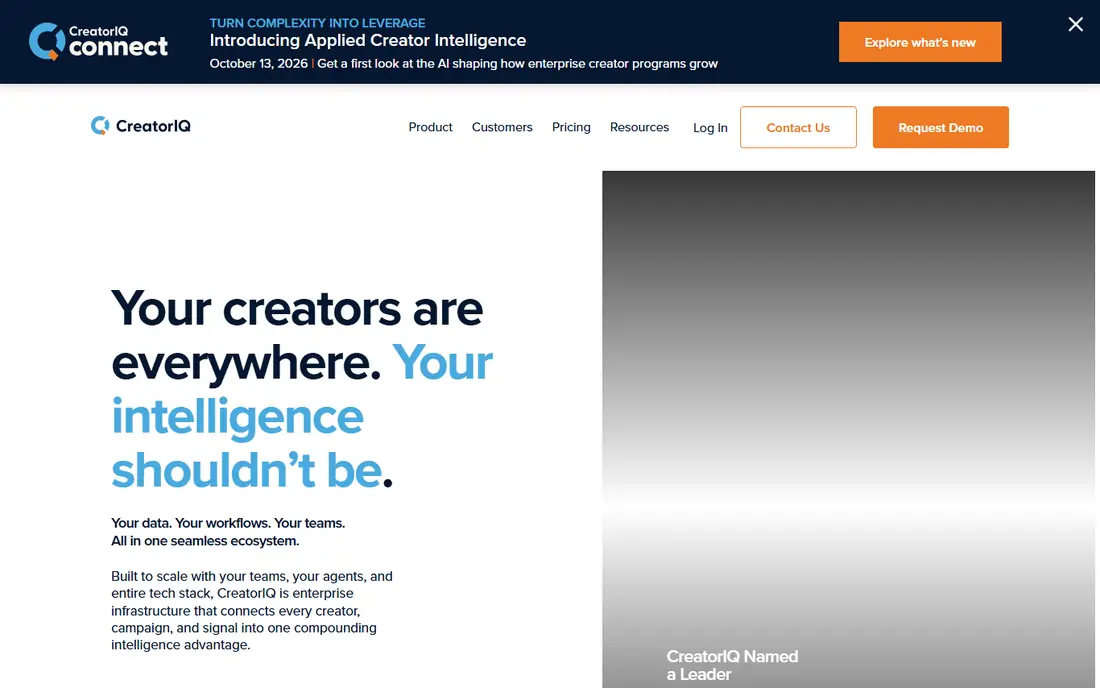
CreatorIQ is the enterprise standard for brands running influencer programs across many countries and teams. It combines discovery, creator relationship management, content approvals, payments, and customizable reporting in one platform, with API access for large data needs. Compliance and stakeholder approvals suit regulated and global brands. Smaller teams will find the cost and complexity hard to justify, and annual contracts lock you in. Choose CreatorIQ when influencer marketing is a major channel with many creators, markets, and internal approvers.
- Large creator database with API access
- Campaign workflows, approvals, and payments
- Advanced reporting for global teams
- Enterprise pricing and annual contracts
- Learning curve for smaller teams
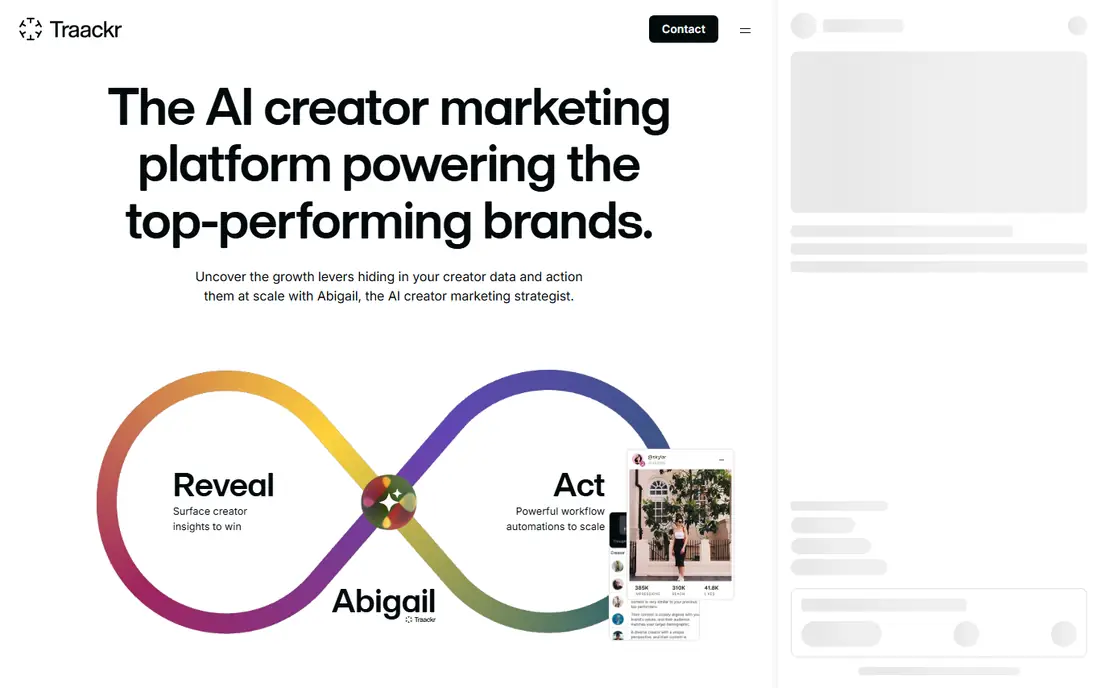
Traackr stands out for benchmarking: it helps brands compare creator performance, spend, and brand impact against competitors and past campaigns. Its relationship tools support long-term creator partnerships rather than one-off posts, and its analytics help teams defend budgets with comparable numbers. That focus suits mature programs. Setup takes effort, since benchmarks only work with clean historical data and consistent tagging. For brands that need to prove return on investment to finance teams, Traackr gives a stronger evidence base than discovery-only tools.
- Strong performance benchmarking
- Brand vitality scoring
- Relationship management for long-term creators
- Enterprise pricing
- Reporting depth needs time to configure well
HypeAuditor is the vetting-first pick in this list. Its audience quality reports flag fake followers, engagement anomalies, and demographic mismatches before you pay a creator, which protects budgets from inflated numbers. AI discovery and lookalike search help find creators similar to proven performers. It is less complete as an end-to-end campaign manager, so some teams pair it with a separate CRM or workflow tool. Use HypeAuditor first when trust in creator data matters more than managing payments in the same platform.
- Strong fraud detection and audience authenticity checks
- AI discovery and lookalike search
- Reports for Instagram, TikTok, and YouTube
- Campaign management tools are thinner than CreatorIQ
- Pricing varies by plan and needs a quote for larger use
Aspire helps brands recruit creators through application pages, manage campaigns, send gifts, and track sales from creator links and codes. That ecommerce focus suits direct-to-consumer brands that need to show revenue, not just reach. Workflow automation cuts manual outreach and follow-up. Pure brand awareness programs without a shop will get less value from its commerce tools. Choose Aspire when creator programs must drive measurable sales and repeat ambassador work.
- Creator marketplace and application pages
- Shopify gifting and sales tracking
- Workflow automation
- Enterprise pricing with onboarding fees
- Best for ecommerce, less for pure brand awareness programs
GRIN is built for direct-to-consumer brands managing large rosters of ambassadors and affiliates. It covers discovery, outreach, gifting, discount codes, and sales attribution, with Shopify and WooCommerce integrations. Teams can see which creators drive orders, not just likes, and manage payouts in one place. Agencies serving many different client types may find its DTC focus narrower than CreatorIQ or Traackr. For a DTC brand scaling creator sales, GRIN gives a clear, commerce-first analytics view.
- Strong for ambassador and affiliate programs
- Ecommerce integrations
- Creator CRM and sales attribution
- Enterprise pricing
- Setup suits DTC brands more than agencies with varied clients
Upfluence combines creator discovery with ecommerce tools, including affiliate tracking, gifting, and automated outreach sequences. Brands can turn existing customers into creators, find new creators by niche and audience, and track sales from creator activity. That blend suits multi-channel ecommerce brands. Non-ecommerce brands should check reporting fit before committing, since its strengths lean toward sales. For online stores that want discovery plus revenue tracking, Upfluence is a strong all-in-one option.
- Large creator search with ecommerce filters
- Affiliate and gifting tools
- Automated outreach
- Pricing is enterprise leaning
- Reporting needs configuration for non-ecommerce goals
Modash is the accessible pick for teams that need discovery and audience insight without an enterprise contract. Its search covers hundreds of millions of creator profiles, with audience demographics, engagement, and fraud signals. A $199 per month starting price on annual billing makes it easier to budget than quote-only rivals. Campaign management and payments are thinner than at CreatorIQ or GRIN, so larger programs may need another tool for execution. For discovery, vetting, and shortlisting, Modash offers strong value.
- Fast creator search with deep audience data
- Transparent starting price
- Shopify affiliate tools
- Less full campaign management than enterprise suites
- Analytics depth grows with higher plans
Later Influence, formerly Mavrck, pairs influencer campaign management with Later social scheduling, which suits social teams that already plan content visually. Campaign boards, creator communication, gifting, and user-generated content management sit in one workflow. Shopify integration helps ecommerce teams track creator-driven sales. Influencer pricing is enterprise leaning, so small teams should compare Modash and Heepsy first. For social-led teams that want influencer and organic social work in one place, Later Influence is a coherent choice.
- Visual campaign boards
- Social scheduling alongside influencer work
- Shopify gifting and content management
- Enterprise pricing for influencer plans
- Analytics depth is tied to the wider Later platform
Heepsy is the budget entry point for influencer analytics, with a free plan and paid plans from $89 per month. Its search filters help small brands and agencies find creators by niche, audience size, location, and engagement, without a sales call. That accessibility makes it a good first tool for testing influencer marketing. Expect lighter reporting and workflow features than at CreatorIQ or Traackr. Use Heepsy to build a shortlist and vet creators, then upgrade when campaign volume or reporting needs grow.
- Low starting price with a free plan
- Large creator database
- Filters for niche, location, and engagement
- Analytics and campaign tools are lighter than enterprise platforms
- Outreach tools are basic
How we picked these
We compared official product pages, pricing research, and public reviews, and we favored platforms that are actively sold in October 2026 with real analytics, not just creator directories. We covered enterprise reporting, audience vetting, discovery, and sales attribution, since different teams need different analytics jobs.
We weighed data depth, fraud detection, reporting flexibility, and total cost, including onboarding fees where published. A platform earned a place by fitting a clear team size and goal, from a small brand testing creators to a global enterprise program.
What to check before you buy
Start with the decision analytics must support. A team defending budget needs benchmarking and sales attribution, while a team avoiding fraud needs audience quality first. Pick the platform that answers your main question, not the one with the longest feature list.
Vet audience quality on real creators
Run your top ten creator candidates through any trial or demo and check follower growth, engagement patterns, and audience location. A tool that looks good on demo data but misses fake followers on your candidates will cost you later.
Confirm platform coverage and data freshness
Check which networks are covered, how often data refreshes, and whether TikTok, Instagram, and YouTube metrics match what creators report. Stale or partial data undermines campaign reporting, especially for fast-moving TikTok campaigns.
Test reporting with a past campaign
Ask for a report built from a past campaign structure, with the metrics your finance or leadership team actually asks for. If the platform cannot produce that report without heavy manual work, it will not save time at scale.
FAQ
What is the best influencer marketing analytics platform?
CreatorIQ suits large enterprise programs, Traackr suits ROI benchmarking, and HypeAuditor suits audience vetting. Modash and Heepsy suit smaller teams that need discovery and analytics at lower prices. The best influencer marketing analytics platforms depend on team size and whether sales, benchmarking, or fraud checks matter most.
How much do influencer analytics platforms cost?
Prices range from $89 per month at Heepsy and $199 per month at Modash to enterprise contracts quoted by CreatorIQ, Traackr, and Aspire. Onboarding fees and annual contracts add cost at the enterprise level. Ask for a full quote including users, creators tracked, and reporting add-ons.
What metrics should influencer analytics track?
Track audience quality, real engagement rate, reach, clicks, conversions, and cost per result, not just follower counts. Audience demographics and overlap show whether creators reach your buyers. Sales attribution matters most for ecommerce, while brand lift and benchmarking matter for awareness programs.
Can small brands use these platforms?
Yes, Heepsy and Modash are built for smaller budgets, with free plans or low starting prices. Small brands should start with discovery and vetting, run a small creator test, and measure results before buying enterprise tools. A shortlist of ten well-vetted creators beats a large, untested roster.
How do platforms detect fake followers?
Platforms check follower growth patterns, engagement anomalies, audience location mismatches, and bot-like behavior, then score audience authenticity. No tool is perfect, so combine platform scores with manual checks of comments and recent posts. Sudden follower spikes without matching engagement are a warning sign.
Do I need a separate tool for campaign management?
It depends on the platform. CreatorIQ, Aspire, and GRIN include campaign workflows, approvals, and payments, while HypeAuditor and Modash focus more on discovery and analytics. If your chosen analytics tool lacks workflows, pair it with a CRM or project tool rather than forcing it to do everything.