Best Influencer Discovery Tool in 2026: 8 Platforms Compared
Compare the best influencer discovery tool options in 2026, with 8 platforms rated on creator databases, filters, fraud checks and pricing for marketers.

- Editor's choice
 Upfluence
Customer-to-creator discovery
Starts atSee websiteVisit upfluence.comFull review - Great alternative
 Aspire
Ambassador programs
Starts atSee websiteVisit aspire.ioFull review - Also consider
 GRIN
Ecommerce creator programs
Starts atSee websiteVisit grin.coFull review
TL;DR:
- Discovery quality depends on database size, filter depth and audience data, not just a large creator count, since follower totals alone hide fake followers and poor audience fit.
- Modash and Influencity suit research-heavy teams and smaller budgets, while CreatorIQ, Aspire and GRIN suit larger brands that need campaign management and commerce tracking.
- Many enterprise platforms hide pricing behind a sales call, so budget for a quote and a contract term, not just a published entry rate.
- Always check audience location, age, interests, engagement history and brand safety signals before outreach, and verify a creator's recent content by hand.
- A discovery tool should also help with outreach, contracts and payment, or it will leave your team juggling spreadsheets alongside the platform.
Quick comparison
| Tool | Best for | Starts at | Free plan? | |
|---|---|---|---|---|
| Upfluence | Customer-to-creator discovery | See website | Free trial | Visit |
| Aspire | Ambassador programs | See website | No | Visit |
| GRIN | Ecommerce creator programs | See website | Free trial | Visit |
 CreatorIQ | Large enterprise programs | See website | No | Visit |
 Modash | Deep creator research | $299 per month | Free trial | Visit |
 Influencity | Budget analytics | $168 per month | Free trial | Visit |
 HypeAuditor | Fraud and audience checks | $299 per month | Free trial | Visit |
 Heepsy | Small-budget discovery | $49 per month | Yes | Visit |
The best influencer discovery tools
We compared official feature pages, pricing notes, database claims, filter options and public reviews for eight platforms that help brands find creators. Prices for quote-based platforms are shown as See website, and published entry rates are used where vendors or reliable listings publish them.
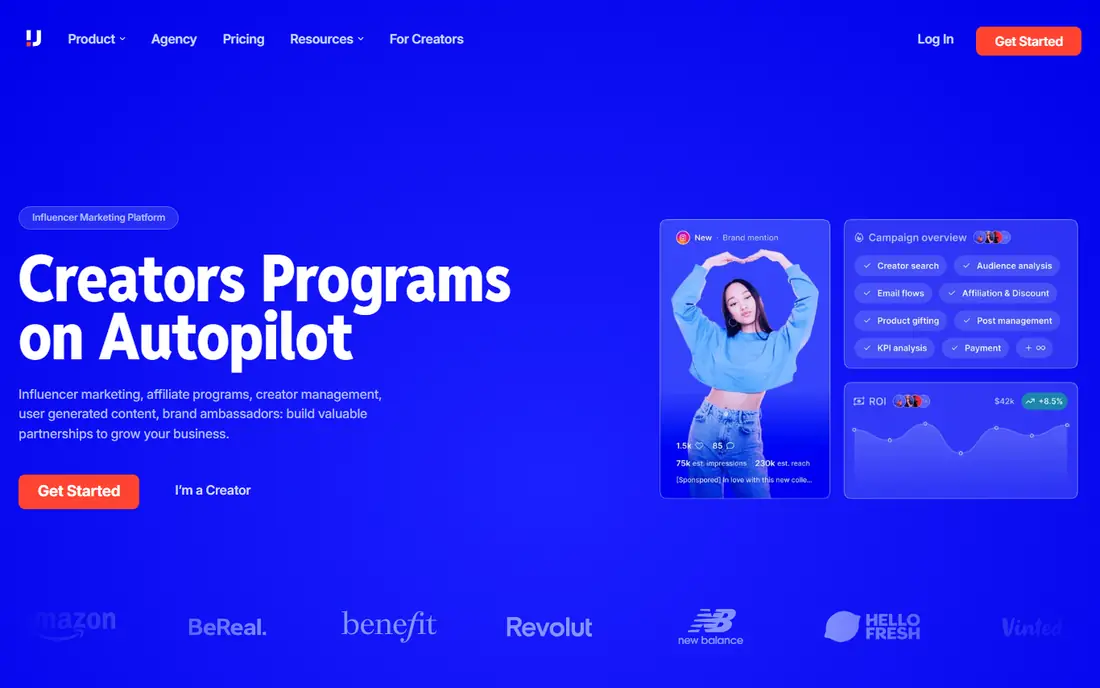
Upfluence stands out for brands that want to turn existing customers into creators. Its Live Capture feature scans your customer base and social followers to find people who already buy and post about your products, which often produces more believable content than cold outreach to strangers. The platform also covers search across Instagram, TikTok, YouTube and other channels, with filters for audience, engagement and location.
Pricing is the main friction. Upfluence sells modules and quotes, so the entry cost depends on which tools you need, and smaller brands may find the total higher than a research-only tool. The platform also takes time to learn, since discovery, outreach, affiliate tracking and reporting live in one system. For Shopify or WooCommerce brands with a real customer base to mine, Upfluence is a strong discovery-first choice.
- Live Capture finds creators among customers
- Shopify and WooCommerce links
- Campaign tools included
- Pricing is quote-based
- Entry modules can limit features
- Learning curve for new teams
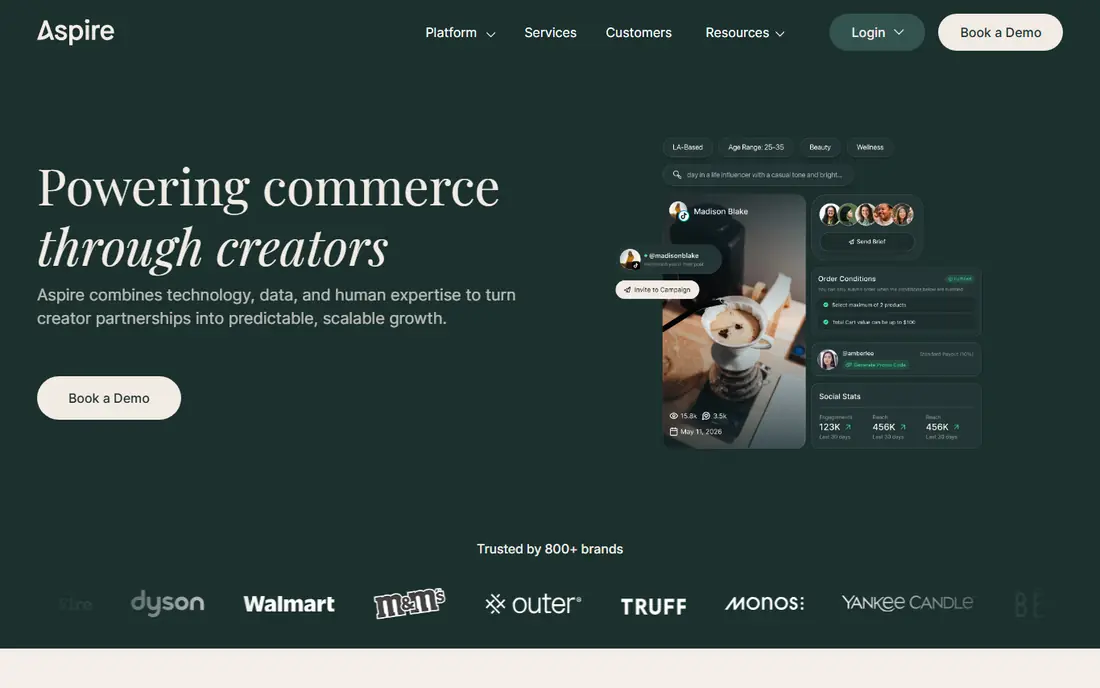
Aspire is built for brands that run ongoing creator relationships rather than one-off posts. Its marketplace and discovery tools help teams find creators by niche, audience and past performance, and its workflows support ambassador programs, affiliate tracking, product seeding and content reuse for ads. That combination suits direct-to-consumer brands that want a steady stream of creator content across a year, not just a single campaign.
The platform is priced by quote and aimed at mid-market and larger brands, so small teams may find it out of reach. Implementation and creator onboarding also take time, since ambassador programs need clear briefs, terms and payment rules. For brands ready to invest in a long-term creator community, Aspire gives discovery, management and measurement in one place, which beats stitching separate tools together.
- Large creator marketplace
- Ambassador and affiliate workflows
- Content licensing tools
- Quote-based pricing
- Better for established brands
- Setup takes time
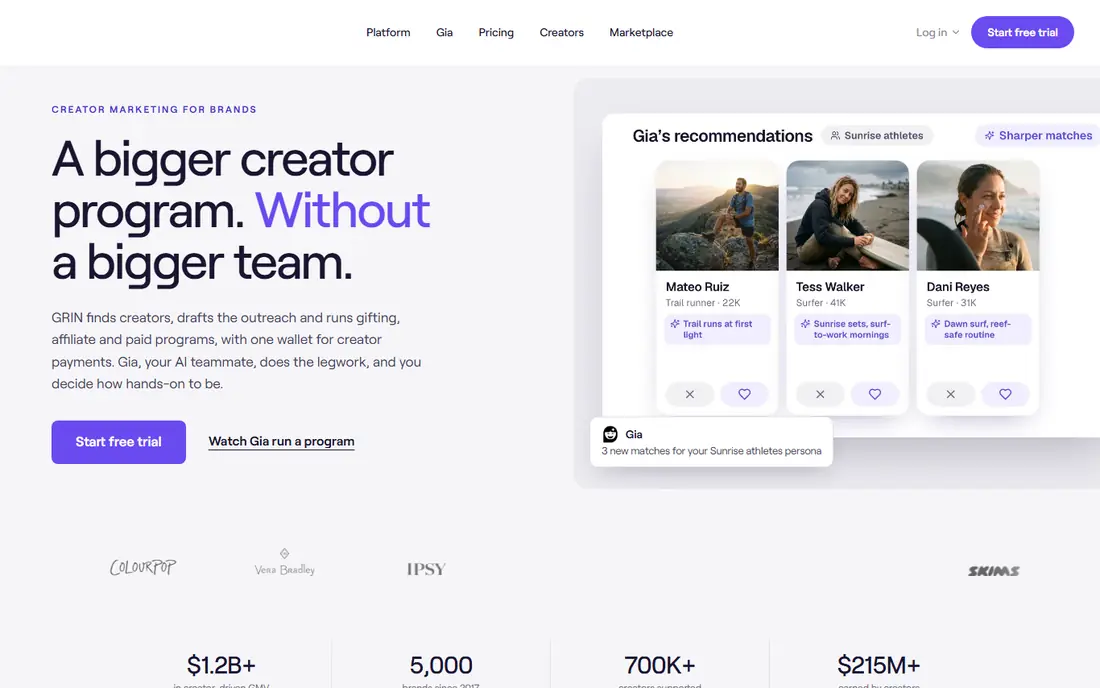
GRIN treats creator management like a customer relationship system for ecommerce brands. Discovery connects to product seeding, discount codes, affiliate links and sales reporting, so teams can see which creators actually drive revenue, not just likes. The platform integrates with Shopify and WooCommerce, and its creator profiles include audience and performance data to support vetting before outreach.
GRIN is less suited to brands outside ecommerce, since its strengths are tied to product sales and order data. Pricing is quoted, and onboarding involves connecting store data and setting up workflows, which takes staff time. For direct-to-consumer brands that already sell through Shopify and want discovery tied to revenue, GRIN is one of the most complete options in this guide.
- Commerce-native tracking
- Creator CRM approach
- Product seeding and payments
- Quote-based pricing
- Ecommerce focus limits non-retail use
- Onboarding can be heavy
CreatorIQ is the enterprise-grade option for global brands and agencies that run large, regulated creator programs. Its discovery database, vetting tools, compliance checks and reporting are built for teams that manage hundreds of creators across markets, with approvals, contracts and brand safety controls. Analytics go beyond engagement rates to audience quality, earned media value and campaign benchmarking.
That scale comes with enterprise pricing and a longer sales cycle, and small or mid-size brands will likely find it too much for a modest program. CreatorIQ is also less attractive as a research-only tool, since its value shows when discovery, management and reporting run together. For large brands where compliance, scale and consistent reporting matter most, CreatorIQ is the safest enterprise pick.
- Enterprise scale and compliance tools
- Deep analytics
- Global creator coverage
- Enterprise-only pricing
- Long sales and setup cycle
- Overkill for small programs
Modash is the research-first pick. Its database covers hundreds of millions of creator profiles, and its filters let teams narrow by niche, audience location, language, engagement, follower growth and past brand work. That depth helps teams vet creators properly before spending on outreach, and self-serve signup means a small team can start without a sales call. Shopify gifting and affiliate tracking add practical value for ecommerce users.
Campaign management is more basic than Aspire or GRIN, so teams that need full workflow, contracts and payments may pair Modash with another tool. Higher tiers add more searches and API access. For agencies and brands whose main problem is finding the right creators and checking their audiences, Modash offers the best research value per dollar in this guide.
- Very large creator database
- Detailed audience filters
- Self-serve signup
- Campaign management is basic
- Some features need higher tiers
- API use costs extra
Influencity suits data-driven teams on a tighter budget. Its discovery tools cover Instagram, TikTok, YouTube and Twitch, with audience analysis, fake follower checks and performance history that help teams avoid creators with inflated followings. Entry pricing is published and lower than most enterprise platforms, and month-to-month options make it easier to test without a long contract.
The interface packs many reports into one workspace, which can feel busy at first, and outreach and campaign tools are lighter than those in Aspire or GRIN. Niche coverage also varies, so test your exact categories during the trial. For teams that need solid discovery and analytics without enterprise pricing, Influencity is a practical middle ground between free search tools and large platforms.
- Transparent entry pricing
- Fake follower detection
- Audience analysis tools
- Interface can feel busy
- Outreach tools are lighter
- Database depth varies by niche
HypeAuditor is best known for audience quality and fraud detection, which makes it a strong vetting tool as well as a discovery platform. Its reports show audience location, age, interests, engagement authenticity and follower growth patterns, helping teams spot bought followers or mismatched audiences before paying a creator. Discovery filters cover niche, location and audience traits across major platforms.
Entry pricing is higher than Heepsy or Influencity, and the most complete campaign management features sit on higher plans. New users may also need time to interpret the quality scores correctly. For brands that have been burned by fake engagement, or agencies that must defend creator choices to clients, HypeAuditor's vetting depth justifies the price, and it pairs well with a campaign tool if needed.
- Strong audience quality scoring
- Fraud detection
- Detailed creator reports
- Higher entry price for small teams
- Full campaign tools need higher plans
- Learning curve
Heepsy is the entry point for small brands, startups and solo marketers who need to find creators without an enterprise budget. A free plan covers basic search, and paid plans start at $49 per month, with filters for category, location, audience size and engagement. That is enough to build a first outreach list, test a few creators and learn which niches respond.
The limits are clear: the database is smaller than Modash or CreatorIQ, analytics are basic, and campaign management, payments and deep fraud checks are limited. Heepsy works best as a starting tool, not as the system for a large program. For a first campaign or a tight budget, it lowers the barrier to proper discovery, and teams can graduate to a larger platform once creator spend grows.
- Low entry price
- Free plan for basic search
- Simple filters for niche discovery
- Database is smaller
- Analytics are basic
- Campaign tools are limited
How we picked these
We compared official feature pages, pricing notes, database claims and public reviews, and we weighted discovery depth, audience data, fraud checks and outreach support above pure creator counts. We required each platform to offer real search and filtering, not just a creator marketplace with no audience data. We did not claim hands-on campaign results, since those depend on brand, budget and creator fit; instead we judged published tools, pricing transparency and documented limits, and we noted where pricing is quoted rather than published.
How to run influencer discovery well
Start with audience, not follower count. Define the age, location, interests and buying intent of the people you want to reach, then filter for creators whose audiences match that profile. Check engagement over several months, not a single viral post, and read recent content to confirm tone, language and brand fit. A creator with 20,000 engaged followers in your niche often outperforms a creator with 500,000 broad followers who rarely engage.
Next, vet for fraud and safety. Look at follower growth spikes, comment quality, audience location versus the creator's claimed market, and past brand partnerships. Ask for screenshots of audience insights or a media kit, and confirm content rights, disclosure practices and exclusivity before payment. Keep a shortlist with notes on why each creator fits, so outreach stays personal and the team can compare results fairly.
Finally, start small and measure. Run a trial with a handful of creators, track link clicks, code redemptions, content quality and audience response, then expand with the creators who performed. Set clear briefs, deadlines and payment terms, and keep records of each agreement. Discovery is only the first step; the brands that succeed treat it as part of a repeatable process, not a one-time search.
FAQ
What is the best influencer discovery platform?
Modash leads for deep research, Upfluence for customer-to-creator discovery, and CreatorIQ for large enterprise programs, while Influencity and Heepsy suit smaller budgets. The best platform depends on program size, budget and whether you also need campaign management. Test your exact niche during a trial before committing.
What are the best tools for influencer discovery?
The tools in this guide cover the main needs: Modash and HypeAuditor for research and vetting, Upfluence, Aspire and GRIN for discovery plus campaign work, CreatorIQ for enterprise scale, and Influencity and Heepsy for lower-cost discovery. Many teams use one research tool plus one campaign tool, rather than expecting one platform to do everything perfectly.
How do I find influencers in my niche?
Use category, keyword, hashtag and audience filters, then check each creator's recent content, audience location and engagement history by hand. Look for creators who already talk about your topic, not just creators with large followings. A shortlist of 20 well-matched creators will beat a list of 200 loosely related names.
How can I check for fake followers?
Look for sudden follower spikes, low or generic comments, audience locations that do not match the creator's market, and engagement rates far below the norm for their size. Tools such as HypeAuditor, Modash and Influencity score audience quality and flag suspicious patterns. Ask creators for audience insights before paying, and treat any refusal as a warning sign.
How much does influencer discovery software cost?
Entry prices in this guide range from free or $49 per month for Heepsy to $299 per month for Modash and HypeAuditor, while enterprise platforms such as Aspire, GRIN and CreatorIQ are quoted and often run into thousands per month. Total cost depends on seats, searches, campaigns and contract term, so get a written quote before budgeting.
Should small brands use a discovery tool?
Yes, if creator marketing is a real channel for them, since manual search on social apps is slow and misses audience data. Start with a low-cost tool such as Heepsy or Influencity, run a small trial campaign, and only move to an enterprise platform when creator spend and management needs grow. A tool should save time and improve vetting, not add cost without clear use.