Best Indoor Cycling Apps in 2026: 9 Apps Compared
Compare the best indoor cycling apps for virtual rides, structured training, and spin classes, with pricing and free options for riders to try in 2026.
- Editor's choice
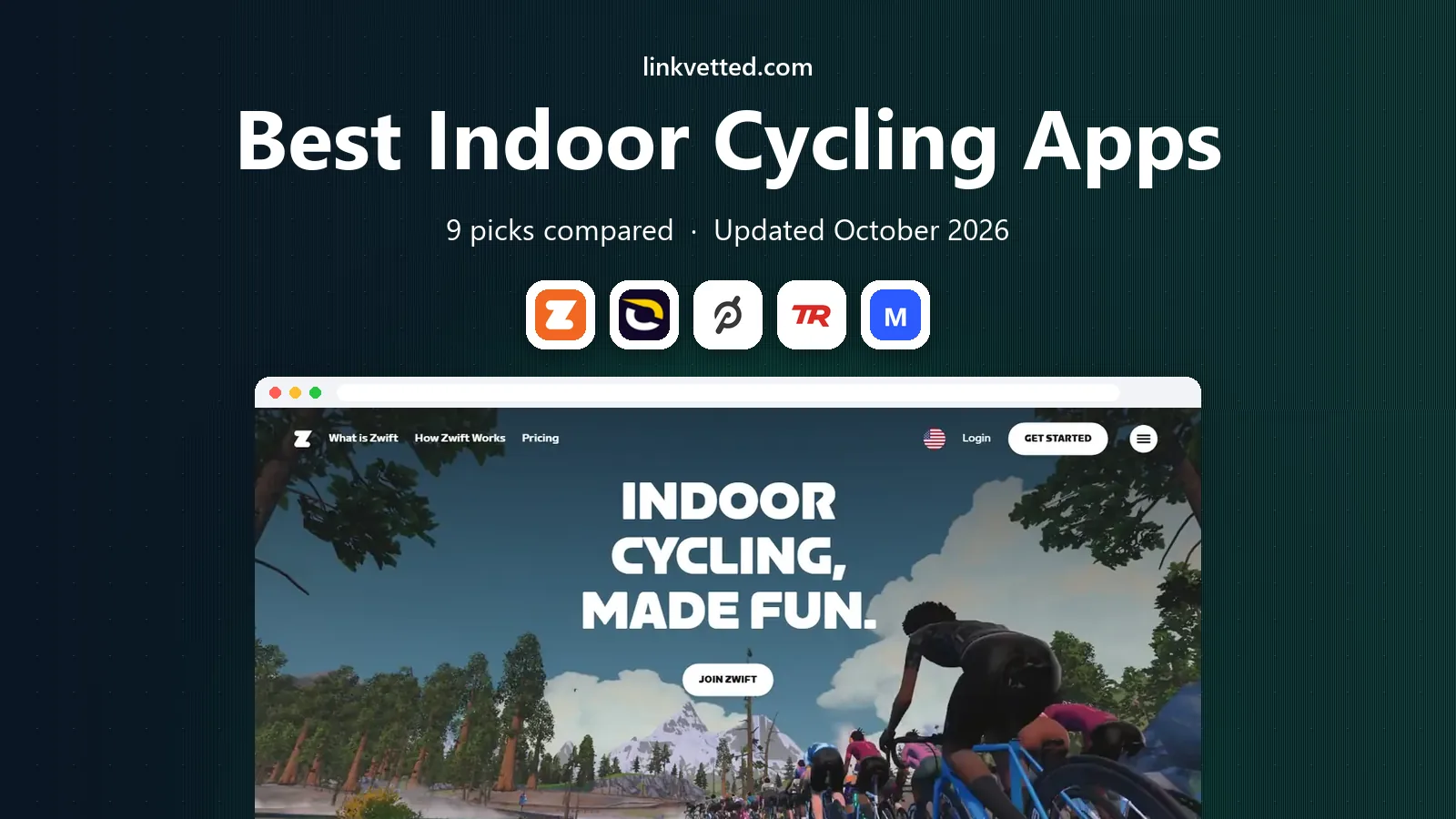
 Zwift
Community virtual worlds
Starts at$19.99 per monthVisit zwift.comFull review - Great alternative
 Rouvy
Real filmed routes
Starts at$19.99 per monthVisit rouvy.comFull review - Also consider
 Peloton
Live and on-demand classes
Starts atSee websiteVisit onepeloton.comFull review
TL;DR:
- Zwift suits riders who want community and gamified worlds, while Rouvy suits riders who prefer real filmed routes.
- TrainerRoad and TrainingPeaks Virtual suit structured training, while Peloton suits class-led workouts.
- MyWhoosh offers a free virtual cycling option, which makes it a good starting point for budget riders.
- Most apps need a smart trainer for the best experience, though many work with speed sensors or basic trainers.
- Check device compatibility and trial terms before you pay, since trainer and app pairings vary.
Quick comparison
| Tool | Best for | Starts at | Free plan? | |
|---|---|---|---|---|
| Zwift | Community virtual worlds | $19.99 per month | Free trial | Visit |
| Rouvy | Real filmed routes | $19.99 per month | Free trial | Visit |
| Peloton | Live and on-demand classes | See website | Free trial | Visit |
 TrainerRoad | Structured adaptive training | $21.99 per month | Free trial | Visit |
 MyWhoosh | Free virtual cycling | Free | Yes | Visit |
 TrainingPeaks Virtual | Coach-led structured training | See website | Free trial | Visit |
 Wahoo SYSTM | Training plus yoga and strength | See website | Free trial | Visit |
 FulGaz | Real video rides | See website | Free trial | Visit |
 Biketerra | Custom real-world routes | $7.99 per month | Yes | Visit |
The best indoor cycling apps
We compared virtual worlds, real routes, class libraries, training plans, device support, and pricing, using vendor pages and public comparisons from 2026.

Zwift turns indoor riding into a multiplayer world, with virtual roads, group rides, races, and training plans in one app. The community is its main advantage, since there is almost always a group ride or race starting, which helps motivation on dark winter evenings. Workouts and plans sit alongside the social features, so you can train seriously without leaving the game-like world.
Cost and hardware are the limits. Zwift works best with a smart trainer that adjusts resistance to terrain, and the subscription is pricier than free or budget rivals. If social riding keeps you consistent, Zwift is worth it. If you train alone and want pure structure, TrainerRoad may suit you better.
- Large active community and events
- Gamified worlds and races
- Structured workouts included
- Monthly price is higher than budget options
- Needs a smart trainer for full resistance control
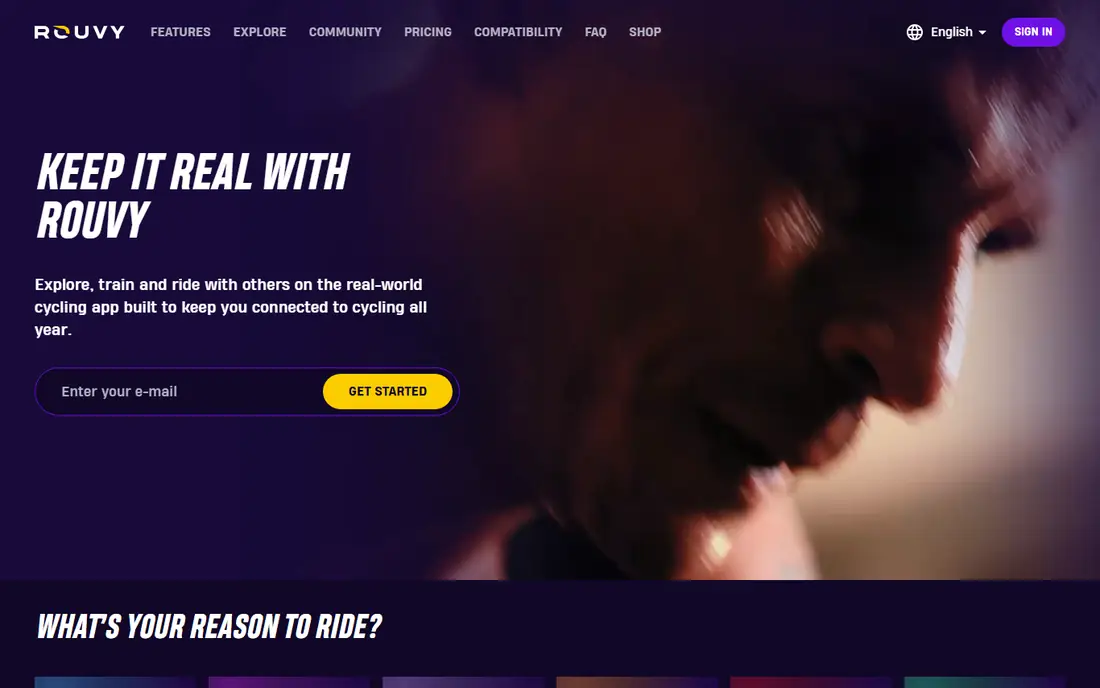
Rouvy films real roads and pairs the video with trainer resistance, so climbs feel like climbs and descents feel like descents. Riders who find cartoon worlds distracting often prefer this realism, especially for famous climbs and race courses. The app also includes workouts, training plans, and segments where you can chase personal bests.
Community size is smaller than Zwift, so group rides feel quieter. A stable internet connection also matters for video quality. For riders who want to explore real places from a garage, Rouvy offers the most convincing ride feel in this list.
- Real filmed routes from around the world
- Structured workouts and plans
- Pause option for breaks
- Smaller community than Zwift
- Video routes need a stable connection
Peloton is best known for spin-style classes led by instructors, with live sessions, music, and leaderboards that push riders to keep pace. The app also covers strength, yoga, and other workouts, which suits riders who want a broader fitness membership. You can use the app with your own bike and a cadence sensor, though the full experience pairs with Peloton hardware.
Serious outdoor cyclists may find Peloton less useful for structured power-based training than TrainerRoad or Zwift. It excels at motivation and class variety, not at race preparation. If classes keep you riding, Peloton is a strong pick.
- Large live and on-demand class library
- Motivating instructors
- App works without Peloton hardware
- Membership cost plus hardware cost for bike owners
- Less focused on outdoor cycling training
TrainerRoad strips away virtual worlds and focuses on getting faster through structured intervals. Its adaptive plans adjust based on your completed workouts, so training stays challenging without becoming unmanageable. Power-based workouts, a training calendar, and performance tracking help riders follow a plan with discipline.
The lack of social features is a drawback for riders who need group motivation. TrainerRoad is a training tool first, and it expects you to bring your own entertainment. For riders with a race or fitness goal, that focus is exactly the appeal.
- Adaptive training plans
- Clear power-based workouts
- Calendar and performance tracking
- No virtual worlds or social riding
- Price is at the higher end
MyWhoosh offers virtual worlds, workouts, and racing at no cost, which makes it the best starting point for budget riders. You can ride, train, and race without a subscription, and the app supports smart trainers like its paid rivals. That free model removes the main barrier to trying virtual cycling.
Route variety and community size do not yet match Zwift, and some features feel newer. For riders who want to test virtual cycling or who ride casually, MyWhoosh is hard to argue against. Paid apps still lead on depth, but MyWhoosh covers the core experience for free.
- Free virtual worlds and racing
- Structured workouts
- No subscription needed to start
- Smaller route and event range than Zwift
- Community is still growing
TrainingPeaks Virtual suits athletes who already use TrainingPeaks for coaching, planning, and analytics. Workouts and plans flow from the TrainingPeaks calendar into the virtual ride, and coaches can review the data in the same system. That integration matters for athletes working with a coach or following a detailed season plan.
Casual riders may find the bundled pricing and coach-focused workflow more than they need. Social riding is also quieter than Zwift. For serious athletes with a coach, TrainingPeaks Virtual keeps training and analysis in one place.
- Links to TrainingPeaks coaching and analytics
- Structured workouts
- Virtual riding without game focus
- Pricing is bundled with TrainingPeaks Premium
- Less social than Zwift
Wahoo SYSTM, formerly Sufferfest, combines cycling workouts with yoga, strength, and mental training in one subscription. That breadth suits athletes who want a complete training plan rather than only bike sessions. Workouts are structured and often intense, with plans for road, gravel, and triathlon goals.
Riders who want virtual worlds or large group events will prefer Zwift or Rouvy. SYSTM is a training library, not a virtual world. If you want cycling plus supporting workouts in one app, it offers good value.
- Cycling workouts plus yoga, strength, and mental training
- Structured plans
- Works with Wahoo devices
- Virtual riding is limited compared with Zwift or Rouvy
- App focus is training, not social worlds
FulGaz, like Rouvy, uses real video routes, with trainer resistance matching the terrain shown on screen. Riders who enjoy scenic climbs and coastal roads will appreciate the footage, and the app syncs rides to Strava and other platforms for tracking. It suits steady endurance rides where scenery matters as much as structure.
Event and social features are limited compared with Zwift, and the route library is smaller than Rouvy in some regions. For solo riders who want beautiful real routes without gamification, FulGaz is a calm and convincing option.
- High-definition real video routes
- Resistance follows terrain
- Syncs with Strava and other apps
- Smaller community and event range
- Video quality depends on connection
Biketerra focuses on custom routes, letting you upload a GPX file or pick a real-world route rendered in 3D. That flexibility suits riders who want to preview a race course, a local climb, or a planned holiday route before riding it outside. A free tier with no distance limits makes it easy to test the concept.
As a newer platform, Biketerra has a smaller community and fewer structured plans than Zwift or TrainerRoad. It is best for riders who value custom routes and low cost over social features. For that niche, it offers something the larger apps do not.
- Custom route uploads
- Free tier with no distance limits
- Real-world terrain rendering
- Newer platform with a smaller community
- Fewer structured plans than larger apps
How we picked these
We compared vendor pricing pages, feature lists, and public comparisons from 2026, focusing on apps that support smart trainers and offer either virtual worlds, real routes, classes, or structured training. We included free, budget, and premium options, so riders at different budgets can find a fit. We did not claim hands-on testing, and we recommend checking trainer compatibility on each vendor site before subscribing.
We also weighed training value against entertainment, since a fun app you open often can beat a perfect plan you ignore. That balance explains why community and class apps sit alongside pure training tools here.
How to set up indoor cycling at home
You need a bike, a trainer, and an app, but the trainer choice shapes the experience most. A direct-drive smart trainer gives the best resistance control and power accuracy, while a wheel-on smart trainer costs less and still works well. A basic trainer with a speed sensor can work with many apps using estimated power, though resistance will not adjust automatically.
Space, fans, and data
Set up in a space with good airflow, since indoor riding generates a lot of heat, and a fan makes longer rides far more comfortable. A mat protects floors, and a towel and water bottle should be within reach. Sync rides to Strava, Garmin, or TrainingPeaks if you track fitness outside the app, and check that your trainer, heart rate monitor, and cadence sensor pair over Bluetooth or ANT+.
Choosing between worlds, video, and classes
Pick the style that keeps you riding three or more times a week. Virtual worlds suit social riders, real video suits scenery lovers, classes suit riders who need an instructor to push them, and structured plans suit goal-driven athletes. Try free trials in each style before committing to a year, since motivation matters more than any single feature.
FAQ
What is the best indoor cycling app for most riders?
Zwift suits most riders for its community, events, and training mix, while MyWhoosh is the best free alternative. Rouvy suits riders who prefer real routes, and TrainerRoad suits riders focused on structured improvement.
What is the best free indoor cycling app?
MyWhoosh offers free virtual worlds, workouts, and racing, while Biketerra offers a free tier for custom routes. Both are good starting points before paying for Zwift or Rouvy.
What is the best virtual cycling app for racing?
Zwift has the largest racing community and event calendar, which makes it the easiest place to find a race at your level. MyWhoosh also offers racing, but with fewer events and riders.
Do I need a smart trainer for indoor cycling apps?
A smart trainer gives the best experience, with automatic resistance and accurate power data. Many apps also work with basic trainers and speed sensors, but resistance will not adjust to terrain or workouts automatically.
What is the best app for indoor cycling training plans?
TrainerRoad offers the most focused adaptive training plans, while TrainingPeaks Virtual suits athletes working with a coach. Zwift and Rouvy also include plans, with more social and scenic riding alongside them.