Best Identity Resolution Software in 2026: 8 Tools Compared
We compared the best identity resolution software for unifying customer records, with notes on privacy, pricing and the best identity resolution platforms.

- Editor's choice
 LiveRamp
Cookieless advertising identity at scale
Starts atSee websiteVisit liveramp.comFull review - Great alternative
 FullContact
Real-time identity API for product teams
Starts atSee websiteVisit fullcontact.comFull review - Also consider
 Amperity
Enterprise CDP with AI-powered resolution
Starts atSee websiteVisit amperity.comFull review
TL;DR:
- LiveRamp remains the reference point for advertising identity at scale, while FullContact suits API-first teams.
- Amperity and Treasure Data suit brands that want resolution inside a full customer data platform.
- Almost every enterprise option here is quote-based, so expect a sales cycle and a six-figure budget at scale.
- Privacy controls and consent handling matter as much as match rates, so check them before any data flows.
Quick comparison
| Tool | Best for | Starts at | Free plan? | |
|---|---|---|---|---|
| LiveRamp | Cookieless advertising identity at scale | See website | No | Visit |
| FullContact | Real-time identity API for product teams | See website | Free trial | Visit |
| Amperity | Enterprise CDP with AI-powered resolution | See website | No | Visit |
 Twilio Segment | First-party data with Unify resolution | See website | Free trial | Visit |
 Treasure Data | Enterprise CDP with flexible identity | See website | Free trial | Visit |
 TransUnion | Identity for regulated and enterprise teams | See website | No | Visit |
 Experian | Consumer enrichment and identity marketing | See website | No | Visit |
 Zeotap | European CDP with identity resolution | See website | No | Visit |
The best identity resolution software
Identity resolution software connects records that belong to the same person across devices, channels and systems, even when names, emails or addresses differ. Done well, it gives marketing and service teams one view of a customer. Done badly, it merges the wrong people and creates privacy risk.
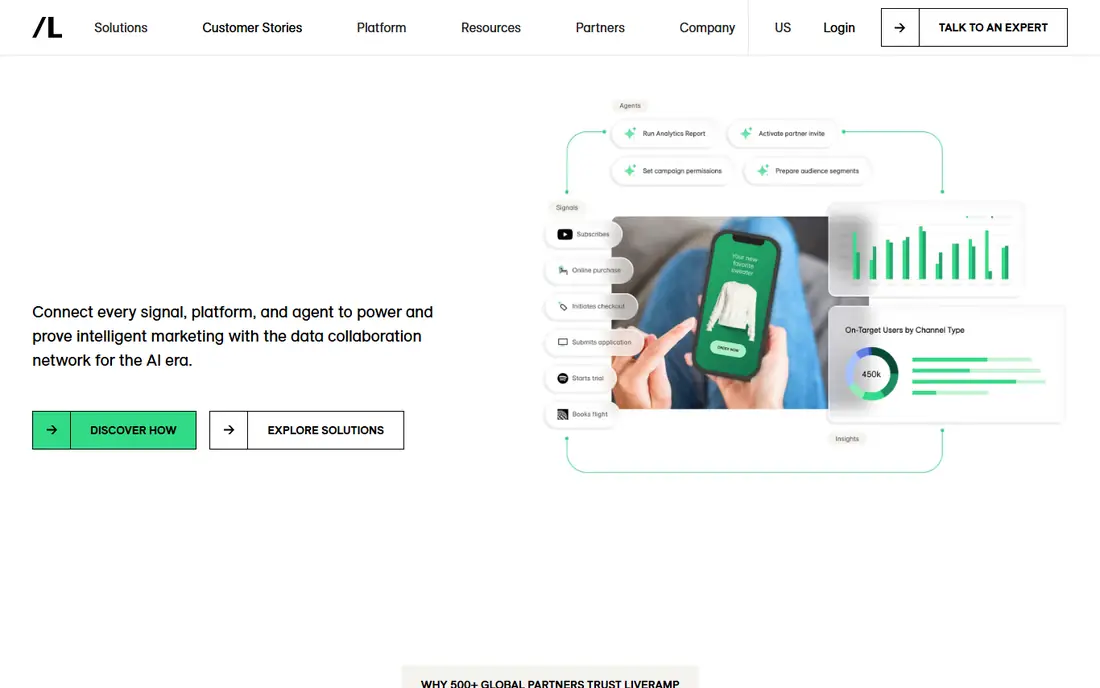
LiveRamp is the standard other advertising identity tools get measured against. Its RampID links people across devices and channels without relying on third-party cookies, and its partner network covers major publishers and ad platforms. For media teams that buy across many channels, that reach is the reason to pay the enterprise price.
The catch is access. Pricing is quote-based and aimed at large advertisers and publishers, and full value needs technical work on onboarding and activation. Smaller teams will find the sales cycle long and the cost hard to justify. For large-scale advertising identity, though, LiveRamp remains the first name to evaluate.
- RampID graph at large scale
- Many activation destinations
- Clean room options
- Enterprise pricing
- Setup needs technical resources

FullContact suits teams that want identity resolution as an API rather than a full platform project. You send an email or phone number and get back a unified person record with links across identifiers. That simple model fits enrichment, signup flows and service tools that need a quick answer at the moment of interaction.
The trade-off is coverage. Graph depth varies by region and by identifier type, so teams should test match rates on their own audience before relying on it. Pricing is usage-based and not fully published, so model your expected call volume early. For API-first teams, FullContact is one of the most accessible options here.
- Real-time person API
- No-match-no-charge model
- Clear developer docs
- Graph depth varies by market
- Enterprise features need a sales plan

Amperity builds unified customer profiles from fragmented first-party data, using its Stitch engine to match records even when details differ. Retail and hospitality brands with online orders, store purchases and loyalty data in separate systems get a clearer single view. The platform also explains why records were linked, which helps data teams trust and correct matches.
The cost and timeline are enterprise-grade. Pricing is custom, and implementation needs data work on your side. Amperity is not a quick API add-on. For large consumer brands that need accurate first-party profiles for personalization, it is one of the strongest CDP choices in this list.
- Stitch matching with AI scoring
- Unified profiles
- Strong retail experience
- Enterprise pricing
- Implementation takes time
Twilio Segment starts from data you already collect: website, app and server events flowing into one pipeline. Its Unify feature links those events to profiles, so marketing and product teams work from the same identity. The destination library is broad, which makes activation to ads, email and analytics simpler than building each link by hand.
The limit is scope. Segment resolves your first-party data well, but it is not a third-party consumer graph. Pricing also grows with event volume, so high-traffic sites should model costs at peak traffic. For teams already standardizing on Segment, Unify is a natural and low-friction step.
- Unify identity resolution
- Broad destination library
- Developer-friendly setup
- Full value needs Segment adoption
- Pricing grows with volume
Treasure Data gives data teams more control over how identities are defined and resolved, which suits organizations with complex customer models. It handles large data volumes and connects to many marketing and analytics tools. Teams that need custom matching rules rather than a fixed black box often prefer this flexibility.
Flexibility brings work. Treasure Data needs data engineering time to configure well, and pricing is quote-based. Smaller teams may find a simpler CDP faster to value. For enterprises with a data team ready to own the identity model, Treasure Data is a capable and adaptable platform.
- Flexible identity configuration
- Large-scale data handling
- Many integrations
- Enterprise complexity
- Pricing by quote
TransUnion, including the former Neustar identity business, serves enterprises that need identity resolution with a compliance-heavy mindset. Its TruAudience line covers identity, audience building and measurement for marketing teams in regulated industries. Large financial services and telecom brands value that combination of scale and controls.
The drawback for most readers is access. This is an enterprise sale with custom pricing and a longer onboarding path. Small and mid-size teams will get faster value from API or CDP options. For regulated enterprises that need a proven identity partner, TransUnion belongs on the shortlist.
- Large consumer identity assets
- TruAudience products
- Strong compliance focus
- Enterprise sales process
- Less suited to small teams
Experian is best known for consumer data, and its identity and marketing services help brands enrich records, build segments and reach audiences across channels. Companies that need demographic and household context beside their own first-party data get more here than from a pure matching API. Global coverage is a plus for multinational brands.
The product range can confuse buyers, since Experian sells many identity-related services under different names. Pricing is enterprise and quote-based, and the right product depends on the exact use case. Ask for a scoped proposal tied to one use case, and pilot match quality before expanding the contract.
- Broad consumer data assets
- Segmentation and enrichment
- Global reach
- Enterprise pricing
- Activation depends on the product chosen
Zeotap combines a customer data platform with identity resolution and activation, with a strong focus on European privacy expectations. Brands operating under GDPR often value its consent-aware approach and its regional data partnerships. The platform covers unification, segmentation and activation in one contract, which simplifies vendor management.
The trade-off is scale outside Europe. Its US graph and partner depth are thinner than LiveRamp or TransUnion, so US-first advertisers should test coverage carefully. Pricing is also quote-based. For European and multinational brands with strict privacy needs, Zeotap is a credible alternative to US-centric platforms.
- Privacy-focused CDP
- Identity resolution plus activation
- European strength
- Smaller US graph than US leaders
- Enterprise pricing
How we picked these
We compared official product pages, documentation and public reviews, and we favored tools with documented matching methods, consent and privacy controls, and activation to common marketing and analytics destinations. We did not test matching accuracy on private customer data, since that requires a controlled pilot with your own records. Where pricing was not published, we say so and advise a pilot before committing.
How to choose identity resolution software without creating a privacy problem
Start with the use case. Advertising identity, customer service unification and fraud prevention need different data, different consent and different retention rules. A tool built for ad targeting may not be the right home for service records, and a CDP built for first-party data may not give you a third-party graph. Write down the exact question the unified profile must answer, then judge match methods against it.
Run a match pilot on your own data
Vendor match rates come from vendor datasets, not yours. A pilot on a sample of your records, with manual review of uncertain matches, tells you more than any benchmark. Check false merges closely, since merging two people is worse than missing a link. Also confirm how the tool handles corrections, deletions and opt-outs, because those requests will arrive.
Check activation and exit terms
A unified profile only helps if it can reach your email, ads, analytics and service tools without heavy custom work. Ask for the destination list and for the cost of each one. Also ask how you export your resolved identities if you leave. A platform that makes exit hard should raise a flag before you sign, not after.
FAQ
What is the best identity resolution tool for a mid-size brand?
For a mid-size brand, Twilio Segment or FullContact often fit better than enterprise graphs, since they start from your own first-party data and offer clearer entry paths. The best identity resolution tools for your case depend on whether you need ad activation, service unification or both.
What are the best identity resolution platforms for advertising?
LiveRamp and TransUnion (Neustar) lead for advertising identity, thanks to large graphs and many activation destinations. They suit media teams buying across many channels. Smaller advertisers may find the cost and setup too heavy for their volume.
How does identity resolution handle privacy laws?
Reputable tools offer consent flags, data minimization, retention controls and deletion workflows, but the legal responsibility stays with your company. Work with your privacy team on lawful basis, regional rules and vendor contracts before connecting personal data.
Is identity resolution the same as a CDP?
No. Identity resolution is one capability inside many CDPs, focused on linking records to a person or household. A CDP adds segmentation, activation and often journey tools around those profiles. Some teams buy resolution alone through an API, while others buy it as part of a CDP.
Can small businesses use identity resolution software?
Yes, through API tools and CDP free tiers, but enterprise graphs are usually out of reach on price. Start with first-party resolution inside your CRM or CDP, clean your own records, and add a third-party graph only when a clear use case justifies the cost.