Best HRIS for Tech and SaaS Companies in 2026: 8 Systems Compared
We compared the best hris for tech and saas companies on payroll, global hiring, automation and price, so tech teams can pick a system that scales well.
- Editor's choice
 Rippling
HR, IT and finance in one system
Starts at$8 per user per monthVisit rippling.comFull review - Great alternative
 BambooHR
Clean core HRIS for smaller teams
Starts at$10 per employee per monthVisit bamboohr.comFull review - Also consider
 HiBob
Modern HRIS for mid size teams
Starts atSee websiteVisit hibob.comFull review
TL;DR:
- Rippling suits tech companies that want HR, IT and finance in one system, with automated device and app provisioning for new hires.
- BambooHR suits smaller tech teams that want a clean core HRIS, with core plans from 10 dollars per employee per month.
- HiBob suits mid size, culture focused tech firms, while Deel suits companies hiring across borders.
- Gusto suits US startups that need simple payroll first, with plans from 49 dollars a month plus 6 dollars per person.
- Workday suits large SaaS firms over 1,000 employees, but it is overkill and costly for smaller teams.
Quick comparison
| Tool | Best for | Starts at | Free plan? | |
|---|---|---|---|---|
| Rippling | HR, IT and finance in one system | $8 per user per month | No | Visit |
| BambooHR | Clean core HRIS for smaller teams | $10 per employee per month | Free trial | Visit |
| HiBob | Modern HRIS for mid size teams | See website | No | Visit |
 Gusto | US startups needing payroll | $49 per month plus $6 per person | No | Visit |
 Deel | Global hiring and payroll | $49 per contractor per month | Free trial | Visit |
 Workday | Large enterprise SaaS firms | See website | No | Visit |
 Paycor | US mid market HR and payroll | See website | No | Visit |
 ADP Workforce Now | Enterprise payroll and compliance | See website | No | Visit |
The best HRIS for tech and SaaS companies
A human resource information system, or HRIS, holds employee records, onboarding, time off, performance and payroll in one place. Tech and SaaS companies need HRIS that handles fast hiring, remote and global staff, device provisioning and integrations with tools such as Slack, Google Workspace and applicant tracking systems. The eight systems below cover startup to enterprise scale in October 2026.
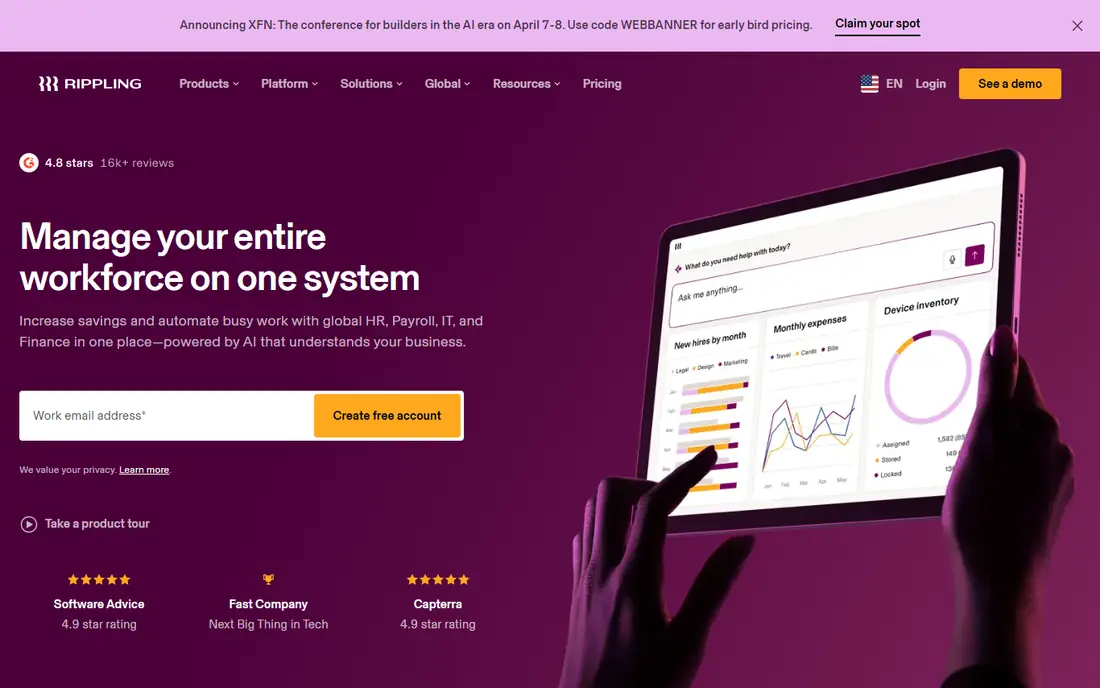
Rippling is our pick for most scaling tech companies, since it treats HR and IT as one onboarding problem. When a new hire joins, Rippling can create accounts, assign apps, ship a laptop and set payroll in one workflow, which saves IT and people teams hours per hire. Third party summaries cite device and core modules from 8 dollars per user per month, with full cost varying by module and quote.
The catch is modular pricing. Rippling breadth is a strength, but it is easy to add modules for payroll, benefits, spend and IT that push the total well above the entry figure. Scope tightly, start with HR and payroll plus IT if you need it, and add modules only when a clear owner and use case exist.
- Unifies HR, IT device management and spend
- Automated onboarding with app and laptop provisioning
- Strong integrations
- Pricing is modular and quote based in full
- Easy to overbuy modules you do not need
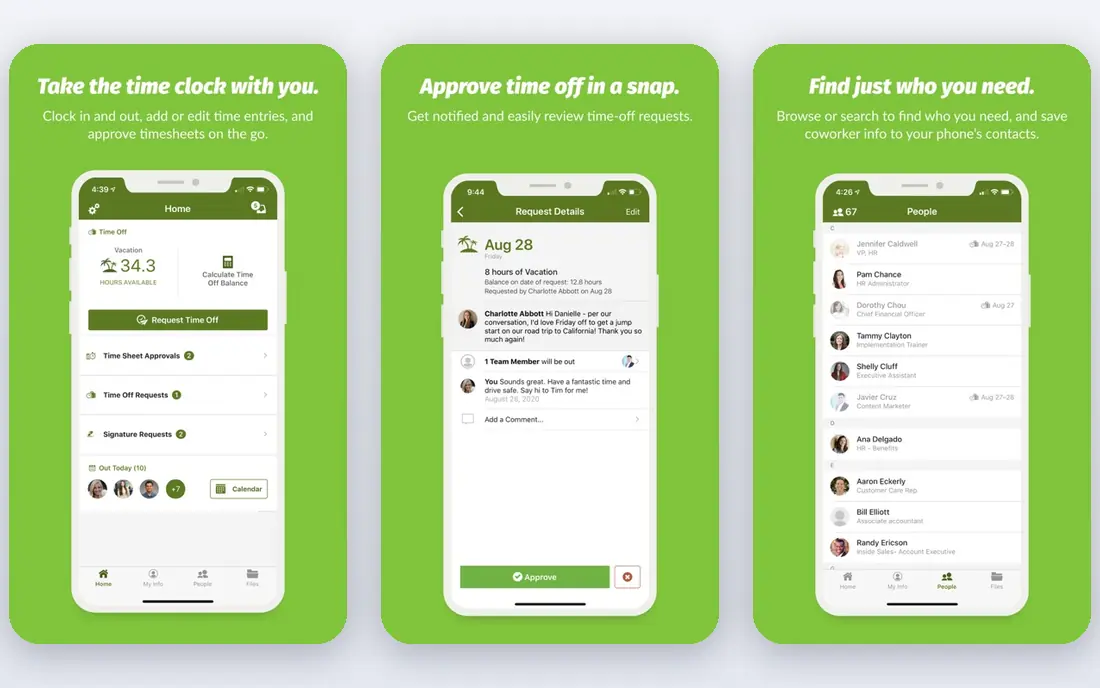
BambooHR suits tech teams that want a core HRIS without enterprise complexity. Its employee database, onboarding workflows, time off and self service tools are easy for managers and staff to use, and its applicant tracking add on helps small teams hire without a separate system. Core pricing from 10 dollars per employee per month, with higher tiers at 17 and 25 dollars in third party summaries, keeps it accessible.
Payroll is the limit. US payroll is an add on rather than a core feature, and reporting on lower tiers is basic compared with HiBob or Workday. For a US tech team under a few hundred people that needs clean records and onboarding first, BambooHR is a strong, low friction choice.
- Simple, well liked interface
- Strong onboarding and applicant tracking add on
- Core plan from 10 dollars per employee per month
- Payroll is a US add on and costs extra
- Reporting is basic on lower tiers
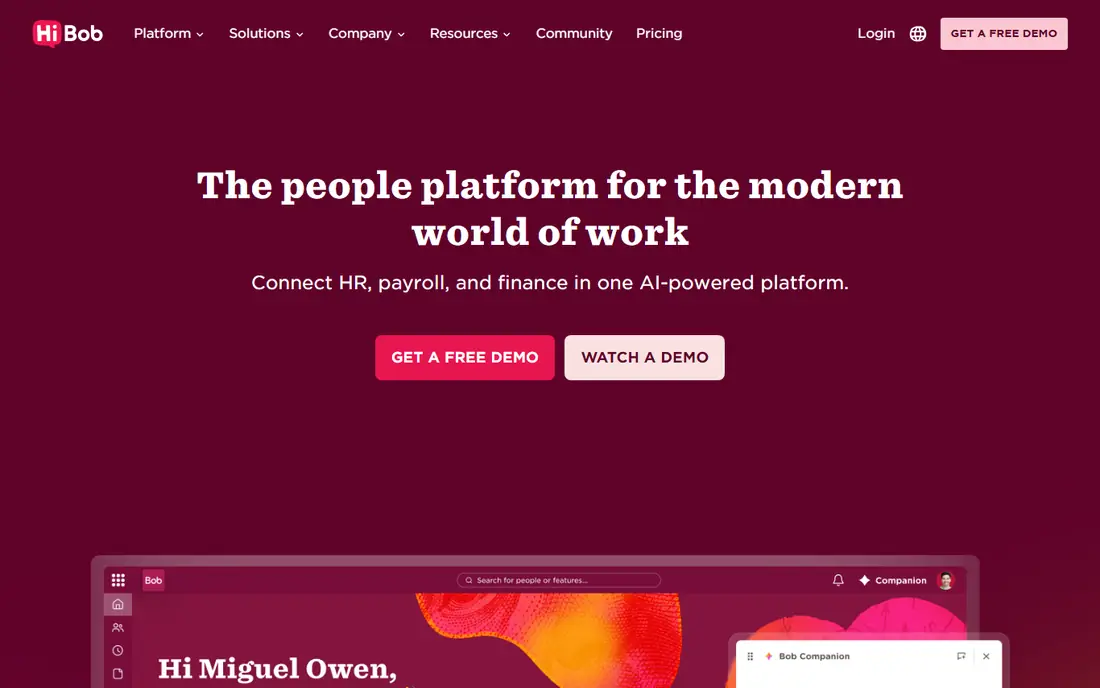
HiBob, often called Bob, fits mid size tech firms that care about culture, engagement and people analytics as much as records. Its social style interface encourages staff to actually use it, and its analytics help people teams spot retention risks and engagement trends across remote teams. It is built for distributed, mid size companies rather than tiny startups or huge enterprises.
Pricing is quote only, with third party summaries citing typical ranges near 8 to 18 dollars per employee per month, so budget only after a demo and quote. Payroll coverage also varies by region, so US and global teams should confirm payroll depth before committing, and plan for a payroll partner where needed.
- Modern, culture focused interface
- Strong people analytics and engagement features
- Configurable for distributed teams
- Pricing is quote only
- Payroll varies by region and may need a partner
Gusto is the pick for US startups that need payroll done right with minimal HR expertise. Its simple plan starts at 49 dollars a month plus 6 dollars per person, with plus and premium tiers for more HR features, and it automates state and federal payroll tax filings. For a founder or first people hire running US payroll for the first time, Gusto clarity beats a more powerful but harder system.
The limit is global scope. Gusto does not support international hiring or global employer of record services at the depth Deel offers, and complex HR needs may outgrow it. US only tech teams that prioritize payroll simplicity should shortlist Gusto first, and revisit once global hiring begins.
- Best payroll experience for non experts
- Transparent published pricing
- Automated state and federal tax filings
- Thin outside the US
- Limited for complex global HR needs
Deel suits tech companies hiring engineers, designers and support staff across borders. Contractors start at 49 dollars a month in third party summaries, while employer of record service, which employs staff compliantly in other countries on your behalf, starts near 599 dollars per employee per month. That service removes the need to set up local entities for a handful of hires in a new country.
The trade off is depth as a core HRIS. Deel is best of breed for global employment, not a full replacement for BambooHR or HiBob on performance, engagement and analytics. Many tech firms run Deel for global staff alongside a core HRIS for headquarters staff, which works well if integrations are kept clean.
- Hire employees and contractors across many countries
- Employer of record service
- Free core HRIS for smaller teams in some summaries
- Employer of record pricing is steep at low volume
- Core HRIS is thinner than dedicated HRIS rivals
Workday fits large SaaS companies that need human capital management plus financials in one enterprise system. Its depth on reporting, workforce planning, skills and global compliance suits firms with thousands of staff, complex org structures and audit needs. For a public or late stage SaaS firm, Workday is often the default enterprise choice.
Smaller firms should not start here. Implementation is slow and costly, pricing is custom, and third party summaries cite typical negotiated ranges near 14 to 28 dollars per employee per month for large deals. Under 1,000 employees, Rippling, HiBob or BambooHR will deliver more value faster and at lower total cost.
- Deepest HCM plus financials integration
- Built for large enterprises over 1,000 employees
- Strong reporting and skills tools
- Expensive and slow to implement
- Overkill under 1,000 employees
- Pricing is custom quote
Paycor suits US mid market tech firms that want HR and payroll together with recruiting and workforce management. Its US payroll and compliance depth helps companies with multi state staff, tax and reporting needs, and its recruiting tools support steady hiring without a separate applicant system. For a growing US SaaS firm that has outgrown Gusto, Paycor is a logical next step.
The limit is global hiring. Paycor is US centered, so companies with a large international footprint will still need Deel or a similar global partner. Pricing is quote only, so get a proposal tied to headcount and payroll scope before you compare it with published price rivals.
- All in one HR and payroll for US mid market
- Recruiting and workforce management included
- Strong US compliance depth
- Pricing is quote only
- Less global depth than Deel or HiBob
ADP Workforce Now fits mid size to large tech companies that prioritize payroll accuracy and compliance above all else. Its payroll engine, tax handling and compliance depth at scale are the reason many large employers stay with ADP for decades, and its package options let firms add HR, benefits and time tools as needed. For a tech firm with complex US payroll, multi state taxes and benefits, ADP reliability matters.
The drawbacks are price opacity and variable support. Pricing is custom quote, implementation can be slow, and support quality varies by package and account team in public reviews. ADP works best when you negotiate service levels in writing and assign an internal owner to manage the relationship.
- Enterprise grade payroll accuracy and compliance at scale
- Broad package options
- Long track record with large employers
- Pricing is opaque and quote based
- Implementation and support quality vary by package and reseller
How we picked these
We compared vendor pricing pages and independent HRIS comparisons current in October 2026, and we kept only systems with a live tech or SaaS customer base and a clear core HRIS offer. We favored systems with published pricing where available, strong onboarding and integration stories, and a fit for at least one tech company stage, from startup to enterprise. We did not claim hands-on testing, and we compared official feature pages, pricing pages and public reviews.
How to choose HRIS for a tech or SaaS company
Start with headcount and geography, not features. A 30 person US startup needs Gusto or BambooHR, a 300 person distributed firm needs HiBob or Rippling, and a 3,000 person public SaaS firm needs Workday or ADP. Global hiring changes the answer again, since Deel or a global payroll partner becomes essential once staff sit in several countries.
Next, test onboarding end to end. Create a fake hire, run onboarding, payroll setup, app provisioning and device ordering, and time how long each step takes. Onboarding is where HRIS value shows up daily in a tech company, and a system that looks good in a demo but stalls on real hires will frustrate every new starter. Check integrations with your applicant tracking, Slack, Google Workspace or Microsoft 365, and payroll providers.
Finally, compare total cost over two years, including implementation, payroll add ons, benefits administration and support tiers. A low entry price with expensive payroll add ons can exceed a higher all in quote. Pilot with one department for a month, measure admin time saved and error rates, then roll out company wide.
FAQ
What is HRIS and how is it different from HRMS and HCM?
HRIS is the core system for employee records, onboarding, time off and reporting. HRMS adds payroll and benefits management, while HCM is a broader term for the full talent lifecycle including recruiting, performance and workforce planning. Vendors use the terms loosely, so compare actual features, not labels, when you shortlist.
Which HRIS is best for a small SaaS startup?
Gusto suits US startups that need payroll first, while BambooHR suits startups that need clean core HR and onboarding with payroll as an add on. Rippling is a strong choice once headcount passes 50 and IT provisioning matters. Choose based on whether payroll, records or IT automation is your current bottleneck.
Can one HRIS handle global SaaS teams?
HiBob and Rippling handle distributed teams well, but true global employment usually needs Deel or a similar employer of record partner for countries where you have no entity. Many SaaS firms pair a core HRIS with Deel for global staff, keeping records in the HRIS and employment compliance in Deel. Confirm data flows between the two before you sign.
How much does HRIS cost for a tech company?
Published entry prices range from 8 to 10 dollars per user or employee per month for Rippling and BambooHR, while Gusto starts at 49 dollars a month plus 6 dollars per person. Mid market and enterprise systems such as HiBob, Paycor, ADP and Workday are quote based and vary by headcount and modules. Always get a two year total cost, not just an entry rate.
How long does HRIS implementation take?
Small teams can go live on Gusto or BambooHR in days to weeks, while mid market Rippling or HiBob rollouts often take one to three months. Enterprise Workday or ADP implementations can take six months or more, especially with data migration and integrations. Plan data cleanup before you start, since dirty employee data delays every system.
Should tech companies combine HRIS with IT device management?
Yes, if hiring volume is high, since Rippling style HR plus IT automation saves real time on every joiner and leaver. If hiring is slow, a separate MDM tool plus a core HRIS may be cheaper and simpler. The deciding factor is hires per month and how much manual account and device work each hire creates.