Choosing Health Care Software in 2026: 5 Options Compared
Searching for the best health care software? Here are 5 options with prices and free plans. Every profile names its biggest catch. Checked this month.
- Editor's choiceAllscripts
Data-driven health care options
Starts atSee websiteVisit allscripts.comFull review - Great alternative
 NextGen Healthcare
Specialty practices
Starts atSee websiteVisit nextgen.comFull review - Also consider
 Epic
Full patient-centered EHR
Starts atSee websiteVisit epic.comFull review
Direct answer
If you need data-driven health care options, Allscripts is the first tool to look at here. Listed starting prices: Practice Fusion from $199 a month per provider. Alternatives: NextGen Healthcare for specialty practices, and Epic for comprehensive patient-centered EHR. The other 2 tools in the list cover narrower or pricier cases.
TL;DR:
- Top of the list is Allscripts, which targets data-driven health care options.
- Neither Allscripts nor Oracle Health, nor any of the other 3 tools, has a permanent free plan; trials and quotes are the norm.
- Oracle Health suits secure and steady health care options.
- What to know about Allscripts first: brand transition to Veradigm.
- Starting prices begin at $199 per month per provider with Practice Fusion.
Last checked November 2026. Prices and plan details were read from the vendors' own pages in November 2026; vendors change plans often, so confirm the current price on the vendor site before you buy.
Quick comparison
| Tool | Best for | Starts at | Free plan? | |
|---|---|---|---|---|
| Allscripts | Data-driven health care options | See website | Not stated | Visit |
| NextGen Healthcare | Specialty practices | See website | Not stated | Visit |
| Epic | Full patient-centered EHR | See website | Not stated | Visit |
 Practice Fusion | Straightforward EHR for medical practices | $199 a month per provider | Free trial | Visit |
 Oracle Health | Secure and dependable health care options | See website | Not stated | Visit |
The 5 tools in detail
If you are comparing health care software, this page covers 5 tools in one place: what each is best for, what it costs to start, whether it has a free plan, and the main limit to know about.
Allscripts
Best for: Data-driven health care options
Allscripts targets data-driven health care options. Choose Allscripts/Veradigm if you need diverse, data-focused health care IT options. Worth adding: based on validated and trusted data sources, its technologies meet critical needs at every level of health care.
Where it is weaker: May need integration effort.
This tool is right for organizations that value data-driven decision-making and many different options. Those seeking a single, unified EHR might have to look elsewhere. This comparison lists no price for Allscripts; ask the vendor. As for free access: Not stated.
- Wide spectrum of options
- Meets critical needs
- Brand transition to Veradigm
NextGen Healthcare was built for specialty practices. The product aims to boost efficiency through tailored features.
Pick NextGen if you are in a specialty practice looking for tailored workflows. Check the vendor site for NextGen Healthcare pricing; none is listed in this comparison. As for free access: Not stated.
Trade-offs to know: May be less well suited to primary care.
- Specialty-specific services
- Cloud-based EHR and PM
- Customization may be needed
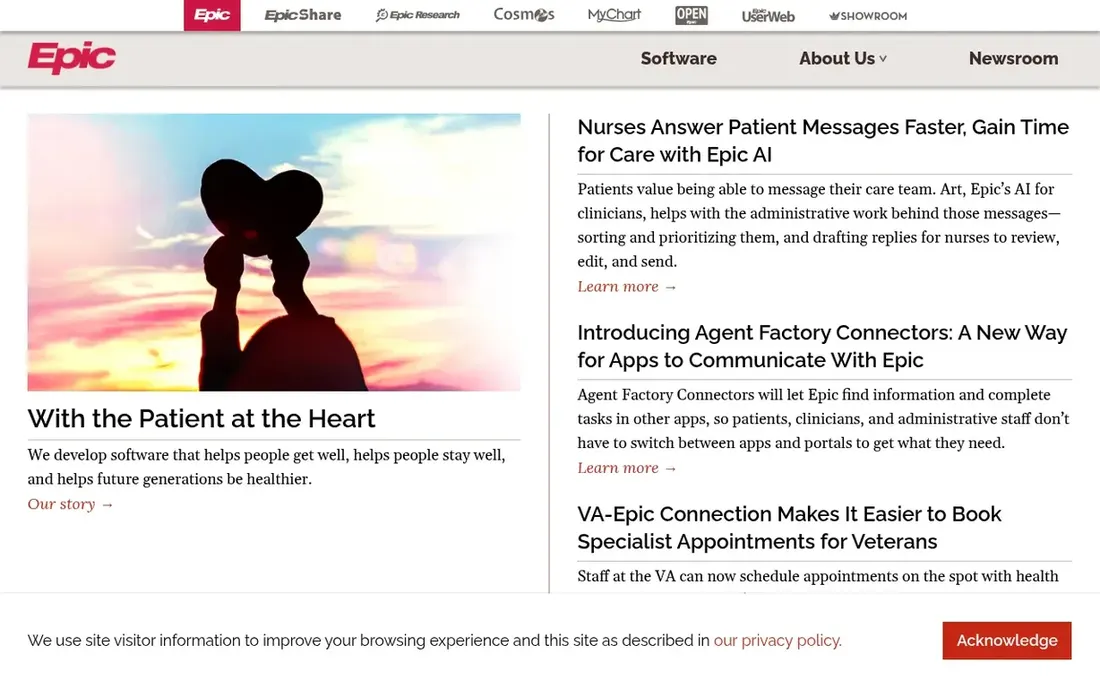
In short, Epic is for full patient-centered EHR. Epic develops software with a focus on helping people get well and stay well, placing the patient at the heart of its options. It is widely used in large health care organizations and gives you a full electronic health record (EHR) system.
Honest limits: Complicated implementation.
Even so, Epic's deep capabilities can result in a complicated implementation process and may need substantial IT resources. Smaller practices or those with restricted budgets might find it less suitable compared with more simplified choices. In daily use, consider Epic if you need a full-featured EHR for a large organization. Check the vendor site for Epic pricing; none is listed in this comparison. Trial and free access: Not stated.
- Patient-centered approach
- Wide functionality
- May need significant resources
Practice Fusion makes the most sense for straightforward EHR for medical practices. Consider Practice Fusion if you prioritize simplicity and an approachable experience.
However, Practice Fusion may lack the advanced customization and features required by bigger or specialty practices. Entry price for Practice Fusion: $199 per month per provider. Trial and free access: Free trial.
What to check first: Restricted customization.
- Approachable interface
- Made for small practices
- Fewer advanced features
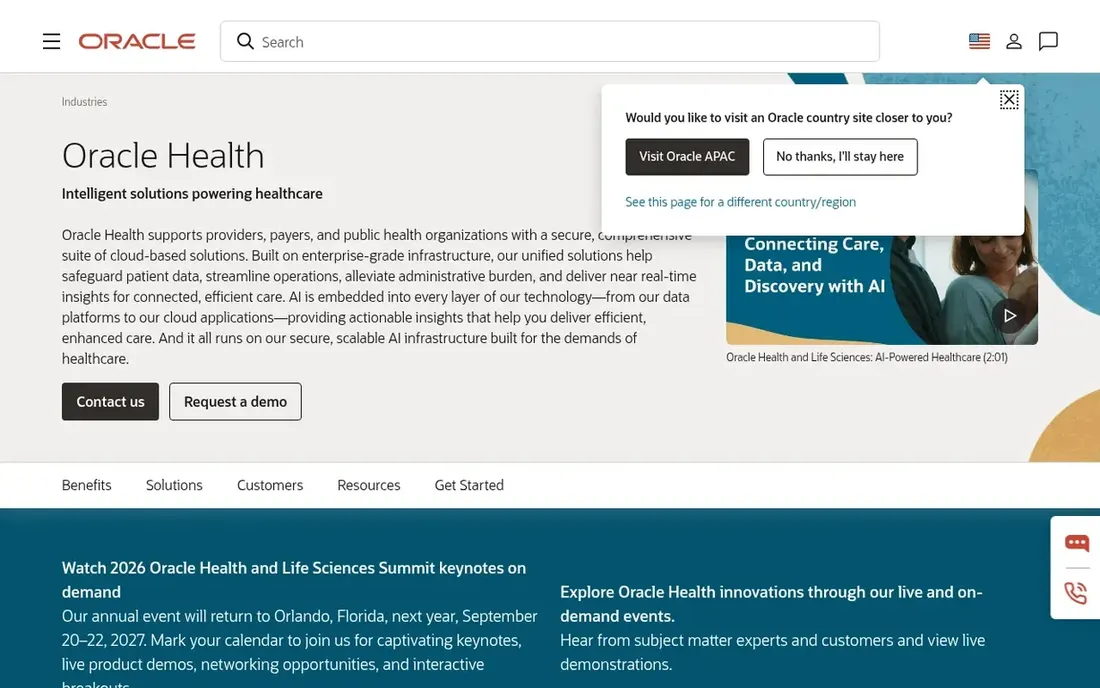
Choose Oracle Health for secure and steady health care options. The product links up with Oracle's broader technology stack.
From a buyer's view, as part of a bigger enterprise suite, Oracle Health may be most beneficial for organizations already using Oracle products. Oracle Health shows no starting price here, so confirm the cost on the vendor site. As for free access: Not stated.
Watch-outs: May be part of a larger suite.
- Focus on security and reliability
- Actionable insights
- Restricted standalone details
How we compared the tools
We compared the tools on published pricing, free plan or trial availability, feature coverage for health care software, and the limits each vendor documents. Plan names, prices and limits change often. Treat the figures here as a starting point and verify them with the vendor. We ordered the tools by general fit, then by how clearly pricing is shown, then by free access. A buyer with unusual needs may reorder them.
Questions to settle before buying
- Get a written quote from Allscripts, NextGen Healthcare, Epic and Oracle Health; the list shows no starting price for them.
- Use real work to test the free trial from Practice Fusion, rather than a demo project.
- Before choosing Allscripts, weigh its main limit: brand transition to Veradigm.
- Confirm that Epic connects to the apps your team already uses, on the plan you would actually buy.
- Ask Oracle Health whether prices are locked for the first term and what happens at renewal.
FAQ
Can I try these options before paying?
Often, yes. Practice Fusion offers a free trial. Use your own data and a real task during the test, and check what the free tier or trial limits before you rely on it. Each of the 5 options in this health care software guide has its own card above with the price, free plan and limits.
What is the best health care software for large hospitals?
Allscripts comes first here and is built for data-driven health care options. Buyers with other needs may prefer NextGen Healthcare (for specialty practices) or Epic (for thorough patient-centered EHR). Compare costs and limits first.
Does any tool for health care software here have a free plan?
A permanent free plan is not offered by Allscripts, Oracle Health or the other tools here. Practice Fusion offer a trial. Plan a short evaluation period instead.
How are the tools for health care software ordered?
Allscripts sits first and Oracle Health last because the order follows typical fit for health care software, then price clarity and free access. It is a judgement call, so read each profile for fit and limits.
Is Allscripts the right pick for everyone comparing health care software?
No single tool suits every team. Allscripts comes first because it fits data-driven health care solutions, while NextGen Healthcare suits specialty practices and Epic suits comprehensive patient-centered EHR. Match the tool to your own size, budget and workflow before deciding.
Which health care software is a good match for small practices?
Allscripts comes first here and is built for data-driven health care options. Buyers with other needs may prefer NextGen Healthcare (for specialty practices) or Epic (for full patient-centered EHR). Compare costs and limits first.
Sources
- https://www.allscripts.com
- https://www.nextgen.com
- https://www.epic.com
- https://www.practicefusion.com
- https://www.oracle.com/health