Best Gym Scheduling Software in 2026: 8 Tools Compared
Compare the best gym scheduling software for classes, appointments and memberships, with booking, waitlists, payments and member apps for gyms in 2026.

- Editor's choice
 Mindbody
Studios wanting discovery
Starts at$79 per monthVisit mindbody.ioFull review - Great alternative
 TeamUp
Class studios billing many members
Starts at$119 per monthVisit goteamup.comFull review - Also consider
 Glofox
Boutique gyms and chains
Starts at$99 per monthVisit glofox.comFull review
TL;DR:
- Gym scheduling is really class booking plus membership billing plus a member app, so judge tools on all three, not just a calendar.
- PushPress offers a free starting tier, while Mindbody, TeamUp and Glofox suit established studios with different strengths.
- Price the whole stack, including payment processing, per-member fees and add-ons, not just the headline monthly rate.
- Waitlists, late-cancel rules and no-show handling matter more for daily operations than a long feature list.
Quick comparison
| Tool | Best for | Starts at | Free plan? | |
|---|---|---|---|---|
| Mindbody | Studios wanting discovery | $79 per month | No | Visit |
| TeamUp | Class studios billing many members | $119 per month | No | Visit |
| Glofox | Boutique gyms and chains | $99 per month | No | Visit |
 PushPress | Gyms starting free | Free | Yes | Visit |
 Zen Planner | Membership-driven gyms | $99 per month | Free trial | Visit |
 WellnessLiving | Studios selling classes plus appointments | $69 per month | No | Visit |
 Gymdesk | Simple gyms under 250 members | $75 per month | Free trial | Visit |
 Wodify | CrossFit boxes with retail | $199 per month | No | Visit |
The best gym scheduling software
A gym schedule is not just a calendar. Members book classes, join waitlists, buy packs, pay monthly dues and cancel late, while staff manage coaches, rooms, capacity and payments. The tools below cover that full loop, with a member-facing app or portal for booking. We compared official pricing pages, feature pages and public reviews, and we favored tools with class scheduling, membership billing, waitlist handling and payment processing that staff can run without constant vendor help.
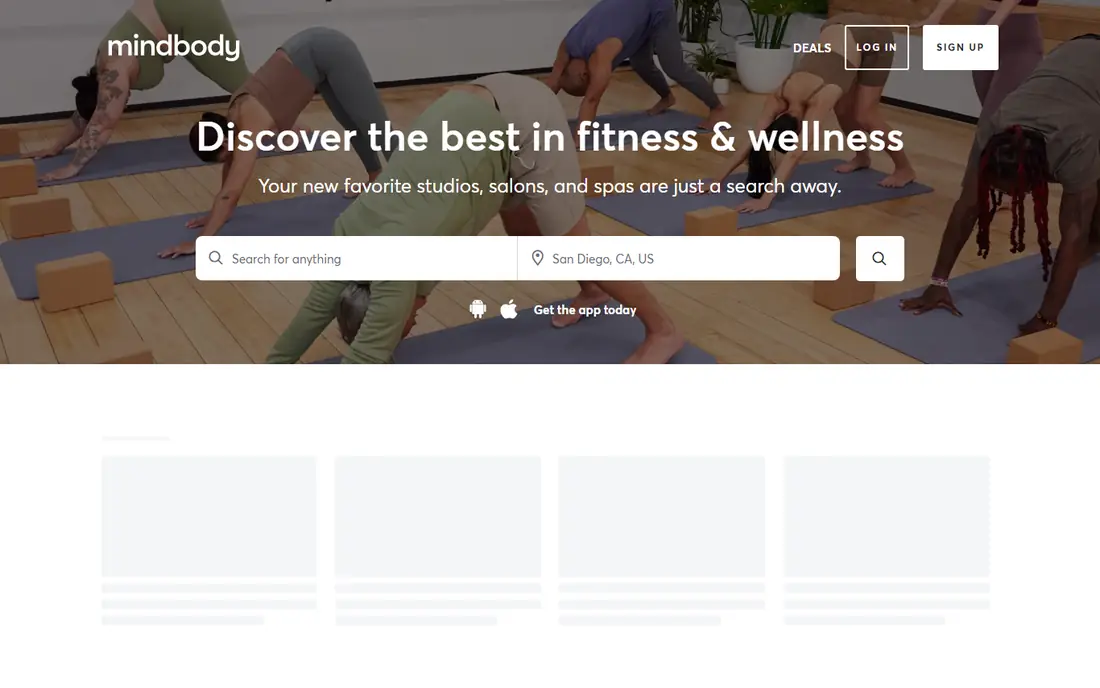
Mindbody is the best-known studio platform, and its discovery network is the reason many studios stay with it. Consumers can find and book classes through the Mindbody app, which can bring new members who would not find a standalone gym website. It covers class scheduling, appointments, memberships, packages, payments and a member app in one system, with per-location pricing listed from $79 per month in public summaries.
The catch is total cost. Add-ons can push real monthly costs well above the starter rate, and public reviews often cite support response as a weakness. Budget the whole stack, including add-ons and processing, before you compare Mindbody with cheaper rivals. For a studio that values discovery and a broad feature set, Mindbody remains a strong, if pricey, choice.
- Large consumer discovery network
- Broad studio features
- Member app
- Add-ons raise real cost
- Support complaints in public reviews
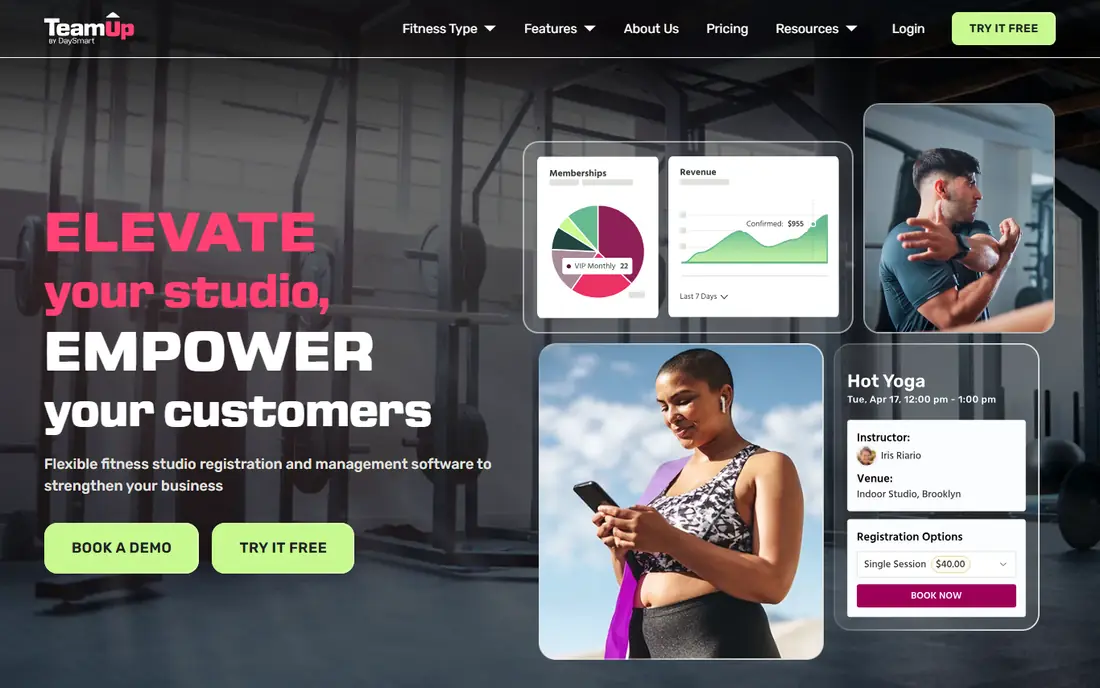
TeamUp suits independent gyms, CrossFit boxes and class studios that bill many members, because pricing is based on active customer bands rather than a flat rate. Public summaries list $119 per month for up to 100 active customers, rising to $379 per month for 500 or more, with no long contract in some summaries. It covers class scheduling, appointments, memberships and payments, with strong appointment handling for studios that mix classes and one-to-one sessions.
The trade-off is band pricing. As your active customer count grows, so does the monthly fee, even if class numbers stay flat, so model growth before you sign. A branded app also costs extra. For studios with a stable member base and appointment-heavy work, TeamUp is a practical, well-reviewed option.
- Usage-based tiers by active customers
- Own payment processor option
- Appointment strength
- Higher tiers rise with member count
- Branded app costs extra
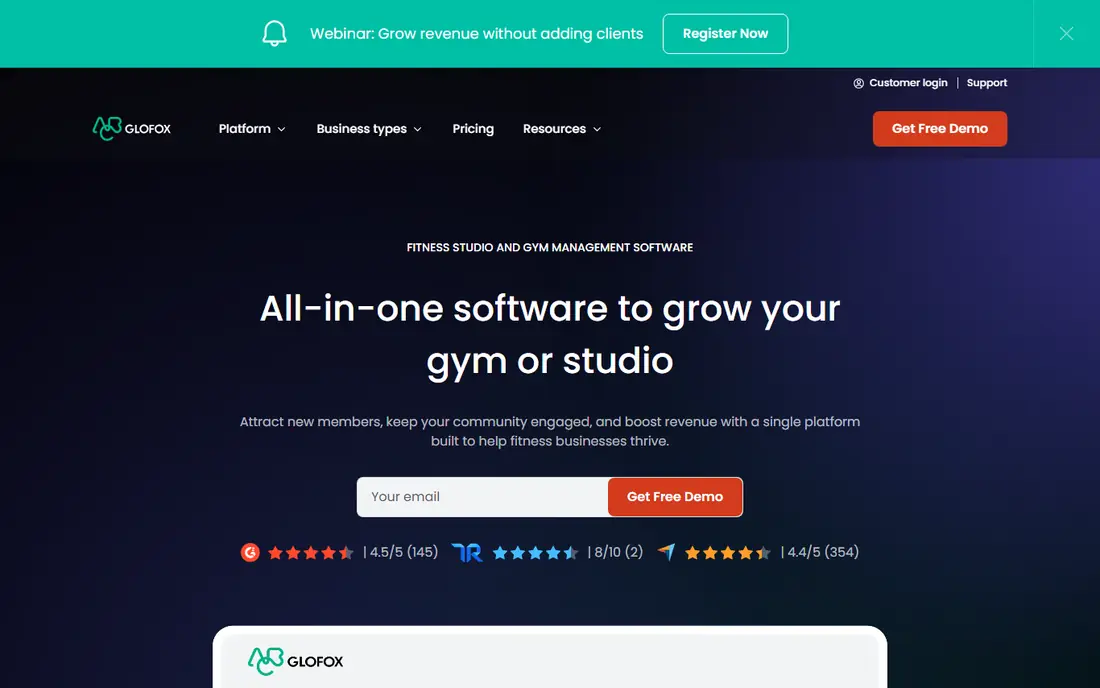
Glofox, now part of ABC Fitness, suits boutique gyms and small chains that want a polished branded member app and a clean booking experience. Public summaries list plans starting around $99 per month per location, with higher tiers quoted for larger needs. It covers class scheduling, memberships, payments, coach management and reporting, with multi-location support for growing chains.
The catch is pricing clarity. Above the starter point, much of Glofox pricing is quote-led, so confirm what your tier includes, including branded app, payments and reporting. For a boutique studio that cares about how booking feels to members, Glofox is a strong choice. For a budget-first gym, Gymdesk or PushPress may be cheaper.
- Polished branded member experience
- Multi-location support
- Class and membership tools
- Pricing largely quote-led above starter
- Add-ons vary by tier
PushPress is the lowest-risk start in this guide, because it offers a genuine free tier, with paid Pro from $159 per month and Max from $229 per month in public summaries. It covers class scheduling, memberships, payments, waitlists and member management, with a strong fit for CrossFit boxes, strength gyms and martial arts schools. Self-managing waitlists and automated late-cancel handling help front desks during busy class times.
The trade-off is payment economics and extras. Payment processing rates vary by plan, and a branded app and growth tools cost extra on top of the software tier. Still, starting free lets a new gym test real booking and billing before paying a monthly fee. For a new or small gym, PushPress is our pick for the lowest-risk start.
- Genuine free tier
- Paid tiers from $159 per month
- Strong for CrossFit and strength gyms
- Payment rates vary by plan
- Branded app and extras cost more
Zen Planner suits membership-driven gyms, especially martial arts schools and established studios that bill hundreds of members. Public summaries list pricing from $99 per month, rising with active members and extensions, with a trial for testing. It covers class scheduling, memberships, billing, attendance, belt tracking for martial arts and reporting, with website and engagement add-ons for growth.
The catch is tier math. As with TeamUp, costs rise with member count and extensions, so a gym that grows will pay more even without adding locations. Check which features are core and which need an extension before you budget. For an established membership gym, Zen Planner is a steady, well-tested choice.
- Membership and billing depth
- Established martial arts fit
- Website and engagement add-ons
- Higher tiers rise with members
- Some features need extensions
WellnessLiving suits studios that sell both classes and appointments, such as yoga, Pilates and wellness studios with private sessions. Public summaries list starter at $69 per month, business at $199 and a top tier at $349, with livestream, room and equipment booking and waitlist handling with cutoffs. That published tier ladder makes comparison easier than quote-only rivals.
The limit is tier depth. Full features, including advanced reporting and branded options, sit on higher tiers, and payment processing fees sit on top of the subscription. For a studio that needs classes, appointments and livestream in one tool at a published price, WellnessLiving is a clear, practical pick.
- Published tier pricing
- Classes plus appointments
- Livestream support
- Higher tiers needed for full features
- Processing fees extra
Gymdesk suits simple class-based gyms and martial arts schools that want clear pricing and all features in one tier. Public summaries list $75 per month up to a set member band, rising to $200 per month for up to 250 members, with a 30-day trial and no contracts in vendor comparisons. It covers class scheduling, memberships, payments, waitlists with auto-fill on cancel, and late-cancel and no-show rules.
The trade-off is discovery and extras. Gymdesk does not offer Mindbody's consumer discovery network, and a branded app and door access cost extra. For a gym that mainly needs reliable scheduling, billing and waitlists without a complex stack, Gymdesk is easy to run and easy to budget.
- Simple pricing by member bands
- All features included
- No contracts in summaries
- Less discovery than Mindbody
- Branded app and door access extra
Wodify suits CrossFit boxes and functional fitness gyms that also sell retail, because it pairs class scheduling and memberships with point of sale and retail tools. Public summaries list pricing from $199 per month per location, with higher tiers quoted, and waitlists that fill open spots automatically. That combination helps a box run classes, coaching and a small shop from one system.
The catch is entry price. At $199 per month, Wodify costs more than Gymdesk, WellnessLiving or PushPress free to start, and some features sit on higher tiers. For a CrossFit box that needs retail and class tools together, the price can be justified. For a simple class gym, a cheaper tool will cover scheduling just as well.
- Strong CrossFit fit
- Retail and point of sale
- Automatic waitlist fills
- Higher entry price
- Tiered features and add-ons
How we picked these
We compared official pricing pages, feature pages and public reviews, and we favored tools with class scheduling, membership billing, waitlist and late-cancel handling, and a member app or portal. We gave weight to published pricing and to total cost, including payment processing and per-member fees, because headline rates alone mislead gym owners. We also favored tools with a trial or free tier where possible, so a gym can test real booking before paying.
What to check before you buy
Run a real class through each demo, from member booking to waitlist to late cancel to payment, using your actual class size and capacity rules. Check how no-shows are charged or deducted, how packs and memberships pause or freeze, and whether coaches can see rosters on a phone at the door. Confirm payment processing rates separately from the subscription, and ask whether failed-payment recovery is included or an add-on.
Finally, test migration. Ask how member records, memberships, packs and payment details move from your current system, and what happens to billing on switch day. A smooth migration matters more than a new feature, because a billing break on day one loses trust fast.
FAQ
What is gym scheduling software?
It is software that manages class bookings, appointments, memberships, payments and member access in one system, with a member app or portal for booking and a staff dashboard for rosters and billing. It replaces paper sign-ups and separate billing tools.
How much does gym scheduling software cost?
Entry prices in this guide range from free with PushPress to $69 to $199 per month for paid starters, with higher tiers for larger member counts. Add payment processing, per-member fees and branded app costs to the subscription when you compare totals.
Can members book and cancel from an app?
Yes, with most tools in this guide, members can book classes, join waitlists and cancel from a member app or portal, subject to your late-cancel rules. Confirm that waitlist auto-fill and no-show handling match your policy before you buy.
Does it handle memberships and payments too?
Yes, most tools in this guide cover memberships, packs, recurring billing and payment processing, not just scheduling. Check failed-payment recovery, pauses and freezes, because those billing details affect revenue more than the calendar itself.
Which tool is best for a new gym?
PushPress free tier is the lowest-risk start, while Gymdesk and WellnessLiving suit a new studio that wants a clear paid tier from day one. Mindbody suits a studio that values discovery, but its total cost is higher once add-ons are included.