Best Freelancing Platforms for Beginners in 2026: 8 Platforms Compared
Find the best freelancing platforms for beginners in 2026, from Upwork and Fiverr to Contra and Freelancer, with fees, tips, and trade-offs for new freelancers.
- Editor's choice
 Upwork
General freelancing
Starts atFreeVisit upwork.comFull review - Great alternative
 Fiverr
Selling defined services
Starts atFreeVisit fiverr.comFull review - Also consider
 Freelancer.com
Bidding on many projects
Starts atFreeVisit freelancer.comFull review
TL;DR:
- Upwork and Fiverr are the best starting points for most beginners, thanks to large client demand.
- Contra is a strong free option for portfolio-led freelancers who want to avoid commission on some work.
- Freelancer.com offers many small contests and projects, but competition can be intense.
- Your profile, samples, and first reviews matter more than the platform you pick.
- Check fees, payout timing, and client quality before you commit to one platform full time.
Quick comparison
| Tool | Best for | Starts at | Free plan? | |
|---|---|---|---|---|
| Upwork | General freelancing | Free | Yes | Visit |
| Fiverr | Selling defined services | Free | Yes | Visit |
| Freelancer.com | Bidding on many projects | Free | Yes | Visit |
 Contra | Portfolio-led freelancing | Free | Yes | Visit |
 PeoplePerHour | UK and European clients | Free | Yes | Visit |
 Guru | Long-term client relationships | Free | Yes | Visit |
 Malt | European freelance work | Free | Yes | Visit |
 Workana | Latin American and remote work | Free | Yes | Visit |
The best freelancing platforms for beginners
We compared official feature pages, pricing pages, and public reviews, and we focused on how easy it is to join, find first clients, get paid, and build a reputation as a new freelancer.
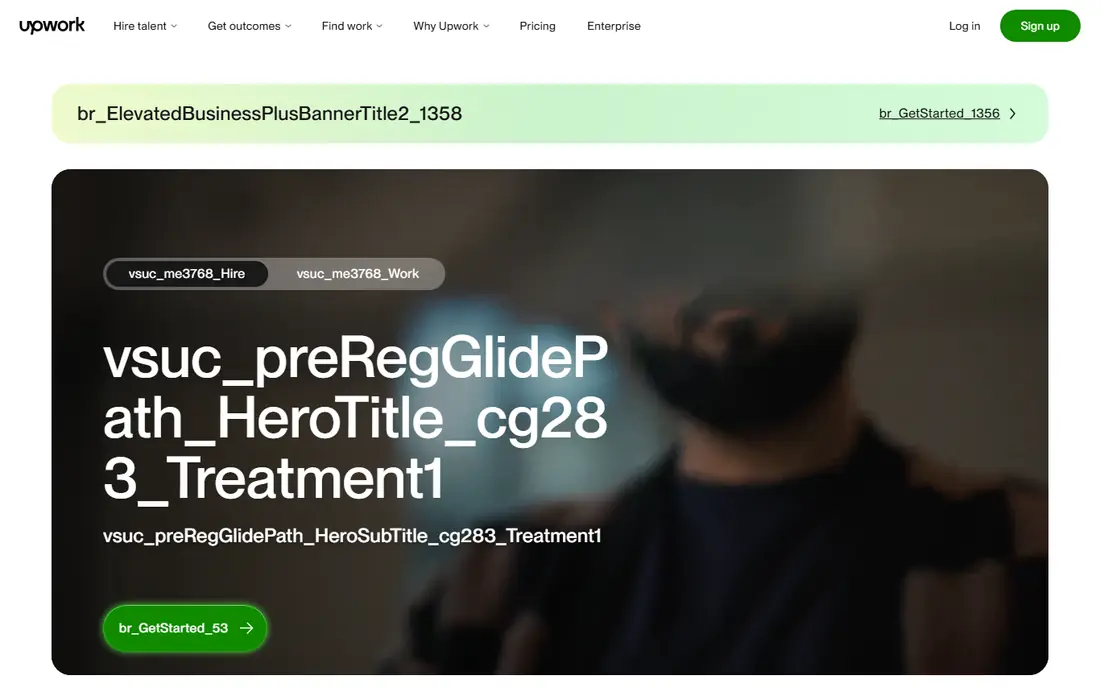
Upwork is the best general starting point for most beginners because client demand is broad and steady. You can find work in writing, design, development, marketing, admin, and many other fields, and the escrow system holds client funds before you start. That protection matters when you are new and cannot yet judge clients well.
The main costs are fees and competition. Upwork charges a service fee on earnings, and popular jobs attract many proposals, so new freelancers need strong profiles and tailored proposals to stand out. Start with smaller jobs, deliver well, and collect reviews, since early ratings shape future invitations.
- Largest range of freelance jobs
- Escrow payment protection
- Strong profile, review, and job matching tools
- Service fees apply to earnings
- Competition is high in popular categories
Fiverr flips the usual freelance model: instead of bidding on jobs, you list a defined service, called a gig, and clients order it. That suits beginners who offer a clear, repeatable service, such as logo design, voiceover, proofreading, or social media graphics. Packages let you offer basic, standard, and premium versions of the same service.
The trade-off is price pressure at the start. New sellers often charge less to win first orders and reviews, and Fiverr takes a service fee from each order. Once reviews and repeat buyers build, you can raise prices and add extras. For service-led beginners, Fiverr is one of the fastest ways to get a first paid order.
- Clients come to you through service listings
- Clear packages and pricing
- Good for repeatable services
- Service fee applies to orders
- Early prices are often low until reviews build
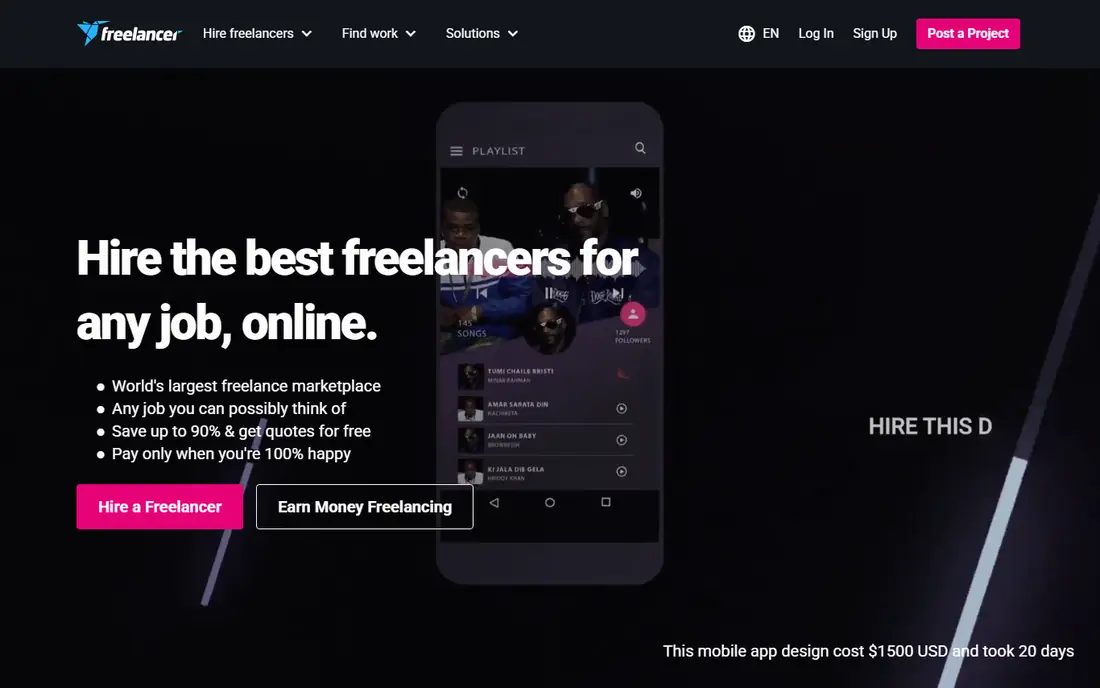
Freelancer.com offers a huge volume of projects and contests, which gives beginners many chances to bid. Contests are useful if you want to show a design or solution before a client commits, and milestone payments help on larger jobs. The platform covers a wide range of skills, from coding to data entry.
Quality varies more here than on Upwork or Fiverr, and many jobs are low budget. Read project details carefully, avoid clients who ask for free work beyond a contest entry, and check fee rules before bidding. Used selectively, Freelancer.com can be a good source of early projects and practice.
- Very large project volume
- Contests let you show work before winning
- Milestone payments for larger jobs
- High competition and some low-budget jobs
- Fees and membership upsells can confuse new users
Contra stands out for beginners who want a strong portfolio without paying platform commission on every job. You can build a visual portfolio, share services, send proposals, and manage contracts and invoices in one place. For designers, writers, and other visual or sample-led freelancers, that portfolio-first approach feels natural.
The limit is demand. Contra has fewer active job listings than the biggest platforms, so you may need to bring your own clients or use it alongside Upwork or Fiverr. As a free home for your work and a way to win commission-free projects, though, Contra is well worth setting up.
- Free portfolio and client tools
- Commission-free options on some work
- Clean profile and proposal workflow
- Smaller client base than Upwork or Fiverr
- Fewer job listings in some categories
PeoplePerHour is a solid choice for beginners targeting UK and European clients. You can bid on projects or sell hourlies, which are defined services with fixed prices, similar to Fiverr gigs. Escrow payments and reviews give both sides some protection, and the platform covers design, writing, development, and marketing well.
New sellers should expect a profile review step and service fees on earnings, so read the fee schedule before pricing work. Competition is lower than on the largest global platforms in some niches, which can help beginners win early jobs. If your clients are mainly in the UK or Europe, PeoplePerHour deserves a try.
- Strong UK and European client base
- Hourlies let clients buy defined services
- Escrow and review system
- Service fees apply
- Approval and profile setup can take time for new sellers
Guru suits freelancers who want longer client relationships rather than one-off gigs. Workrooms keep messages, files, milestones, and payments in one place, and the SafePay system holds funds for agreed work. That structure helps when a project runs for weeks or months and needs clear stages.
The marketplace is smaller than Upwork, so job volume is lower, and the interface feels older than newer platforms. For beginners who value clear project management and steady clients, Guru is a dependable, if quieter, option. Pair it with a larger platform while you build a client base.
- Workrooms for managing projects and files
- SafePay escrow system
- Flexible fee and membership options
- Smaller marketplace than Upwork
- Interface feels dated compared with newer rivals
Malt is a leading freelance platform in Europe, especially in France, and it has grown into other European markets. Profiles are detailed, client reviews are visible, and the platform handles contracts and payments, which simplifies admin for new freelancers. Tech, design, marketing, and consulting work are well represented.
Beginners outside Europe will find less demand here, and country coverage varies, so check whether your market is active before investing time in a profile. If you live in Europe or want European clients, Malt is a strong, professional place to start.
- Strong in France and other European markets
- Clear profiles and client reviews
- Payment handling for freelancers
- Best coverage is in Europe, with less demand elsewhere
- Some features vary by country
Workana is a major freelance platform in Latin America, with remote projects across design, development, writing, marketing, and admin. It supports Spanish, Portuguese, and English, which helps freelancers who work in those languages. Payment protection and a ranking system reward reliable delivery, which benefits beginners who complete early jobs well.
Global reach is smaller than Upwork or Fiverr, so freelancers targeting only US or UK clients may find fewer jobs. For Spanish or Portuguese speakers, or anyone open to Latin American clients, Workana offers real demand and a clear path to early reviews.
- Strong Latin American client base
- Projects in Spanish, Portuguese, and English
- Escrow-style payment protection
- Smaller global reach than Upwork
- Fees apply to project earnings
How we picked these
We compared official feature pages, pricing pages, and public reviews, and we favored platforms that are open to new freelancers in October 2026, offer payment protection, and publish fee information. We included global, European, and Latin American options, since beginner demand varies by region. We did not claim hands-on testing, and we treated fees as changeable, so check each platform pricing page before you price your services.
How to win your first freelance jobs
Build a profile around one service
New freelancers do better with one clear service and three strong samples than with a long list of skills. State who you help, what you deliver, and what a finished job looks like. Clients hire clarity, especially from sellers without reviews.
Price for reviews first, then raise rates
Early jobs are about proof, not maximum income. Price fairly, over-deliver on communication and deadlines, and ask happy clients for a review. Once you have five to ten strong reviews, raise prices gradually and drop low-value work.
Protect yourself on every job
Use platform escrow or contracts, agree scope and revisions in writing, and never start large unpaid work on a promise. Check client history and reviews, and walk away from jobs that ask for free work, vague scope, or payment outside the platform.
FAQ
What is the best freelancing platform for beginners?
Upwork is the best general choice, and Fiverr is best if you sell a defined service. Contra is a strong free extra for portfolio-led work. Try one main platform well rather than spreading thinly across five at once.
Can beginners really earn on Upwork and Fiverr?
Yes, but early earnings are usually modest. Small, well-delivered jobs build reviews, and reviews lead to better jobs and higher rates. Expect the first month to focus on profile, proposals, and proof rather than high income.
How much do freelancing platforms charge?
Most charge a service fee on earnings, plus payment processing or withdrawal costs in some cases. Fee rates and free bid allowances vary by platform, so check the pricing page and factor fees into your rates before accepting work.
Do I need experience to join a freelancing platform?
No, most platforms accept new freelancers, but you need samples that show what you can do. Personal projects, volunteer work, and practice pieces all count as samples when you have no client work yet.
Is Fiverr or Upwork better for beginners?
Fiverr suits sellers with a clear, repeatable service, since clients order from listings. Upwork suits freelancers who want varied project work and are willing to write proposals. Many beginners use both and keep the one that brings better clients.
How do I avoid scams on freelancing platforms?
Use platform payments and messaging, avoid clients who ask to pay outside the platform, and be wary of jobs that promise high pay for vague work or ask for upfront fees. Check client reviews and payment verification before starting.