Best Foraging Apps for Plant Identification Free in 2026: 8 Apps Compared
Find the best foraging apps for plant identification free, with safety notes, photo tips, and free tools for wild plants, trees, fungi, and gardens in 2026.

- Editor's choice
 PlantNet
Free wild plant identification
Starts atFreeVisit identify.plantnet.orgFull review - Great alternative
 iNaturalist
Community-checked observations
Starts atFreeVisit inaturalist.orgFull review - Also consider
 Seek by iNaturalist
Family-friendly nature identification
Starts atFreeVisit inaturalist.orgFull review
TL;DR:
- We found PlantNet and iNaturalist are the strongest free starting points, since both are free to use for identification without a paywall blocking core results.
- PictureThis and PlantSnap add care and garden features, but their free routes are more limited, so read the free limits before you rely on them.
- No app is safe enough on its own for eating a wild plant, and we list that safety note plainly in this guide.
- Taking photos of leaves, flowers, stems, and habitat improves results a lot, since one blurry leaf photo often leads to a wrong guess.
- For foraging, pair an app with a local field guide or expert check, and treat any uncertain result as a reason not to eat the plant.
Quick comparison
| Tool | Best for | Starts at | Free plan? | |
|---|---|---|---|---|
| PlantNet | Free wild plant identification | Free | Yes | Visit |
| iNaturalist | Community-checked observations | Free | Yes | Visit |
| Seek by iNaturalist | Family-friendly nature identification | Free | Yes | Visit |
 Flora Incognita | Detailed plant identification | Free | Yes | Visit |
 PictureThis | Garden plants and plant care | Free | Yes | Visit |
 Google Lens | Quick photo checks on any phone | Free | Yes | Visit |
 PlantSnap | Fast photo identification | Free | Yes | Visit |
 LeafSnap | Tree and leaf identification | Free | Yes | Visit |
The best foraging apps for plant identification free
Safety note: plant identification apps are not a substitute for expert identification, and misidentification can be dangerous. Never eat a wild plant, mushroom, or berry based only on an app result. If you are unsure, leave it alone and ask a local expert, extension service, or experienced forager who can see the plant in person.

PlantNet is our pick for most foragers who want a genuinely free tool. It is free to use, with no ads in the core identification flow, and it is backed by research institutions, which shows in its focus on wild plants rather than only garden varieties. You photograph a flower, leaf, fruit, or bark, and PlantNet suggests matches with scientific names and photos to compare.
The honest limit is coverage and photo quality. Common species identify well, while rare or local species can be missed, and a single poor photo often leads to a weak result. Take several photos, including the whole plant and close-ups, and compare the suggested species with the plant in front of you. Used that way, PlantNet is a strong learning tool and a good first check on a walk.
- Free identification
- Large plant database
- Community and scientific backing
- Accuracy drops for rare species and poor photos
- Some regions are covered better than others
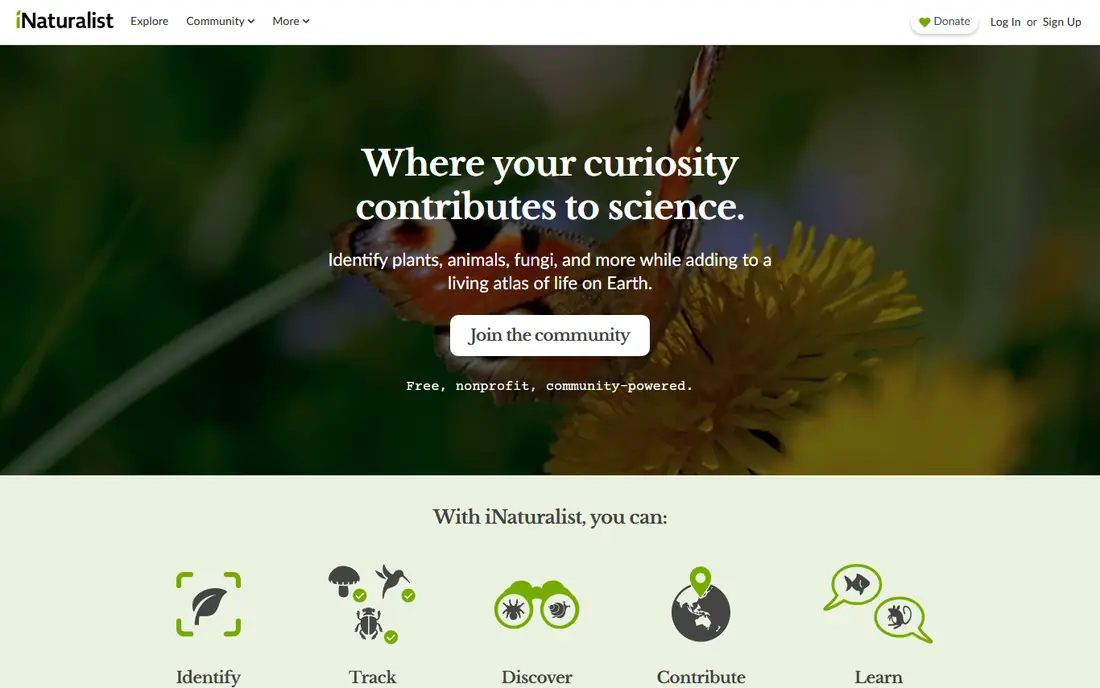
iNaturalist suits foragers who want a second opinion, not just a fast guess. You post an observation with photos and location, and the community, including knowledgeable naturalists, can suggest or confirm an identification. That human check is valuable when an app alone gives two similar species, one safe and one not.
It is free, and your observations also help citizen science, since researchers use the data to track species. The trade-off is speed: community confirmation can take hours or days, so it is not the tool for a split-second decision on a trail. Use it to learn over time, build a record of what grows near you, and double-check anything you plan to study further.
- Free
- Community experts can confirm or correct IDs
- Useful observation records
- Slower than instant ID apps
- Interface takes time to learn
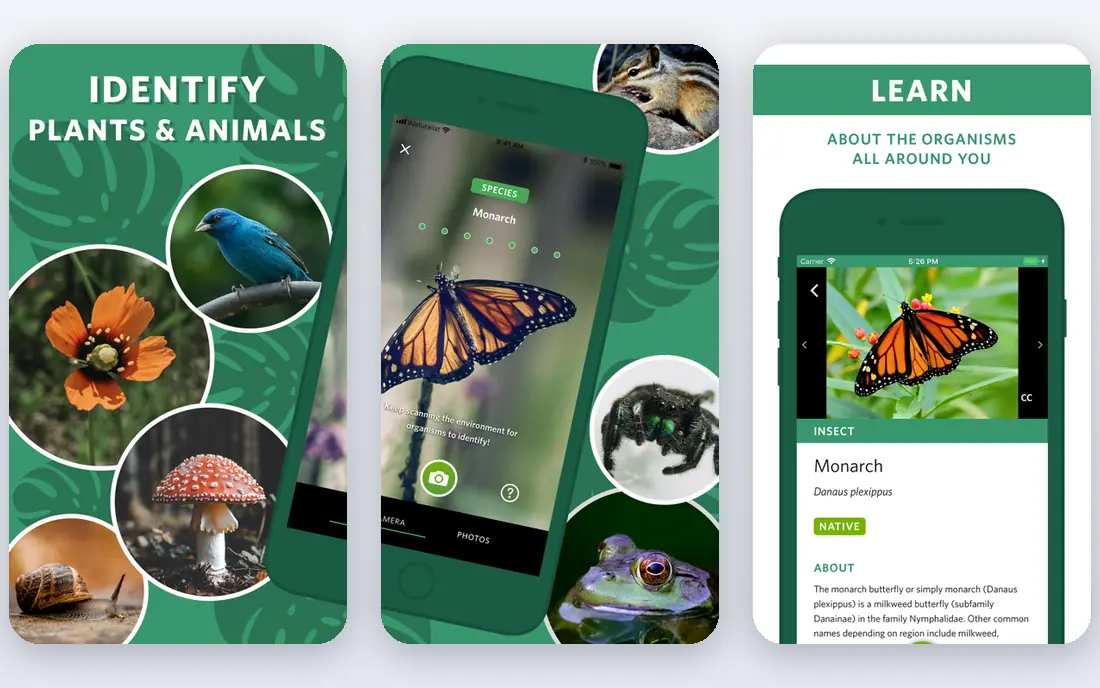
Seek is the friendlier face of iNaturalist, and it works well for walks with children or for beginners who want to learn names without a complex interface. Point the camera at a plant and Seek suggests a match, with challenges and badges that make a walk feel like a nature hunt. It also covers fungi and animals, which helps when a foraging walk turns up more than plants.
Seek is free, and it wisely declines to guess when it is unsure, rather than offering a confident wrong answer. That caution is a strength for foraging, even if it feels less satisfying in the moment. Treat Seek as a learning companion, and move any plant you might eat to a full expert check, never to a Seek result alone.
- Free
- No account needed for basic use
- Identifies plants, fungi, and animals
- Less detailed than iNaturalist itself
- Can decline to guess when unsure
Flora Incognita comes from a research background and gives detailed species profiles once a plant is identified, which helps a forager learn leaf shape, flower structure, and habitat. The app is free for identification, and its guided photo steps help you capture the parts that matter, rather than a single distant shot of a bush.
Its main limit is geography. Coverage and accuracy are strongest in its core European regions, and users elsewhere may find fewer matches. If you forage in Europe, it is one of the best free options available. If you forage elsewhere, use it beside PlantNet or iNaturalist and compare results, rather than relying on it alone.
- Free identification
- Detailed species profiles
- Strong accuracy for covered regions
- Best coverage in Europe
- Less complete elsewhere
PictureThis is popular for a reason: it is fast, the interface is clear, and it adds care advice, watering reminders, and disease hints for garden plants. For a forager, that speed is useful for a first pass on a common plant, and the toxicity notes can flag a plant that needs caution. The free download gives a free route to identification, though the number of free identifications is limited and premium prompts appear often.
That limit is why we do not rank it first for foraging, even though its garden features are strong. If you mainly garden and occasionally forage, PictureThis can be a useful extra tool. If you forage often and want a free tool without counting identifications, PlantNet or iNaturalist will serve you better, and any eating decision still needs an expert check.
- Fast identification
- Disease and care advice
- Large species database
- Free identifications are limited
- Premium prompts are frequent
Google Lens is already on many Android phones and available on iPhone through the Google app, which makes it the easiest free check when you have no other app open. Take a photo, tap Lens, and you get visual matches and web results for the plant, often with care or toxicity pages. That speed is handy for a quick question on a walk.
Because Lens is general-purpose, it is not tuned to plant details the way PlantNet is, and it can give a confident wrong match for similar species. Use it as a quick cross-check, not as your only source, and compare its result with a plant-specific app and a field guide. For foraging, that extra comparison is not optional, it is the safety step.
- Free
- Built into many phones
- Identifies plants and many other objects
- General-purpose tool, not a plant specialist
- Confident wrong answers happen
PlantSnap offers fast photo identification from a large database, with care information for many garden and wild plants. The free tier lets you try identification without paying, which is why it earns a place here, though the free experience includes limits and ads that PlantNet avoids. For a casual gardener who wants a quick name, that trade-off may be fine.
For foraging, the same caution applies as with every app in this list. PlantSnap can help you learn names and narrow a search, but its result is a starting point, not proof that a plant is safe to eat. Cross-check with PlantNet or iNaturalist, look at several photos of the suggested species, and leave any doubtful plant alone.
- Large plant database
- Quick photo ID
- Plant care information
- Free tier has limits and ads
- Accuracy varies by species
LeafSnap focuses on leaves, which makes it useful when you are identifying trees on a walk and flowers are not in season. You photograph a leaf, and the app suggests tree species with photos and details to compare. That narrow focus can be an advantage, since leaf shape, veins, and edges carry a lot of information for trees.
The limit is scope. Herbs, grasses, and flowering plants without clear leaves are harder, and the community behind it is smaller than iNaturalist. For tree identification on a foraging walk, LeafSnap is a handy free extra. For a full foraging check, pair it with PlantNet and a local tree guide, and never eat based on a leaf photo alone.
- Leaf-focused identification
- Useful for trees
- Free basic use
- Leaf-only approach struggles with flowers and herbs
- Smaller community than iNaturalist
How we picked these
We compared official app pages, pricing, and free tier details for plant identification apps that still work in October 2026, and we kept only apps with a genuine free route to identification. We favored apps with plant-specific databases, clear species profiles, and community or scientific backing, and we checked that free limits, ads, and premium prompts were honest rather than hidden. Safety shaped the list: apps that encourage eating based on a photo alone were left out, and every app here is presented as a learning tool first.
How to use a plant ID app safely on a foraging walk
Good photos are the difference between a useful result and a guess. Photograph the whole plant, then close-ups of leaves from both sides, flowers or fruit if present, stems, and bark for trees. Note the habitat, such as woodland edge, wetland, or garden, and the season, since those details help an expert or a second app narrow the match.
Then slow down before any decision about eating. Compare at least two sources, check a trusted field guide for your region, and look for lookalike species, since many edible plants have toxic twins. If the app gives a low confidence result, or two apps disagree, treat the plant as unidentified. That rule, applied every time, is what keeps foraging enjoyable rather than risky.
What to carry beside the app
Carry a regional field guide, water, and a phone charger, and tell someone where you are walking. A guide gives you details an app photo cannot, such as smell, stem texture, and seasonal changes, and an expert contact gives you a place to send photos for a human check. The app is the starting point, not the final word.
FAQ
Are these foraging apps really free?
PlantNet, iNaturalist, Seek, Flora Incognita, Google Lens, and LeafSnap offer free identification as a core feature. PictureThis and PlantSnap have free routes with limits and premium prompts, so check the free allowance in the app before you rely on them for a long walk.
Can I eat a plant if an app says it is edible?
No. Apps can misidentify plants, and misidentification can be dangerous. Never eat a wild plant, mushroom, or berry based only on an app result. Get expert identification from someone who can see the plant in person, and learn local lookalike species before you forage for food.
Which free app is most accurate for wild plants?
PlantNet and Flora Incognita tend to perform well for wild plants in their covered regions, while iNaturalist adds community confirmation that improves reliability over time. Accuracy still depends on photo quality, region, and species, so compare two apps and a field guide for important identifications.
How do I take better photos for plant identification?
Photograph the whole plant, leaves from above and below, flowers or fruit, stems, and bark, in good light without heavy shadow. Avoid a single blurry photo of one leaf, since that gives the app too little to work with and raises the chance of a wrong match.
Do these apps work offline?
Some apps let you save observations or download regional data, but most identification needs a connection for full results. Download any available offline content before a walk, and save photos to identify later if you lose signal in woodland or hills.
Are mushroom identifications safe from an app?
No. Mushroom identification is especially risky, since many edible and toxic species look similar. Use apps only to learn and narrow a search, and get expert help before eating any wild mushroom, even if an app gives a confident match.