Best Fleet Tracking Software for Construction Sites in 2026: 8 Tools Compared
best fleet tracking software construction sites compared: 8 tools for trucks, equipment, and crews, with live maps, safety alerts, and pricing for site work.

- Editor's choice
 Samsara
Large construction fleets
Starts atSee websiteVisit samsara.comFull review - Great alternative
 Geotab
Open platform fleets
Starts atSee websiteVisit geotab.comFull review - Also consider
 Verizon Connect
Mixed fleets on Verizon coverage
Starts atSee websiteVisit verizonconnect.comFull review
TL;DR:
- Samsara is the broadest platform for construction fleets, pairing vehicle tracking with dashcams, equipment sensors, and site visibility in one dashboard.
- Geotab suits fleets that want an open platform with many third-party integrations and a large reseller network for support.
- Motive and Verizon Connect are strong for mixed fleets that need electronic logging, safety coaching, and reliable coverage across job sites.
- Fleetio is different from the rest here, because it focuses on maintenance and asset records and pulls live location data from a separate telematics provider.
Quick comparison
| Tool | Best for | Starts at | Free plan? | |
|---|---|---|---|---|
| Samsara | Large construction fleets | See website | No | Visit |
| Geotab | Open platform fleets | See website | No | Visit |
| Verizon Connect | Mixed fleets on Verizon coverage | See website | No | Visit |
 Motive | Trucking and compliance fleets | See website | No | Visit |
 Azuga | Small fleets on a budget | See website | Free trial | Visit |
 Fleetio | Maintenance-first fleets | $4 per vehicle per month | Free trial | Visit |
 Teletrac Navman | Compliance-heavy fleets | See website | No | Visit |
 GPS Insight | Fleets wanting flexible terms | See website | No | Visit |
The best fleet tracking software for construction sites
Construction fleets need more than a dot on a map. Trucks move between sites, heavy equipment sits idle, and managers need proof of arrival, safety events, and maintenance status. We compared tools on live tracking, equipment coverage, safety features, and contract terms.
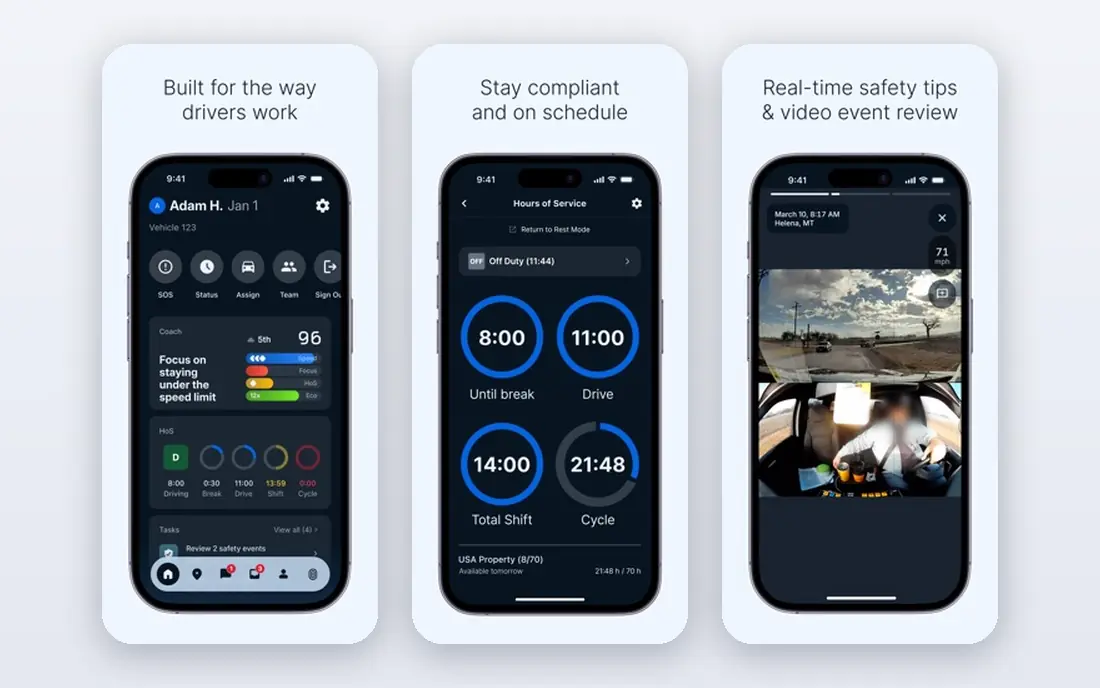
Samsara is our pick for larger construction operations because it treats vehicles, powered equipment, and site cameras as one system. A manager can see truck locations, equipment utilization, and safety events without switching tools. Dashcams with in-cab alerts help coach drivers, and video can clarify what happened after an incident on or near a site.
The main drawback is commercial, not technical. Pricing is by quote, and multi-year terms are common, so a small fleet may find the total commitment high. Samsara requires a minimum fleet size in many cases, and add-ons for cameras and extra applications raise the per-vehicle cost. For a fleet with dozens of assets, the breadth justifies the process. For five trucks, get a written quote and compare it with a simpler tracker first.
- Wide platform covering vehicles, equipment, cameras, and sites
- AI dashcam safety alerts
- Strong reporting and integrations
- Quote-only pricing
- Contracts often run for several years, so check term length before signing
Geotab is built around an open platform, which matters when a construction firm already uses other software for dispatch, fuel, or maintenance. The GO device reports location, speed, engine diagnostics, and driver behavior, and the marketplace adds tools for routing, cameras, and asset tracking. That flexibility lets a fleet build a system around its existing tools rather than replacing them all at once.
The trade-off is variation. Because Geotab sells through resellers, pricing and support quality can differ by provider, and hardware costs vary. Ask for a full quote that includes devices, plans, and any add-ons, and confirm who provides support. Fleets that value choice and integration depth will like Geotab. Fleets that want one vendor and one bill may prefer Samsara or Verizon Connect.
- Large marketplace of integrations
- Detailed engine and driver data
- Works through resellers in many regions
- Pricing varies by reseller
- Setup and accessory choices can feel complex at first
Verizon Connect, built on the Reveal platform, suits construction fleets that work in areas where coverage matters. Trucks, trailers, and heavy equipment can be tracked on one map, and integrated video adds safety context. Field service tools help dispatch the nearest crew to a site, which reduces wasted driving time between jobs.
The buying process is sales-led, so there is no published starter price to compare quickly. Hardware, installation, and replacement terms need clear answers in writing. Firms with an existing Verizon business relationship often find the buying and support path smoother. Others should still get a quote, but compare the total term cost with Motive and Geotab before committing.
- Strong cellular coverage for remote sites
- Reveal platform covers tracking, video, and field service
- OEM integrations available
- Quote-only pricing
- Hardware and installation costs may be billed separately
Motive, formerly KeepTruckin, is a strong choice when compliance is a daily concern. Its electronic logging device tools help fleets meet hours-of-service rules, and the platform pairs tracking with dashcams, maintenance reminders, and fuel spend tracking. For construction firms that also run highway trucks, that mix covers both site work and road work.
The cost structure needs care. Core tracking, cameras, and compliance modules can be priced separately, so the headline quote may not match the full system you need. Ask for the all-in price for your vehicle count, camera count, and compliance needs. Fleets that need clean compliance records and driver coaching will find Motive worth the quote process.
- Strong electronic logging and compliance tools
- AI dashcams and driver coaching
- Spend and maintenance tools in one platform
- Quote-only pricing
- Some features require separate product licenses, which raises the total cost
Azuga fits smaller construction fleets that need reliable tracking without enterprise pricing. It covers live location, geofences, driver behavior, and maintenance alerts, and its driver rewards program gives managers a positive way to encourage safe driving. For a fleet of vans, pickups, and a few pieces of equipment, Azuga keeps the daily map and alerts simple.
The limit is scale. Very large fleets with complex equipment sensors, site cameras, and deep integrations may outgrow Azuga faster than Samsara or Geotab. Small and mid-size firms, however, often prefer Azuga because the cost is lower and the contract terms can be more flexible. Confirm the current plan terms, since pricing and term options change.
- Lower entry cost than enterprise platforms
- Driver rewards and safety scoring
- Month-to-month options in some plans
- Less depth for large equipment fleets
- Advanced features may need higher tiers
Fleetio is included here for a different reason from the others. It does not replace a GPS tracker. Instead, it manages vehicles, equipment, inspections, work orders, and fuel records, and it pulls live location and diagnostic data from Samsara, Geotab, Motive, and other providers. That makes it a strong second layer for a construction firm whose main pain is maintenance, not just location.
The catch is that you must budget for both systems if you do not already have telematics. Fleetio pricing starts at $4 per vehicle per month, which is transparent and low compared with full telematics platforms. If you already have trackers, Fleetio adds order to maintenance work. If you have no trackers yet, start with a tracking platform first, then add Fleetio when maintenance records become the bottleneck.
- Clear maintenance, inspection, and asset records
- Integrates with major telematics providers
- Published pricing
- Not a standalone GPS tracker, so you still need a telematics device
- Tracking depth depends on the paired provider
Teletrac Navman serves fleets that need detailed compliance and reporting, including hours, safety, and asset utilization. It tracks vehicles and powered assets, sends alerts for events that need attention, and produces reports managers can use for billing, payroll checks, and safety reviews. Construction firms with regulated trucks and a mix of on-road and off-road assets will find the reporting depth useful.
The buying experience is enterprise-oriented, so small fleets may wait longer for a quote and onboarding than with Azuga or Fleetio. Pricing is by quote, and camera and compliance add-ons affect the total. If your fleet is large and compliance reporting is central, Teletrac Navman is worth a quote. If you only need basic site tracking, a simpler tool will start faster.
- Real-time compliance alerts
- Strong reporting for large fleets
- Mixed asset tracking for vehicles and equipment
- Quote-only pricing
- Enterprise focus can make small-fleet buying slower
GPS Insight offers live tracking, custom reports, and alerts for vehicles and equipment, with a focus on fleets that want reporting shaped to their own operations. Device rental options can help firms that do not want to buy hardware outright, and the platform covers the core needs of dispatch, geofencing, and utilization checks for construction work.
The drawback is that pricing is not published, so you cannot compare it quickly without a quote. Advanced video and compliance features may be separate, so confirm what is included. GPS Insight suits fleets that value reporting flexibility and do not want a long hardware commitment. Get the term, device, and support terms in writing before you sign.
- Custom reporting
- Device rental options in some cases
- Tracking for vehicles and equipment
- Quote-based pricing
- Camera and advanced features may cost extra
How we picked these
We compared official product pages, pricing information, and public fleet buyer guides, and we focused on tools that track both vehicles and construction equipment, not only passenger cars. We favored platforms with live maps, geofences, safety alerts, and maintenance or compliance features, and we noted where pricing is quote-only rather than repeating third-party estimates as fact. We left out consumer trackers and single-vehicle tools that cannot manage a work fleet.
What to check before you buy
Construction tracking fails when the hardware, coverage, and contract do not match site reality. Test the system on your actual routes and sites, not only in a demo. Check signal in rural areas, yards, and indoor storage, and confirm how the device handles equipment that sits idle for weeks.
Vehicles versus equipment
Trucks need electronic logging and driver safety tools in many cases, while excavators, loaders, and generators need utilization, location, and battery or engine hour data. Choose a platform that covers both asset types, or pair a vehicle platform with an equipment tracker that feeds the same dashboard. Two separate maps will slow dispatch and hide idle equipment.
Contracts and total cost
Ask for the full term cost, including devices, installation, cameras, and each software module. Note the contract length, early termination fee, and device replacement policy. A low monthly rate on a long term with paid cameras can cost more than a higher rate on a flexible term. Get the renewal price in writing as well.
Safety and driver privacy
Tell drivers what is tracked, why, and how video and scores are used. Use dashcam alerts and coaching for safety, not only for discipline, and set clear rules for video access. A transparent policy improves acceptance and reduces disputes, while a hidden rollout often creates resistance that hurts the rollout.
FAQ
What is the best fleet tracking software for construction sites?
Samsara is our broadest pick for larger construction fleets, while Geotab suits fleets that want many integrations. Motive is strong for compliance-heavy truck fleets, and Azuga fits smaller fleets on a tighter budget. The best choice depends on fleet size, equipment mix, and whether cameras and compliance tools are required.
Do I need dashcams for a construction fleet?
Dashcams are not required for basic tracking, but they help with safety coaching and incident review. GPS alone tells you where a vehicle was and how it was driven. Video shows what happened around it. If insurance claims, site incidents, or driver coaching are major concerns, add cameras. If dispatch and arrival proof are the main needs, tracking alone may be enough.
Can fleet tracking work for heavy equipment as well as trucks?
Yes, most platforms on this list track powered equipment with battery-powered or wired sensors, reporting location, utilization, and engine hours. Check whether the equipment tracker uses cellular or satellite coverage for remote sites, and whether idle time and geofence alerts are included in your plan.
How much does fleet tracking cost per vehicle?
Full telematics platforms are commonly quoted in the $25 to $60 per vehicle per month range once hardware and cameras are included, but quotes vary by fleet size, term, and features. Fleetio maintenance software starts at $4 per vehicle per month, but it needs a separate tracker. Always compare total term cost, not only the monthly rate.
Do construction fleets need electronic logging devices?
Electronic logging applies to commercial truck drivers covered by federal hours-of-service rules. Local service vans and off-road equipment often fall outside that mandate, but highway trucks usually need a registered device. Motive, Geotab, Verizon Connect, and Teletrac Navman all offer compliant logging options. Confirm the device is registered before you buy.