Best Fertility Apps in 2026: 9 Apps Compared
Compare the best fertility apps in 2026, from Clue, Flo, and Natural Cycles to Ovia, Premom, and Glow, with tracking features and prices compared for you.
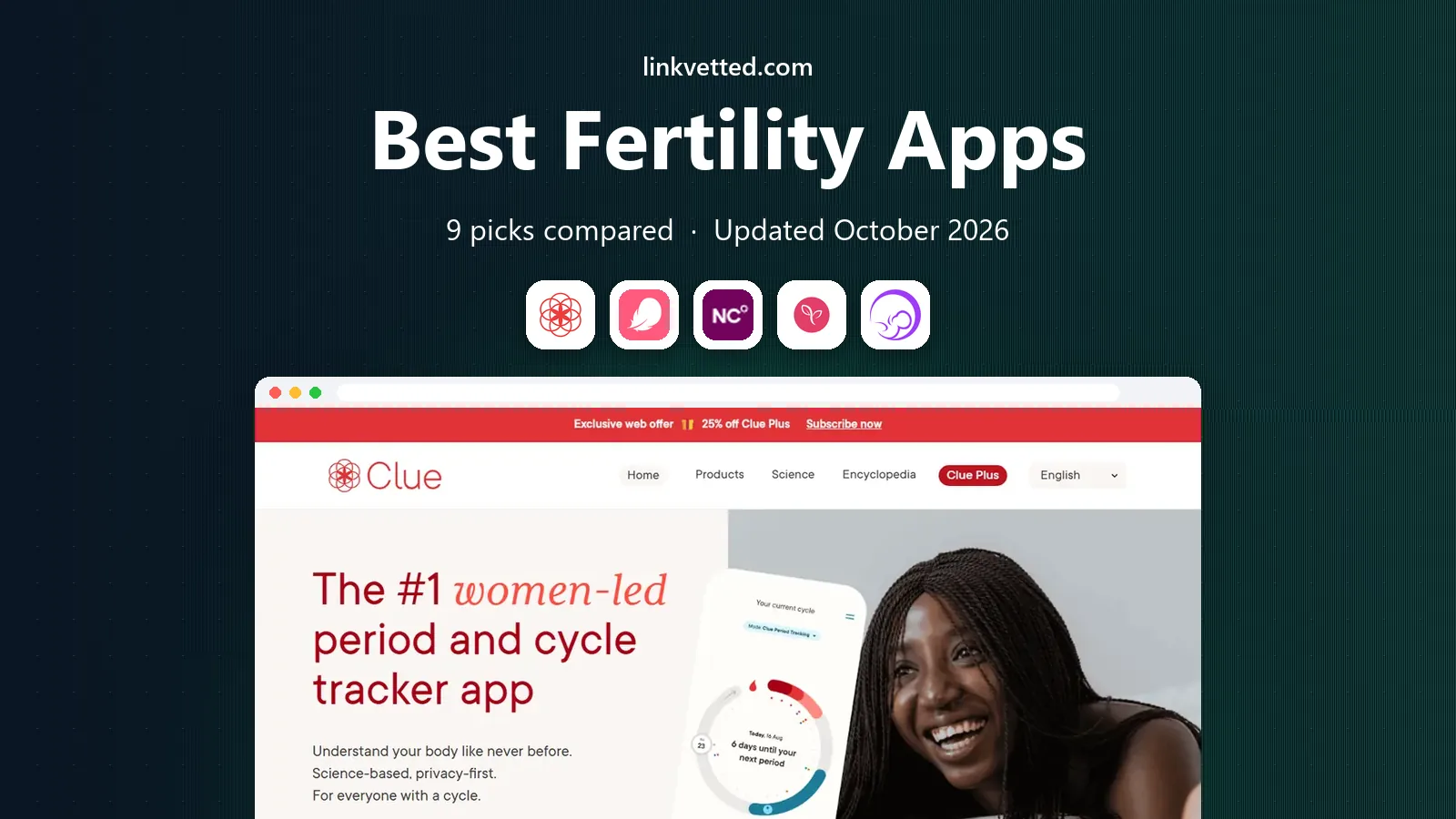
- Editor's choice
 Clue
Flexible cycle tracking
Starts atFreeVisit helloclue.comFull review - Great alternative
 Flo
Cycle tracking plus content
Starts atFreeVisit flo.healthFull review - Also consider
 Natural Cycles
Temperature-based method
Starts atSee websiteVisit naturalcycles.comFull review
TL;DR:
- Clue and Flo suit general cycle and fertility tracking, while Natural Cycles suits users who want a temperature-based method with formal clearance for contraception.
- The best fertility app for trying to conceive often depends on whether you track ovulation tests, temperature, symptoms, or all three together.
- Premom and Fertility Friend suit detailed charting, while Ovia and Glow add broader pregnancy and partner features.
- Fertility apps give estimates, not medical advice, so check privacy settings and talk with a clinician if cycles are irregular or conception takes time.
Quick comparison
| Tool | Best for | Starts at | Free plan? | |
|---|---|---|---|---|
| Clue | Flexible cycle tracking | Free | Yes | Visit |
| Flo | Cycle tracking plus content | Free | Yes | Visit |
| Natural Cycles | Temperature-based method | See website | No | Visit |
 Ovia Fertility | Free fertility tracking | Free | Yes | Visit |
 Premom | Ovulation test tracking | Free | Yes | Visit |
 Fertility Friend | Detailed charting | Free | Yes | Visit |
 Glow | Trying to conceive community | Free | Yes | Visit |
 Kindara | Fertility awareness charting | Free | Yes | Visit |
 Mira | Hormone tracking with a device | See website | No | Visit |
The best fertility apps
Fertility apps help you log periods, symptoms, temperature, and ovulation tests, then show a fertile window based on that history. No app can guarantee ovulation or pregnancy, and predictions get weaker with irregular cycles, illness, or changing routines. The apps below differ in method, detail, privacy approach, and price, so pick the one that matches how much you want to track.
Please note this article is for general information only and is not medical advice. If you have irregular cycles, a known health condition, or have been trying to conceive for a while without success, talk with a clinician about next steps.

Clue lets you log periods, symptoms, mood, pain, and other signals without forcing a fixed cycle length. That flexibility helps when cycles vary, since the app learns from your own history rather than assuming a standard pattern. The interface is calm and easy to read, which matters when you log data every day.
The free plan covers core tracking, while Clue Plus adds deeper analysis and advanced predictions. Clue is based in Berlin and presents a privacy-led approach, but you should still read its current privacy policy and check what data you share. For general tracking with room to adjust, Clue is a strong and steady choice.
- Flexible logging for irregular cycles
- Clear charts and predictions
- Science-led design
- Deeper analysis sits behind Clue Plus
- Predictions are estimates, not guarantees
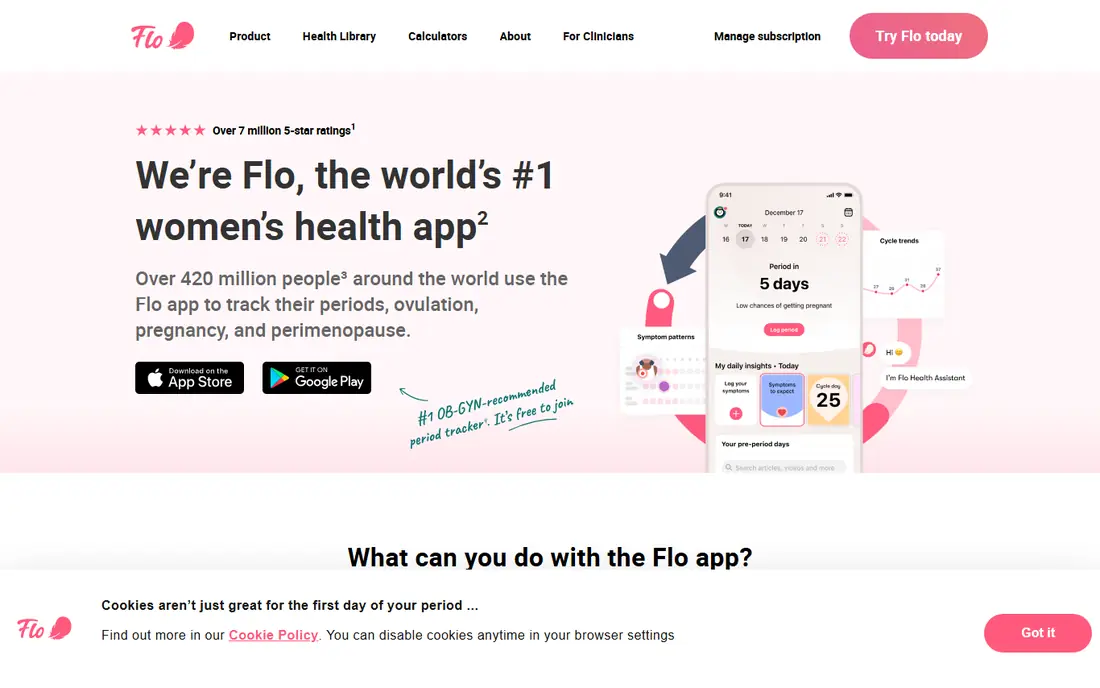
Flo combines cycle and fertility tracking with articles, symptom tools, and pregnancy modes in one app. Core tracking is free, which makes it easy to start, and Premium adds a health assistant, expert content, and community chats. That breadth suits users who want education and tracking together, not just a calendar.
Flo has faced regulatory action in the past over data sharing, and it has since added an Anonymous Mode option. Read the current privacy settings before you log sensitive health data, and turn off sharing options you do not need. For content-rich tracking, Flo remains popular, but privacy settings deserve your attention.
- Large content library
- Pregnancy and cycle modes
- Community features in Premium
- Many useful features sit behind Premium
- Past privacy history deserves a careful read

Natural Cycles uses daily temperature readings to estimate fertility, rather than calendar math alone. It has formal clearance as a contraceptive method in the United States, which sets it apart from general period trackers. Users get a daily fertility status, and the app can pair with a thermometer or wearable band depending on the plan.
The cost is higher than most apps here, and the method needs consistent readings to work well. It is less suited to users who cannot measure temperature regularly or who have very irregular cycles. If you want a temperature-based method with formal clearance, check the current plan, device options, and instructions carefully.
- Temperature-based algorithm
- FDA-cleared for contraception use
- Clear daily fertility status
- Annual cost is higher than most trackers
- Needs regular temperature readings
- Weaker fit for very irregular cycles
Ovia Fertility gives a daily fertility score based on cycle data, symptoms, and other signals you log. Core tracking is free, and the same account can move into pregnancy tracking later, which suits users who want continuity rather than a new app at each stage. Food safety lookups and practical tools add value beyond the calendar.
Some premium tools are available through an employer or health plan rather than a simple paid upgrade, so check what your account includes. Ovia is owned by Labcorp, so read its privacy policy and data controls before you start. For free, practical fertility tracking, Ovia is a strong option.
- Free to download and use for core tracking
- Daily fertility score
- Pregnancy continuity
- Premium tools may come through an employer or health plan
- Data is held by a large health company
Premom is built around ovulation predictor tests. You photograph a test strip, and the app reads the line strength and places it on your chart. That visual record helps when you test daily near ovulation and want to see the rise and peak clearly, rather than guessing from a faint line.
The free plan covers core test tracking, while Premium adds deeper analysis and extra tools. Results still depend on test quality, timing, and correct use, so follow the test instructions and do not rely on one reading alone. For users who track with ovulation tests, Premom is one of the most practical choices.
- Photo analysis of ovulation test strips
- Clear ovulation charts
- Good for test-led tracking
- Premium features need a subscription
- Test strip quality affects results
Fertility Friend is the detail-first option. It supports basal body temperature, cervical fluid, ovulation tests, symptoms, and custom data, with charts that show patterns over many cycles. Long-time charters value that depth, especially when they share charts with a clinician or want to spot subtle shifts.
The interface looks older than newer apps, and the richest analysis sits behind a VIP subscription. New users may need a few cycles to learn the charting terms. If you want depth over polish, Fertility Friend remains a trusted choice for serious charting.
- Very detailed charts and data entry
- Long track record
- Strong analysis tools in VIP
- Dated interface
- Full analysis needs a paid VIP plan
- Learning curve for new charters
Glow organizes tracking around trying to conceive, with ovulation predictions, symptom logging, and partner sharing. Community forums let users ask questions and share experiences, which some people find reassuring during a stressful process. The app can also move into pregnancy tracking as needs change.
Advanced cycle charts and forecasts sit behind Premium, so check what the free plan covers for your needs. Glow has also faced past privacy scrutiny, so review current settings and sharing options. For TTC tracking with community support, Glow is a solid and social option.
- TTC-focused tracking
- Partner sharing
- Community and forums
- Premium needed for advanced charts
- Past privacy settlement deserves a careful read
Kindara supports fertility awareness charting with temperature, cervical fluid, and other signs, in a clean chart view. It suits users who want to learn their own cycle signals rather than rely only on a calendar prediction. Community features add peer support, and data can be shared with a partner.
Kindara is smaller than the largest apps, so updates and support may feel less broad. Check the current free and paid features before you commit your history to it. For method-based charting with a clear interface, Kindara is a thoughtful alternative to the biggest names.
- Fertility awareness method support
- Detailed charting
- Community features
- Smaller team and app footprint than Clue or Flo
- Some features need a paid plan
Mira pairs an analyzer device with test wands that measure fertility hormones, including luteinizing hormone and estrogen metabolites, from urine samples. The app turns those readings into hormone curves, which can help users with irregular cycles or unclear ovulation test results. That data depth goes beyond calendar and temperature tracking alone.
The catch is cost and effort. You need the device and ongoing wands, so the total price is higher than an app-only tracker. Mira is not a substitute for medical testing or advice, but for users who want hormone data at home, it offers a level of detail few app-only tools match.
- Lab-grade hormone readings at home
- Detailed fertility hormone charts
- Useful for irregular cycles
- Needs a device and test wands, which add cost
- App alone is not the full system
How we picked these
We compared official feature pages, app store listings, and pricing information for apps that focus on fertility, ovulation, or fertility awareness tracking. We favored apps that are still maintained, support temperature or test tracking where claimed, and state their privacy approach clearly. We left out general period trackers with no fertility tools, since this list is about trying to conceive and fertility awareness.
How to choose a fertility tracking app
Start with the signals you will actually log. If you only want a fertile window estimate, a simple calendar app may be enough. If you test daily or measure temperature, pick an app built for that data, since a calendar-only app will waste your effort. Also decide how much you want to share, since some apps offer partner sharing and community while others keep data private by default.
Check privacy before you log
Read the privacy policy, check whether health data is sold or shared for advertising, and turn on any anonymous or private mode offered. Use a strong passcode, limit connected accounts, and export your data now and then so you keep a copy. If an app's data practices worry you, choose a different app rather than hoping settings will fix it.
Know when to seek care
Apps estimate fertility from past cycles and logged signals, and they can be wrong. Seek clinical advice if cycles are very irregular, periods stop, pain is severe, or conception has not happened after a reasonable time for your age and health history. Bring your charts to the appointment, since a clear record can help a clinician spot patterns faster.
FAQ
What is the best fertility app?
Clue suits flexible cycle tracking, Flo suits content-rich tracking, and Premom suits ovulation test tracking. The best fertility tracker app depends on whether you log temperature, tests, symptoms, or just dates. Try the free plan for one full cycle before you pay for a premium plan.
What is the best app to get pregnant?
Premom, Fertility Friend, and Glow are strong for trying to conceive, since they focus on ovulation, charting, and TTC features. No app can guarantee pregnancy, and results depend on timing, health, and other factors. Use the app to time intercourse around your fertile window, and seek care if conception takes longer than expected.
What is the best app for tracking ovulation?
Premom is best if you use ovulation tests, Natural Cycles is best if you use temperature, and Fertility Friend is best if you want both plus detailed charts. The best ovulation tracking apps show the data behind the prediction, not just a colored window. Check a few cycles against your own signs before you trust any single method.
Are fertility apps accurate?
Fertility apps give estimates based on your logged data, and accuracy falls with irregular cycles, missed logs, illness, or changing routines. Temperature and hormone methods can add detail, but no consumer app replaces clinical testing. Treat predictions as a guide, log consistently, and talk with a clinician if results do not match your experience.
What is the best TTC app for irregular cycles?
Fertility Friend and Mira suit irregular cycles better than calendar-only apps, since they use detailed charting or hormone data. Clue also helps with flexible logging for varied cycles. If cycles are very irregular, a clinician can check for causes that an app cannot diagnose, so do not rely on an app alone.