Best Expense Reporting Software for Small Business in 2026: 8 Tools Compared
We compared the best expense reporting software for small business on receipt capture, approvals, cards, and price, with free options and honest fit notes.
- Editor's choice
 Ramp
Free cards plus expense automation
Starts atFreeVisit ramp.comFull review - Great alternative
 Brex
Startups that want free spend tools
Starts atFreeVisit brex.comFull review - Also consider
 Expensify
Teams keeping their current cards
Starts at$5 per member per monthVisit expensify.comFull review
TL;DR:
- Ramp and Brex give small teams cards plus expense tools at no monthly fee, if you qualify for their cards.
- Expensify is the best pick for teams that want to keep their existing cards.
- Zoho Expense is the cheapest paid reporting tool here for tiny teams.
- Navan is the pick when travel booking and expenses should live together.
Quick comparison
| Tool | Best for | Starts at | Free plan? | |
|---|---|---|---|---|
| Ramp | Free cards plus expense automation | Free | Yes | Visit |
| Brex | Startups that want free spend tools | Free | Yes | Visit |
| Expensify | Teams keeping their current cards | $5 per member per month | Yes | Visit |
 Zoho Expense | Budget teams and Zoho users | $4 per active user per month | Yes | Visit |
 BILL Spend and Expense | Teams already using BILL | Free | Yes | Visit |
 Navan | Travel plus expenses in one app | $15 per user per month | Yes | Visit |
 Sage Expense Management | Firms on Sage accounting | See website | Free trial | Visit |
 Rydoo | Simple mobile expense reports | $10 per user per month | Free trial | Visit |
The best expense reporting software for small business
Expense reporting should take minutes, not an afternoon of chasing receipts. The tools below capture receipts, apply policies, route approvals, and sync to accounting, but they differ on cards, pricing, and how much automation you get for free.

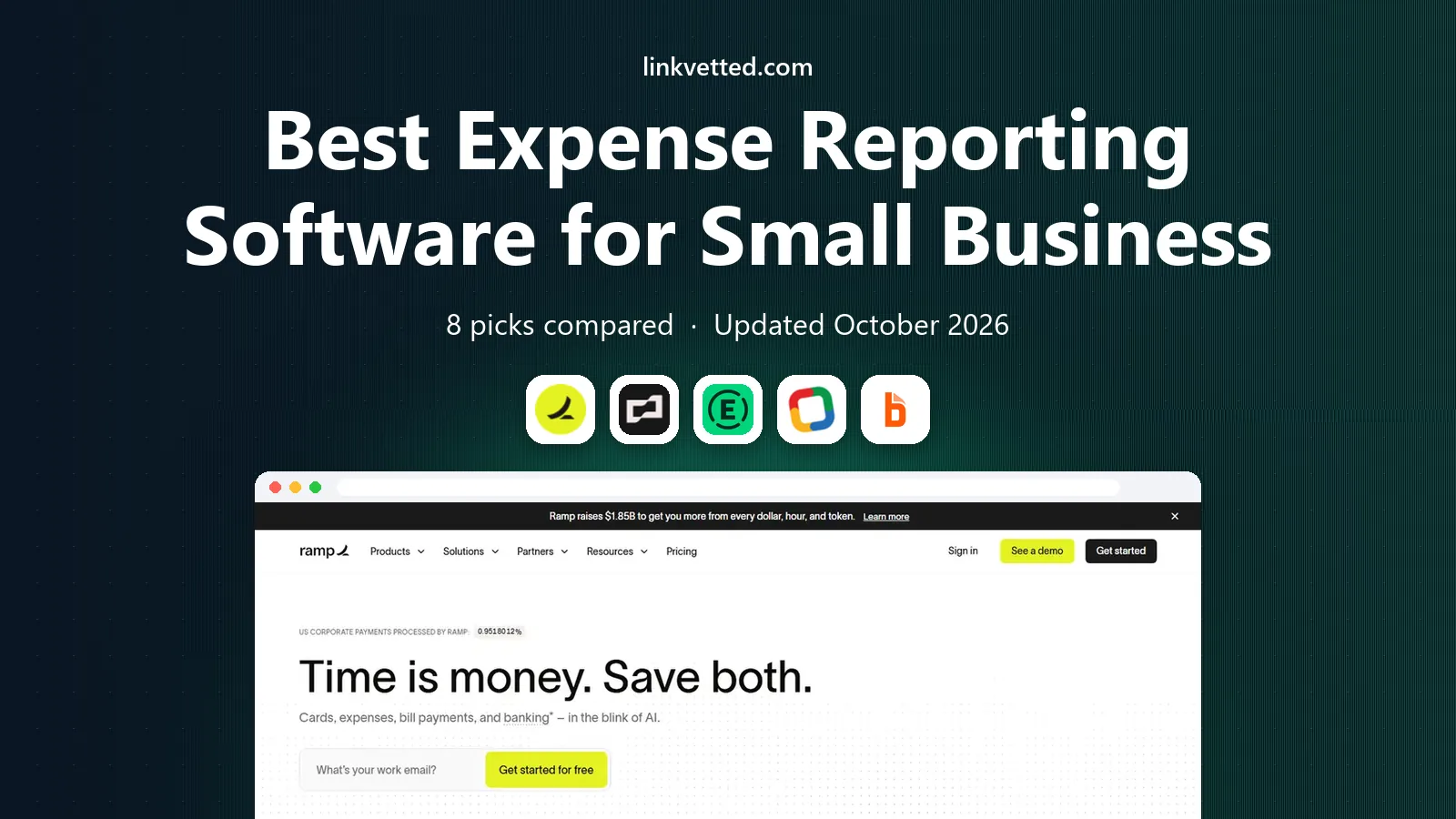
['Ramp gives a small team cards, expenses, and bill pay in one free tier, which is hard to beat on price alone.'] Its strengths include corporate cards with spend controls, receipt capture and accounting sync, and automation for coding and approvals. The trade-offs are you must use Ramp cards for the free tier and Plus adds a per-user fee plus a platform fee. Pricing starts at Free, with a free plan status of Yes. For buyers where free cards plus expense automation matters most, it is worth a short trial on real work before you commit, so you can see how setup, speed, and support feel in daily use. In short, Ramp fits free cards plus expense automation better than it fits a buyer who only wants the lowest entry price and is willing to accept a weaker fit elsewhere.
- Corporate cards with spend controls
- Receipt capture and accounting sync
- Automation for coding and approvals
- You must use Ramp cards for the free tier
- Plus adds a per-user fee plus a platform fee
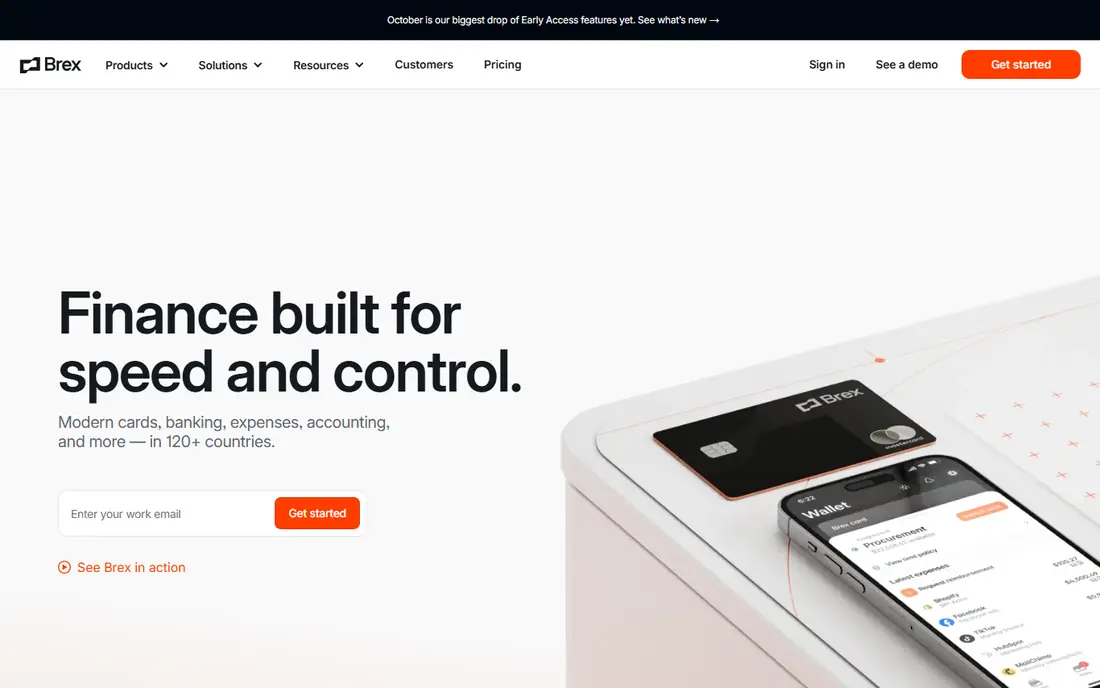
['Brex suits funded startups and growing firms that want cards, banking, and expense tools in one account.'] Its strengths include corporate cards with spend controls, expense capture and accounting links, and global spend tools for growing teams. The trade-offs are you must use Brex cards for the free tier and Premium costs extra per user. Pricing starts at Free, with a free plan status of Yes. For buyers where startups that want free spend tools matters most, it is worth a short trial on real work before you commit, so you can see how setup, speed, and support feel in daily use. In short, Brex fits startups that want free spend tools better than it fits a buyer who only wants the lowest entry price and is willing to accept a weaker fit elsewhere.
- Corporate cards with spend controls
- Expense capture and accounting links
- Global spend tools for growing teams
- You must use Brex cards for the free tier
- Premium costs extra per user
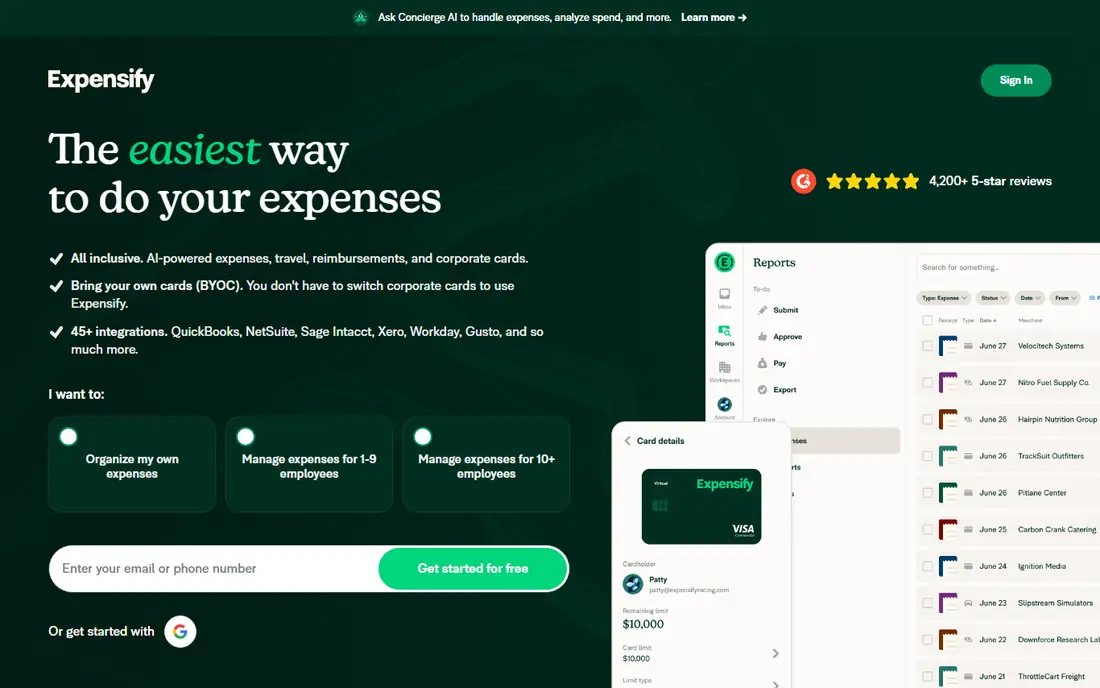
['Expensify is the classic expense tool for teams that do not want to switch banks or cards to get automation.'] Its strengths include receipt scanning with SmartScan, approval workflows and accounting sync, and works with your existing cards. The trade-offs are some features need the higher Control plan and pricing is per active member, not per seat. Pricing starts at $5 per member per month, with a free plan status of Yes. For buyers where teams keeping their current cards matters most, it is worth a short trial on real work before you commit, so you can see how setup, speed, and support feel in daily use. In short, Expensify fits teams keeping their current cards better than it fits a buyer who only wants the lowest entry price and is willing to accept a weaker fit elsewhere.
- Receipt scanning with SmartScan
- Approval workflows and accounting sync
- Works with your existing cards
- Some features need the higher Control plan
- Pricing is per active member, not per seat
['Zoho Expense gives a tiny team a proper expense workflow for less than most rivals charge.'] Its strengths include receipt scanning and approvals at a low price, links to Zoho Books, QuickBooks, and Xero, and a free version for very small teams. The trade-offs are the free version covers only a few users and some advanced controls need higher tiers. Pricing starts at $4 per active user per month, with a free plan status of Yes. For buyers where budget teams and zoho users matters most, it is worth a short trial on real work before you commit, so you can see how setup, speed, and support feel in daily use. In short, Zoho Expense fits budget teams and zoho users better than it fits a buyer who only wants the lowest entry price and is willing to accept a weaker fit elsewhere.
- Receipt scanning and approvals at a low price
- Links to Zoho Books, QuickBooks, and Xero
- A free version for very small teams
- The free version covers only a few users
- Some advanced controls need higher tiers
['BILL Spend and Expense suits firms already using BILL for payables, because spend and bills sit in one place.'] Its strengths include employee cards with budgets and controls, expense capture and accounting sync, and bill pay beside spend tools in BILL. The trade-offs are you must use BILL cards for the free tier and some features need a paid BILL plan. Pricing starts at Free, with a free plan status of Yes. For buyers where teams already using bill matters most, it is worth a short trial on real work before you commit, so you can see how setup, speed, and support feel in daily use. In short, BILL Spend and Expense fits teams already using bill better than it fits a buyer who only wants the lowest entry price and is willing to accept a weaker fit elsewhere.
- Employee cards with budgets and controls
- Expense capture and accounting sync
- Bill pay beside spend tools in BILL
- You must use BILL cards for the free tier
- Some features need a paid BILL plan
['Navan is the pick when trips create most of the expenses, because booking and reporting share one flow.'] Its strengths include travel booking beside expense capture, receipt capture and approvals, and first users free on the expense plan for small firms. The trade-offs are the full value needs travel use too and some pricing depends on plan and firm size. Pricing starts at $15 per user per month, with a free plan status of Yes. For buyers where travel plus expenses in one app matters most, it is worth a short trial on real work before you commit, so you can see how setup, speed, and support feel in daily use. In short, Navan fits travel plus expenses in one app better than it fits a buyer who only wants the lowest entry price and is willing to accept a weaker fit elsewhere.
- Travel booking beside expense capture
- Receipt capture and approvals
- First users free on the expense plan for small firms
- The full value needs travel use too
- Some pricing depends on plan and firm size
['Sage Expense Management suits firms that already run Sage accounting and want expenses to flow straight into it.'] Its strengths include receipt capture with card links, approval workflows and accounting sync, and support for Sage Intacct and Sage 300 users. The trade-offs are pricing is quoted, not published and it is best for firms already on Sage. Pricing starts at See website, with a free plan status of Free trial. For buyers where firms on sage accounting matters most, it is worth a short trial on real work before you commit, so you can see how setup, speed, and support feel in daily use. In short, Sage Expense Management fits firms on sage accounting better than it fits a buyer who only wants the lowest entry price and is willing to accept a weaker fit elsewhere.
- Receipt capture with card links
- Approval workflows and accounting sync
- Support for Sage Intacct and Sage 300 users
- Pricing is quoted, not published
- It is best for firms already on Sage
['Rydoo keeps mobile expense reporting simple, which suits teams that submit most expenses from a phone.'] Its strengths include mobile-first receipt capture, multi-currency expense handling, and approvals and accounting links. The trade-offs are pricing varies by plan and some advanced controls need higher tiers. Pricing starts at $10 per user per month, with a free plan status of Free trial. For buyers where simple mobile expense reports matters most, it is worth a short trial on real work before you commit, so you can see how setup, speed, and support feel in daily use. In short, Rydoo fits simple mobile expense reports better than it fits a buyer who only wants the lowest entry price and is willing to accept a weaker fit elsewhere.
- Mobile-first receipt capture
- Multi-currency expense handling
- Approvals and accounting links
- Pricing varies by plan
- Some advanced controls need higher tiers
How we picked these
We compared official feature pages, pricing pages, and app store listings for tools that are live and supported in October 2026. We kept only products that truly fit best expense reporting software for small business, and we dropped tools that were discontinued, vague about pricing, or built for a different job. We weighed receipt capture, approval workflows, card controls, accounting sync, and total cost for a small team, plus ease of setup and support for small teams. Where a price was not published, we wrote See website rather than guessing, and we noted free plans and trials exactly as vendors state them.
How to choose expense reporting software for a small business
Start with the job, not the brand. For best expense reporting software for small business, the factors that matter most are receipt scanning, approvals, card choice, accounting links, and reimbursement speed. Write those down before you look at pricing, because vendors describe the same feature in very different ways. Card-based tools often look free because they earn from card fees, while card-agnostic tools charge per user. Compare the total cost, including any platform fee, and check whether you must switch cards to use the free tier. Run a trial with real work, real staff, and a clear deadline. Check how long setup takes, how quickly support replies, and whether the reports you need are easy to find without help. If the trial feels like work to maintain, that is a useful warning, because daily use will not get easier after you pay.
FAQ
What is best expense reporting software for small business?
The best starting point is to list what you must do every week with best expense reporting software for small business, then test two or three tools on that exact work. A free plan or trial will show fit faster than a feature list alone, and it keeps you from paying for depth you never use.
How much does best expense reporting software for small business cost?
Cost depends on seats, volume, and add-ons, so compare the total monthly bill, not only the headline plan price. Check what is included at the entry tier, what triggers an upgrade, and whether annual billing changes the rate.
Can I switch later if I pick the wrong tool?
Most tools on this list let you export core data or connect to other apps, but the ease varies a lot. Ask about export formats, migration help, and contract length before you move a whole team onto one platform.
Which option is best for a small team?
For a small team, the simplest tool that covers the core job usually wins, because setup and training stay light. Larger teams should weigh admin controls, permissions, and reporting more heavily than a low entry price.
Should I use a free plan or a trial first?
Trials are worth using with real data and a real deadline, not a demo account. Give one owner the test, set the tasks you will judge, and decide on that evidence rather than on a sales call alone.