Best Event Marketing Platforms in 2026: 9 Platforms Compared
Compare the best event marketing platforms in 2026 for registration, promotion, attendee apps, ticketing, and hybrid events, with pricing for each today.
- Editor's choice
 Eventbrite
Simple public ticketed events
Starts atFreeVisit eventbrite.comFull review - Great alternative
 Cvent
Enterprise event programs
Starts atSee websiteVisit cvent.comFull review - Also consider
 Bizzabo
Corporate event marketing
Starts atSee websiteVisit bizzabo.comFull review
TL;DR:
- Eventbrite is our pick for simple public events, with a free tier for free events and a large discovery marketplace.
- Cvent and Bizzabo lead for enterprise event marketing, with venue sourcing, CRM links, and deep reporting.
- Whova is strong for attendee networking at conferences, with an app, agendas, and community features.
- Price models vary from per-ticket fees to annual enterprise contracts, so match the model to event size and frequency.
Quick comparison
| Tool | Best for | Starts at | Free plan? | |
|---|---|---|---|---|
| Eventbrite | Simple public ticketed events | Free | Yes | Visit |
| Cvent | Enterprise event programs | See website | No | Visit |
| Bizzabo | Corporate event marketing | See website | No | Visit |
 Whova | Attendee networking conferences | See website | No | Visit |
 Splash | Corporate event pages and marketing | See website | No | Visit |
 vFairs | Virtual and hybrid expos | See website | Free trial | Visit |
 Accelevents | Hybrid in-person and virtual events | See website | No | Visit |
 Swapcard | B2B trade shows and networking | See website | No | Visit |
 Eventzilla | Simple small events on a budget | Free | Yes | Visit |
The best event marketing platforms
Event marketing covers promotion, registration, ticketing, attendee engagement, and post-event follow-up. Some tools here focus on public discovery and ticketing, while others focus on corporate programs, trade shows, or virtual events. Pick by event type first, then by price model.
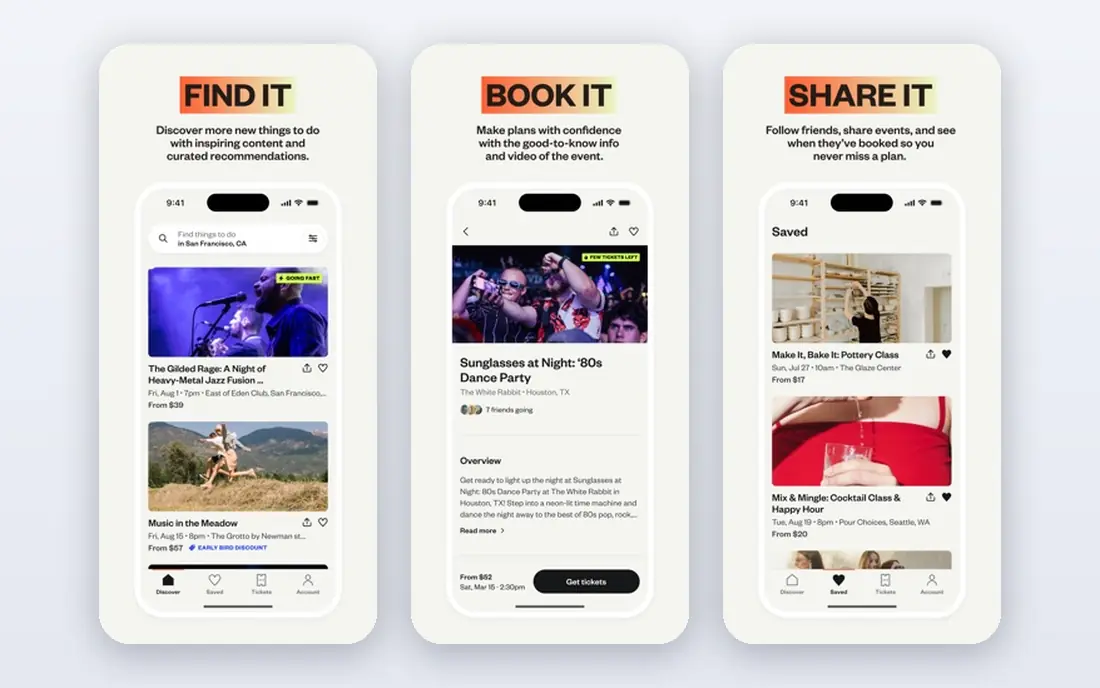
Eventbrite is the fastest way to publish a public event and start selling tickets. Setup takes minutes, the marketplace helps people discover your event, and mobile check-in works well for small to mid-size gatherings. For free events, there is no platform fee, which makes it a low-risk starting point.
Paid events carry service and payment fees per ticket, so large ticket volumes need a cost check. Complex registration logic, multi-track agendas, and enterprise reporting are weaker than on Cvent or Bizzabo. For a concert, workshop, fundraiser, or community event, Eventbrite is hard to beat for simplicity.
- Free for free events
- Large public discovery marketplace
- Quick setup and mobile check-in
- Per-ticket fees on paid events
- Less depth for complex corporate programs
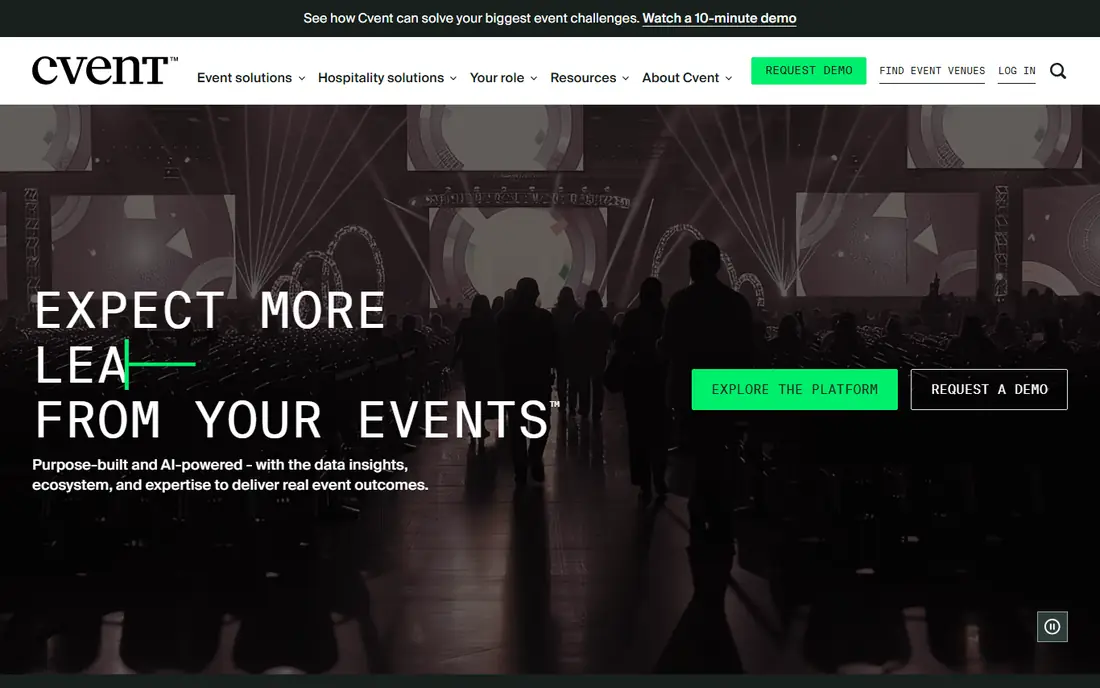
Cvent is built for organizations that run many events a year, from conferences to meetings and trade shows. It covers venue sourcing, registration, attendee management, onsite check-in, and reporting in one system, with integrations to major CRM and marketing tools. That breadth suits enterprise marketing teams with a full event calendar.
Pricing is quote-based and enterprise-level, so small organizers should look elsewhere. Implementation and training also take time, and the system rewards a dedicated event team. If you run a large, repeatable event program, Cvent gives you control and data that simpler tools cannot match.
- Venue sourcing and full event management
- Many integrations
- Deep reporting for large programs
- Quote-based enterprise pricing
- Setup and training take time
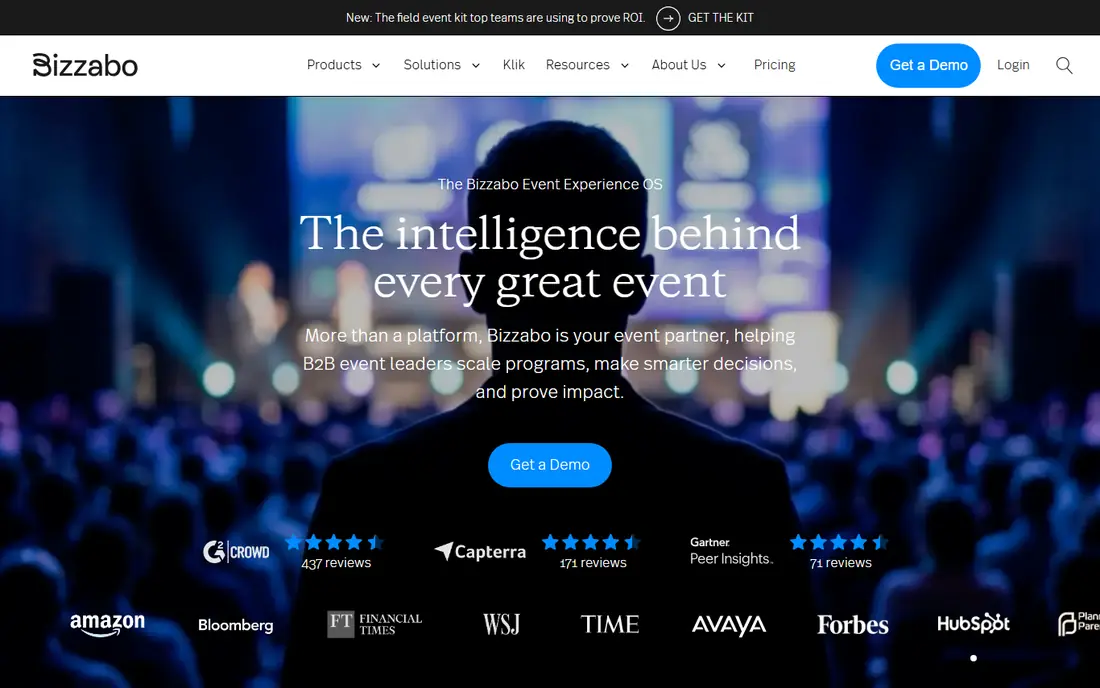
Bizzabo focuses on corporate event marketing, with branded event websites, registration, email promotion, and onsite networking. Its Klik SmartBadge helps attendees connect at in-person events, and Salesforce integration ties event data to sales follow-up. That marketing focus sets it apart from pure ticketing tools.
Published comparisons put annual pricing at a high enterprise level, with a multi-user minimum, so it suits companies with a regular event program. A one-off small event will not justify the cost. For B2B marketers who run several corporate events a year, Bizzabo is a strong contender.
- Strong event marketing and website tools
- Klik SmartBadge networking
- Salesforce integration
- Annual pricing with a user minimum in published comparisons
- More than small events need
Whova shines once attendees arrive, whether in person or hybrid. Its app offers agendas, speaker profiles, attendee networking, direct messaging, and gamified activities that keep people engaged between sessions. Academic conferences, associations, and community events use it well for that reason.
Pricing is quote-based, so get a quote for your attendee count and event length. Whova is less of a public discovery tool than Eventbrite, so pair it with a marketing channel if you need to fill seats from scratch. For engagement at a conference you already promote, it is a top pick.
- Strong attendee app with agendas and profiles
- Networking, messaging, and gamification
- Community boards
- Quote-based pricing
- Less focused on public ticket discovery
Splash is built for corporate teams that need beautiful event pages fast. You can create branded landing pages, manage RSVPs, send invitations, and track attendance without a developer. That speed helps marketing teams that run many smaller corporate events, dinners, and launches.
It is not a full expo or ticketing platform, so large paid public events need another tool for ticket sales and onsite complexity. For brand-led corporate events where the page and the guest list matter most, Splash keeps the workflow clean and professional.
- Polished branded event pages
- Email and RSVP tools
- Attendance tracking and reporting
- Quote-based pricing
- Less depth for ticketing and large expos
vFairs is designed for virtual and hybrid trade shows and expos. It offers 3D booths, virtual auditoriums, networking lounges, and exhibitor tools that mimic a physical expo floor. Dedicated project managers on many plans help teams that have not run a virtual expo before.
Full pricing is quote-based, and the platform is strongest when at least part of the event is virtual. A purely in-person conference may get better value from Whova or Bizzabo. For a virtual expo with many exhibitors, vFairs is a leading choice.
- 3D exhibit halls and virtual auditoriums
- Networking lounges
- Dedicated project support on many plans
- Quote-based pricing for full events
- Virtual-first design needs care for in-person-only events
Accelevents covers hybrid events in one system, with registration, ticketing, onsite check-in, and a virtual event layer. That matters for organizers who run the same event for in-person and remote audiences and do not want two systems. Annual plans in public comparisons offer unlimited events, which suits a busy calendar.
A single small event may find the annual price steep, and virtual features can be an add-on depending on plan. Check the plan details for your event mix before you commit. For a team with a regular hybrid calendar, Accelevents is a practical all-in-one pick.
- In-person plus virtual in one platform
- Registration, ticketing, and attendee app
- Unlimited events on annual plans in comparisons
- Annual pricing can be high for a single event
- Virtual features are a paid add-on in some plans
Swapcard is built for B2B trade shows where meetings and leads matter more than ticket sales alone. Its AI matchmaking suggests relevant attendees and exhibitors, schedules meetings, and captures leads for follow-up. That focus helps exhibitors justify attendance with measurable meetings.
Pricing varies by plan, with self-service options at a lower entry point and fuller enterprise features at a higher cost. Exhibitors and attendees need a short onboarding to use matchmaking well. For a trade show where networking is the product, Swapcard is a strong fit.
- AI matchmaking for meetings
- Lead capture for exhibitors
- Strong for B2B trade shows
- Self-service pricing starts low but full features cost more
- Learning curve for exhibitors
Eventzilla is a budget-friendly alternative to Eventbrite for simple events. It offers free tier use, straightforward registration and ticketing, and conditional forms that adapt questions by ticket type. That covers most small workshops, classes, and community events without enterprise cost.
Discovery is smaller than Eventbrite, so you must drive your own promotion. Enterprise reporting, complex agendas, and large expo features are also limited. For a small organizer who wants low fees and simple setup, Eventzilla is a sensible pick.
- Free tier for basic events
- Simple registration and ticketing
- Conditional registration forms
- Smaller discovery marketplace than Eventbrite
- Fewer enterprise features
How we picked these
We compared official feature pages, pricing pages, and public reviews for event marketing platforms available in October 2026. We favored tools with clear registration, promotion, and attendee engagement features, and we mixed public ticketing, corporate marketing, and virtual expo tools. Where pricing is quote-based, we say so and note the need for a quote tied to event size.
How to choose an event marketing platform
Start with event type and audience. A public ticketed concert needs discovery and fast checkout. A corporate conference needs branded pages, CRM follow-up, and reporting. A trade show needs exhibitor tools and meeting matchmaking. A virtual expo needs booths and streaming. Matching type first prevents paying for the wrong strengths.
Next, model total cost. Per-ticket fees, annual contracts, and per-attendee charges behave very differently. A free tier with per-ticket fees can cost more than an annual plan if you run many events. Run last year's event count and ticket volume through each model before you sign.
Finally, test the attendee journey. Register as a guest, check in on mobile, join a session, and message another attendee. Friction in any step shows up as support messages on event day. Run a small pilot event before a flagship conference.
Promotion and follow-up checklist
Check email tools, social sharing, and CRM integration before you buy. After the event, you need attendance data, session feedback, and lead lists for sales follow-up. A platform that collects data but cannot export it cleanly will slow your team after the event ends.
Onsite tips
Confirm check-in works offline or with weak venue Wi-Fi, and test badge printing and scanning in advance. Train volunteers on the check-in app, and keep a backup list for door entry. Onsite problems are visible to every attendee, so preparation matters more than any feature list.
FAQ
What is the best event marketing platform?
Eventbrite is our pick for simple public events, while Cvent and Bizzabo lead for enterprise programs. Whova leads for attendee networking at conferences. The best event marketing platform depends on event type, size, and whether you need ticketing, corporate marketing, or virtual expo tools.
What is the best event marketing software for small businesses?
Eventbrite and Eventzilla are strong small business picks, due to free tiers and simple setup. Eventbrite adds a larger discovery marketplace, while Eventzilla offers a budget-friendly alternative with simple registration. Choose based on fees and how much promotion help you need.
How much do event marketing platforms cost?
Costs range from free for free events on Eventbrite to per-ticket fees on paid events, to annual enterprise contracts for Cvent and Bizzabo. Quote-based tools need a quote for your attendee count and event frequency. Model total cost from past events before you compare headline prices.
Can one platform handle virtual and hybrid events?
Yes. vFairs, Accelevents, and RingCentral Events (formerly Hopin) handle virtual and hybrid formats, with varying depth. Check streaming, booth, and networking features for your exact format, since virtual tools differ widely in production quality and attendee interaction.
What is the difference between Eventbrite and Cvent?
Eventbrite focuses on simple public ticketing and discovery, with fast setup and per-ticket fees. Cvent focuses on enterprise event programs, with venue sourcing, complex registration, and deep reporting under an annual contract. Small public events fit Eventbrite, while large corporate programs fit Cvent.
Do event platforms integrate with CRM tools?
Most enterprise platforms here integrate with Salesforce, HubSpot, and other CRM tools, while simpler tools offer basic integrations or exports. Confirm the exact integration for your CRM in a demo, including how leads, attendance, and session data sync after the event.