Best ERP Software in 2026: 8 Platforms Compared
Looking for the best ERP software? We compared 8 leading ERP platforms on finance, inventory, manufacturing, pricing and fit for business size. Compare plans.
- Editor's choice
 NetSuite
Growing mid-sized to large firms
Starts atSee websiteVisit netsuite.comFull review - Great alternative
 SAP S/4HANA
Large enterprises
Starts atSee websiteVisit sap.comFull review - Also consider
 Microsoft Dynamics 365
Microsoft-based companies
Starts atSee websiteVisit dynamics.microsoft.comFull review
TL;DR:
- NetSuite and SAP S/4HANA lead for larger companies, while Odoo and Acumatica suit smaller and mid-sized businesses that want lower cost and flexibility.
- Microsoft Dynamics 365 is the strongest pick for companies already using Microsoft 365, Teams and Azure.
- Sage Intacct is best for finance-led teams that need strong accounting and reporting without full manufacturing features.
- ERP pricing is almost always quoted, not listed, so budget for implementation, training and support, not just the license fee.
Quick comparison
| Tool | Best for | Starts at | Free plan? | |
|---|---|---|---|---|
| NetSuite | Growing mid-sized to large firms | See website | No | Visit |
| SAP S/4HANA | Large enterprises | See website | No | Visit |
| Microsoft Dynamics 365 | Microsoft-based companies | See website | Free trial | Visit |
 Odoo | Affordable flexible ERP | Free | Yes | Visit |
 Acumatica | Mid-sized firms | See website | No | Visit |
 Sage Intacct | Finance-led teams | See website | No | Visit |
 Oracle ERP Cloud | Large enterprises | See website | No | Visit |
 Infor CloudSuite | Manufacturing and distribution | See website | No | Visit |
The best ERP software
We compared official product pages, pricing pages and public reviews for ERP platforms that are still actively sold and supported in 2026, covering finance, inventory, manufacturing and services.
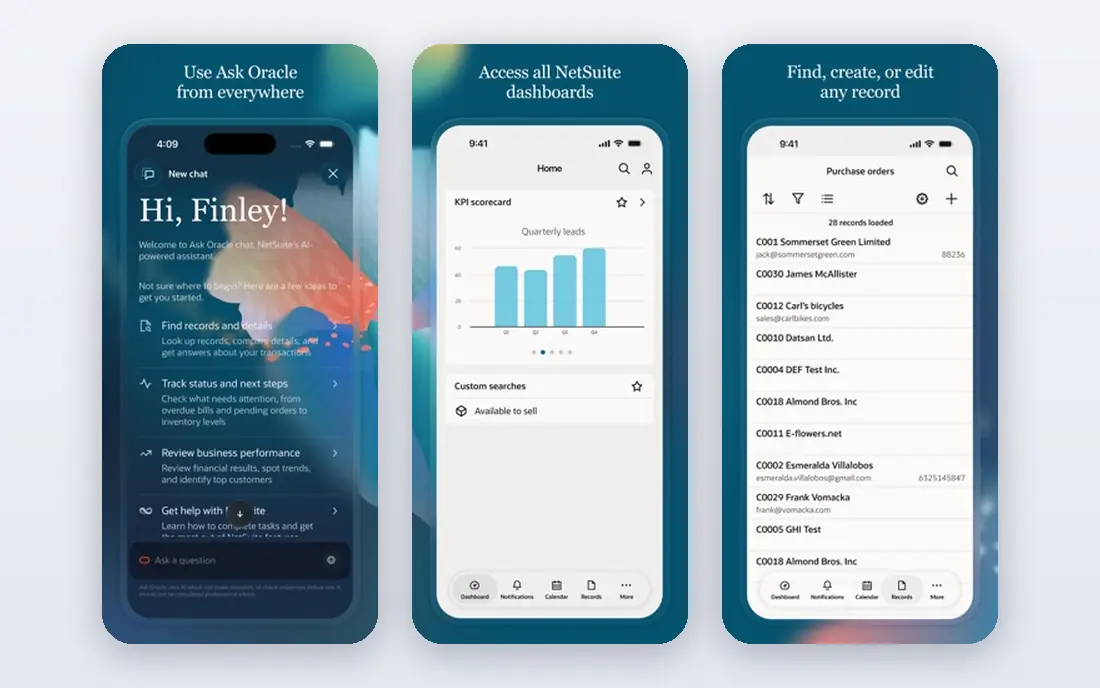
NetSuite, owned by Oracle, is the most widely used cloud ERP for growing companies that have outgrown basic accounting software. It covers financials, inventory, order management, CRM and ecommerce in one system, with real-time dashboards and multi-subsidiary support for companies operating in several countries. Because it is cloud-native, updates and access work without managing servers. The catch is cost and implementation. Pricing is quoted per business, and a proper rollout needs planning, data migration and training, often with a partner. For a company with 50 to 500 staff that needs one system for finance and operations, NetSuite is usually the first platform to evaluate.
- Full suite covering finance, inventory, CRM and ecommerce
- Cloud-native
- Strong for multi-subsidiary firms
- Quoted pricing can be high
- Implementation needs experienced partners
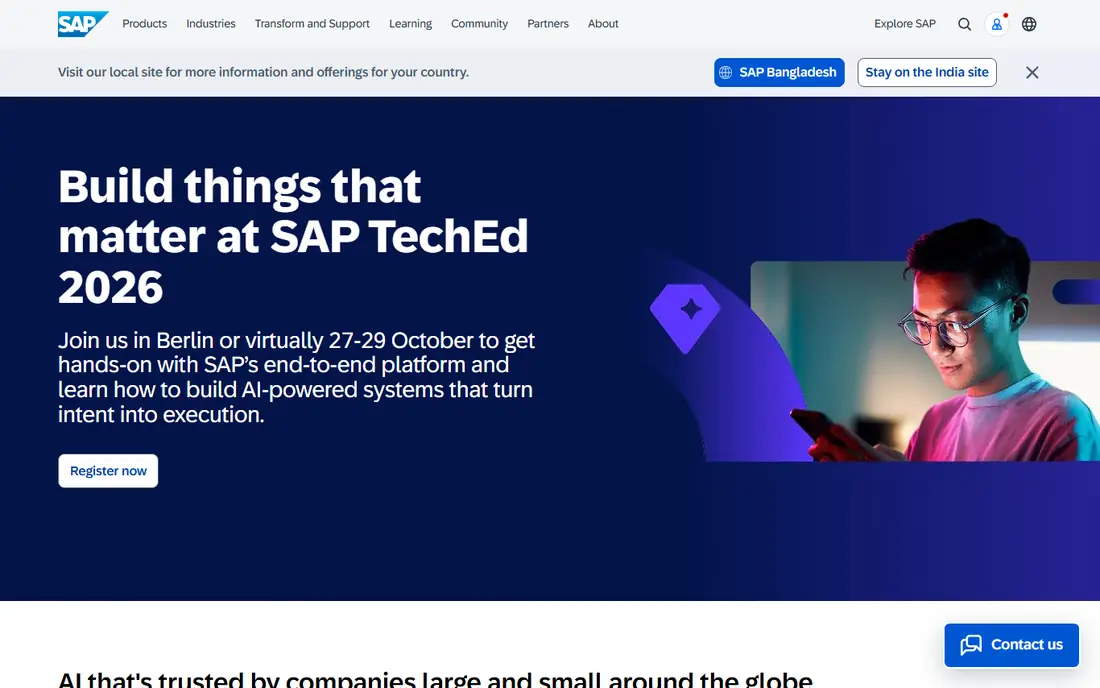
SAP S/4HANA is the enterprise standard for large manufacturers, distributors and global firms. It handles complex supply chains, production planning, finance and compliance across many countries and currencies, with an in-memory database that speeds reporting. Its partner ecosystem is the largest in ERP, so specialist help is available almost everywhere. That power comes with complexity. Implementation can take many months and needs experienced consultants, and the total cost is far above mid-market ERP. Small and mid-sized firms should look at Odoo or Acumatica first. For a large enterprise with complex operations, S/4HANA remains the benchmark.
- Deep manufacturing, supply chain and finance features
- Global compliance
- Huge partner ecosystem
- Complex and costly to implement
- Overkill for small businesses
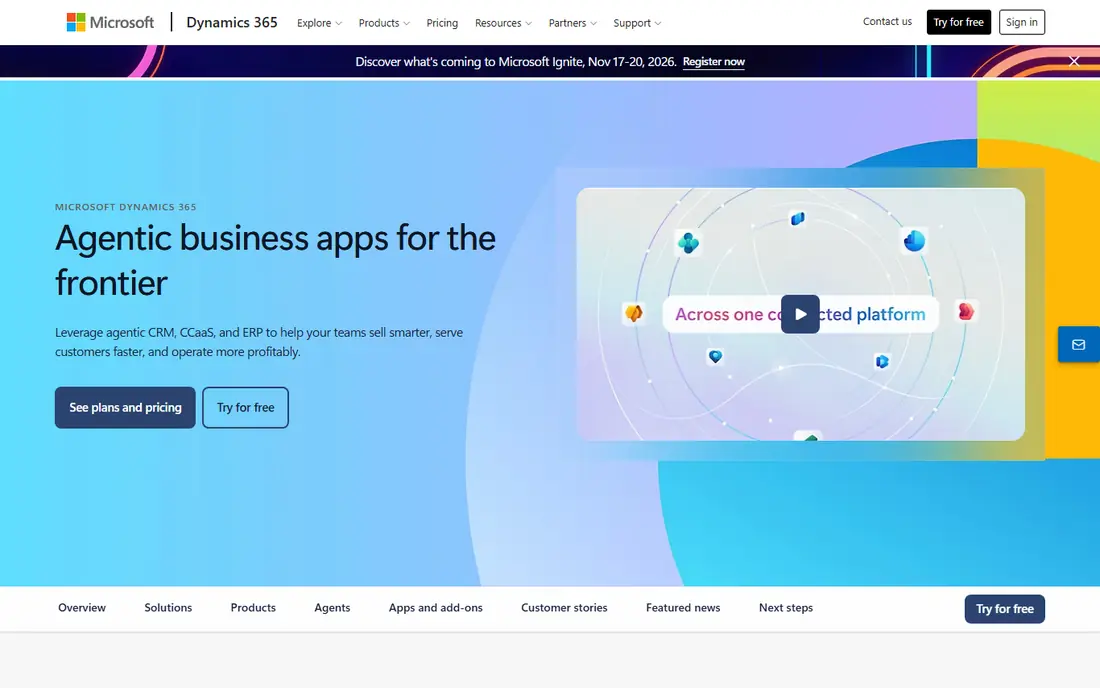
Microsoft Dynamics 365 splits ERP into modular apps, such as Finance, Supply Chain Management and Business Central, so you can buy what you need and add modules later. For companies already using Outlook, Teams, Excel and Power BI, that integration is a real advantage: data flows between tools without heavy custom work, and staff learn the interface faster. Pricing is modular and quoted, so a full suite can cost more than the headline app price suggests. Partner quality also matters a lot, so check references before signing. For Microsoft-centered companies, Dynamics 365 is the natural ERP choice.
- Works well with Microsoft 365, Teams and Power BI
- Modular apps for finance, supply chain and sales
- Familiar interface
- Modular pricing can add up
- Implementation quality varies by partner
Odoo is the most affordable serious ERP here. Its open-source Community edition is free, covering CRM, sales, inventory, accounting and manufacturing basics, while the Enterprise edition adds more features, support and hosting. The modular design lets a small business start with accounting and inventory, then add manufacturing or ecommerce later. The trade-off is support and polish. Community users rely on forums and partners, and heavy customization needs technical skill. For a small or mid-sized business that wants ERP flexibility without enterprise prices, Odoo is the best value pick, especially if you have in-house technical help or a good partner.
- Free community edition
- Modular apps
- Lower cost than enterprise ERP
- Large app store
- Enterprise features need a paid plan
- Implementation support varies
- Customization needs technical skill
Acumatica is a cloud ERP built for mid-sized distribution, manufacturing, construction and services firms. Its unusual pricing model charges based on computing resources used rather than per user, which can save money for companies with many occasional users, such as warehouse staff. Features cover financials, inventory, order management, manufacturing and project accounting. The partner network is smaller than SAP or Microsoft, so check local partner strength before committing. Pricing is quoted, not listed. For a mid-sized firm that wants modern cloud ERP without per-user costs ballooning, Acumatica is a strong contender.
- Pricing based on resources used, not per user
- Strong distribution and manufacturing
- Cloud-based
- Smaller partner network than SAP or Microsoft
- Quoted pricing
Sage Intacct is a finance-first ERP, best for companies whose main need is strong accounting, reporting and multi-entity consolidation rather than factory-floor manufacturing. It handles dimensions such as department, project and location in reporting, which finance teams value, and it serves services firms, nonprofits and software companies well. It is cloud-native, with regular updates. Manufacturing and warehouse features are thinner than NetSuite or Infor, so manufacturers should look elsewhere. Pricing is quoted. If finance and reporting drive your ERP decision, Sage Intacct deserves a shortlist place.
- Strong accounting, reporting and multi-entity finance
- Good for services and nonprofits
- Cloud-native
- Weaker manufacturing features than rivals
- Quoted pricing
Oracle ERP Cloud, part of Oracle Fusion Cloud, serves large enterprises that need deep finance, procurement, project management and risk management at global scale. It integrates with Oracle's other cloud products and offers strong compliance and security controls for regulated industries. Reporting and AI-assisted finance features are a focus in recent releases. As with SAP, implementation is a major project, and total cost suits large firms rather than small businesses. Companies already using Oracle databases or NetSuite may find migration paths easier. For a large enterprise evaluating SAP, Oracle ERP Cloud is the main alternative to compare.
- Deep finance, procurement and project features
- Global scale
- Strong security and compliance
- Complex implementation
- High total cost
- Best for large firms
Infor CloudSuite offers industry-specific ERP editions, such as CloudSuite Industrial for manufacturing and CloudSuite Distribution, with features tuned to each sector rather than a generic template. That specialization helps manufacturers, food producers and distributors who need sector workflows, lot tracking or fashion product data out of the box. Comparing editions takes care, since features and pricing differ by industry, and implementation still needs a capable partner. Pricing is quoted. For a manufacturer or distributor that wants ERP built for its industry rather than adapted from a generic suite, Infor is a strong pick.
- Industry-specific editions for manufacturing, food, fashion and healthcare
- Strong supply chain
- Cloud-based
- Industry editions can complicate comparison
- Quoted pricing
- Partner dependence
How we picked these
We compared official product pages, pricing information and public reviews for ERP platforms that are actively sold in 2026. We included enterprise, mid-market and affordable options, plus finance-led and industry-specific platforms, so readers can match the platform to company size and sector. We left out accounting-only tools that do not cover inventory or operations, and legacy on-premise-only products with no cloud path.
How to choose ERP software without a costly mistake
Start by listing the processes you must fix: finance close, inventory accuracy, order fulfillment, manufacturing planning or project billing. An ERP that excels at finance but lacks manufacturing will disappoint a factory, just as a manufacturing ERP will frustrate a services firm. Shortlist two or three platforms, then run a demo with your own data and your own workflows, not just the vendor's scripted demo. Budget for the full project, not just licenses: implementation, data migration, integration, training and first-year support often cost as much as the software itself. Ask for total cost over three years, check reference customers in your industry and size, and confirm how pricing changes as users or transactions grow. A phased rollout, starting with finance and inventory before adding manufacturing, reduces risk for most firms. Plan data cleanup early as well, since duplicate customers, old stock codes and messy charts of accounts cause more delays than software features do. Assign one internal owner for the project, protect their time, and agree how success will be measured, such as faster month-end close or fewer stock errors, before you sign a contract.
FAQ
What is the best ERP software for small business?
Odoo is the best ERP software for many small businesses, thanks to its free Community edition and modular paid plans. Microsoft Dynamics 365 Business Central is a strong alternative for companies already using Microsoft tools.
What are the top ERP software platforms for large enterprises?
SAP S/4HANA and Oracle ERP Cloud are the top ERP platforms for large enterprises, with deep global finance, supply chain and compliance features. NetSuite also serves larger mid-sized firms and multi-subsidiary companies well.
What is the best ERP tool for manufacturing?
SAP S/4HANA, Infor CloudSuite and NetSuite are strong ERP tools for manufacturing, with Infor offering industry-specific editions. The right choice depends on manufacturing type, complexity and company size.
How much does ERP software cost?
Most ERP vendors quote prices rather than listing them, and costs vary by users, modules and implementation scope. Expect license costs plus implementation, training and support, and ask for a three-year total cost before you sign.
Is Odoo really free?
Odoo Community edition is free and open source, while Odoo Enterprise is paid and adds features, hosting and support. Many small businesses start on Community and move to Enterprise as they grow.