Best Enterprise Sales Automation Software AI in 2026: 10 Tools Compared
Best enterprise sales automation software AI, compared across 10 CRM and outreach tools with AI prospecting, sequencing, and honest limits for large teams.

- Editor's choice
 Salesforce Sales Cloud
Enterprise CRM with AI
Starts atSee websiteVisit salesforce.comFull review - Great alternative
 HubSpot Sales Hub
All-in-one sales platform
Starts atSee websiteVisit hubspot.comFull review - Also consider
 Outreach
Enterprise sequences
Starts atSee websiteVisit outreach.ioFull review
TL;DR:
- Salesforce and HubSpot remain the safest enterprise cores, since AI features sit inside a CRM your team already uses for pipeline and reporting.
- Outreach and Salesloft lead for structured sequences, coaching, and multi-channel outreach at enterprise scale.
- Apollo and Clay are best for AI prospecting and list building, but they need clear data rules before reps use them at volume.
- Gong and Microsoft Dynamics add conversation insight and enterprise governance for firms that need deeper reporting.
- AI should draft, score, and summarize, while humans still approve outreach, pricing, and commitments to customers.
Quick comparison
| Tool | Best for | Starts at | Free plan? | |
|---|---|---|---|---|
| Salesforce Sales Cloud | Enterprise CRM with AI | See website | Free trial | Visit |
| HubSpot Sales Hub | All-in-one sales platform | See website | Yes | Visit |
| Outreach | Enterprise sequences | See website | Free trial | Visit |
 Salesloft | Cadence and coaching | See website | Free trial | Visit |
 Apollo.io | AI prospecting at scale | See website | Yes | Visit |
 Clay | AI-enriched prospect lists | See website | Free trial | Visit |
 Gong | Conversation intelligence | See website | Free trial | Visit |
 Microsoft Dynamics 365 Sales | Microsoft enterprise stack | See website | Free trial | Visit |
 Zoho CRM | Value enterprise CRM | See website | Free trial | Visit |
 Pipedrive | Visual pipeline with AI help | See website | Free trial | Visit |
The best enterprise sales automation software AI
Enterprise sales automation with AI covers a wide job: finding accounts, enriching contact data, drafting outreach, running sequences, scoring leads, and summarizing calls. No single tool does all of it best, so large firms usually pair a CRM core with one or two specialist tools. The picks below reflect that reality.
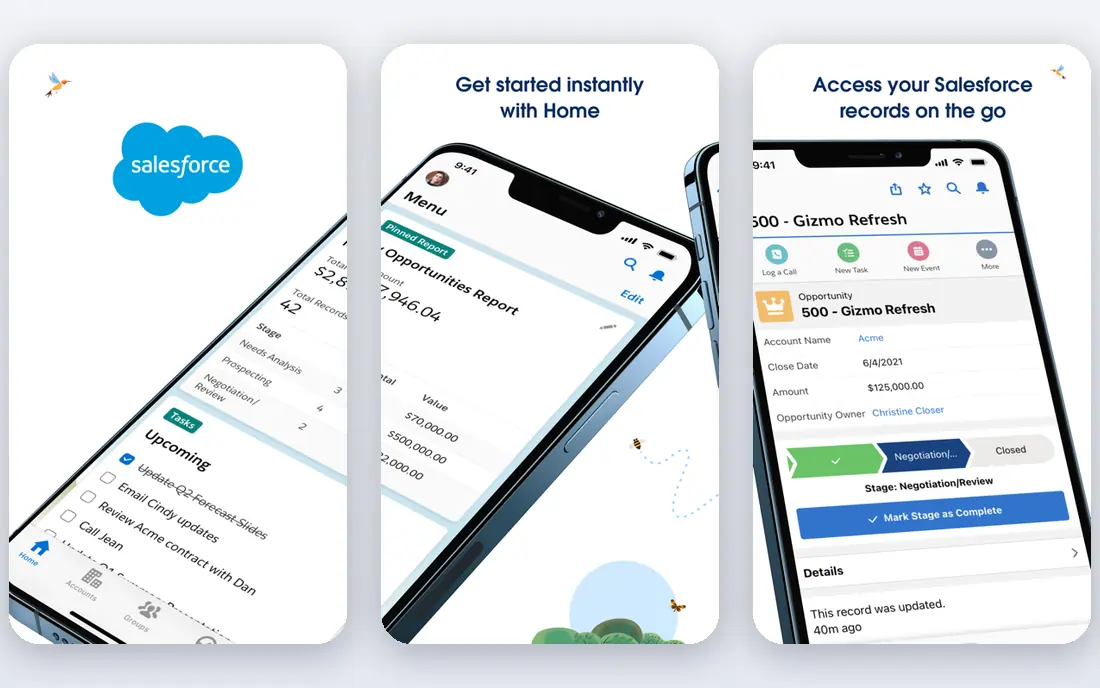
Salesforce Sales Cloud is the enterprise standard for a reason: it handles complex pipelines, territories, approvals, and reporting in one system, and its Einstein AI features add lead scoring, opportunity insight, and activity summaries. For a large sales org, that combination of governance and AI assistance is hard to replace. Admins can build workflows that route leads, trigger tasks, and enforce stages.
The cost is the catch, both in licenses and in the admin time needed to keep the system clean. Small teams may find it heavy, but enterprises with multiple business units and strict reporting needs usually accept that trade. Buy it for the CRM first, and treat AI as a productivity layer on top of clean pipeline data.
- Deep enterprise CRM
- Einstein AI for scoring and summaries
- Huge integration set
- High total cost
- Setup and admin effort is significant
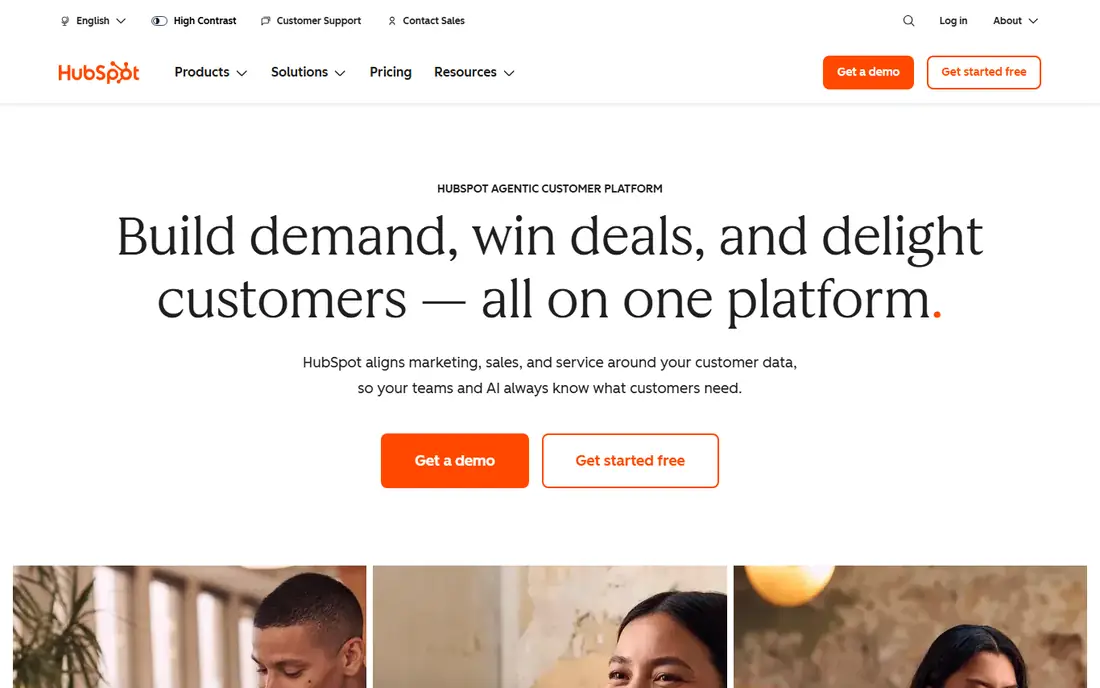
HubSpot Sales Hub appeals to enterprises that want faster adoption and a single platform for marketing, sales, and service data. Its sequences, templates, meeting scheduling, and AI drafting tools reduce manual admin, and the free CRM tier lets teams test the basics before paying. Reporting is clear enough for managers without a dedicated analyst for every view.
The limit appears at very complex enterprise setups, where Salesforce offers deeper customization and territory logic. HubSpot enterprise pricing also rises as contacts and seats grow. For firms that value speed, clean data, and a lower training burden, HubSpot is often the better balance.
- Easy adoption
- Built-in sequences and AI writing help
- Strong reporting
- Enterprise tiers get expensive
- Deep customization is less flexible than Salesforce
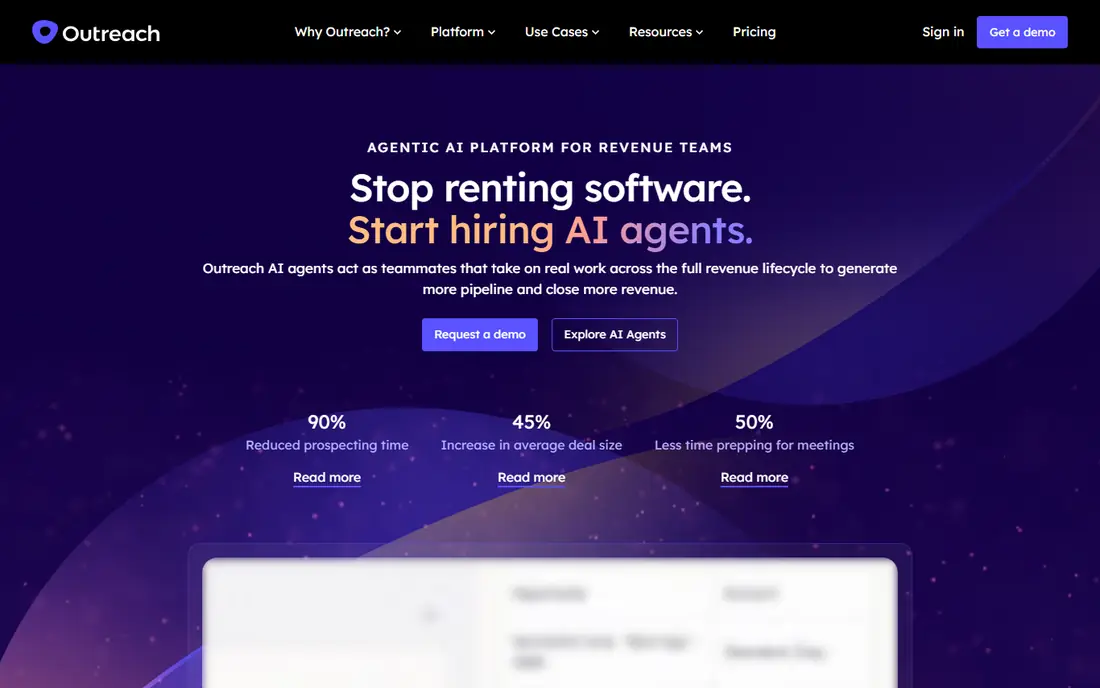
Outreach is built for teams that run high-volume, multi-step outreach across email, phone, and social tasks. Its sequences keep reps on a consistent cadence, while AI features help prioritize accounts, suggest next steps, and surface coaching moments. Managers get visibility into activity, reply rates, and pipeline created from each sequence.
Outreach works best when CRM data is clean and when managers enforce a clear sequence strategy. Without that discipline, automation can simply send more low-quality messages faster. Pricing is quote-led for enterprise, so budget for implementation and training as well as licenses.
- Strong sequence automation
- AI insights and coaching
- Enterprise controls
- Quote-led pricing
- Needs CRM discipline to work well
Salesloft, now part of Salesloft and Drift under a combined go-to-market platform, focuses on cadences that guide reps through each touch, plus call recording and coaching tools. Its AI features help draft messages, summarize conversations, and flag deals that need attention. For sales leaders, the analytics show which steps actually lead to meetings.
The main risk is overlap. If your CRM already covers sequences and tasks, you need a clear reason to add Salesloft, such as better coaching or multi-channel cadence control. Evaluate it against Outreach on your real workflow, not on feature lists alone, since the two are close rivals.
- Cadence builder
- Conversation tools
- Strong analytics for managers
- Enterprise pricing needs a quote
- Overlap with CRM features can confuse buyers
Apollo combines a contact and company database with prospecting, enrichment, and sequences, plus AI help for writing and scoring. For enterprise teams that need to build target lists fast, that all-in-one approach saves time compared with buying data, enrichment, and outreach separately. The free tier lets a team test data quality in its own market before paying.
Data accuracy is never perfect in any database, so reps should verify key contacts before major outreach, and managers should set rules on volume and personalization. Used with those guardrails, Apollo is a strong prospecting layer that feeds a CRM rather than replacing it.
- Large contact database
- AI prospecting and sequences
- Free tier to test
- Data accuracy varies by segment
- High-volume outreach needs care
Clay is a newer favorite for revenue teams that build highly targeted lists. It pulls data from many providers into a spreadsheet-like workspace, then uses AI to enrich, score, and write personalized first lines based on real signals, such as job posts or tech changes. That signal-based approach often beats generic mass outreach.
The learning curve is real, and credit pricing means a poorly designed workflow can burn credits fast. Clay fits best with a RevOps owner who designs lists carefully and hands reps clean, verified batches. For enterprises that want precision over volume, it is a powerful addition to Apollo or a CRM.
- AI agents for enrichment
- Many data sources in one table
- Flexible workflows
- Learning curve
- Credit-based pricing can surprise new users
Gong records and analyzes sales calls, emails, and meetings to show what top reps actually say, which deals are at risk, and where pipeline language signals trouble. Its AI summaries save managers from listening to every call, and its deal boards link conversation insight to CRM stages. For enterprise teams with many reps, that visibility is a real coaching advantage.
Gong is not a prospecting tool or a CRM, so it needs both to deliver full value. It also requires consent and privacy handling for call recording, which varies by region and customer type. Firms that already run a disciplined CRM process will get the most from it.
- Call and email insight
- Deal risk signals
- Coaching from real conversations
- Quote-led pricing
- Value depends on call volume and CRM use
Dynamics 365 Sales suits enterprises already running Microsoft 365, Teams, and Azure. Its Copilot AI features draft emails, summarize records, and surface next steps inside tools reps already open. Integration with Outlook and Teams reduces tab switching, and enterprise governance, security, and reporting fit large IT standards.
Outside a Microsoft environment, the advantage shrinks, and setup can feel heavier than HubSpot. For Microsoft-first firms, however, Dynamics is a credible Salesforce alternative, especially when IT wants one vendor for productivity, CRM, and AI assistance.
- Deep Microsoft 365 and Teams links
- Copilot AI help
- Enterprise governance
- Setup complexity
- Best value inside a Microsoft shop
Zoho CRM offers workflow automation, AI scoring and forecasting through its Zia assistant, and a wide suite of connected apps for a lower license cost than the largest rivals. For enterprises with cost pressure, or firms in regions where Zoho support is strong, that value matters. It covers leads, deals, activities, and reporting well for most standard sales processes.
The ecosystem is smaller than Salesforce or Microsoft, so niche integrations may need extra work. Very complex enterprise requirements, such as intricate territory models, may also push teams toward a larger platform. For many mid-to-large firms, though, Zoho delivers most of what sales teams use daily at a fair price.
- Lower cost than Salesforce
- AI assistant Zia
- Broad Zoho app suite
- Enterprise ecosystem is smaller
- Advanced customization takes work
Pipedrive is known for a clean, visual pipeline that reps actually update, and its AI assistant adds deal insights, email summaries, and automation suggestions. That simplicity helps adoption, which is often the real bottleneck in sales automation. If reps do not log activity, even the best AI cannot score or forecast accurately.
Enterprise buyers should check governance, permissions, and reporting depth against their needs, since Pipedrive is less built for multi-unit complexity than Salesforce or Dynamics. For sales teams that want a fast, visual system with useful AI help, it is a strong, lower-friction choice.
- Clear visual pipeline
- AI sales assistant
- Easy for reps to adopt
- Less enterprise governance than Salesforce
- Advanced reporting is limited
How we picked these
We compared official feature pages, pricing pages, and public documentation for CRM, sequencing, prospecting, and conversation tools, and we favored products that are actively sold in 2026 and used by enterprise sales teams. We looked for AI features that do real work, such as scoring, drafting, enrichment, and summaries, rather than AI labels on basic automation. We also mixed CRM cores with specialist tools, since that is how most large firms actually buy.
What to check before you buy enterprise sales automation with AI
Start with data quality. AI outreach built on stale contacts will damage your domain reputation and waste rep time, so audit your CRM, agree on an ideal customer profile, and set enrichment rules before you scale sequences. Check email deliverability settings, sending limits, and unsubscribe handling, since enterprise outreach at volume needs those controls in place.
Next, run a controlled pilot with one team and one segment. Measure reply rate, meeting rate, and pipeline quality, not just activity volume. Ask vendors about data sources, AI training, and privacy terms, especially for call recording and contact data. Finally, confirm CRM integration depth: two-way sync, activity logging, and field mapping matter more than a long feature list, because a tool that does not update the CRM will not survive a quarter.
Governance and AI use
Set a clear policy: AI drafts, humans approve. Ban fully automated outreach to key accounts, require review for pricing or legal claims, and log AI-generated messages where possible. That policy protects your brand and keeps reps accountable for what goes out under their name.
Measuring return
Track meetings booked, pipeline created, and win rate by source, not just emails sent. If AI prospecting creates meetings that never convert, the list or message is wrong, not the volume. Review those numbers monthly during the first two quarters and adjust targeting before adding more seats.
FAQ
What is enterprise sales automation software with AI?
It is software that automates sales tasks such as prospecting, enrichment, sequencing, follow-up, and forecasting, with AI used for scoring, drafting, and summaries. In enterprise use, it usually means a CRM core plus specialist tools for outreach and conversation insight.
Is AI sales outreach safe for enterprise brands?
It can be, with guardrails. Use verified data, cap sending volume, personalize with real signals, and require human approval before messages go to key accounts. Fully automated, generic outreach risks spam complaints and damage to your domain reputation.
Should we buy Salesforce or HubSpot for AI sales automation?
Salesforce suits complex, multi-unit enterprises that need deep customization and reporting. HubSpot suits firms that want faster adoption and an all-in-one platform with less admin overhead. Both offer AI features, so choose on CRM fit first and AI second.
Do Apollo and Clay replace a CRM?
No. They build and enrich prospect lists that feed a CRM, where pipeline, deals, and reporting live. A firm still needs a CRM as the system of record, even if prospecting happens in a specialist tool.
How do we measure AI sales tools?
Measure reply rate, meeting rate, pipeline quality, and win rate, alongside time saved on admin tasks. Activity alone, such as emails sent, is a weak measure, since high volume with low relevance does not create revenue.