Best Enterprise Learning Platform in 2026: 8 Tools Compared
We compare the best enterprise learning platforms in 2026, from Cornerstone and Docebo to Degreed and Workday, with pricing and honest trade-offs today.
- Editor's choice
 Cornerstone Learning
Large enterprise LMS
Starts atSee websiteVisit cornerstoneondemand.comFull review - Great alternative
 Docebo
Scalable corporate learning
Starts atSee websiteVisit docebo.comFull review - Also consider
 SAP SuccessFactors Learning
SAP centred enterprises
Starts atSee websiteVisit sap.comFull review
TL;DR:
- Enterprise learning platforms must handle compliance, skills, onboarding, and manager reporting in one system.
- Cornerstone and SAP suit large regulated employers, while Docebo and Absorb suit faster growing mid-size teams.
- Degreed and LinkedIn Learning focus more on skills and content, while a full LMS handles assignments and compliance.
- Most enterprise pricing is by quote based on user count, so test admin workflows before signing.
Quick comparison
| Tool | Best for | Starts at | Free plan? | |
|---|---|---|---|---|
| Cornerstone Learning | Large enterprise LMS | See website | Free trial | Visit |
| Docebo | Scalable corporate learning | See website | Free trial | Visit |
| SAP SuccessFactors Learning | SAP centred enterprises | See website | Free trial | Visit |
 Workday Learning | Workday HR customers | See website | Free trial | Visit |
 Degreed | Skills and career growth | See website | Free trial | Visit |
 Udemy Business | Ready made course library | See website | Free trial | Visit |
 LinkedIn Learning | Professional skills content | See website | Free trial | Visit |
 Absorb LMS | Mid-size teams | See website | Free trial | Visit |
The best enterprise learning platforms
An enterprise learning platform trains thousands of staff across roles, locations, and compliance needs. The top enterprise learning software combines course delivery, assignments, certifications, skills tracking, and reporting that managers and auditors can trust. We compared official feature pages, pricing pages, documentation, and public reviews for the tools below.
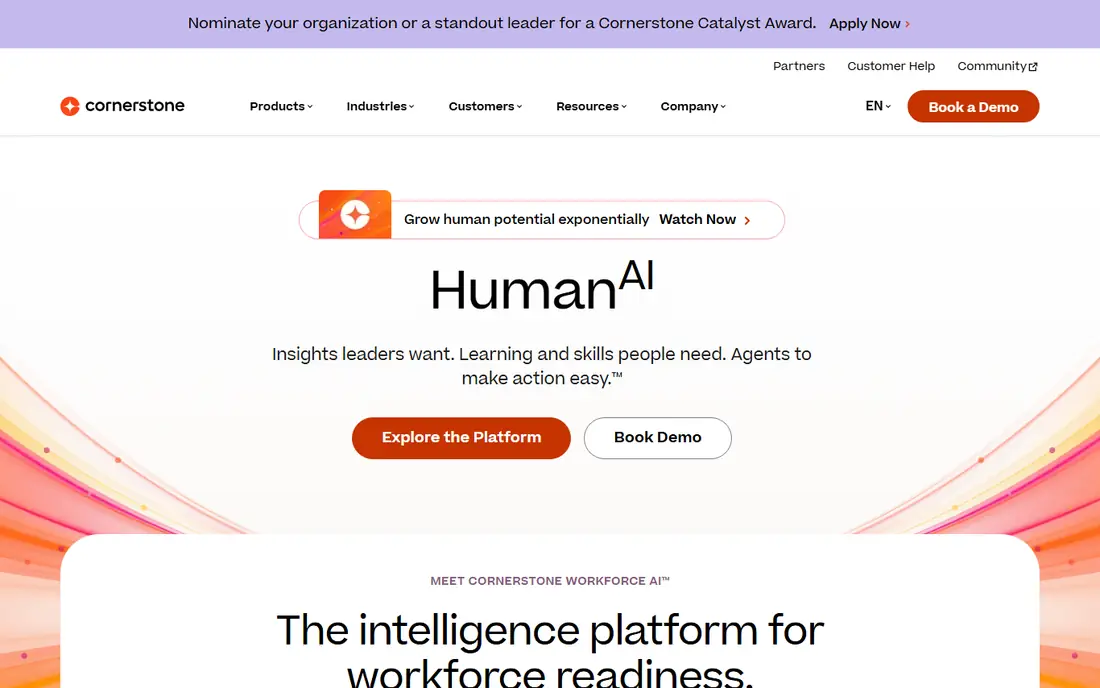
Cornerstone Learning is a long standing enterprise LMS used by large employers for compliance training, onboarding, certifications, and role based learning paths. It handles complex assignment rules, recertification cycles, and audit reporting that smaller tools often lack. Integrations with HR systems keep user records, manager hierarchies, and job roles in sync.
That depth comes with admin effort. Configuration, reporting setup, and content migration need a dedicated learning team or implementation partner. For large regulated employers, that trade-off is usually worth it. For a team of a few hundred staff, a lighter LMS may launch faster and cost less.
- Deep compliance and certification tools
- Strong reporting
- Broad enterprise deployments
- Admin setup can be heavy
- Pricing by quote

Docebo offers a modern LMS with a clean learner experience, mobile access, and tools for internal staff plus external audiences such as partners and customers. AI features help with content tagging, recommendations, and admin tasks, while the marketplace and integrations support a wide content mix. That flexibility suits growing companies that train staff, partners, and customers from one system.
Pricing is by quote based on active users and modules, so compare the plan that covers your external audiences as well as staff. Admin reporting is capable but needs setup to match compliance needs. For mid-size to large teams that want a modern feel without Cornerstone complexity, Docebo is our pick for most people.
- Modern learner experience
- Strong AI assisted tools
- Flexible external training
- Pricing by quote
- Advanced reporting needs configuration
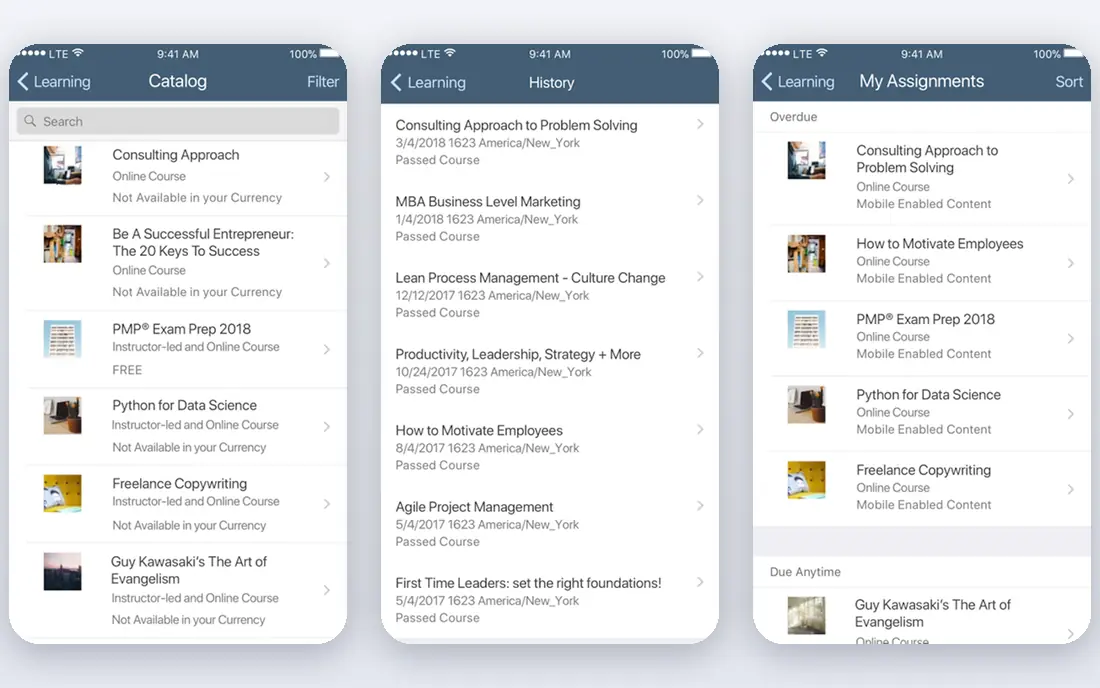
SAP SuccessFactors Learning fits organisations already running SAP for HR and payroll. Learning assignments follow job, location, and organisational data from SAP, which reduces manual user management. Compliance tracking, certifications, and audit trails suit regulated industries with strict training records.
Outside SAP, the integration value drops and the interface may feel heavier than Docebo or Absorb. Implementation usually needs SAP expertise. If SAP is your HR system of record, SuccessFactors Learning is the natural shortlist leader. If it is not, evaluate a standalone LMS first.
- Native SAP HR integration
- Strong compliance tracking
- Global enterprise scale
- Best value inside SAP
- Interface can feel dated
Workday Learning gives Workday customers a native way to deliver courses, track completions, and link learning to skills and career growth. Because it shares Workday worker, job, and manager data, assignments and reporting stay consistent without a separate sync project. Employees access learning inside the same system they use for HR tasks.
Specialist LMS features such as complex external training, extended enterprise portals, and deep compliance workflows can be thinner than Cornerstone or Docebo. For Workday customers with straightforward internal learning needs, the convenience is high. For complex compliance or partner training, a specialist LMS may still be needed alongside it.
- Native Workday data
- Skills and career links
- Clean employee experience
- Learning depth lags specialist LMS rivals
- Pricing bundled with Workday
Degreed focuses on skills rather than course completion alone. It aggregates internal courses, external content, and credentials into skill profiles, pathways, and career plans that employees and managers can track. That view helps organisations spot skill gaps, plan internal mobility, and connect learning to real roles.
Degreed is not a direct replacement for a compliance LMS in regulated settings, since assignment enforcement and audit reporting are lighter. Many large employers pair Degreed with an LMS: the LMS handles required training, Degreed handles growth and skills. If your main goal is upskilling and retention, Degreed deserves a place on the shortlist.
- Skills focused pathways
- Broad content aggregation
- Career mobility tools
- Not a full compliance LMS on its own
- Pricing by quote
Udemy Business gives teams instant access to thousands of business, technology, and personal development courses without building content from scratch. Admins can assign learning paths, track progress, and see which skills teams are building. Launch is fast compared with a full LMS implementation, which appeals to growing companies.
Course quality varies because content comes from many instructors, so learning teams should curate paths rather than opening the full library unchecked. Custom compliance tracking and certification workflows are limited compared with Cornerstone. For ready made skills content at scale, Udemy Business is a strong and fast option.
- Large ready made library
- Fast launch
- Useful analytics for managers
- Content quality varies by course
- Limited custom compliance workflows
LinkedIn Learning offers professionally produced courses in business, technology, and creative skills, with recommendations tied to LinkedIn skills data. Employees often already know the brand, which helps adoption, and managers can assign paths and track viewing. Integration with LinkedIn and some LMS platforms keeps reporting in one place for many teams.
It is a content library, not a full LMS, so strict compliance assignments, certifications, and audit trails need another system. For professional development and skills growth, especially in knowledge work teams, LinkedIn Learning is an easy and well liked choice. Pair it with an LMS when compliance matters.
- High quality professional courses
- LinkedIn skills data
- Easy employee access
- Not a full LMS
- Limited assignment enforcement for compliance
Absorb LMS targets mid-size organisations that need a capable LMS without enterprise implementation weight. Admin tools for courses, users, reports, and e-commerce for external training are clear and fast to learn. Mobile access and a modern learner interface help adoption across distributed teams.
Very large regulated employers may find Cornerstone or SAP deeper on complex compliance and global requirements. For teams from a few hundred to several thousand learners, Absorb often hits the best balance of power, price, and launch speed. Ask for a trial with your real course types and reporting needs to confirm fit.
- Clean admin experience
- Good value for mid-size teams
- External training support
- Enterprise complexity lags Cornerstone
- Pricing by quote
How we picked these
We compared official feature pages, pricing pages, documentation, and public reviews for enterprise learning platforms that support large user counts, assignments, reporting, and integrations and that were actively sold in October 2026. We favoured tools with compliance or skills strengths, HR integration, and a track record with enterprise customers. We excluded small course marketplaces without admin reporting or assignment controls. Prices are listed as See website where vendors price by user count and modules.
What to check before you buy an enterprise learning platform
Start with the jobs learning must do. List required compliance courses, onboarding paths, role training, partner training, and skills programs separately, then test each one in a trial. A content library alone will not pass a compliance audit, and a compliance LMS alone may not inspire skills growth.
Next, check admin and reporting effort. Ask who will manage users, assignments, content, and reports, and how much of that can be automated from HR data. Request sample audit reports and manager dashboards, since reporting gaps often appear only after launch.
Finally, model total cost and content needs. Enterprise pricing usually depends on active users, modules, and implementation support. Add content creation or licensing costs on top of the platform fee. A platform that launches fast but needs constant manual admin work can cost more over three years than a pricier system with strong automation.
FAQ
What is the best enterprise learning platform?
Cornerstone and SAP SuccessFactors Learning suit large regulated enterprises, Docebo and Absorb suit growing mid-size to large teams, and Degreed suits skills focused programs. The best pick depends on compliance needs, HR system, and whether you need content or a full LMS.
What is the difference between an LMS and a learning experience platform?
An LMS focuses on assigning, tracking, and reporting required training. A learning experience platform focuses on discovery, skills, and personalised content. Many employers use both: an LMS for compliance and a skills platform for growth.
How much do enterprise learning platforms cost?
Most price by quote based on user count, modules, and implementation scope. Content libraries may charge per user per month, while full LMS platforms often need a custom quote. Ask for three year total cost including implementation.
Can enterprise learning platforms integrate with HR systems?
Yes, leading platforms integrate with Workday, SAP, and other HR systems, plus single sign-on and content providers. Native integration with your HR system of record usually saves the most admin time.
Do these platforms support external training for partners and customers?
Docebo, Absorb, and Cornerstone support external audiences well, with separate portals and commerce options. Workday Learning and LinkedIn Learning are more focused on internal staff development.
How long does implementation take?
Small content library launches can take weeks, while full LMS implementations for large enterprises can take several months. Timeline depends on HR integration, content migration, compliance rules, and admin training.