Best Endpoint Management Software in 2026: 8 Tools Compared
Compare the best endpoint management software for Windows, Mac, and mobile fleets, with pricing units, platform coverage, and honest limits in 2026 today.
- Editor's choice
 Microsoft Intune
Microsoft 365 fleets
Starts atSee websiteVisit microsoft.comFull review - Great alternative
 Jamf Pro
Large Apple fleets
Starts atSee websiteVisit jamf.comFull review - Also consider
 NinjaOne
IT teams needing patching and remote support
Starts atSee websiteVisit ninjaone.comFull review
TL;DR:
- Check your existing Microsoft 365 licensing first, since Intune may already be included and change the whole comparison.
- Pricing units differ: Intune and JumpCloud charge per user, while Jamf, Hexnode, and Mosyle charge per device.
- Apple only fleets should compare Jamf and Mosyle, while mixed fleets should start with Intune or Hexnode.
Quick comparison
| Tool | Best for | Starts at | Free plan? | |
|---|---|---|---|---|
| Microsoft Intune | Microsoft 365 fleets | See website | Free trial | Visit |
| Jamf Pro | Large Apple fleets | See website | Free trial | Visit |
| NinjaOne | IT teams needing patching and remote support | See website | Free trial | Visit |
 ManageEngine Endpoint Central | Deep feature sets on a budget | See website | Free trial | Visit |
 JumpCloud | Identity plus device management together | See website | Free trial | Visit |
 Hexnode UEM | Best value cross-platform management | See website | Free trial | Visit |
 Mosyle | Low cost Apple management | See website | Yes | Visit |
 Action1 | Patch first teams on a budget | Free | Yes | Visit |
The best endpoint management software
Endpoint tools are priced by user, device, or technician, so we compare the pricing unit as well as the features, because that unit decides the real bill.
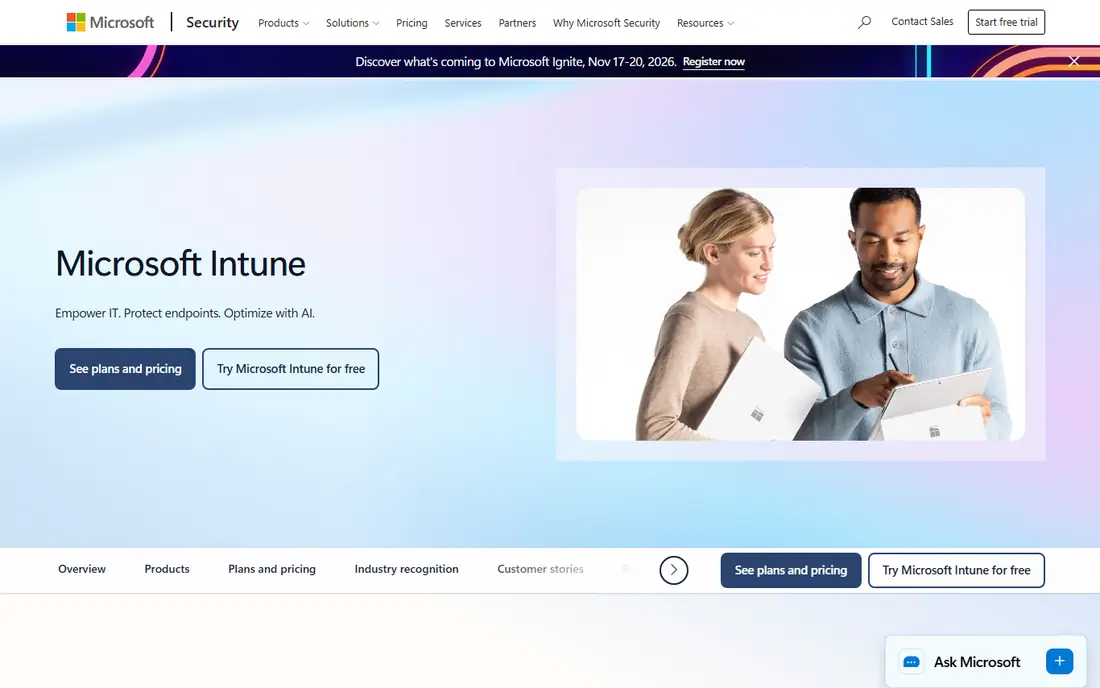
Microsoft Intune is the default shortlist pick for any organisation already on Microsoft 365, because Plan 1 is included in Business Premium and E3 and E5 plans, and standalone Plan 1 is priced per user per month. That bundling alone can make Intune the cheapest option, even before you compare features. Coverage spans Windows, Mac, iOS, and Android, with compliance and Conditional Access built in. The limits are focus and depth. Intune is cloud only, and Apple management, while improved, does not match Jamf for Mac specialists. If your fleet is mostly Windows and Microsoft identity already runs the business, Intune is the sensible centre. If it is mostly Mac, pair this entry with Jamf.
- Native Entra ID and Conditional Access integration
- Windows, Mac, iOS, and Android coverage
- Often already included in Microsoft 365
- Cloud only
- Mac depth lags Jamf for Apple specialists
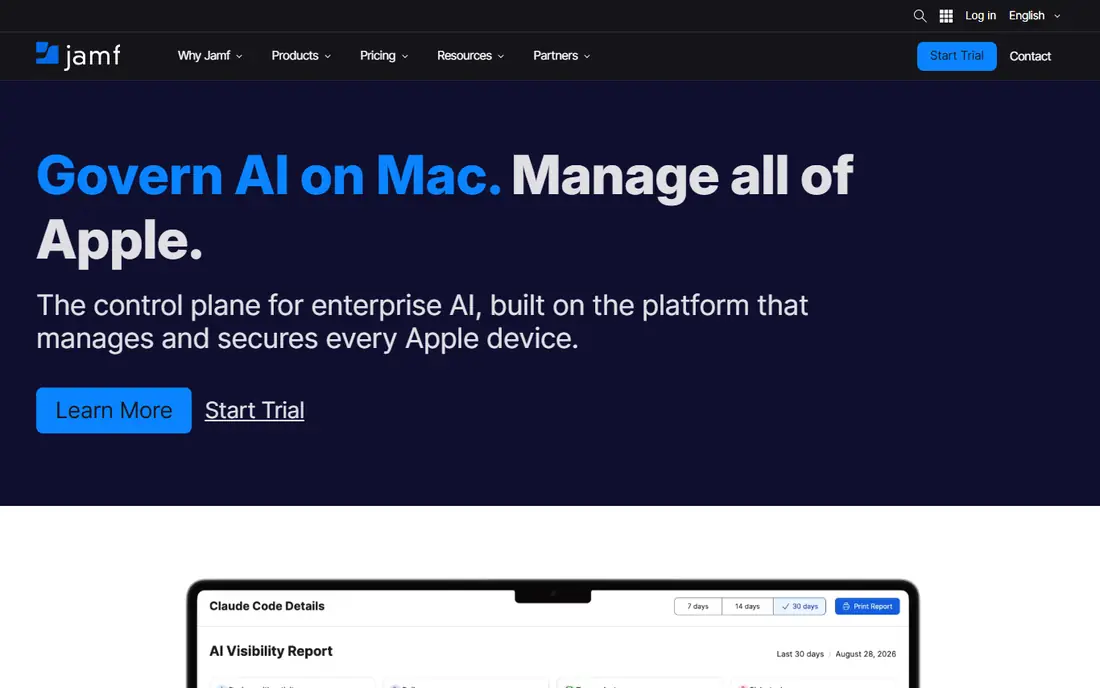
Jamf Pro is the Apple specialist, with deep macOS, iOS, iPadOS, and tvOS management, Apple Business Manager integration, and the Self Service app for users. Large Apple fleets with strict compliance needs will find policy, app deployment, and security controls more complete here than in a general tool. The admin community, Jamf Nation, is also a practical resource. Cost and scope are the trade-offs. Per device pricing adds up for large fleets, and Jamf is not a Windows management tool, so mixed fleets need a second system or a partner tool. Choose Jamf when Apple devices dominate and compliance depth matters.
- Deepest Apple management
- Apple Business Manager integration
- Strong admin community
- Per device pricing adds up
- Windows management is not its job
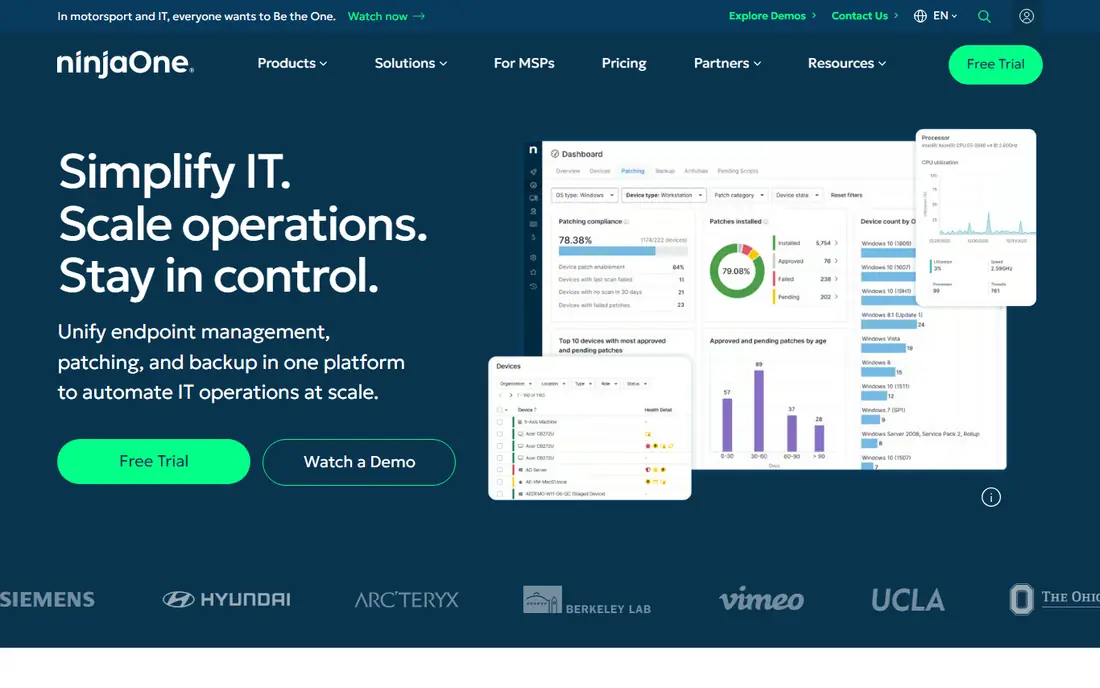
NinjaOne suits IT teams that want endpoint management plus patching, monitoring, and remote support in one console, rather than stitching three tools together. Coverage spans Windows, Mac, and mobile, and automation helps small IT teams handle more devices without adding headcount. That breadth is why it appears on many shortlists for growing companies. Pricing is quote based and per device, so you cannot compare it from a public price list alone. Get a quote for your exact device count and check which modules are included, since patching and backup options can change the total. Pick NinjaOne when patching and support matter as much as policy.
- Patching, remote support, and monitoring in one console
- Broad platform coverage
- Pricing is quote based and per device
- Smaller teams may find it more than they need
ManageEngine Endpoint Central offers one of the deepest feature sets in this list, with patching, software deployment, configuration, and remote support across Windows, Mac, and Linux. On-premises and cloud deployment options suit organisations with data or network rules that rule out a cloud only tool. Device band pricing can also work out well for mid-size fleets. The interface feels dense at first, and smaller teams may need training time to use the full feature set well. Support quality and upgrade planning also matter more here than with a simpler cloud tool. Choose Endpoint Central when feature depth and deployment choice beat a minimal interface.
- Wide patching and configuration features
- On-premises and cloud options
- Device band pricing
- Interface feels dense
- Smaller teams may need time to learn it
JumpCloud is attractive when identity and device management should live together, because it combines a directory, single sign-on, and device policies in one platform. That combination suits companies without a full Microsoft or Google identity stack, and it covers Windows, Mac, Linux, iOS, and Android. Fewer consoles means fewer gaps between identity and device state. Per user pricing adds up as headcount grows, and device depth on some platforms lags a specialist like Jamf or Intune. Check the plan tier carefully, since device management, single sign-on, and full device identity sit on different tiers. Pick JumpCloud when identity is the gap, not just device policy.
- Directory, single sign-on, and device management in one platform
- Cross-platform coverage
- Per user pricing adds up
- Device depth lags specialists on some platforms
Hexnode UEM is the value pick for cross-platform fleets, with a low per device entry price on annual billing and coverage for iOS, Android, Windows, and macOS. Kiosk and frontline device options suit retail, logistics, and field teams that need locked down devices. For a cost sensitive rollout, that entry price is hard to ignore. Higher tiers are needed for advanced features, and support response varies by plan, so read the tier details before you commit. Large enterprise compliance work may still favour Intune or Jamf. Choose Hexnode when a broad, affordable cross-platform rollout is the priority.
- Low per device entry price
- Broad platform coverage
- Kiosk and frontline options
- Advanced features need higher tiers
- Support response varies by plan
Mosyle is the budget Apple pick, with a free tier up to 30 devices and a very low per device price on its Business Premium plan. For schools and small businesses running only Apple devices, that pricing makes proper management affordable where Jamf might feel out of reach. Apple focused features cover the core deployment and security jobs well. The limit is scope, since Mosyle manages Apple devices only. A mixed fleet will need a second tool for Windows or Android, which can erase the saving. Choose Mosyle when your fleet is Apple only and budget is tight, and Jamf when scale and compliance depth justify the higher price.
- Very low per device price for Apple fleets
- Free tier up to 30 devices
- Apple focused features
- Apple only
- Windows and Android fleets need another tool
Action1 stands out with a free tier up to 200 endpoints, which makes it an easy first step for patch focused teams. Cloud setup is quick, and patching, software deployment, and basic endpoint visibility cover the most urgent jobs for small IT teams. If patching is your main gap, starting free is a sensible test. Beyond patching, management depth is narrower than Intune, Jamf, or Endpoint Central, and larger fleets need a quote. Treat Action1 as a patch first tool, not a full replacement for a complete unified endpoint platform, unless your needs stay narrow. Pick it to close a patching gap fast and cheaply.
- Free up to 200 endpoints
- Patching focused
- Cloud based and quick to start
- Management depth beyond patching is narrower
- Larger fleets need a quote
How we picked these
We compared official pricing pages, platform coverage, and feature lists for endpoint management tools that work in October 2026. We checked whether pricing is per user, per device, or per technician, whether a free plan or trial exists, and which platforms each tool manages. Where a vendor publishes no price, we marked it See website rather than guessing, and we recommend a quoted price for your exact device and user counts before signing.
Buying endpoint software without a surprise bill
Count the right unit
A per user price and a per device price are not comparable until you know your ratio of users to devices. A company with shared devices will favour per user pricing, while a company with many devices per person will favour per device pricing. List users, devices, and shared or kiosk devices separately, then ask each vendor for a total based on those numbers.
Test enrolment on every platform you run
A tool that manages Windows beautifully may handle Mac or Android less well, and that gap only appears during a real enrolment test. Enrol one device of each type, push a policy, install an app, and test remote lock and wipe. Check how the tool handles lost devices, departing staff, and compliance failures, since those are the moments that matter.
Plan for offboarding and reporting
Endpoint tools live or die on reporting and offboarding. Confirm that you can see patch status, compliance, and encryption across the fleet in one view, and that wiping a device on exit is quick and auditable. Ask about data residency, admin roles, and audit logs before you sign, especially if you work in a regulated sector.
FAQ
What is the best endpoint management software overall?
Microsoft Intune is the best overall pick for most Microsoft 365 organisations, since it is often already included and covers Windows, Mac, iOS, and Android. Jamf Pro leads for Apple only fleets, while Hexnode offers the best value for cross-platform fleets on a budget. The right answer depends on your existing identity stack and device mix.
How is endpoint management software priced?
Pricing is usually per user per month, per device per month, or per technician per month, and the unit changes the total sharply. Intune Plan 1 is priced per user, Jamf and Hexnode per device, and some MSP tools per technician. Always get a quote for your exact user and device counts.
Do I need endpoint management for a small team?
Yes, even a team of ten benefits from central app deployment, patching, encryption checks, and remote wipe for lost devices. Mosyle offers a free tier up to 30 Apple devices, and Action1 is free up to 200 endpoints for patch focused use. Start small and add features as the fleet grows.
Can one tool manage Windows, Mac, and phones?
Yes, Intune, NinjaOne, Endpoint Central, JumpCloud, and Hexnode all manage Windows, Mac, and mobile platforms, though depth varies by platform. Jamf and Mosyle focus on Apple, so mixed fleets need a second tool or a general platform. Test enrolment on each platform before committing.
What is the difference between MDM and UEM?
Mobile device management, or MDM, originally covered phones and tablets, while unified endpoint management, or UEM, covers phones, laptops, desktops, and sometimes IoT devices in one console. Most modern tools here are UEM platforms, even when vendors still use MDM in their marketing. Focus on the platforms and policies you need, not the label.