Best Employee Feedback Tools in 2026: 9 Tools Compared
Searching for the best employee feedback tools? We compare nine survey and engagement platforms on price, anonymity, analytics and ease of use today here.
- Editor's choice
 Culture Amp
Deep engagement research and benchmarks
Starts atSee websiteVisit cultureamp.comFull review - Great alternative
 Lattice
Feedback tied to performance and goals
Starts at$11 per user per monthVisit lattice.comFull review - Also consider
 15Five
Weekly check-ins and manager coaching
Starts at$4 per user per monthVisit 15five.comFull review
TL;DR:
- Culture Amp and Quantum Workplace suit larger companies that need benchmarks, driver analysis and action planning.
- 15Five and Lattice tie feedback to check-ins, goals and performance, which helps managers act on results between surveys.
- Bonusly is the lowest-cost entry point here, but it is recognition-first and works best alongside a survey tool.
- Anonymity rules, minimum response thresholds and clear follow-up matter more than survey length.
Quick comparison
| Tool | Best for | Starts at | Free plan? | |
|---|---|---|---|---|
| Culture Amp | Deep engagement research and benchmarks | See website | No | Visit |
| Lattice | Feedback tied to performance and goals | $11 per user per month | No | Visit |
| 15Five | Weekly check-ins and manager coaching | $4 per user per month | Free trial | Visit |
 Workleap Officevibe | Simple pulse surveys for midsize teams | See website | No | Visit |
 TINYpulse | Lightweight weekly listening | See website | Free trial | Visit |
 Quantum Workplace | Research-backed surveys and action plans | See website | No | Visit |
 Bonusly | Peer recognition and small rewards | $3 per user per month | Yes | Visit |
 Leapsome | One people platform for global teams | See website | Free trial | Visit |
 Qualtrics XM | Enterprise experience research at scale | See website | No | Visit |
The best employee feedback tools
Good feedback tools do more than send a survey. They protect anonymity, show managers what to do next, and track whether action actually happened. We compared official feature pages, pricing pages and public reviews to judge each platform on those points.
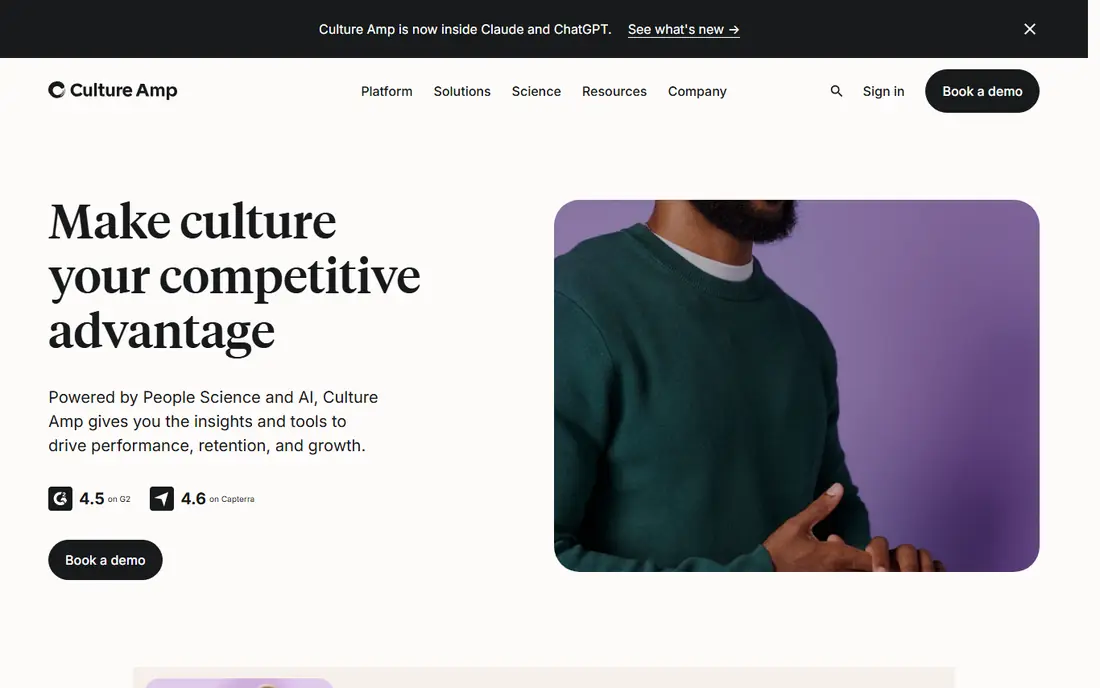
Culture Amp is often the benchmark for engagement surveys. Its templates draw on workplace research, and its reporting helps HR teams see which drivers, such as growth, leadership or workload, link most closely to engagement in their own data. Benchmarks add context, so a score means more than a number alone.
For a company with several hundred staff or more, that depth is valuable. Managers get guided action plans rather than a raw report, which helps turn survey week into follow-up work. Diversity and inclusion reporting is also built into many plans, which matters for larger employers.
The trade-off is cost and effort. Pricing is by quote, and smaller teams may find the setup heavier than a simple pulse tool. If you only need a short monthly survey, start with a lighter option and move to Culture Amp when you need deeper analysis.
- Psychology-informed survey templates
- Benchmarks and driver analysis
- Action planning tools for managers
- Quote-based pricing can be high for small teams
- Implementation takes time and planning
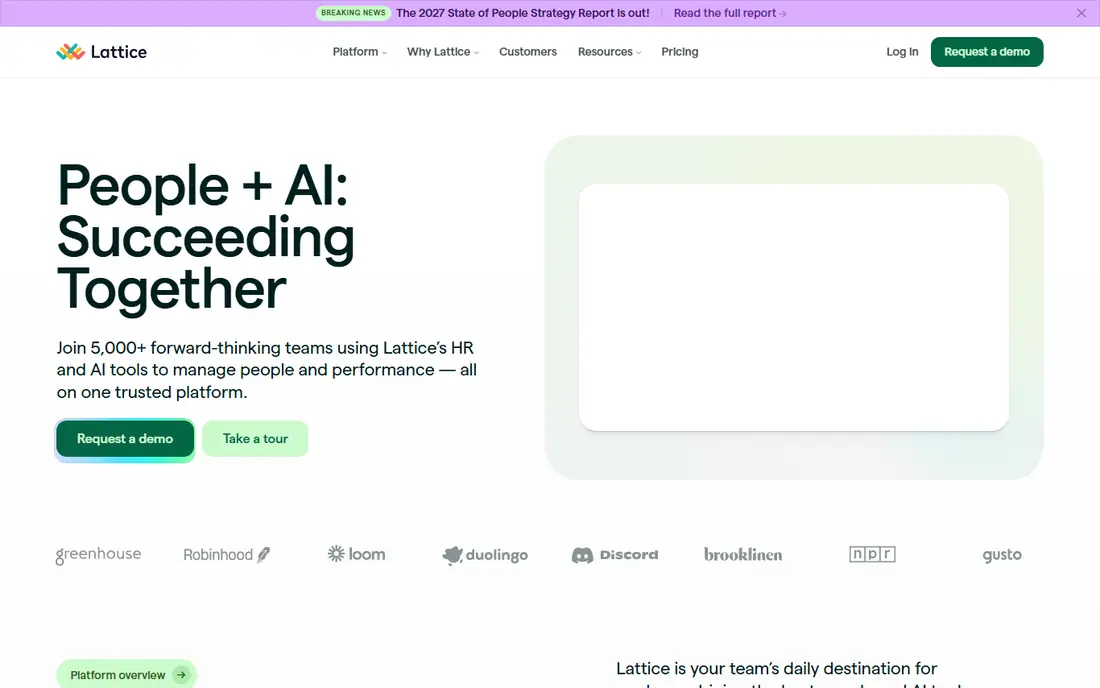
Lattice appeals to companies that want feedback inside the same system as performance management. An engagement survey result can sit next to goals, review notes and check-in history, which gives managers a fuller picture of a team member. That connection is the main reason to choose Lattice over a survey-only tool.
The engagement module is priced as an add-on in many cases, so check the full quote. The core platform starts at $11 per user per month on annual billing in the sources we reviewed, with engagement adding to that figure. For teams already using Lattice for reviews, the extra module is a natural step.
Be careful with minimums. Published reports note annual minimums that can make the per-seat price less relevant for a very small team. Ask for the total annual cost for your headcount before you compare headline rates.
- Engagement surveys sit beside reviews, goals and 1-on-1s
- Clear manager dashboards
- Strong reporting for midsize companies
- Full value needs several modules
- Minimum annual agreements can raise the real cost for small teams
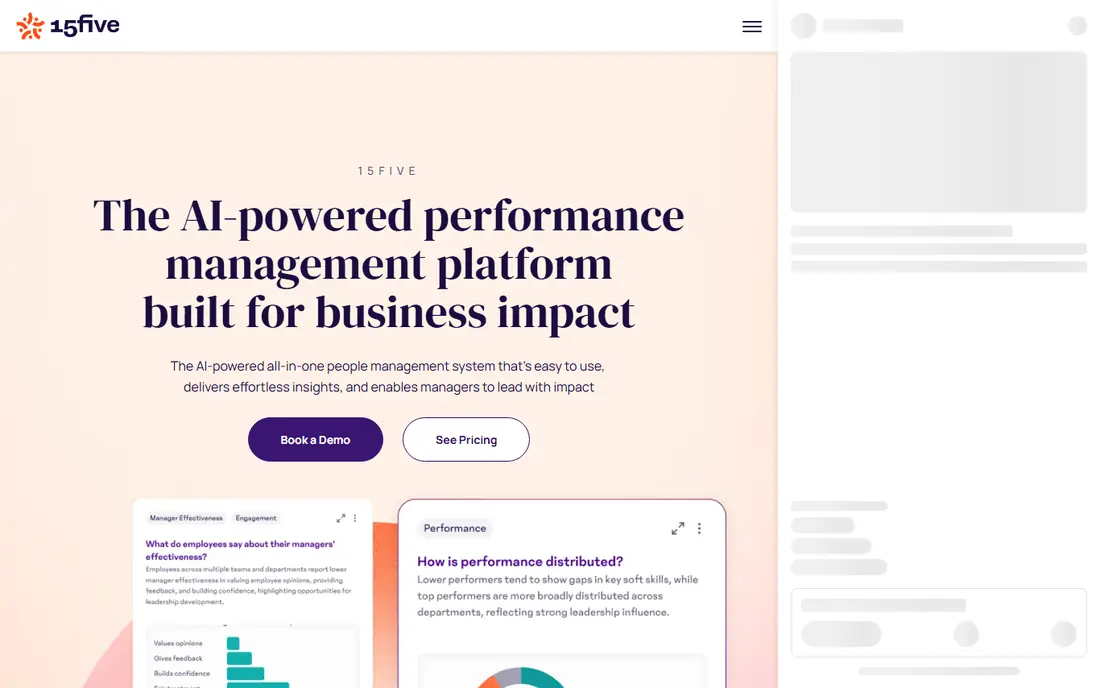
15Five takes a different rhythm from annual survey tools. Weekly check-ins ask staff how they feel, what is blocking them, and what they need from their manager. That steady flow can surface problems early, before they show up in a yearly engagement score.
The Engage product, listed from $4 per user per month on annual billing, adds pulse and engagement surveys to the check-in habit. Managers also get prompts and suggested talking points, which helps newer managers handle difficult conversations. Recognition through High Fives adds a light, positive layer.
The catch is adoption. If managers do not read and respond to check-ins, staff stop writing honestly. 15Five works best when leaders commit to a weekly review habit and close the loop in 1-on-1 meetings.
- Short weekly check-ins keep feedback frequent
- Engage surveys from $4 per user per month
- Coaching prompts for managers
- Best results need manager habit change
- Advanced performance features sit on higher tiers
Workleap Officevibe is designed to get a pulse survey running fast. Staff answer short, anonymous surveys, managers see team trends, and HR can track engagement over time without building surveys from scratch. That simplicity suits midsize teams without a dedicated people analytics team.
Recent reports note a move to flat annual tiers, with a standard platform price reported from $4,999 per year. Because that model differs from per-seat pricing, confirm the current tier, user limit and included features on a demo before you budget. The change matters a lot for smaller teams.
On features, Officevibe covers the core well but does not match Culture Amp or Qualtrics for deep driver analysis. If you need simple, regular listening with low admin, that trade-off is reasonable.
- Anonymous pulse surveys with simple setup
- Clear team-level reporting
- Integrations with common HR tools
- Pricing model has changed to annual tiers in recent reports
- Less depth than enterprise research platforms
TINYpulse focuses on one short question at a time. Staff can answer in minutes, which helps response rates stay high over months. Anonymous channels let people raise concerns they might not raise in a meeting, and managers can respond without seeing names where anonymity is set.
That lightness is both the strength and the limit. TINYpulse is easy to run, but it will not give you the benchmark depth or complex survey logic of an enterprise platform. For a company that wants a weekly habit rather than a research project, that is often the right balance.
Pricing is by quote, so ask what is included for your team size and whether recognition and survey features are bundled or sold separately. A free trial is a good way to test response rates with a real team before you commit.
- Very short pulse questions
- Anonymous feedback channels
- Peer recognition features
- Quote-based pricing
- Reporting is lighter than larger platforms
Quantum Workplace is a survey and action platform for companies that want to move from data to change. Its engagement surveys use research-backed questions, and its reporting helps teams compare results with benchmarks and track progress after action plans are set.
Managers get tools to build plans, assign owners, and check progress, which addresses the common failure where survey results are shared once and then forgotten. That follow-through design is why many midsize employers choose it over a generic survey form.
The main drawback is access. Pricing is by quote, and the platform is built for employers with enough staff to make benchmarking meaningful. Very small teams may get similar value from a simpler pulse tool at a lower cost.
- Engagement surveys backed by workplace research
- Benchmarking
- Action planning linked to results
- Quote-based pricing
- Better suited to midsize and larger employers than very small teams
Bonusly is not a survey tool in the same sense as the others here. Staff give each other small points tied to company values, and points can be redeemed for rewards. That daily recognition habit can improve morale in a way that a quarterly survey cannot.
Pricing starts at $3 per user per month on annual billing for the Team plan, with a free plan for up to 8 users in published reports. That makes Bonusly an easy first step for a small team, or a useful add-on beside a survey platform.
Do not buy Bonusly expecting deep engagement analytics. It can show recognition trends, but it will not replace anonymous pulse surveys or driver analysis. Pair it with a survey tool if you need both recognition and listening.
- Peer-to-peer recognition that staff actually use
- Low starting price
- Free plan for small teams
- Recognition-first, not a full survey platform
- Rewards catalog and tax rules need checking
Leapsome brings engagement surveys together with performance reviews, goals, compensation reviews and learning. For a growing company that wants one people platform rather than five separate tools, that breadth saves admin time and keeps data in one place.
Global teams benefit from multilingual support and a design that fits distributed work. Survey results can link to review cycles, so feedback is not isolated from development conversations. A free trial helps you test whether the full platform fits your workflow.
The trade-off is complexity. A team that only wants pulse surveys may find Leapsome heavier than needed. Confirm pricing, since published figures have varied, and check which modules are included in your quote.
- Surveys, reviews, goals and learning in one place
- Good fit for European and global teams
- AI-assisted insights
- Quote-based pricing in recent reports
- Breadth can mean more setup than a single-purpose tool
Qualtrics XM is the enterprise end of this list. It handles complex survey logic, large employee populations, multiple languages, and text analysis of open comments at scale. Real-time alerts can flag urgent feedback, which matters in large organizations where a local issue can grow fast.
For a global employer running employee, customer and brand research in one system, Qualtrics offers depth that smaller tools cannot match. Its analytics team and partner ecosystem also support custom research designs.
That power comes with cost and complexity. Pricing is by quote and typically enterprise-level, and teams need time to learn the platform. Smaller employers will usually get faster value from Culture Amp, Lattice or 15Five.
- Advanced survey logic and text analytics
- Real-time alerts
- Strong fit for large, complex organizations
- Quote-based enterprise pricing
- Setup and training take significant time
How we picked these
We compared official feature pages, pricing pages and public reviews for each platform. We looked for tools that handle anonymous or confidential feedback, offer reporting that managers can act on, and operate in the United States in 2026.
We included survey-led platforms, performance-linked platforms and one recognition-led option, because feedback takes different forms in real workplaces. Where a price was not published on the vendor page, we wrote See website rather than relying on a third-party estimate alone.
How to run feedback that staff trust
Trust starts before the first survey. Tell staff what will be asked, who will see results, and what minimum group size protects anonymity. Publish a short timeline for sharing results and actions, and keep to it.
Anonymity, thresholds and follow-up
Set a minimum response threshold so small teams are not exposed, and avoid cutting results so finely that individuals can be identified. Share team-level themes, not raw comments, and let managers respond to themes in public. Staff will only keep answering if they see change.
Picking the right cadence
Annual surveys give benchmarks, pulse surveys give early warnings, and check-ins give manager-level signals. Most companies do best with a mix: a fuller survey once or twice a year, short pulses in between, and regular check-ins for day-to-day issues. Avoid surveying so often that staff feel polled but never heard.
FAQ
What are the best employee feedback tools for small teams?
For small teams, 15Five and Bonusly are strong starting points because of lower entry prices and simple setup. Workleap Officevibe and TINYpulse also suit smaller groups that want pulse surveys without enterprise complexity. Check total annual cost, not just the per-user rate, before you choose.
What is the best employee feedback software for engagement surveys?
Culture Amp and Quantum Workplace lead for engagement survey depth, benchmarks and action planning. Lattice is a strong choice when you also want reviews and goals in the same system. Qualtrics XM fits large enterprises with complex research needs.
How do employee feedback apps protect anonymity?
Most platforms in this list offer anonymous or confidential survey modes and minimum response thresholds. Check whether managers see only aggregated results, whether small groups are suppressed, and whether open comments are shared verbatim. Put those rules in writing for staff before launch.
How often should we run employee feedback surveys?
A full engagement survey once or twice a year works well for most companies, with short pulse surveys monthly or quarterly in between. Weekly check-ins through 15Five or a similar tool add manager-level signals without replacing the larger survey. The key is to act on each round before the next one starts.
What is the difference between feedback tools and engagement platforms?
Feedback tools collect input through surveys, check-ins or recognition. Engagement platforms add analysis, benchmarks, action planning and tracking over time. Many products here do both, but recognition-only tools such as Bonusly are best paired with a survey platform for a full picture.
Do these tools integrate with HR systems?
Most of the platforms here integrate with common HR systems, Slack, Microsoft Teams and Google Workspace, though the exact list varies by plan. Check the integration page for your HR system, single sign-on support, and data export options before you sign, especially if you need results in your HR reporting.