Best Employee Engagement Survey Software in 2026: 9 Tools Compared
The best employee engagement survey software compared for pulse surveys, benchmarks and action plans, with pricing for teams of every size in 2026 today.

- Editor's choice
 Culture Amp
Deep engagement surveys and benchmarks
Starts atSee websiteVisit cultureamp.comFull review - Great alternative
 Qualtrics EmployeeXM
Enterprise listening at scale
Starts atSee websiteVisit qualtrics.comFull review - Also consider
 Lattice
Surveys tied to performance
Starts atSee websiteVisit lattice.comFull review
TL;DR:
- Culture Amp and Qualtrics lead on survey science and benchmarks, but both use quote-based pricing and suit larger teams.
- Lattice and 15Five tie surveys to performance and manager check-ins, which helps teams act on results rather than just read them.
- Small teams should start with a simple pulse tool or SurveyMonkey, and only move to an enterprise platform when benchmarks matter.
- Protect anonymity and trust: explain why you survey, share results honestly, and act on at least one finding each cycle.
Quick comparison
| Tool | Best for | Starts at | Free plan? | |
|---|---|---|---|---|
| Culture Amp | Deep engagement surveys and benchmarks | See website | No | Visit |
| Qualtrics EmployeeXM | Enterprise listening at scale | See website | No | Visit |
| Lattice | Surveys tied to performance | See website | No | Visit |
 15Five | Weekly check-ins and manager coaching | $4 per user per month | Free trial | Visit |
 Workday Peakon | Large enterprises on Workday | See website | No | Visit |
 Officevibe | Simple pulse surveys for small teams | See website | Free trial | Visit |
 TINYpulse | Lightweight weekly listening | See website | Free trial | Visit |
 SurveyMonkey | Flexible surveys for any team | See website | Yes | Visit |
 Quantum Workplace | Benchmarks and action planning | See website | No | Visit |
The best employee engagement survey software
We kept tools that run employee surveys, pulse checks or listening programmes, and noted where a tool is survey-only or part of a wider people platform.
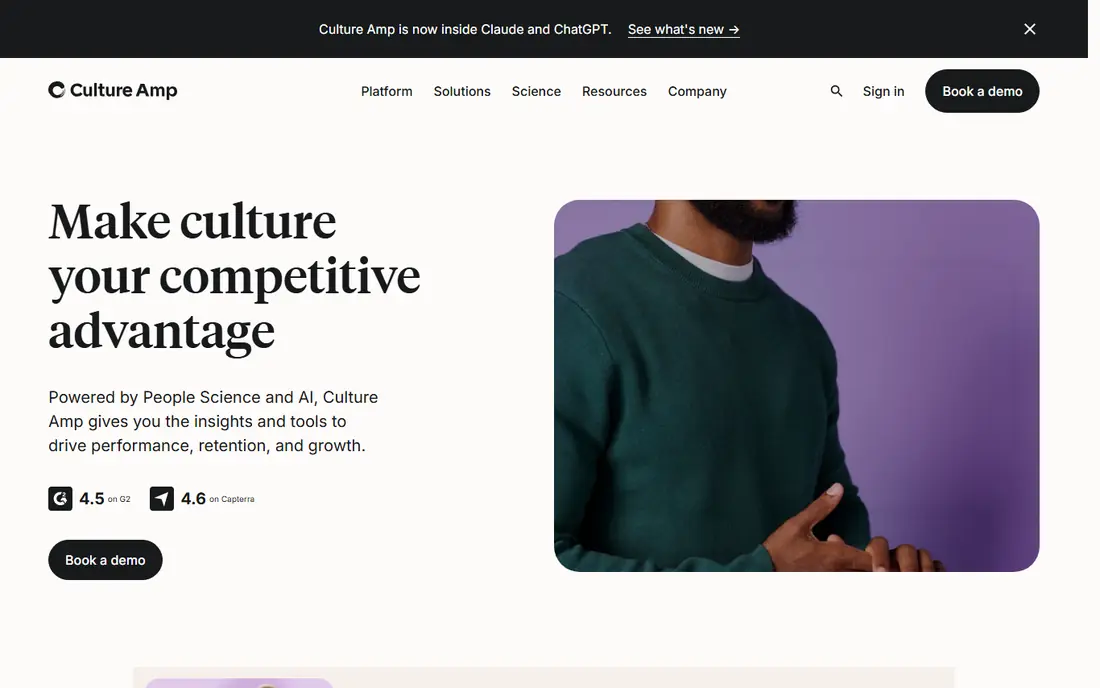
Culture Amp is the benchmark for engagement surveys. Its templates draw on engagement research, its benchmarks let a team compare results with similar companies, and driver analysis shows which factors most affect engagement, rather than just listing scores. Action planning tools help managers turn a low score into a concrete next step.
Pricing is quote-based, and onboarding takes time, which makes Culture Amp a better fit for mid-size and large teams than for a team of ten. Small teams may also find the depth more than they need for a simple pulse check. For a company that wants serious survey science and credible benchmarks, Culture Amp remains the lead pick.
- Research-backed survey templates
- Strong benchmarks
- Driver analysis and action plans
- Quote-based pricing
- Onboarding takes time
- Best for larger teams
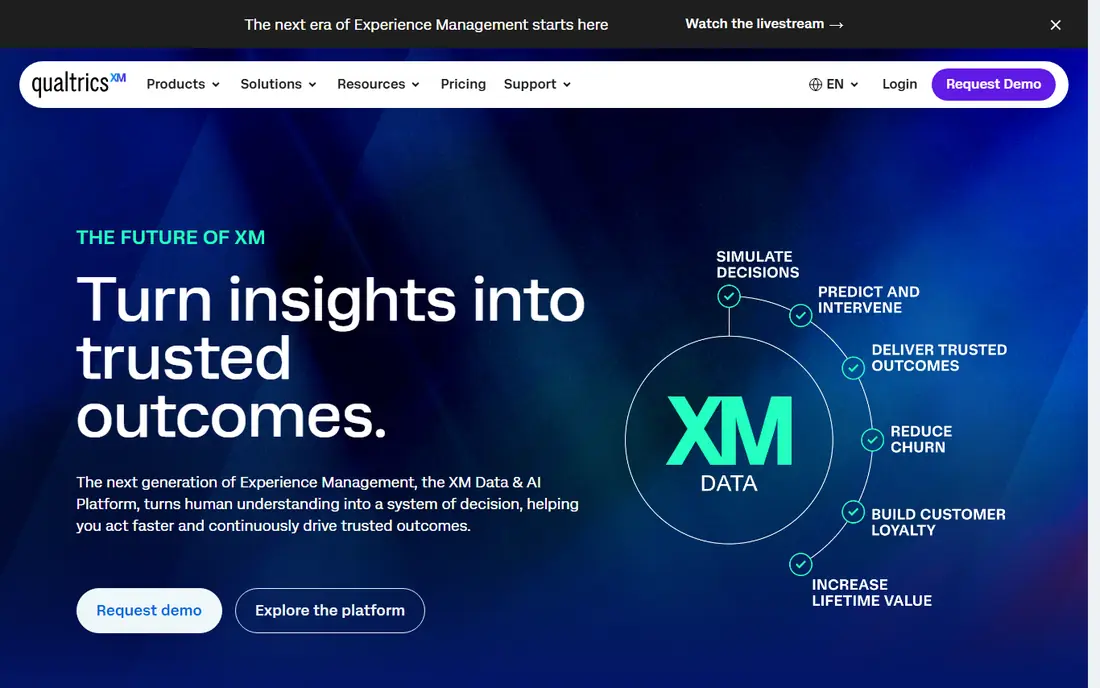
Qualtrics EmployeeXM suits large enterprises running listening across the whole employee lifecycle, from onboarding to exit. It handles complex survey logic, large samples and text analysis of open comments, which helps a large HR team find themes in thousands of responses. Integrations with HR systems keep survey lists current as staff join or leave.
Complexity is the trade-off. Setup and governance take time, and a team without a dedicated survey owner may struggle to use the full platform. Quote-based pricing also puts it beyond most small teams. For an enterprise that needs listening at scale, Qualtrics is a powerful, proven choice.
- Enterprise survey design
- Lifecycle listening
- Strong analytics and text analysis
- Quote-based pricing
- Complex setup
- Needs a dedicated owner

Lattice ties engagement surveys to performance reviews, goals and one-to-ones in one people platform. That link helps a manager see engagement, feedback and goals together, rather than in separate tools. The Engagement module is priced as an add-on to core performance tools, with reports of around $4 per seat per month for Engagement on top of core pricing, so check the current bundle before you buy.
Buying several modules raises the total, and minimum annual terms can make Lattice costly for a very small team. For a mid-size team that already wants performance tools, adding Lattice surveys keeps engagement close to the work managers already do. That closeness often matters more than a slightly deeper survey alone.
- Engagement surveys plus reviews and goals
- Clear manager views
- Modular pricing
- Full value needs several modules
- Minimum annual terms can raise cost for small teams
15Five suits teams that want frequent, light signals rather than one big annual survey. Weekly check-ins ask staff for wins, blockers and mood, while pulse surveys add a broader engagement view. Managers get coaching prompts and one-to-one tools, which helps turn a low score into a conversation. Engage pricing starts at $4 per user per month billed annually.
Benchmark depth is thinner than Culture Amp or Qualtrics, and the full platform needs higher tiers for performance and compensation features. For a small or mid-size team that wants managers to listen weekly, 15Five is an easy, practical start.
- Weekly check-ins and pulse surveys
- Manager coaching tools
- Simple setup
- Less benchmark depth than Culture Amp
- Full platform needs higher tiers
Workday Peakon, now part of Workday, gives large enterprises real-time engagement data with benchmarks and driver analysis. It suits companies already running Workday, since HR data, org structure and survey lists stay in sync. Managers see trends as they happen, rather than waiting for an annual report, and can compare teams and locations.
Outside a Workday setup, Peakon loses some of its advantage, and quote-based pricing puts it beyond small teams. Implementation also takes planning. For a large Workday customer, Peakon is a natural, strong engagement choice.
- Real-time engagement data
- Strong benchmarks
- Fits Workday HR data
- Quote-based pricing
- Best value inside a Workday setup
- Complex for outsiders
Officevibe suits small and mid-size teams that want a simple pulse habit. Short, regular surveys ask about key engagement drivers, staff can leave anonymous feedback, and managers get reports with practical tips. That simplicity helps a team start listening without a large HR project.
Depth is limited compared with Culture Amp or Qualtrics, and plan names and pricing have changed over time, so check the current vendor page. For a team that wants a clear, low-friction pulse tool, Officevibe remains a friendly pick.
- Simple pulse surveys
- Anonymous feedback
- Manager reports and tips
- Less depth than enterprise tools
- Pricing and plan names change often
TINYpulse keeps listening light. A short weekly pulse, plus an anonymous suggestion box, gives managers a regular signal without a long survey. The dashboard stays simple, which helps managers who do not want to learn a large HR platform. That light touch suits small teams and busy managers.
The feature set is narrower than Lattice or Culture Amp, with less performance, goal and benchmark depth. Pricing also varies by plan and may need a sales conversation. For a team that wants a weekly habit rather than a full people platform, TINYpulse is a practical, low-effort choice.
- Short weekly pulses
- Anonymous suggestions
- Simple manager dashboard
- Feature set is narrower than full platforms
- Pricing is quote-based on some plans
SurveyMonkey is not an engagement platform, but it is a flexible survey tool that many small teams already know. Templates cover engagement, onboarding and exit topics, and the builder handles logic, anonymity settings and reporting. A free plan covers basic surveys, which makes it a low-risk start for a team testing its first engagement survey.
Engagement-specific features, such as benchmarks, driver analysis and manager action plans, are thinner than in Culture Amp or Quantum Workplace, and higher plans are needed for larger teams and advanced analysis. For a small team that needs a simple, flexible survey fast, SurveyMonkey is a sensible pick.
- Flexible survey builder
- Templates for engagement
- Free plan for basic surveys
- Not engagement-specific
- Benchmarks and action tools need higher plans or add-ons
Quantum Workplace combines research-backed engagement surveys with benchmarks and action planning. Managers get guidance on what to do after a survey, not just a score, and coaching tools help turn results into team conversations. That action focus helps companies that have run surveys before but struggled to follow through.
Quote-based pricing and a mid-size focus make it less suited to very small teams. For a company that wants benchmarks plus a clear action routine, Quantum Workplace is a strong alternative to Culture Amp, especially in the US mid-market.
- Research-backed surveys
- Benchmarks
- Action planning and coaching tools
- Quote-based pricing
- Best for mid-size and larger teams
How we picked these
We compared official feature and pricing pages, benchmark notes and public reviews, and kept tools that run employee surveys or pulse programmes today. We favoured tools with a free plan or trial where possible, and we noted where pricing is quote-based instead of inventing a figure. We did not claim hands-on testing; our view rests on published features and widely reported limits.
How to run a survey people trust
Explain the purpose before you send the survey, and say clearly who sees results and how anonymity works. Small teams need extra care, since a single comment can identify a person, so use minimum reporting thresholds and avoid asking for identifying details in small groups. Share results honestly, including low scores, and pick one or two actions to complete before the next survey.
Keep surveys short. A long annual survey with no follow-up teaches staff that surveys change nothing. A short pulse, a shared summary and a visible action build trust over time. Also protect survey data like other HR data, with limited access and a clear retention rule.
FAQ
What is the best employee engagement survey software?
Culture Amp leads for survey depth and benchmarks, Lattice and 15Five lead for tying surveys to performance and manager work, and Officevibe and TINYpulse lead for simple pulse surveys. The best pick depends on team size and whether you need benchmarks or just a regular signal.
What is the best employee survey software for small business?
15Five, Officevibe, TINYpulse and SurveyMonkey suit small businesses, with free plans or trials to test. Start simple, protect anonymity, and only move to Culture Amp or Qualtrics when you need benchmarks and deeper analysis.
How much does employee engagement survey software cost?
Costs range from free SurveyMonkey basics to $4 per user per month for 15Five Engage, plus quote-based pricing for Culture Amp, Qualtrics, Peakon and Quantum Workplace. Check the vendor pricing page, since minimum terms and module counts change the total.
How often should I run an engagement survey?
Run a full engagement survey once or twice a year, with short pulse surveys monthly or quarterly in between. Weekly check-ins, such as 15Five or TINYpulse, suit teams that want a light, frequent signal without survey fatigue.
Are employee surveys anonymous?
They should be, for honest answers, but anonymity depends on settings and team size. Use minimum reporting thresholds, avoid identifying questions in small teams, and tell staff exactly who sees what before you launch.
What should I do after an engagement survey?
Share a summary, including low scores, pick one or two actions with owners and dates, and report progress before the next survey. Without visible action, staff stop answering, and the next survey gives you less honest data.
Sources
- https://www.cultureamp.com/pricing
- https://www.qualtrics.com/pricing
- https://lattice.com/pricing
- https://www.15five.com/pricing
- https://www.workday.com/pricing
- https://officevibe.com/pricing
- https://www.tinypulse.com/pricing
- https://www.surveymonkey.com/pricing
- https://www.quantumworkplace.com/pricing