8 Best Employee Assessment Tools
Compare the best employee assessment tools for skills, aptitude and video screening, with validity notes, pricing models and fair-use guidance for hiring teams.
- Editor's choice
 TestGorilla
Teams wanting a broad, easy-to-start test library
Starts atFreeVisit testgorilla.comFull review - Great alternative
 Criteria
Teams wanting research-backed aptitude and personality measures
Starts atSee websiteVisit criteriacorp.comFull review - Also consider
 HireVue
Enterprises needing video, assessments and hiring at scale
Starts atSee websiteVisit hirevue.comFull review
TL;DR:
- TestGorilla suits teams that want a broad test library with a free starting point.
- Criteria and Predictive Index suit teams that want research-backed aptitude and behavioural insight.
- HackerRank and Codility suit technical hiring with real coding work samples.
- HireVue and Harver suit high-volume and enterprise screening at scale.
Quick comparison
| Tool | Best for | Starts at | Free plan? | |
|---|---|---|---|---|
| TestGorilla | Teams wanting a broad, easy-to-start test library | Free | Yes | Visit |
| Criteria | Teams wanting research-backed aptitude and personality measures | See website | No | Visit |
| HireVue | Enterprises needing video, assessments and hiring at scale | See website | No | Visit |
 HackerRank | Technical teams hiring developers with work samples | See website | No | Visit |
 Codility | Engineering teams needing live coding and structured interviews | See website | No | Visit |
 Predictive Index | Teams wanting behavioural insight for hiring and team fit | See website | No | Visit |
 Harver | High-volume employers needing situational judgment at scale | See website | No | Visit |
 Bryq | Small and mid-size teams wanting cognitive and personality screening | See website | No | Visit |
The best best employee assessment tools in detail
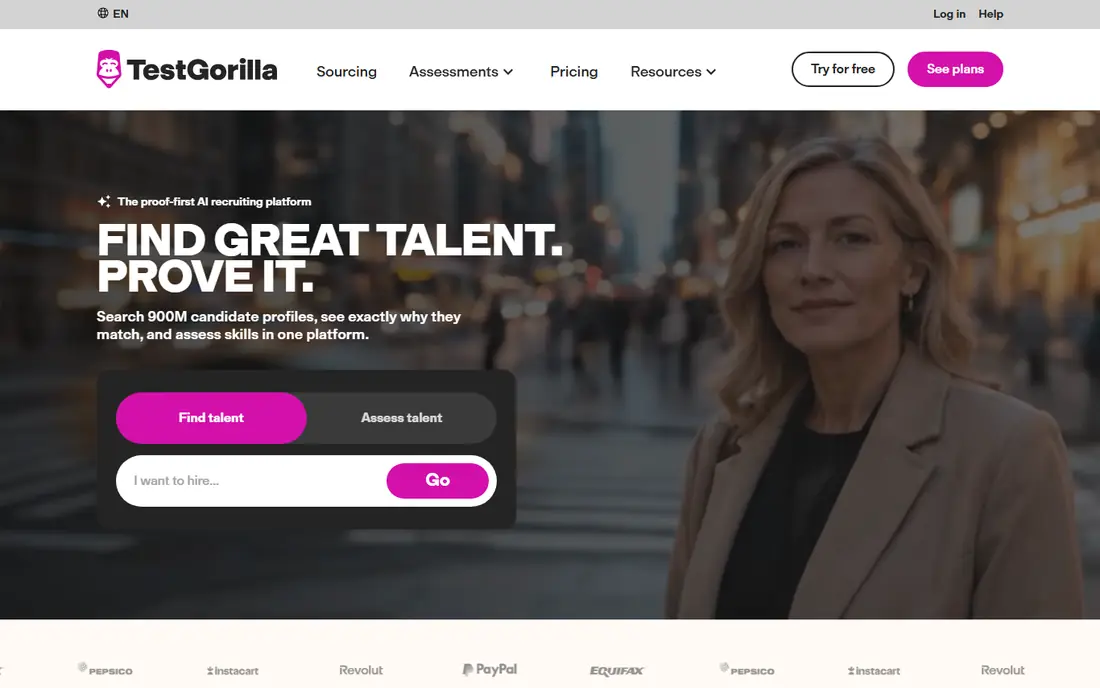
TestGorilla is the easiest starting point for skills-first hiring because its library covers many roles in one place. We like it for teams wanting a broad, easy-to-start test library because large test library with anti-cheating controls. Its free plan lets small teams try a few tests before paying, while paid plans add coding, video and integrations. The trade-off is that paid plans need an annual commitment. That limit matters most when your team is growing or when the tool must cover more than its core job. Check the current plan details on the vendor site before you commit, and test the exact workflow you will use every week.
- Large test library with anti-cheating controls
- Paid plans need an annual commitment
Criteria
Best for: Teams wanting research-backed aptitude and personality measures
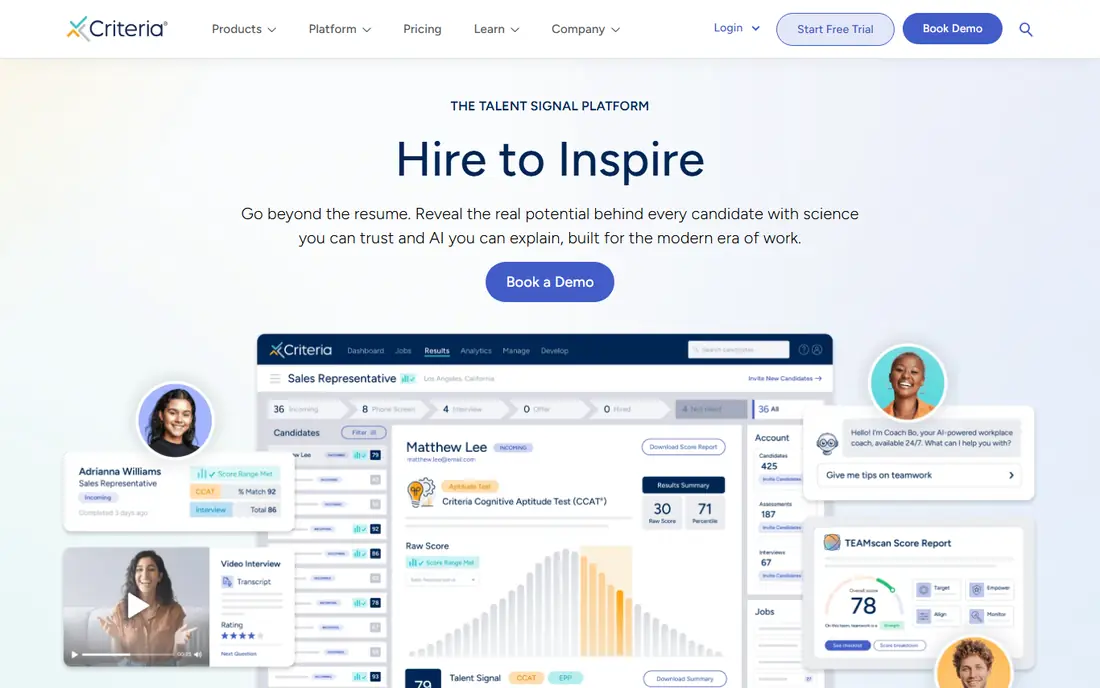
Its aptitude and personality measures help hiring managers compare candidates on traits linked to job performance. Criteria suits teams that want assessment science to be visible, with manuals and validity evidence behind the tests. For teams focused on teams wanting research-backed aptitude and personality measures, the draw is validated assessments with technical manuals. On the other side, quote-based pricing with no public starting price. That does not rule it out, but it does change who should shortlist it. Run a short trial with real data and a real deadline, then judge it on the result, not on the demo.
- Validated assessments with technical manuals
- Quote-based pricing with no public starting price
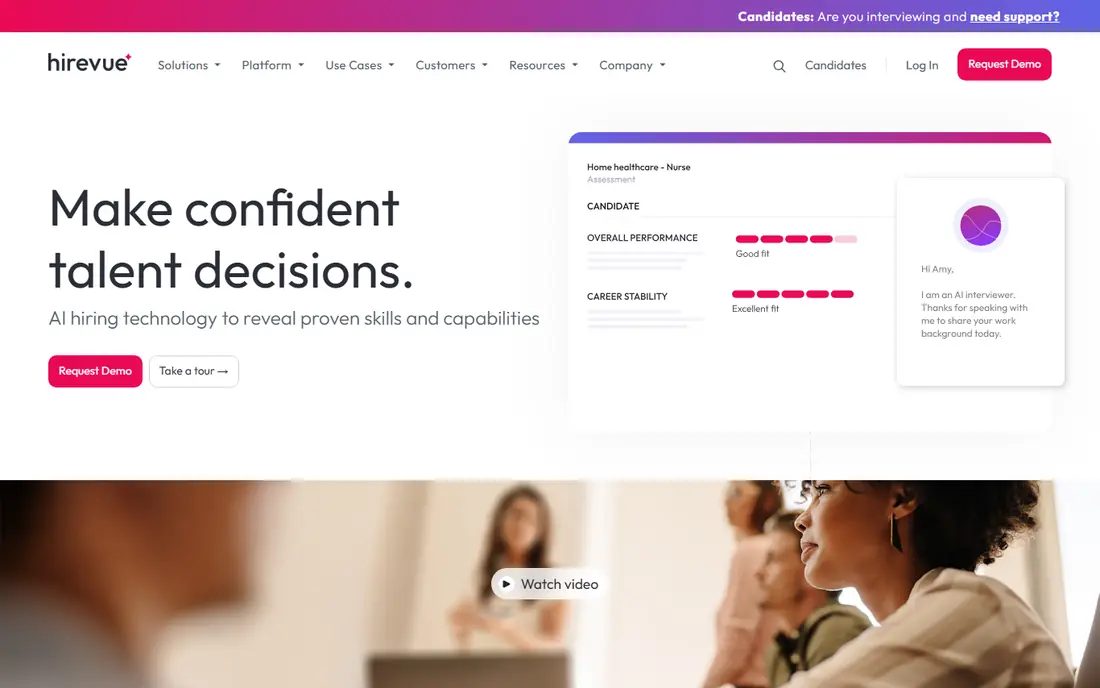
For enterprises needing video, assessments and hiring at scale, HireVue earns a place because video interviews, assessments and enterprise security. HireVue targets large hiring programmes where video interviews, assessments and scheduling must work together. Its enterprise controls and audit information suit regulated employers that need to show how hiring decisions were supported. The weakness to weigh is that enterprise pricing and setup effort. If that weakness touches your main workflow, look at a stronger alternative in this list. If it does not, the core strength may be enough for your team.
- Video interviews, assessments and enterprise security
- Enterprise pricing and setup effort
HackerRank focuses on real coding tasks rather than CV claims, which helps technical teams judge skill directly. We like it for technical teams hiring developers with work samples because large coding challenge library across many languages. Its challenge library covers many languages and difficulty levels, so teams can match tests to junior and senior roles. The trade-off is that best value shows for regular technical hiring. That limit matters most when your team is growing or when the tool must cover more than its core job. Check the current plan details on the vendor site before you commit, and test the exact workflow you will use every week.
- Large coding challenge library across many languages
- Best value shows for regular technical hiring
Codility
Best for: Engineering teams needing live coding and structured interviews
Its live interview tools combine coding, discussion and scoring, which helps interviewers compare candidates fairly. Codility suits teams that want to watch how a candidate solves a problem, not just whether the final code passes. For teams focused on engineering teams needing live coding and structured interviews, the draw is live coding IDE with structured technical interviews. On the other side, enterprise pricing suits larger engineering teams. That does not rule it out, but it does change who should shortlist it. Run a short trial with real data and a real deadline, then judge it on the result, not on the demo.
- Live coding IDE with structured technical interviews
- Enterprise pricing suits larger engineering teams
Predictive Index
Best for: Teams wanting behavioural insight for hiring and team fit
For teams wanting behavioural insight for hiring and team fit, Predictive Index earns a place because behavioural and cognitive measures with team insights. Predictive Index adds a behavioural view to hiring, showing how a candidate tends to work and what drives them. Its team insights also help managers understand fit within an existing team, not just fit for a single role. The weakness to weigh is that pricing depends on headcount and scope. If that weakness touches your main workflow, look at a stronger alternative in this list. If it does not, the core strength may be enough for your team.
- Behavioural and cognitive measures with team insights
- Pricing depends on headcount and scope
Harver suits employers that hire hundreds of people for similar roles and need consistent screening at speed. We like it for high-volume employers needing situational judgment at scale because situational judgment and high-volume screening. Its situational tests present realistic work scenarios, which helps predict how candidates may handle common job situations. The trade-off is that enterprise focus suits larger hiring programmes. That limit matters most when your team is growing or when the tool must cover more than its core job. Check the current plan details on the vendor site before you commit, and test the exact workflow you will use every week.
- Situational judgment and high-volume screening
- Enterprise focus suits larger hiring programmes
Its published validity and bias audit information helps smaller employers choose a tool they can defend to candidates. Bryq offers a clear small-team entry point for cognitive and personality assessment with a focus on fairness evidence. For teams focused on small and mid-size teams wanting cognitive and personality screening, the draw is cognitive and personality measures with published validity work. On the other side, smaller library than the largest test platforms. That does not rule it out, but it does change who should shortlist it. Run a short trial with real data and a real deadline, then judge it on the result, not on the demo.
- Cognitive and personality measures with published validity work
- Smaller library than the largest test platforms
How we picked these
We looked for tools that are still sold, that offer validated or clearly described assessments, and that fit a real hiring stage. We checked vendor pricing and product positioning, and we used See website where pricing is quote-based or depends on headcount. We left out generic quiz builders and tools that only screen CVs, because they do not provide structured assessment evidence. We also favour tools that publish validity information or audit details, since assessment fairness matters for candidates and employers alike.
How to use assessment tools fairly and well
Match the test to the job, not to a generic profile
A test should measure skills the role actually needs. A coding test suits a developer role, while a situational judgment test suits a customer-facing role. Avoid using personality or cognitive tests as a sole filter, and check whether the vendor provides job-related validity evidence. Document why each test was chosen, so hiring decisions can be explained to candidates and reviewers.
Keep candidate experience and access in mind
Long, confusing or inaccessible tests lose good candidates and can create unfair barriers. Keep total assessment time reasonable, give clear instructions, and offer accommodations where needed. Test the candidate flow yourself on mobile and desktop before launch. A clear, respectful process also reflects well on your employer brand, even for candidates who do not get the role.
Use scores as one input, not the whole decision
Assessment scores should inform interviews and work samples, not replace human judgment. Set score bands in advance, train hiring managers on what scores mean, and review outcomes for adverse impact across groups. Regularly check whether high scorers perform well in role, and retire tests that do not predict success. That review loop keeps assessment fair and useful over time.
FAQ
What are employee assessment tools?
Employee assessment tools measure skills, aptitude, personality traits or job-related judgment through structured tests, work samples or video interviews. They help hiring teams compare candidates on the same tasks. Used well, they add evidence beyond CVs and unstructured interviews.
Are talent assessment tools fair?
They can be fairer than CV screening alone when tests are job-related, validated and used consistently. Fairness still needs care: check validity evidence, monitor outcomes across groups, and offer accommodations. Avoid using a single test score as an automatic reject, and keep human review in the process.
Which assessment tool is best for small businesses?
TestGorilla and Bryq suit smaller teams with clear published starting prices and broad libraries. Criteria also suits teams that want research-backed measures, though pricing is quote-based. Start with the roles you hire most, then choose a library that covers those skills well.
How much do employee assessment tools cost?
Prices range from free tiers to quote-based enterprise agreements, so we list See website where no public price is confirmed. Some tools charge by user, candidate credits or headcount. Model your hiring volume and test types before comparing, because credit models can cost more at high volume.
Do assessment tools replace interviews?
No. Assessments screen and inform interviews, but interviews still test communication, motivation and fit in context. Combine a short, job-related assessment with structured interview questions based on the same role criteria. That pairing gives a fuller picture than either method alone.
Sources
https://www.testgorilla.com https://www.criteriacorp.com https://www.hirevue.com https://www.hackerrank.com https://www.codility.com https://www.predictiveindex.com https://harver.com https://www.bryq.com