Best Email Platform for Nonprofits in 2026: 8 Services Compared
Find the best email platform for nonprofits in 2026. We compare 8 services on free plans, nonprofit discounts, automation, and donor tools before you subscribe.
- Editor's choice
 MailerLite
Small nonprofit newsletters
Starts at$12 per monthVisit mailerlite.comFull review - Great alternative
 Mailchimp
Automated donor journeys
Starts at$13 per monthVisit mailchimp.comFull review - Also consider
 Constant Contact
Fundraising events
Starts at$12 per monthVisit constantcontact.comFull review
TL;DR:
- MailerLite is our pick for most small nonprofits, with a free plan and a 30 percent nonprofit discount on paid plans.
- Constant Contact is the strongest pick for events, thanks to its event tools and phone support, with up to 30 percent off for nonprofits on annual billing.
- Mailchimp still has the largest template library, but its free plan is now small, so check contact limits before you build a list there.
- Brevo prices by email volume rather than contacts, which helps lists with many inactive supporters.
- Always ask about the nonprofit discount before you pay, as several vendors do not apply it automatically.
Quick comparison
| Tool | Best for | Starts at | Free plan? | |
|---|---|---|---|---|
| MailerLite | Small nonprofit newsletters | $12 per month | Yes | Visit |
| Mailchimp | Automated donor journeys | $13 per month | Yes | Visit |
| Constant Contact | Fundraising events | $12 per month | Free trial | Visit |
 Brevo | Email plus SMS outreach | $8.08 per month | Yes | Visit |
 HubSpot | CRM connected marketing | Free | Yes | Visit |
 Kit | Creator style donor updates | See website | Yes | Visit |
 GetResponse | Webinars and acquisition | $15.58 per month | Free trial | Visit |
 Moosend | Low cost automation | $9 per month | Free trial | Visit |
The best email platform for nonprofits
A nonprofit email platform has to do more than send a newsletter. It needs to segment donors, volunteers, and event guests, automate thank you messages, and stay affordable when a list grows slowly. We compared free limits, nonprofit discounts, automation, and ease of use for small teams.
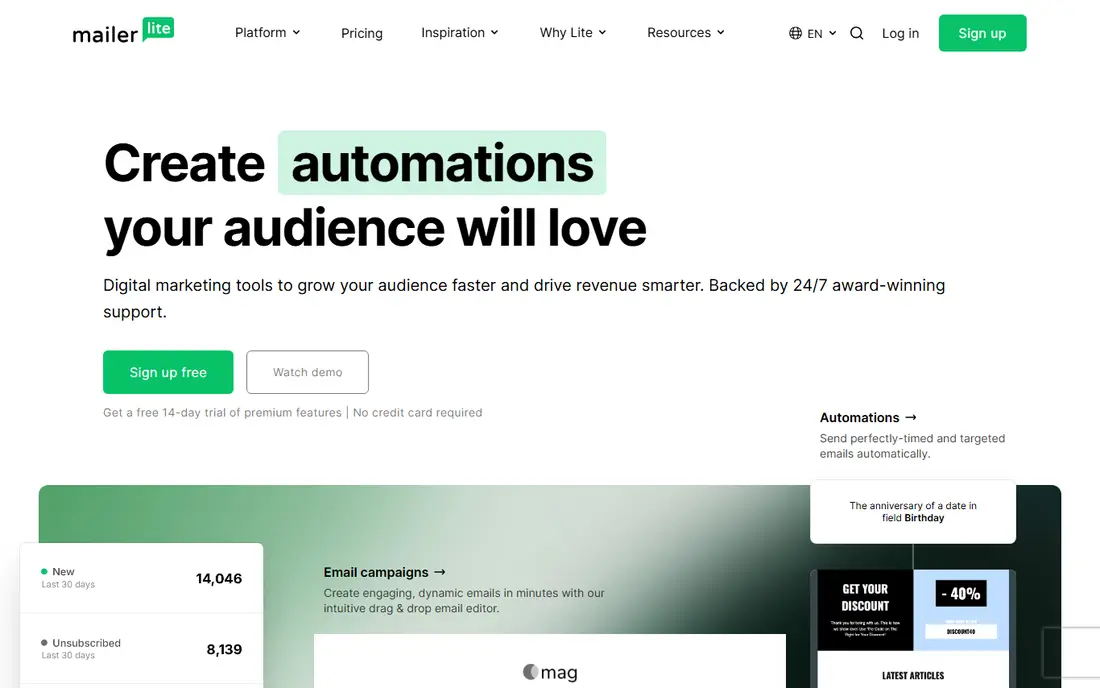
MailerLite is easy to recommend to a small nonprofit team that needs to send a clean monthly update without hiring a marketer. The editor is simple, automation covers welcome messages and basic donor journeys, and the free plan works for a list just getting started. Paid plans start at around $12 per month, with a 30 percent discount for eligible nonprofits.
The trade is depth. MailerLite does not match HubSpot for CRM reporting or Constant Contact for event management. If your main need is a reliable newsletter, simple segments, and a price a board will approve, MailerLite is the calmest choice here.
- Free plan for small lists
- 30 percent nonprofit discount
- Simple editor and automation
- Fewer deep CRM features
- Some templates need a paid plan
- Support is mainly online
Mailchimp remains the most familiar name in this list, and its automation tools are genuinely strong for donor journeys, from first gift to monthly giving. Paid plans start at around $13 per month, and the template library covers appeals, event invites, and impact updates. Volunteers who have used Mailchimp before will need little training.
The free plan is the problem for new nonprofits. Recent reports put it at a small contact limit with limited sends, so a growing list can outgrow it quickly. Mailchimp also counts contacts in ways that can surprise teams, so archive unsubscribed contacts and check the tier for your list size before you commit.
- Largest template library
- Strong multi step automation
- Familiar to many volunteers
- Free plan is now very small
- Contact based pricing can rise fast
- Nonprofit discount is limited
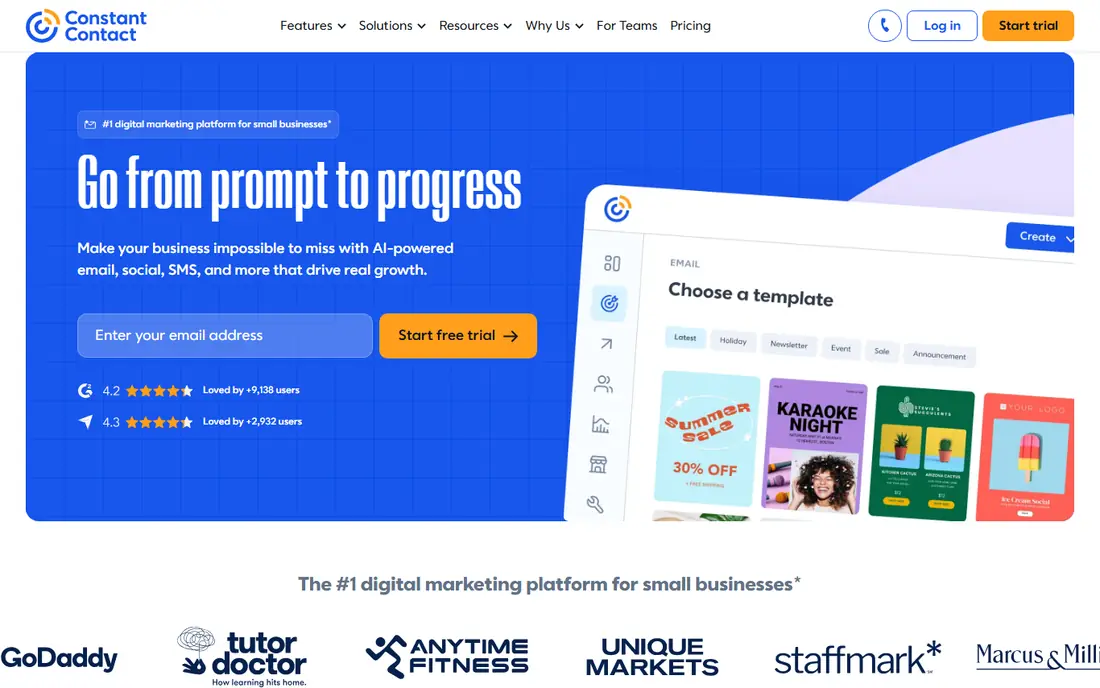
Constant Contact is built for organizations that run galas, auctions, and community events alongside email. You get event registration, ticket tools, and social posting in the same account, plus hundreds of templates including nonprofit designs. Pricing starts at around $12 per month in vendor comparisons, with up to 30 percent off for nonprofits when billed annually.
There is no free plan, only a trial, and the cost climbs as your list grows. For a team that sends event invites every month and wants a human on the phone when something goes wrong, that cost can be worth it. For a team that only sends a monthly newsletter, MailerLite will be cheaper.
- Strong event tools
- Many nonprofit templates
- Phone support
- No permanent free plan
- Higher cost at larger list sizes
- Nonprofit discount needs annual billing
Brevo, formerly Sendinblue, fits nonprofits with a large list but a modest sending schedule. Because it prices by email volume rather than by contact count, you are not penalized for keeping old supporters on file. The free plan allows 300 emails a day with unlimited contacts, and paid plans start at around $8.08 per month.
SMS is a real plus for volunteer reminders and event day updates, though SMS credits cost extra. The nonprofit discount is less generous than MailerLite or Constant Contact, and the templates are functional rather than beautiful. If your list is large and your sends are few, Brevo can save real money.
- Prices by email volume
- Free plan with 300 emails a day
- SMS in the same account
- Nonprofit discount is limited
- Template design is plainer
- Learning curve for automation
HubSpot makes sense when donor records matter as much as the email itself. The free CRM lets you track donors, volunteers, and partners in one place, and the free marketing tools cover forms, basic email, and lists. Paid plans start low in some comparisons, with a 40 percent nonprofit discount on Professional and Enterprise tiers.
The catch is the climb. As you add marketing contacts and automation, HubSpot pricing rises faster than MailerLite or Brevo. Setup also takes longer, because you are building a CRM, not just a newsletter tool. For a growing nonprofit that wants one record per supporter, HubSpot is worth the effort.
- Free CRM for donor records
- Strong segmentation
- Scales to a full marketing suite
- Paid marketing plans get expensive
- Templates are basic on low tiers
- Setup takes time
Kit, formerly ConvertKit, suits nonprofits led by a founder, author, or program director whose personal updates drive giving. Emails look like a letter from a person, landing pages are quick to build, and automation covers welcome sequences and simple segments. A free plan covers small lists, with paid plans scaling by subscriber count.
Formal gala invitations and heavily designed appeals are not Kit strong point. If your fundraising voice is personal and story led, Kit will feel natural. If you need polished, image heavy campaign design, Mailchimp or Constant Contact will fit better.
- Simple, text focused emails
- Strong landing pages
- Good for personal updates from leaders
- Fewer design templates
- Less suited to formal appeals
- Pricing rises with subscribers
GetResponse stands out for nonprofits that teach, run webinars, or recruit supporters through courses and events. Webinars, landing pages, and automation live in one account, and the nonprofit discount is generous at 50 percent off paid plans in vendor comparisons. Paid plans start at around $15.58 per month.
The interface packs in a lot, so a small team may need a week to feel comfortable. The starting price is also higher than MailerLite or Brevo. If webinars are a core part of how you find and keep supporters, GetResponse earns its place. If you only send newsletters, it is more tool than you need.
- Webinars built in
- Strong acquisition tools
- 50 percent nonprofit discount on paid plans
- Interface has many menus
- Higher starting price
- Free plan is limited
Moosend is a budget pick that still offers real automation, not just a send button. Paid plans start at around $9 per month, with a 25 percent nonprofit discount in vendor comparisons, and the editor is straightforward for a small team. Automation covers welcome series, abandoned donation follow ups, and simple segments.
The template library is smaller than Mailchimp, and integrations are fewer than HubSpot. For a nonprofit that wants low cost automation and does not need a huge template catalog, Moosend is a practical, honest choice. Check the trial first to make sure the templates fit your brand.
- Low starting price
- Easy automation
- 25 percent nonprofit discount
- Smaller template library
- Fewer integrations
- Support is mainly online
How we picked these
We compared vendor pricing pages, nonprofit discount pages, free plan limits, and third party nonprofit guides updated in 2026. We favored platforms with a clear nonprofit discount or a generous free plan, plus automation for donor journeys and segmentation for donors, volunteers, and event guests. We left out tools that only handle fundraising pages or donor CRM without email, because the brief here is an email platform a nonprofit team can actually send from each week.
What to check before you choose
Ask for the discount in writing
Discounts vary from 15 percent to 50 percent, and some need proof of 501(c)(3) status or annual prepayment. Email the vendor, confirm the rate for your plan, and save the reply. A discount that only applies to a higher tier may cost more than a cheaper platform with no discount.
Price for your list in a year, not today
Contact based pricing punishes growth, while volume based pricing from Brevo rewards a large but quiet list. Model your list size in 12 months, including volunteers and event guests, and compare that total. A free plan that fits today can become a surprise bill after a successful campaign.
Test the editor with a real appeal
Build one real appeal, not a test template, and send it to your own inbox and phone. Check images, buttons, and plain text fallback. The editor your team will use at 9 pm before a deadline matters more than a feature list.
Keep donor data clean from day one
Use separate lists or tags for donors, volunteers, and event guests, and archive unsubscribed contacts where the platform counts them. Clean data keeps costs down and makes segmentation, which is the main reason to pay for a platform, actually useful.
FAQ
What is the best email marketing service for nonprofits?
MailerLite is our pick for most small nonprofits, thanks to its free plan, simple editor, and 30 percent nonprofit discount. Constant Contact is better for events, HubSpot is better for CRM connected fundraising, and Brevo is better for large lists with modest sending.
Is there a free email platform for nonprofits?
Yes. MailerLite, Mailchimp, Brevo, HubSpot, and Kit all offer free plans or free tiers, though limits differ. MailerLite and Brevo are the most useful free starts for small lists, while Mailchimp free plan is now small and best for testing rather than long term sending.
Does Mailchimp offer a nonprofit discount?
Mailchimp has offered a 15 percent discount in the past, but recent nonprofit guides report that new nonprofits may only get a one time offer rather than a recurring discount. Confirm the current terms with Mailchimp before you build a budget around it, and compare MailerLite and Constant Contact discounts.
What is a Mailchimp alternative for nonprofits?
MailerLite is the closest low cost alternative, with a similar editor and a stronger recurring nonprofit discount. Brevo is a good alternative for volume pricing, Constant Contact is a good alternative for events, and HubSpot is a good alternative when you need a donor CRM.
How much should a nonprofit pay for email marketing?
Many small nonprofits can start free and move to $9 to $15 per month as their list grows. Larger lists, SMS, and advanced automation push costs higher. Model your list size in a year, apply the nonprofit discount, and compare the total, not just the entry price.
Should a nonprofit use a CRM with email?
Yes, if donor history matters to your fundraising. HubSpot free CRM, or a separate donor CRM connected to MailerLite or Mailchimp, lets you segment by gift history and avoid sending the same appeal to new donors and long term supporters. For a newsletter only team, a CRM can wait.
Sources
- https://www.mailerlite.com
- https://www.mailchimp.com
- https://www.constantcontact.com
- https://www.brevo.com
- https://www.hubspot.com
- https://www.kit.com
- https://www.getresponse.com
- https://www.moosend.com
- https://technologyadvice.com/marketing/best-email-marketing-software-for-nonprofits/
- https://www.constantcontact.com/blog/email-marketing-platform-nonprofits/