Best Email Marketing Platforms in 2026: 9 Platforms Compared
Compare the best email marketing platforms for small business and ecommerce, with pricing by contacts, free plans, automation, and honest trade-offs today.
- Editor's choice
 Mailchimp
All-round email for small businesses
Starts atFreeVisit mailchimp.comFull review - Great alternative
 Constant Contact
Local businesses, nonprofits, and events
Starts at$12 per monthVisit constantcontact.comFull review - Also consider
 Brevo
Value for businesses that email less often
Starts at$9 per monthVisit brevo.comFull review
TL;DR:
- Mailchimp is the safest all-round pick, with broad integrations and a familiar editor, but prices rise fast as lists grow.
- Brevo wins on value for many small businesses, since pricing is based on sends rather than contacts.
- Klaviyo leads for ecommerce, with deep Shopify and WooCommerce data driving product-based automation.
- MailerLite and Kit suit small teams and creators who want simplicity and generous free plans.
- ActiveCampaign suits teams that need deep automation, while Constant Contact suits local businesses that want support.
Quick comparison
| Tool | Best for | Starts at | Free plan? | |
|---|---|---|---|---|
| Mailchimp | All-round email for small businesses | Free | Yes | Visit |
| Constant Contact | Local businesses, nonprofits, and events | $12 per month | Free trial | Visit |
| Brevo | Value for businesses that email less often | $9 per month | Yes | Visit |
 Klaviyo | Ecommerce stores on Shopify and WooCommerce | Free | Yes | Visit |
 Kit | Creators, authors, and newsletters | Free | Yes | Visit |
 ActiveCampaign | Deep automation and CRM for growing teams | $15 per month | Free trial | Visit |
 MailerLite | Simple, low-cost email for small teams | Free | Yes | Visit |
 GetResponse | Funnels, webinars, and all-in-one marketing | See website | Yes | Visit |
 Campaign Monitor | Agencies and brands that prize design | See website | Free trial | Visit |
The best email marketing platforms
We compared pricing models, free plans, automation, templates, and integrations across platforms available in October 2026. The best email marketing software depends on list size, billing model, and whether you sell online, run a local business, or publish a newsletter.
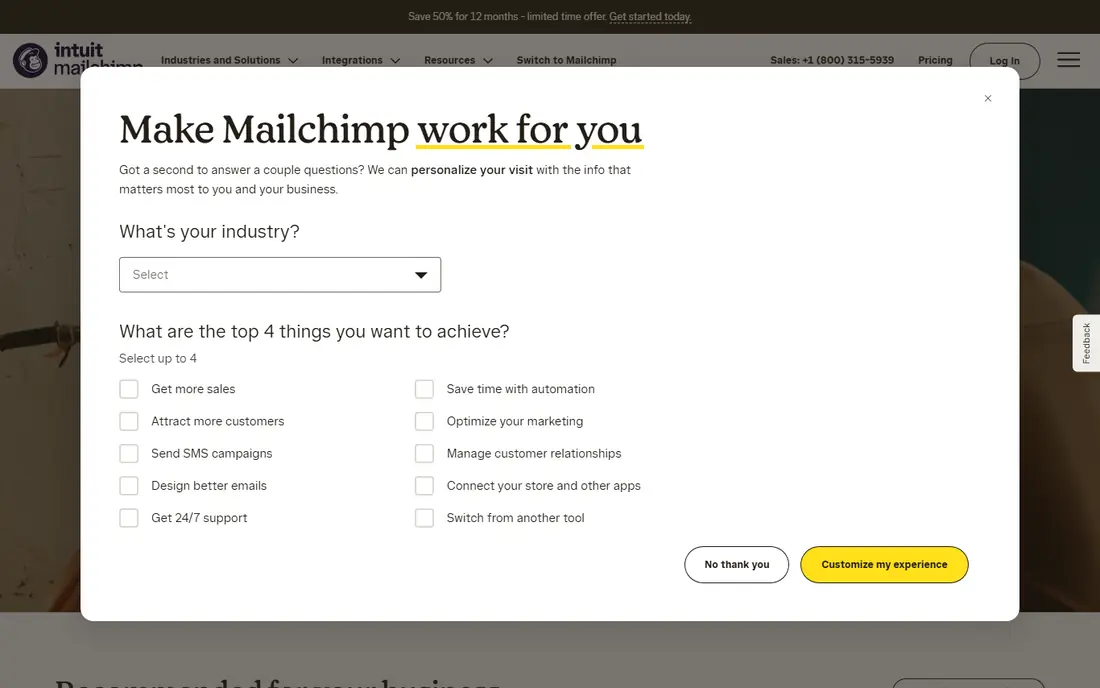
Mailchimp remains the most familiar name in email marketing, and that familiarity helps. Templates look modern, the drag-and-drop editor is easy to learn, and integrations cover Shopify, WooCommerce, WordPress, and hundreds of other tools. For a small business that needs email, landing pages, and basic automation in one place, Mailchimp covers the job well.
The price is the catch. Mailchimp charges by contacts, with send limits tied to plan size, so costs climb as a list grows, even if you email rarely. The free plan also limits contacts, so it suits starting lists rather than large ones. Mailchimp is a good best email marketing platform for general use, but check the price at your actual list size before committing.
- Huge integration library
- Strong templates and editor
- Familiar analytics
- Price rises sharply with contacts
- Free plan limits contacts and features
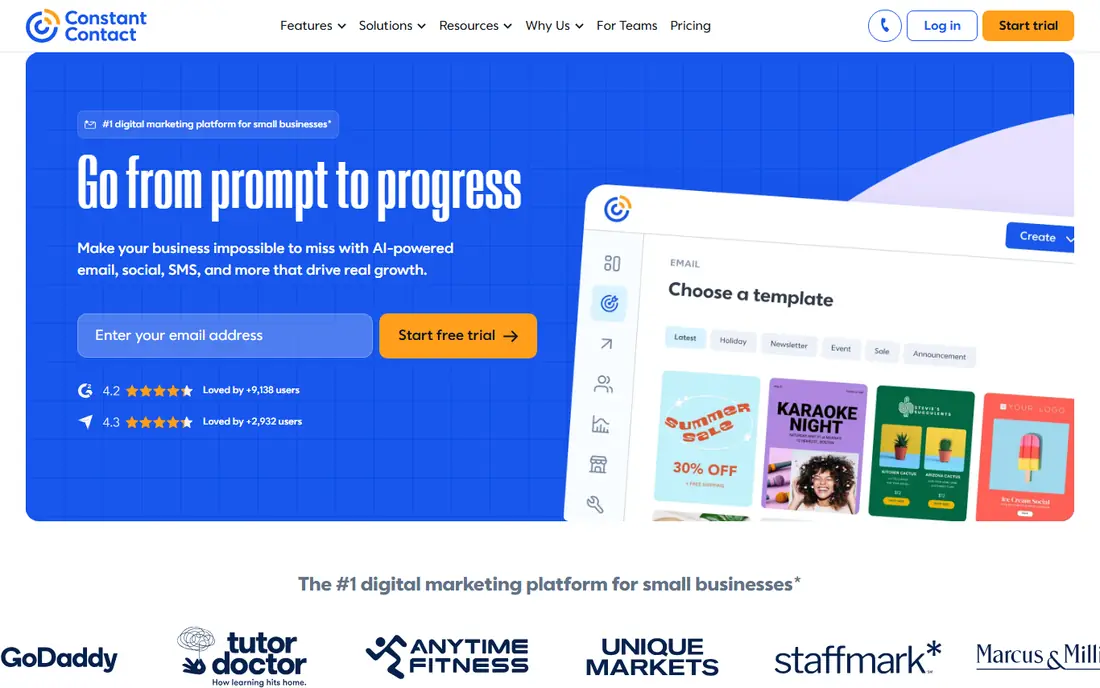
Constant Contact suits local businesses, nonprofits, and event organizers who want email plus simple social and event tools. Templates are clean, setup is guided, and support is a real strength, with help available by phone and chat in many plans. Event registration and surveys also fit organizations that run programs, not just sales.
Automation is simpler than in ActiveCampaign or Klaviyo, and there is no permanent free plan, only a trial. Pricing rises with contacts, so larger lists cost more. For a team that values support and simplicity over deep automation, Constant Contact is a dependable best email marketing service for small business use.
- Easy templates and event tools
- Strong customer support
- Social posting included
- No permanent free plan
- Automation is simpler than ActiveCampaign
- Price rises with contacts
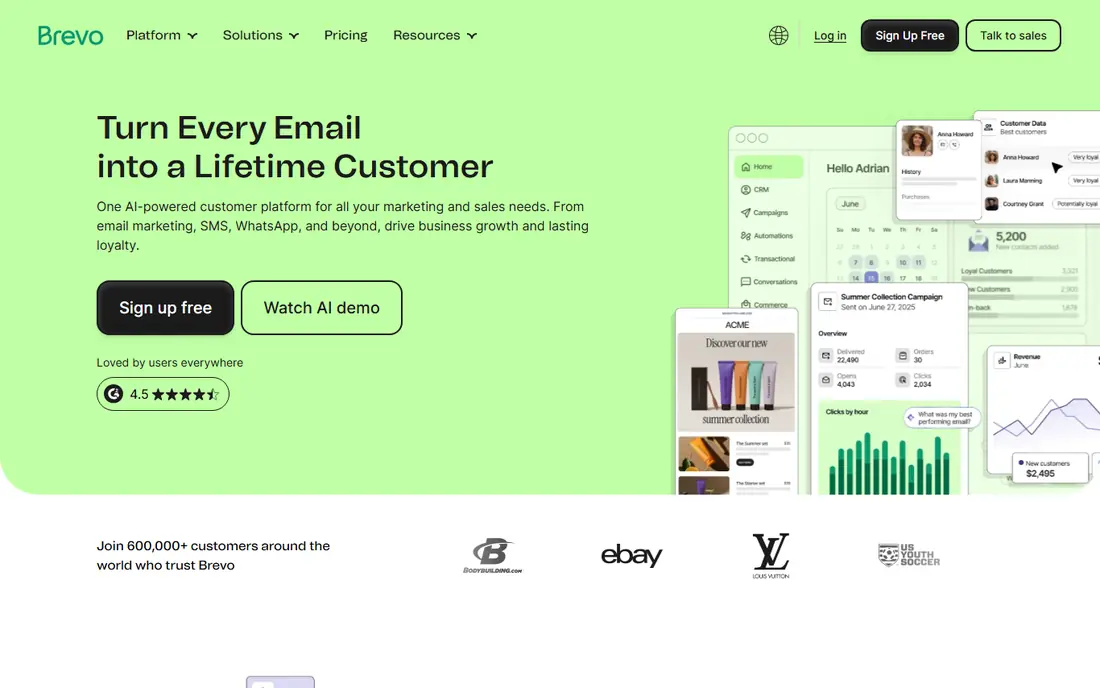
Brevo, formerly Sendinblue, wins on pricing logic for many small businesses. Instead of charging by contacts, Brevo charges by emails sent, so a large list that you email monthly can cost far less than on contact-based platforms. The free plan allows 300 emails per day with unlimited contacts, which suits starting businesses well.
Templates and design polish trail Mailchimp, and automation takes a little learning. Free sends also carry Brevo branding unless you upgrade. For a best email marketing platform for ecommerce on a budget, or for a business with a large but quiet list, Brevo offers strong value that is worth testing.
- Pricing by sends, not contacts
- Free plan allows many contacts
- SMS and WhatsApp options
- Templates are less polished than Mailchimp
- Automation learning curve
- Logo on free sends
Klaviyo is the default for serious ecommerce email, and it earns that role through data. Purchase history, browsing, and product views flow from Shopify or WooCommerce into segments and flows, so abandoned cart, welcome, and post-purchase emails can target real behavior. Revenue attribution also shows what each flow earns, which helps stores justify the cost.
The price rises with active profiles, so a growing store will pay more even before sending more emails. Setup also takes time, since the best results need clean store data and tested flows. For the best email marketing platform for ecommerce, Klaviyo leads when store revenue, not just opens, is the goal.
- Deep store data for segmentation
- Strong flows for abandonment and post-purchase
- Revenue attribution
- Price rises fast with active profiles
- Learning curve
- Free plan is small
Kit, formerly ConvertKit, is built for creators who publish newsletters, sell courses, or grow an audience. Forms, landing pages, and visual sequences are simple to set up, and the free plan covers up to 10,000 subscribers in many cases, which is generous compared with rivals. That makes Kit a low-risk start for a new newsletter.
Design templates are simpler than Mailchimp, and ecommerce automation is thinner than Klaviyo. Paid plans also start higher than some rivals, though the free cap softens that. For creators who care more about writing and sequences than fancy templates, Kit is one of the best email marketing services for small business creators.
- Generous free subscriber cap
- Simple forms and sequences
- Creator-focused tools
- Templates are simpler than Mailchimp
- Ecommerce features are thinner
- Paid plans start higher
ActiveCampaign suits teams that need automation beyond basic welcome emails. The builder supports branching, scoring, site tracking, and CRM records, so sales and marketing can share one view of a contact. That depth helps B2B teams, agencies, and growing businesses with longer sales cycles.
The trade-off is complexity and cost. There is no permanent free plan, only a trial, and the full feature set takes time to learn. Pricing also rises with contacts and add-ons. For a best email marketing tool where automation depth matters more than simplicity, ActiveCampaign is the strongest pick on this list.
- Powerful automation builder
- CRM and scoring included
- Many integrations
- No free plan, only a trial
- Learning curve
- Price rises with contacts and features
MailerLite is the simplicity pick. The interface is clean, templates are tidy, and pricing stays low for small lists, with a free plan for starting senders. Landing pages, forms, and basic automation cover most small business needs without the clutter of a larger platform. Support is also helpful for new users.
Automation depth trails ActiveCampaign and Klaviyo, and new accounts go through an approval review that can delay the first campaign. Integrations are fewer than Mailchimp, though major tools are covered. For a best email marketing service for small business owners who want low cost and low fuss, MailerLite is hard to beat.
- Clean interface
- Low paid prices
- Landing pages and forms included
- Automation is basic compared with ActiveCampaign
- Approval process can delay first sends
- Fewer integrations
GetResponse goes beyond email, adding funnels, webinars, landing pages, and ecommerce tools in one account. That breadth suits businesses that run webinars, sell courses, or build lead funnels without stitching several tools together. Automation is solid, and templates cover email, pages, and webinar registration.
The platform can feel crowded, since so many tools share one dashboard, and pricing depends on which features you choose. Free plans also carry limits on contacts and features. For a best email campaign platform that also hosts webinars and funnels, GetResponse offers a useful all-in-one option.
- Funnels, webinars, and landing pages in one platform
- Good automation
- Ecommerce tools
- Interface can feel crowded
- Pricing varies by feature set
- Free plan has limits
Campaign Monitor is known for design, with templates and editing controls that help brands keep email looking sharp. Agencies like the client management tools, shared templates, and reporting, while brands like the clean analytics and segmentation. For design-led email, it remains a respected choice.
Pricing can be high for small lists, and there is no permanent free plan, only a trial. Automation is capable but less deep than ActiveCampaign, and ecommerce features trail Klaviyo. Campaign Monitor suits agencies and design-focused brands that will use its templates and client tools often enough to justify the price.
- Beautiful templates
- Strong design controls
- Agency and client tools
- No permanent free plan
- Pricing can be high for small lists
- Automation is less deep than ActiveCampaign
How we picked these
We compared official pricing pages, billing models, free-plan limits, automation depth, and integrations for platforms available in October 2026. We favored platforms with clear pricing, a real free plan or trial, and a distinct use case, from ecommerce to creators to local business. We did not claim hands-on campaign tests, and we treated prices as changing with list size, so readers should price at their actual contact count.
How to choose an email platform
Price your list, not the headline price. A platform that looks cheap at 500 contacts can cost far more at 5,000, and a send-based platform such as Brevo can reverse that math. Use the pricing calculator on each vendor site with your real contact count and monthly send volume.
Check deliverability basics first
Use a custom sending domain, set up authentication records as guided, and start with engaged subscribers before mailing an old list. Warm up slowly if you switch platforms, and clean bounces and unsubscribes promptly. Good deliverability habits matter more than any single platform claim.
Test automation with one real flow
Build one flow that matters, such as a welcome series or an abandoned cart series, and run it for a few weeks before paying for a full migration. Check reporting, ease of editing, and whether the flow triggers correctly. A platform that looks good in a demo can still frustrate in daily editing.
Plan for growth and exit
Check how pricing changes at double your current list size, and confirm you can export contacts, templates, and reports if you leave. Avoid locking key data into a platform with no export. A platform that scales with clear pricing will save a painful migration later.
FAQ
What is the best email marketing platform for small business?
Mailchimp is a safe general pick, Brevo offers strong value by sends, and MailerLite offers simplicity at low cost. For local businesses that want support, Constant Contact is also strong. Price each option at your actual list size, since that changes the ranking.
What is the best email marketing software for ecommerce?
Klaviyo leads for ecommerce, with deep Shopify and WooCommerce integration, product-based flows, and revenue reporting. Mailchimp and Brevo also work for smaller stores, but Klaviyo offers deeper store data. For a small store on a budget, Brevo or MailerLite may be enough to start.
What is the best email marketing platform for ecommerce on a budget?
Brevo is often cheapest for stores that email less often, since it charges by sends rather than contacts. MailerLite is also low cost for small lists. Klaviyo free covers up to 250 contacts, which suits a new store testing its first flows.
Is there a good free email marketing service?
Yes, Mailchimp, Brevo, Klaviyo, Kit, MailerLite, and GetResponse all offer free plans, with different contact and send limits. Kit offers the largest free subscriber cap among these, while Brevo allows many contacts with a daily send limit. Pick based on list size and send frequency, not just the word free.
How much does email marketing cost per month?
Costs range from free for small lists to $13 to $20 per month for starter paid plans, rising with contacts or sends. At 5,000 contacts, many platforms cost $50 to $100 per month or more, depending on billing model. Always price at your list size and check for overage charges.
How do I improve email deliverability?
Use a custom domain with proper authentication, mail engaged subscribers first, avoid purchased lists, and keep subject lines honest. Clean your list regularly, honor unsubscribes promptly, and test emails across devices before sending. These habits help more than switching platforms alone.