Best EHR for Urgent Care Centers (2026): 5 Picks Checked on Vendor Pages
5 best EHR for urgent care centers, with entry costs, free tiers and the buyer each one serves. Strengths and weak spots are spelled out. Pick with confidence.
- Editor's choice
 NextGen Healthcare
Specialty practices using cloud EHR
Starts atSee websiteVisit nextgen.comFull review - Great alternative
 Practice Fusion
Straightforward EHR for small practices
Starts at$199 per month per providerVisit practicefusion.comFull review - Also consider
 Athenahealth
Connected ambulatory care networks
Starts atSee websiteVisit athenahealth.comFull review
Direct answer
If you need specialty practices using cloud EHR, NextGen Healthcare is the first tool to look at here. Listed starting prices: Practice Fusion from $199 per month per provider and AdvancedMD from $130 per provider per month. Practice Fusion is better for straightforward EHR for small practices, and Athenahealth is better for connected ambulatory care networks. Details, prices and limits for the rest of the 5 tools are below.
TL;DR:
- NextGen Healthcare is the opening pick, best for specialty practices using cloud EHR.
- AdvancedMD has the lowest monthly starting price in this list: $130 per provider per month.
- Kareo is the one to check for private practices wanting connected billing.
- NextGen Healthcare, Kareo and the 3 others all need a premium plan or a trial, since no free plan is listed.
Last checked November 2026. Prices and plan details were read from the vendors' own pages in November 2026; vendors change plans often, so confirm the current price on the vendor site before you buy.
Quick comparison
| Tool | Best for | Starts at | Free plan? | |
|---|---|---|---|---|
| NextGen Healthcare | Specialty practices using cloud EHR | See website | Not stated | Visit |
| Practice Fusion | Straightforward EHR for small practices | $199 per month per provider | Free trial | Visit |
| Athenahealth | Connected ambulatory care networks | See website | Not stated | Visit |
 AdvancedMD | Unified cloud practice management | $130 per provider per month | Not stated | Visit |
 Kareo | Private practices wanting connected billing | See website | Not stated | Visit |
The best EHR for urgent care centers
Short on time? The summary and table above give the quick view of 5 EHR for urgent care centers, and the profiles that follow give the detail behind each entry.
NextGen Healthcare is built with specialty practices using cloud EHR in mind. Urgent care groups with distinct service lines can consider it when they want a customizable system instead of a single-purpose tool. Its specialty orientation may help organizations with varied clinical needs.
Limits to weigh: Urgent care is not the stated focus.
For everyday use, setup may involve more configuration than a dedicated urgent care product. For everyday use, since the emphasis is specialty practices, an urgent care center should verify how well the system supports walk-in encounters and rapid documentation. NextGen Healthcare shows no starting price here, so confirm the cost on the vendor site. Free access: Not stated.
- Focus on simplifying workflows
- Specialty-specific services
- Specialty configuration may add complexity
Practice Fusion was built for straightforward EHR for small practices. Practice Fusion supplies an EHR targeted at medical practices, with a product story centered on core charting for clinical teams. Clinics needing an all-in-one urgent care stack should look at dedicated choices first.
Downsides: Fewer end-to-end management features.
Best features of Practice Fusion: Straightforward. From a buyer's view, urgent care centers with heavy walk-in volume may find it lacks the dedicated front-desk and throughput features of urgent care specific systems. It is worth checking how scheduling and billing fit your operation. Price to start with Practice Fusion: $199 per month per provider. Free access: Free trial.
- Focused product story
- Suits smaller clinical teams
- Restricted urgent care specific tooling
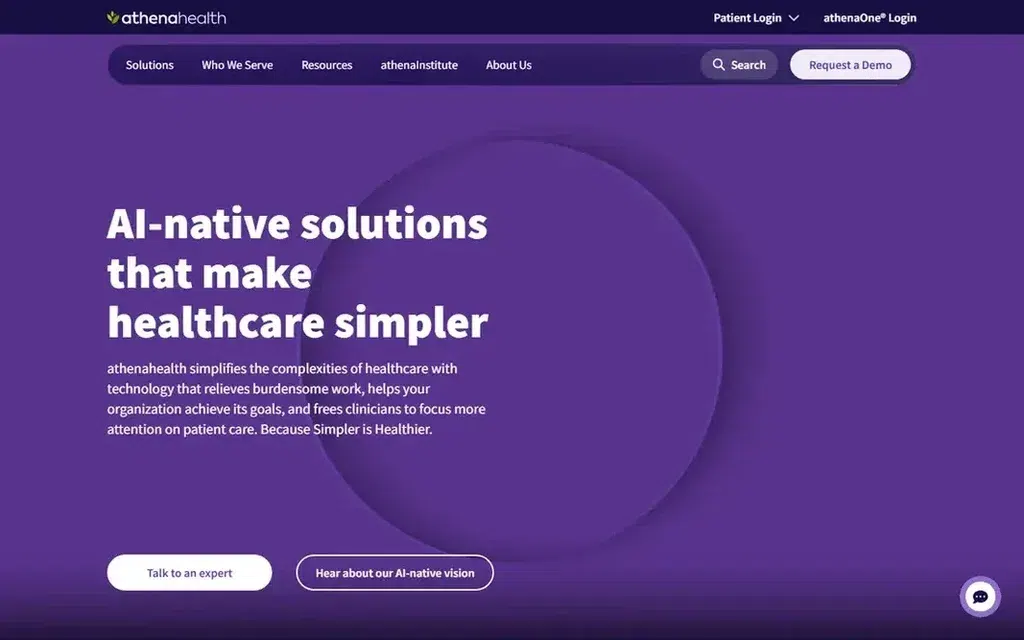
Athenahealth is designed for connected ambulatory care networks. Athenahealth offers healthcare products and services for ambulatory care, positioning itself around connecting clinicians and the broader healthcare ecosystem.
Drawbacks to consider: Not designed specifically for urgent care.
Worth adding: since the focus is ambulatory care broadly, an urgent care center may have to tune templates and workflows for walk-in visits. Check the vendor site for Athenahealth pricing; none is listed in this comparison. As for free access: Not stated.
- Ambulatory EHR and services in one offering
- Fits practices wanting managed workflows
- Setup may require workflow adjustments
AdvancedMD works best for unified cloud practice management. Urgent care centers that want one cloud platform for administrative and clinical work may find it worth evaluating. It can suit expanding practices that prefer consolidation over several vendors.
Limits to weigh: Scalable setup needs planning.
Centers that require on-demand care tooling out of the box may prefer a dedicated product. As for the details, planning the setup around urgent care workflows takes effort. What you pay to start with AdvancedMD: $130 per provider per month. On free options: Not stated.
- Merges practice management and EHR
- Single cloud-based option
- Not urgent care specific
Kareo makes the most sense for private practices wanting connected billing. An urgent care center that operates like a private practice may value having these functions together.
Limits to weigh: May need workflow customization.
The product is framed around private practice needs instead of on-demand care, so high-volume walk-in workflows may need adjustment. From a buyer's view, confirm how the product takes care of urgent care billing and scheduling specifics. Check the vendor site for Kareo pricing; none is listed in this comparison. As for free access: Not stated.
- Scheduling in one system
- Built for private practices
- Not built around urgent care flow
What went into this list
We compared the tools on published pricing, free plan or trial availability, feature coverage for EHR for urgent care centers, and the limits each vendor documents. Where a price is missing, the vendor does not list one publicly or ties it to a quote. Always confirm before budgeting. The order reflects how well each tool fits the most common buying scenario for EHR for urgent care centers, then price clarity, then free plan access. It is a starting point, not a verdict.
What to confirm before you sign up
- Ask NextGen Healthcare, Athenahealth and Kareo for a written quote, since no starting price is shown.
- Use real work to test the free trial from Practice Fusion, rather than a demo project.
- Read the limits listed for NextGen Healthcare first: urgent care is not the stated focus.
- Add up seats, add-ons and usage charges for NextGen Healthcare before comparing it with cheaper entries.
- Ask Athenahealth how an export works before you move any records in; an easy exit lowers the risk.
FAQ
Does any tool for EHR for urgent care centers here have a free plan?
A permanent free plan is not offered by NextGen Healthcare, Kareo or the other tools here. Practice Fusion offer a trial. Plan a short evaluation period instead.
What is the cheapest option for EHR for urgent care centers in this list?
On published monthly entry prices, AdvancedMD is the lowest here at $130 per provider per month. Entry price is only part of the cost, because seats, add-ons and billing terms can change the total. Each of the 5 options in this EHR for Urgent care centers guide has its own card above with the price, free plan and limits.
Is NextGen Healthcare the right pick for everyone comparing EHR for urgent care centers?
No single tool suits every team. NextGen Healthcare comes first because it fits specialty practices using cloud EHR, while Practice Fusion suits straightforward EHR for small practices and Athenahealth suits connected ambulatory care networks. Match the tool to your own size, budget and workflow before deciding.
What makes an EHR a solid fit for urgent care centers?
Urgent care centers need quick registration, fast charting for walk-in visits, and billing that keeps pace with volume. Software built around on-demand care normally suits better than a general ambulatory system, though general systems can work with configuration.
Can I try these tools before paying?
Often, yes. Practice Fusion offers a free trial. Use your own data and a real task during the test, and check what the free tier or trial limits before you rely on it. All 5 picks in this EHR for Urgent care centers comparison list a starting price, free plan details and the main limits on their cards above.
Sources
- https://www.nextgen.com
- https://www.practicefusion.com
- https://www.athenahealth.com
- https://www.advancedmd.com
- https://www.kareo.com