Best Ecommerce Search Platform in 2026: 9 Platforms Compared
We compared the best ecommerce search platform options for relevance, merchandising and speed, with pricing, strengths and honest limits for each tool.
- Editor's choice
 Algolia
Developer-friendly search at scale
Starts atFreeVisit algolia.comFull review - Great alternative
 Searchspring
Merchandising for mid-market stores
Starts atSee websiteVisit searchspring.comFull review - Also consider
 Constructor
AI product discovery for retailers
Starts atSee websiteVisit constructor.comFull review
TL;DR:
- Ecommerce search decides how fast shoppers find products, and good search handles typos, synonyms and vague queries without returning empty results.
- Algolia and Fast Simon publish entry pricing and free tiers, while Searchspring, Constructor, Bloomreach and Coveo are mostly quote-only at larger volumes.
- Merchandising control matters as much as relevance: look for rules, boosting, banners and analytics that your team can use without developer help for every change.
- Small stores should start with a free or low-cost plan and measure search conversion, while large catalogs need AI ranking, personalization and strong support.
Quick comparison
| Tool | Best for | Starts at | Free plan? | |
|---|---|---|---|---|
| Algolia | Developer-friendly search at scale | Free | Yes | Visit |
| Searchspring | Merchandising for mid-market stores | See website | No | Visit |
| Constructor | AI product discovery for retailers | See website | No | Visit |
 Bloomreach Discovery | Commerce search and personalization | See website | No | Visit |
 Klevu | AI search for Shopify and mid-market stores | See website | No | Visit |
 Coveo | Enterprise search and relevance | See website | No | Visit |
 Doofinder | Small and mid-size stores on many platforms | See website | Free trial | Visit |
 Fast Simon | Shopify search and filters | $39.99 per month | Yes | Visit |
 Luigi's Box | Pay-as-you-go AI search | Free | Yes | Visit |
The best ecommerce search platforms
We compared official product pages, pricing pages and public documentation for the tools below, weighing relevance quality, typo and synonym handling, merchandising tools, analytics, platform integrations and price transparency. Every tool here is actively sold in 2026 and built for online stores rather than general website search.
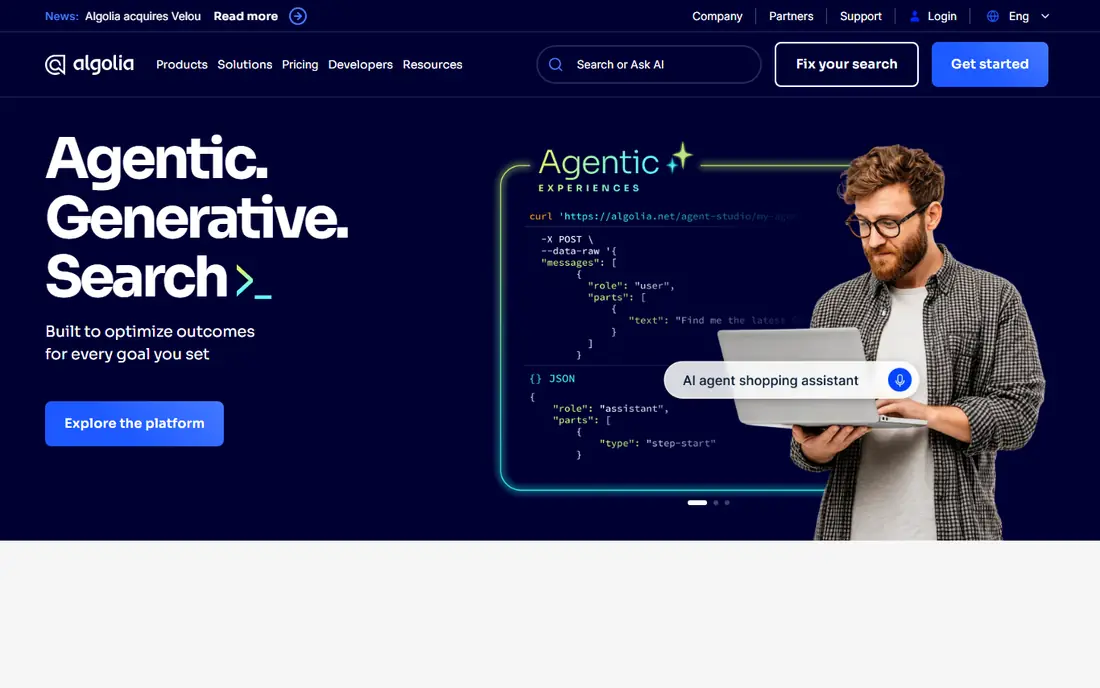
Algolia is the best-known search API for teams that want full control over relevance. It handles typos, synonyms and instant results well, and its documentation and SDKs cover the major platforms, which shortens integration time for developer-led teams. The free Build plan, with 10,000 search requests per month and 1 million records, lets small projects test real search before paying.
The catch is that the best features, including AI search and the merchandising studio, sit in custom-priced Premium and higher plans. Usage-based pricing can also climb quickly at high query volumes, so model your expected searches before you commit. For teams with developers and a large catalog, Algolia remains a strong default.
- Fast results and strong APIs
- Free Build plan with 10,000 searches per month
- Merchandising studio on paid plans
- Needs developer help for full setup
- Advanced AI features sit in higher tiers
- Usage costs rise with volume
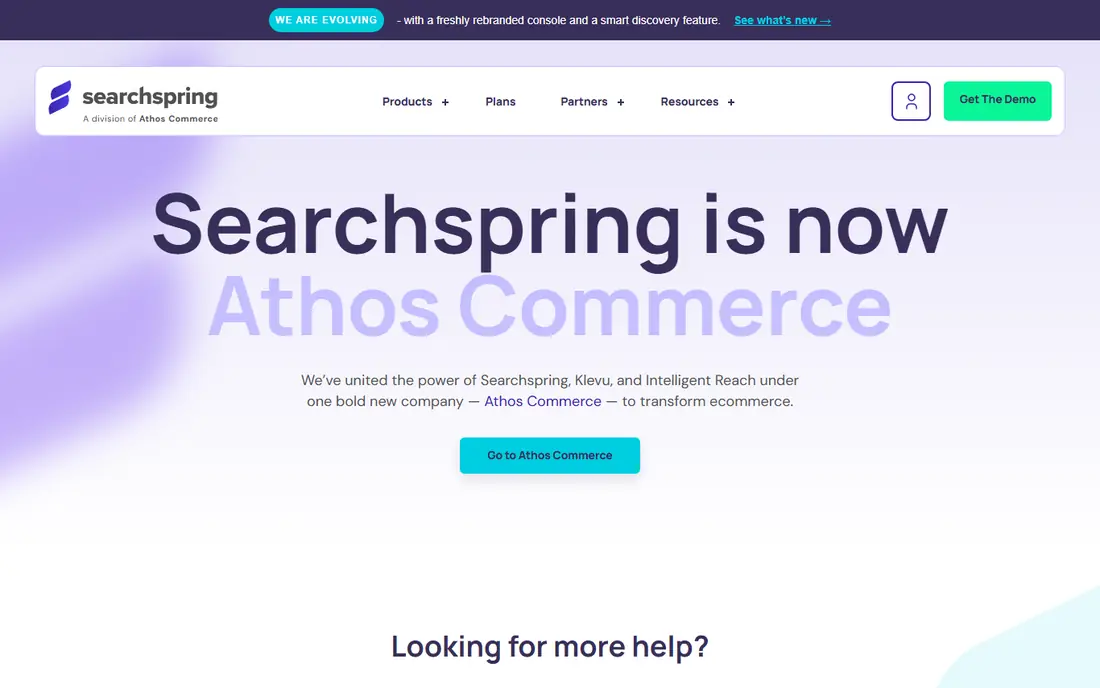
Searchspring is built only for ecommerce, and that focus shows in its merchandising tools. Store teams can boost products, set rules for categories, run campaigns and test result layouts without writing code for every change. Personalization and product recommendations sit alongside search, so one platform can shape much of the shopping journey.
Pricing is not published and is based on visitors, product count and features, so small stores should expect an enterprise-style sales process. For mid-market and larger retailers that want merchandisers, not developers, to run search day to day, Searchspring is one of the most practical picks.
- Merchandiser-friendly controls
- Personalization and recommendations
- Strong analytics for ecommerce teams
- Pricing not published
- Needs a sales conversation
- May be costly for small stores
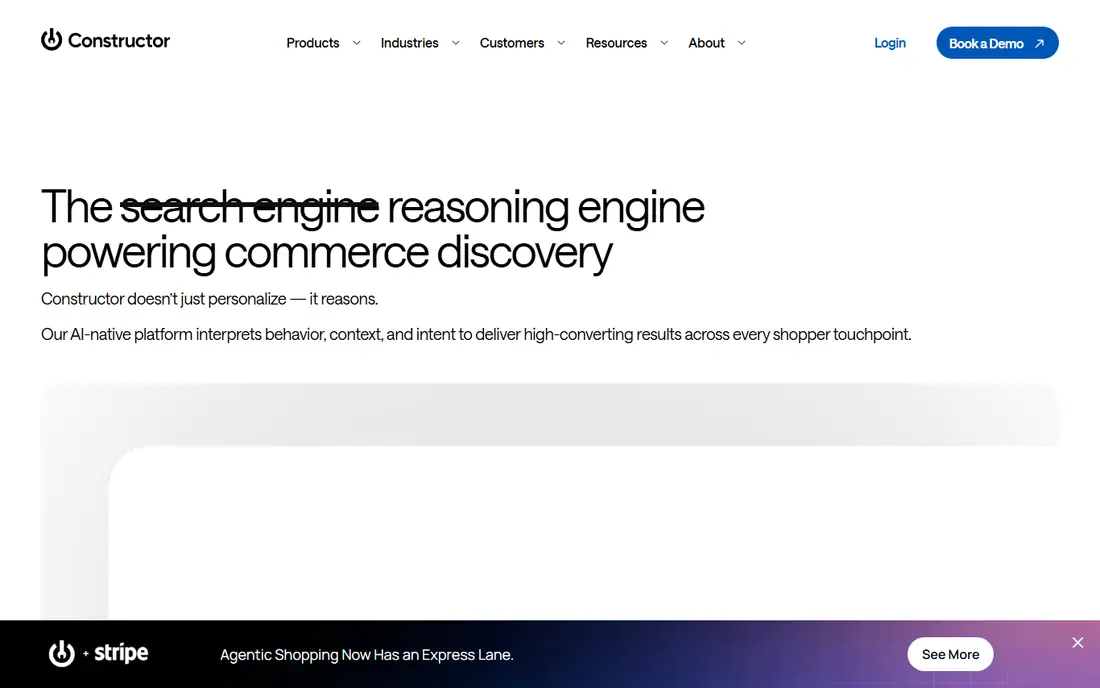
Constructor focuses on product discovery, using shopper behavior to rank results, recommendations and category pages. Retailers that want search to learn from clicks, add-to-cart actions and purchases will find its AI approach appealing, and its tools cover search, browse, recommendations and collections in one system. Support quality is often praised in user reviews, which matters during a complex rollout.
Pricing is by quote and the platform is aimed at mid-market and enterprise retailers, so it is not a casual buy for a small store. It also works best once you have enough behavior data to learn from. For a larger retailer that treats search as a revenue lever, Constructor is worth a serious demo.
- AI ranking tuned to clicks and purchases
- Strong search and recommendations
- Good support reputation
- Quote-only pricing
- Enterprise focus
- Setup needs catalog and behavior data
Bloomreach Discovery is the search and merchandising part of the Bloomreach commerce suite, which also covers content management and marketing. It combines AI search with merchandising rules and personalization, so a retailer can tune results for campaigns, segments and individual shoppers from one place. Large retailers use it to manage huge catalogs across regions and channels.
Pricing is by quote and annual contracts for larger retailers commonly run high, so small stores should look elsewhere. Teams that only need search, without the wider suite, should compare the standalone cost against focused search tools. For a retailer already using Bloomreach content or marketing tools, Discovery is a natural addition.
- Search, merchandising and content in one suite
- Personalization for returning shoppers
- Large retailer customer base
- Quote-only pricing
- Suite pricing can be high
- Commerce focus may exceed simple search needs
Klevu offers AI-powered search, category merchandising and product recommendations, with a strong presence on Shopify and other commerce platforms. It uses natural language processing to interpret shopper intent, which helps when queries are long, vague or written in everyday language. Merchandising tools let teams control boosts, banners and result order without constant developer help.
Pricing is tiered by store size and features and is not published as one simple list, so you will need a quote for a firm number. Small stores may find the entry tiers steep compared with free or low-cost alternatives. For mid-market stores that want AI search with merchandising in one package, Klevu is a solid contender.
- AI search with natural language handling
- Merchandising and recommendations
- Shopify-friendly setup
- Pricing not published as a simple list
- Tiered plans can be costly for small stores
- Setup takes care for large catalogs
Coveo is an enterprise search and relevance platform used for commerce, customer service and workplace search. Its AI models tune results from behavior and content signals, and it offers testing, personalization and analytics for teams that manage search as a product. Security and scale features suit large organizations with complex catalogs and strict governance needs.
Pricing is by quote, and first-year totals for enterprise deployments can be high once licensing and services are added. Small and mid-size stores will likely find simpler tools faster and cheaper. For a large enterprise that needs one relevance platform across commerce and support content, Coveo is a serious option.
- Strong AI relevance across commerce and content
- Personalization and testing
- Enterprise scale and security
- Quote-only pricing
- Enterprise sales process
- More platform than small stores need
Doofinder is a search and discovery app for stores on Shopify, WooCommerce, Magento, PrestaShop and other platforms. It offers fast AI search, dynamic filters, recommendation carousels and merchandising controls, plus voice and image search options that suit mobile shoppers. Multi-language and multi-currency support help international stores.
Pricing is plan-based and varies with features and usage, so check the current plan table rather than relying on old listings. The entry plans suit small stores, while advanced plans add alerts, multi-index and deeper recommendations. For a store that wants a capable search app without an enterprise contract, Doofinder is easy to trial.
- Fast AI search with voice and image options
- Works on many platforms
- Recommendation carousels included
- Pricing varies by plan and volume
- Advanced plans cost more
- Some features need higher tiers
Fast Simon, formerly InstantSearch Plus, is a search and filters app with a strong Shopify presence. Its free plan covers a small number of monthly sessions, and the Starter plan at $39.99 per month adds synonyms, redirects, custom filters and hourly sync. A no-code editor lets merchants adjust layouts and filters without developer help, and support is often praised for quick, practical help.
Session caps mean growing stores need to watch volume and plan for the next tier. Stores off Shopify should check platform support before committing. For a Shopify store that wants published pricing, good filters and a fast setup, Fast Simon is one of the clearest buys.
- Published Starter price
- Free plan for small session volumes
- No-code editor and strong filters
- Free plan caps monthly sessions
- Higher tiers cost more
- Best on Shopify
Luigi's Box offers AI search, product recommendations, boosting, synonyms and analytics on a pay-as-you-go model. The free allowance covers up to 5,000 units per month, with extra units charged in blocks, which suits stores with uneven traffic or seasonal peaks. It works with Shopify, BigCommerce, WooCommerce, Magento, PrestaShop and Shopware, so multi-platform sellers have options.
Pay-as-you-go pricing needs careful modeling, since a traffic spike raises the bill in the same month. The Shopify review base is smaller than some rivals, so test the app on your own catalog before relying on it. For a store that wants AI search without a fixed monthly contract, Luigi's Box is a flexible pick.
- Free allowance up to 5,000 units per month
- AI search with recommendations
- Analytics and A/B testing
- Pay-as-you-go costs need modeling
- Smaller Shopify review base
- Support depth varies by plan
How we picked these
We compared official product pages, pricing pages and public documentation, and we looked for platforms that are actively sold in 2026, built for ecommerce catalogs, and offer relevance tuning, merchandising or analytics beyond basic keyword matching. We included a mix of API-led platforms, merchandiser-led tools and low-cost apps, and we used See website where a vendor does not publish a price. Prices change often, so confirm the current plan on the vendor site before you buy.
How to choose the right search platform
Start by measuring your current search. Check how many searches return no results, how often shoppers refine or leave after searching, and which queries drive the most revenue. Those numbers tell you whether you need better relevance, better merchandising, better filters or simply better synonyms.
Relevance, merchandising and analytics
Test typo handling, synonyms and long queries on your real catalog, not on a demo catalog. Ask who can change boosts, banners and rules, and how fast changes go live. Finally, check analytics: you need query reports, no-result reports and conversion by search, or you will be guessing at every tuning decision.
Cost and integration
Model cost at your current traffic and at double that traffic, since usage pricing can surprise you. Confirm the integration for your platform, the time to index a full catalog, and how product updates sync. A platform that takes days to reflect a price change will frustrate both merchandisers and shoppers.
FAQ
What is the best ecommerce search platform?
Algolia is a strong default for developer-led teams, Searchspring and Constructor suit merchandiser-led and AI-led retailers, and Fast Simon or Doofinder suit smaller stores that want published pricing and fast setup. The best pick depends on catalog size, team skills and budget.
What are the best ecommerce search platforms for Shopify?
Algolia, Klevu, Searchspring, Doofinder, Fast Simon and Luigi's Box all offer Shopify apps or integrations. Fast Simon and Doofinder are often the simplest starts for smaller Shopify stores, while Klevu and Searchspring suit larger stores that need deeper merchandising.
How much does ecommerce search software cost?
Entry costs range from free for Algolia Build, Luigi's Box free allowance and Fast Simon free plan, to $39.99 per month for Fast Simon Starter, with most mid-market and enterprise platforms priced by quote. Always model cost at your real search volume, not just the headline plan price.
What is ecommerce search software?
Ecommerce search software is the system that indexes your product catalog and returns ranked results when shoppers type a query. Good tools handle typos, synonyms and filters, support merchandising rules, and report on queries, clicks and conversions.
Do I need AI search for my store?
AI search helps most when your catalog is large, queries are vague or long, or shoppers use everyday language rather than exact product names. Small stores with a narrow catalog can often do well with strong keyword search, synonyms and filters, and add AI later as volume grows.
Can I try ecommerce search software before paying?
Yes, several tools offer free plans or trials, including Algolia, Fast Simon, Luigi's Box and Doofinder. Use the trial on your real catalog and measure no-result searches and search conversion, since demo catalogs hide real relevance problems.