Best Ecommerce Fulfillment Services in 2026: 9 Services Compared
Compare the best ecommerce fulfillment services in 2026, from ShipBob and ShipMonk to Amazon MCF, Red Stag, Stord and Flexport, with costs and fit in detail.
- Editor's choice
 ShipBob
All-round DTC fulfillment
Starts atSee websiteVisit shipbob.comFull review - Great alternative
 ShipMonk
Subscription and kitting
Starts atSee websiteVisit shipmonk.comFull review - Also consider
 Amazon Multi-Channel Fulfillment
Amazon-first sellers
Starts atSee websiteVisit sellercentral.amazon.comFull review
TL;DR:
- ShipBob is our pick for most direct-to-consumer brands because its network, integrations, and dashboard cover many growth stages.
- ShipMonk suits subscription and multi-channel brands that need kitting and custom packaging.
- Amazon Multi-Channel Fulfillment suits Amazon-first sellers, while Red Stag suits heavy and bulky products.
- Get quotes for the same order profile from at least two providers, since published rates rarely show the full monthly cost.
- Always test receiving, pick accuracy, and returns handling with a small batch before moving full inventory.
Quick comparison
| Tool | Best for | Starts at | Free plan? | |
|---|---|---|---|---|
| ShipBob | All-round DTC fulfillment | See website | No | Visit |
| ShipMonk | Subscription and kitting | See website | No | Visit |
| Amazon Multi-Channel Fulfillment | Amazon-first sellers | See website | No | Visit |
 Red Stag Fulfillment | Heavy and bulky items | See website | No | Visit |
 Stord | Tech-led omnichannel fulfillment | See website | No | Visit |
 Flexport | Freight plus fulfillment | See website | No | Visit |
 eFulfillment Service | Small US startups | See website | No | Visit |
 Rakuten Super Logistics | US retail fulfillment | See website | No | Visit |
 DCL Logistics | Complex kitting and tech | See website | No | Visit |
The best ecommerce fulfillment services
A fulfillment service stores your products, picks and packs orders, ships them, and handles returns. The right provider depends on order volume, product size, sales channels, and where your customers live. The nine services below cover small startups through large omnichannel brands.
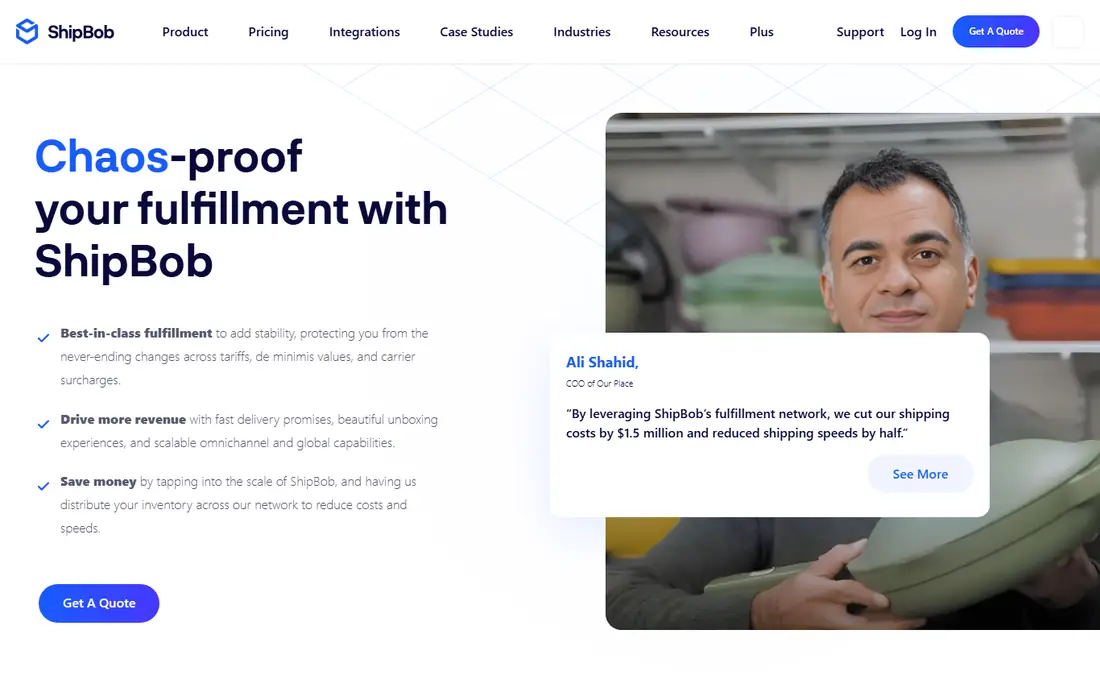
ShipBob is a popular choice for direct-to-consumer brands because it combines warehousing, order fulfillment, and inventory tools in one dashboard. Sellers can split stock across locations, connect Shopify and marketplaces, and track orders, inventory, and shipping performance without separate software. Published storage rates include $5 per bin, $10 per shelf, and $40 per pallet per month, with receiving and other services priced by plan.
The main limit is quote-based fulfillment pricing, which makes direct comparison harder. Minimum spend and order volume terms can also apply, so small sellers should confirm terms before sending stock. For growing DTC brands that want a proven network and strong integrations, ShipBob is a safe first quote.
- Large global network
- Strong Shopify and marketplace integrations
- Clear dashboard and analytics
- Pricing is quote-based for fulfillment
- Minimum spend and volume terms apply on some plans

ShipMonk suits brands with subscription boxes, bundles, and multi-channel sales. Its platform handles kitting, custom packaging, and recurring orders, and it runs fulfillment centers in the US, Canada, the UK, and the Czech Republic. That mix helps brands that sell on Shopify, Amazon, and other channels from shared stock.
Pricing is quote-based, with a monthly minimum tied to order volume and pick fees, and contracts can run for a year with renewal terms. Sellers should read the term, minimum, and fee schedule carefully. For subscription and bundle-heavy brands, ShipMonk offers operational depth that simpler providers may lack.
- Strong subscription and kitting support
- Custom packaging
- Multi-channel integrations
- Quote-based pricing
- Monthly minimum tied to order volume
- Contract terms need review
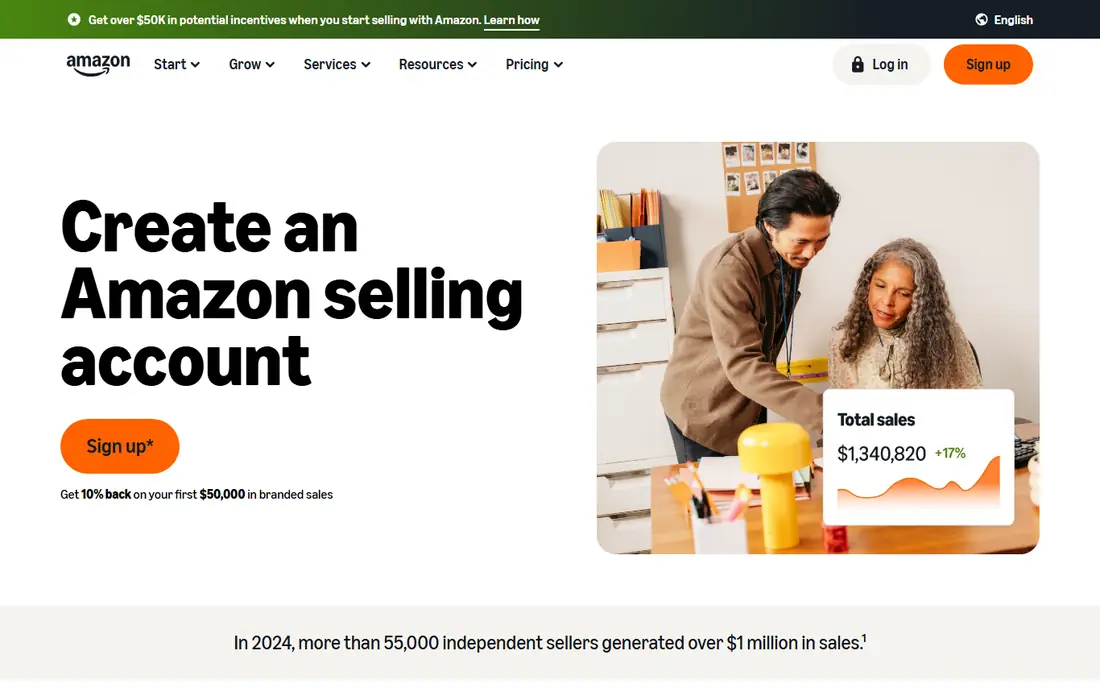
Amazon Multi-Channel Fulfillment, or MCF, lets sellers use Amazon fulfillment centers to ship orders from Shopify, Walmart, and other channels, not just Amazon. That network gives fast delivery reach and a single inventory pool, which simplifies stock management for Amazon-first sellers. MCF fees depend on product size, weight, and delivery speed.
Custom branding is limited compared with a dedicated 3PL, and fee changes can affect margins. Sellers who do not sell on Amazon may also find less value in the network. For brands already built on Amazon, MCF is often the simplest way to offer fast shipping across channels without a second warehouse partner.
- Huge fulfillment network
- Fast delivery options
- Single inventory pool for Amazon and other channels
- Fees vary by size, weight, and channel
- Less custom branding than a 3PL
Red Stag Fulfillment focuses on heavy, bulky, and high-value products that many general 3PLs handle poorly. It offers accuracy guarantees, careful handling, and a US warehouse network suited to large items that need more space and stronger packing. Brands selling furniture, fitness equipment, or large consumer goods often benefit from that specialization.
Small, light products at low volume are not its best fit, and pricing is quote-based. Sellers should share exact dimensions, weights, and packaging needs for an accurate quote. For heavy product brands, Red Stag reduces damage and handling problems that can eat margins on a generalist network.
- Specializes in heavy and oversized products
- Accuracy guarantees
- US warehouse network
- Not ideal for tiny or light items at low volume
- Quote-based pricing
Stord combines warehousing, fulfillment, and supply chain software in one platform, with integrations for Shopify, Amazon, Walmart, and other channels. Brands can manage inventory across nodes, track orders, and see supply chain data in one dashboard, which helps omnichannel teams avoid stockouts and overselling.
Pricing is quote-based and the platform is aimed at growing and mid-market brands, so very small sellers may find simpler providers cheaper. For brands that want technology-led fulfillment with a clear data view across channels, Stord offers a modern alternative to older 3PL models.
- Unified platform for warehousing and fulfillment
- Omnichannel integrations
- Data visibility
- Quote-based pricing
- Best fit is growing and mid-market brands
Flexport acquired Shopify Logistics, including Deliverr, and now offers freight, customs, and fulfillment under one provider. That combination suits importers who want ocean or air freight, customs clearance, and US fulfillment managed together, with a single view of goods in transit and in warehouses.
A reported $5,000 minimum monthly fulfillment spend since early 2026 makes Flexport a poor fit for very small sellers. The platform is also more complex than a simple 3PL. For import-led brands with meaningful volume, Flexport can simplify a supply chain that otherwise needs several vendors.
- Combines freight, customs, and fulfillment
- Deliverr network for US fulfillment
- Global logistics view
- Minimum monthly fulfillment spend reported at $5,000 since early 2026
- Complex for small sellers
eFulfillment Service ships from one warehouse in Traverse City, Michigan, and states no order minimums, no setup fees, and no long-term contracts. That low-barrier model suits small US startups that want to test outsourced fulfillment without a large commitment or a complex contract.
The single location is the trade-off. Delivery times to distant states will be longer than from a multi-node network, and international shipping options are more limited. For a small brand testing fulfillment, or a brand with most customers in the Midwest and East, eFulfillment Service is an accessible starting point.
- No order minimums stated
- No setup fees stated
- No long-term contracts stated
- Single Michigan warehouse
- Fewer locations for fast national delivery
Rakuten Super Logistics, often called RSL, runs a US warehouse network for ecommerce and retail fulfillment, including business-to-business orders. It supports integrations with major platforms and marketplaces, and its order management tools help brands handle both direct orders and retail shipments from shared stock.
Pricing is quote-based, and RSL is less focused on DTC brand features such as custom unboxing than some rivals. For brands that sell to retailers as well as direct customers, that B2B strength matters. For pure DTC brands, compare RSL with ShipBob and ShipMonk on packaging and delivery speed.
- US warehouse network
- Retail and B2B fulfillment support
- Order management tools
- Quote-based pricing
- Less known for DTC brand marketing features
DCL Logistics specializes in complex fulfillment, including kitting, assembly, and subscription builds for tech and consumer brands. It runs locations in the US, Canada, and Europe, which helps brands that need multi-region stock and careful handling of electronics and bundled products. Its experience with product launches and retail compliance adds value for complex operations.
Setup is geared toward larger or more complex operations, so a very small seller with simple single-item orders may not need its depth. Pricing is quote-based. For brands with bundles, kits, or tech products that need careful assembly, DCL offers expertise that a general 3PL may not match.
- Strong kitting and assembly
- Tech and consumer electronics experience
- US and international locations
- Quote-based pricing
- Setup suits larger or more complex operations
How we picked these
We compared official provider pages, pricing pages, location lists, and integration lists for fulfillment services live in the US in 2026. We favored providers with clear warehouse networks, platform integrations, and a range of sizes, from small startups to omnichannel brands. Where fulfillment pricing is quote-based, we used See website and recommend getting quotes for the same order profile from at least two providers.
How to compare fulfillment quotes fairly
Send every provider the same order profile. Include average order weight and dimensions, items per order, monthly order count, peak month count, return rate, and any kitting or custom packaging needs. Without that shared profile, quotes cannot be compared, since a low pick fee can hide high storage, receiving, or shipping costs.
Next, ask for the full fee list. Cover receiving, storage by bin, shelf, and pallet, pick and pack, packaging materials, shipping, returns, account management, and any minimums or contract terms. Ask how fees change, how much notice is given, and what happens if volume falls below a minimum. Those terms decide the real monthly cost more than any headline rate.
Finally, run a small live test. Send a limited batch, place test orders to different regions, and check pick accuracy, packing quality, tracking updates, and returns handling. Talk to the support team during the test, since response speed during a problem matters as much as speed during a smooth week.
FAQ
How much does ecommerce fulfillment cost?
Costs vary by provider, order size, weight, storage, and volume, and most providers price by quote. Get quotes for the same order profile from at least two providers, and add receiving, storage, pick and pack, shipping, and returns to get a full monthly total.
Should a small brand outsource fulfillment?
Outsourcing helps when packing orders takes time from product, marketing, or customer service, or when shipping speed suffers from a home setup. A low-barrier provider such as eFulfillment Service can be a good test before committing to a larger network.
What is the difference between a 3PL and Amazon FBA?
A third-party logistics provider, or 3PL, fulfills orders from your own channels and marketplaces, while Amazon FBA primarily fulfills Amazon orders, with MCF covering other channels. A 3PL often offers more custom branding, while Amazon offers a very large delivery network.
How do I choose warehouse locations?
Place stock near your customers to cut shipping cost and delivery time. Check where your orders ship today, then choose a provider with nodes near those regions, rather than picking the provider with the most warehouses overall.
Can a fulfillment service handle returns?
Yes, most providers handle returns, including inspection, restocking, and disposal or refurbishment where offered. Confirm return fees, inspection standards, and how quickly returned stock becomes available for resale.
How long does it take to switch fulfillment providers?
A small switch can take a few weeks, while a large catalog move can take a month or more. Allow time for receiving, system setup, test orders, and a parallel run, and avoid switching during a peak sales period if possible.