Best Ecommerce Fraud Prevention Software in 2026: 9 Tools Compared
Compare the best ecommerce fraud prevention software for 2026, from Signifyd and Riskified to Stripe Radar, and cut chargebacks without blocking good orders.
- Editor's choice
 Signifyd
Guaranteed fraud protection
Starts atSee websiteVisit signifyd.comFull review - Great alternative
 Riskified
Enterprise approval and guarantee
Starts atSee websiteVisit riskified.comFull review - Also consider
 Forter
Identity based real-time decisions
Starts atSee websiteVisit forter.comFull review
TL;DR:
- Signifyd, Riskified, Forter, and ClearSale offer chargeback guarantees on eligible orders, which shifts fraud liability but costs a share of approved order value.
- Stripe Radar is the simplest start for Stripe stores, while SEON suits teams that want to own their fraud rules and data checks.
- Sift covers payment, account, and content abuse beyond checkout, which suits marketplaces and digital platforms.
- NoFraud, now Wyllo, and ClearSale suit smaller and mid-size stores that want managed review without an enterprise contract.
- The best ecommerce fraud prevention tools balance approval rate, false declines, and manual review time, not just blocked fraud.
Quick comparison
| Tool | Best for | Starts at | Free plan? | |
|---|---|---|---|---|
| Signifyd | Guaranteed fraud protection | See website | No | Visit |
| Riskified | Enterprise approval and guarantee | See website | No | Visit |
| Forter | Identity based real-time decisions | See website | No | Visit |
 Sift | Full journey fraud and abuse | See website | No | Visit |
 SEON | Rule owning fraud teams | $699 per month | Free trial | Visit |
 ClearSale | Guaranteed protection with human review | $250 per month | No | Visit |
 NoFraud | Small and mid-size managed review | See website | Yes | Visit |
 Stripe Radar | Stripe stores wanting simple screening | $10 per month | Yes | Visit |
 Kount | Identity and data rich screening | See website | No | Visit |
The best ecommerce fraud prevention software
Ecommerce fraud prevention software screens orders, accounts, and payments for stolen cards, account takeover, promo abuse, and other abuse, then approves, declines, or sends an order to manual review. The tools below differ in guarantee, pricing model, and how much control a merchant keeps.
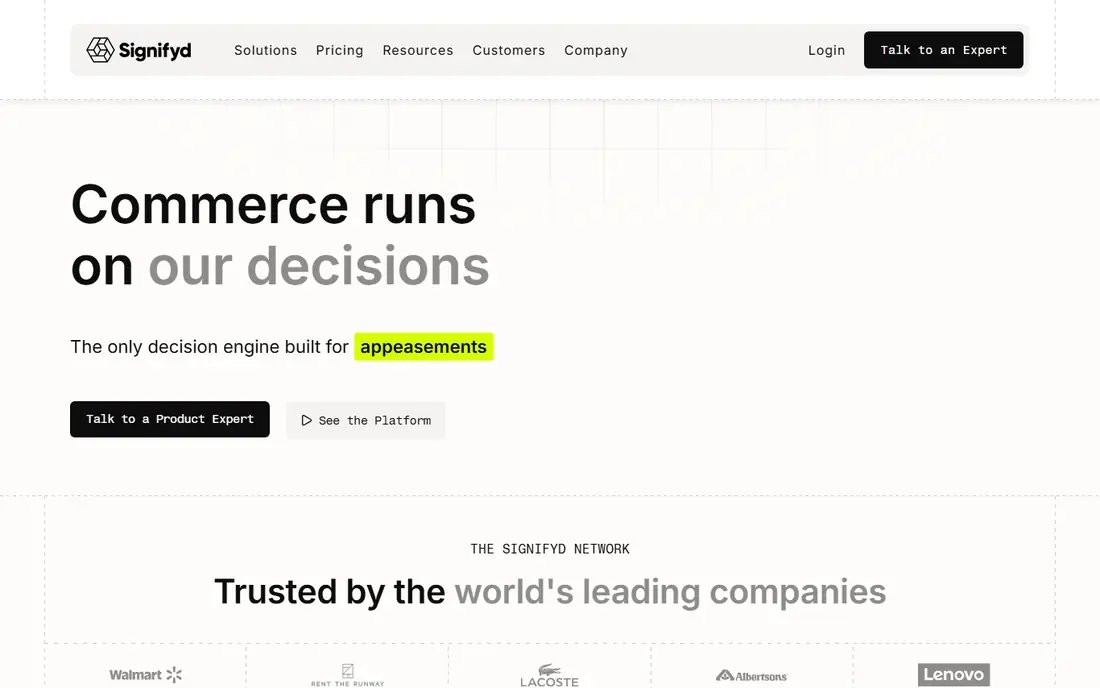
Signifyd is a well known choice for mid-market and enterprise retailers that want automated fraud decisions plus a financial guarantee. Approved orders that later prove to be fraudulent chargebacks can be covered under the guarantee, which gives finance a clearer cost model than a tool that only scores risk. Integrations with Shopify, Adobe Commerce, BigCommerce, and Salesforce Commerce Cloud help merchants get live without a long custom build.
The catch is cost and contract detail. Signifyd pricing is custom, often tied to approved order value, and guarantee coverage has terms, exclusions, and data requirements. A merchant should model net margin after the fee, approval rate, and false declines, and should test the guarantee on its own product mix, especially for high risk categories or international orders.
- 100 percent guarantee on covered fraudulent chargebacks in its guarantee model
- Automated decisions for most orders
- Broad platform integrations
- Pricing is custom, based on order value and risk
- Guarantee terms and exclusions need careful reading
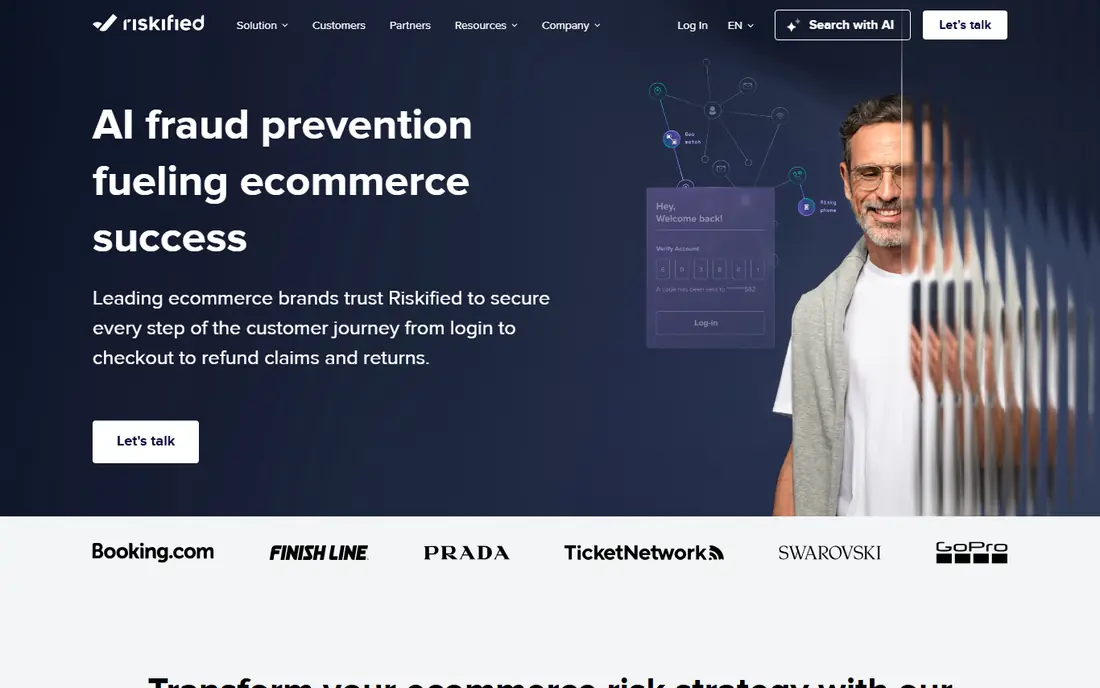
Riskified serves large global merchants that sell across many countries and payment methods and want both fraud protection and higher approval rates. Its guarantee model covers eligible fraudulent chargebacks, and its policy abuse tools address returns, refunds, promo abuse, and reseller abuse beyond stolen card fraud. For a high volume retailer, approval rate gains can matter as much as fraud blocked, because a wrongly declined good customer is lost revenue.
The downside is enterprise scale. Riskified pricing is custom, and the platform suits merchants with enough volume to justify a performance based contract. Smaller stores should compare Signifyd, ClearSale, or NoFraud first. For a large merchant, Riskified deserves a pilot measured on net approved margin, not on blocked orders alone.
- Chargeback guarantee on eligible orders
- Focus on approval rates and policy abuse
- Strong for global, high volume merchants
- Enterprise pricing is custom
- Smaller stores may find it oversized
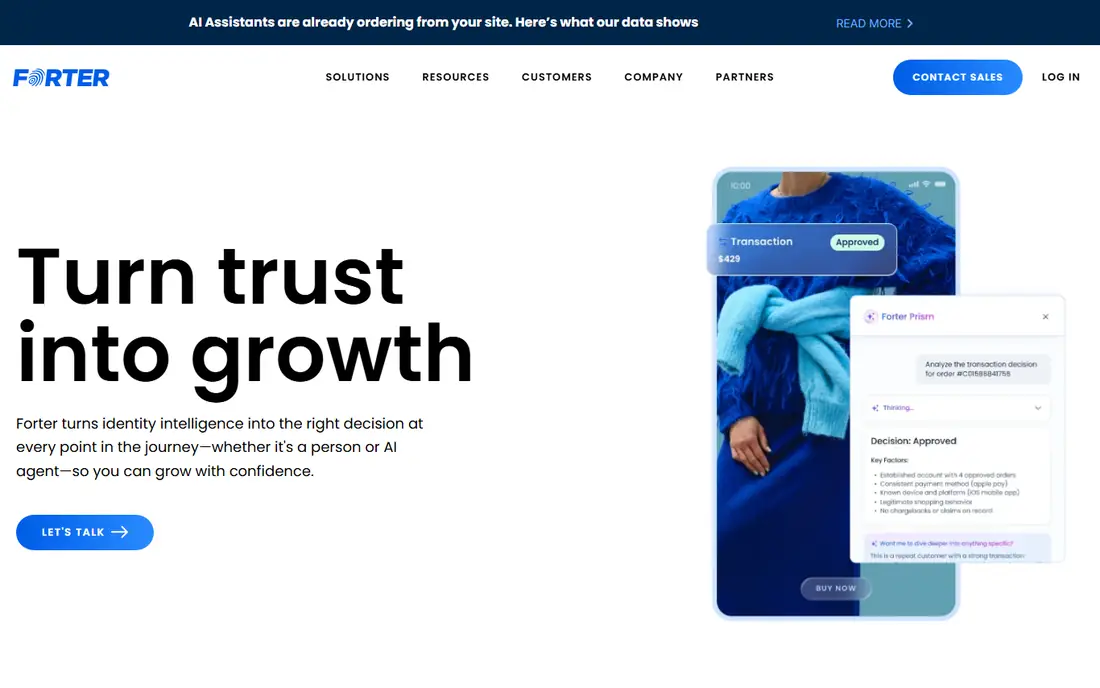
Forter makes identity based decisions in real time, using signals across many merchants and touchpoints to judge whether a user, device, and payment pattern look legitimate. That identity view helps with account takeover and policy abuse, not just checkout fraud, which matters for retailers with loyalty programs, stored payment methods, and repeat customers. Optional guarantee products can add financial protection on top of the decision engine.
The limit is enterprise focus. Forter pricing is custom, and the full value comes with integration across checkout, account, and post-purchase flows. A small store with a simple checkout may not need that breadth. For a large retailer with high order volume and account abuse problems, Forter is a strong contender.
- Real-time identity based decisions across the customer journey
- Optional guarantee products
- Strong for large retailers and account abuse
- Custom enterprise pricing
- Implementation and integration work suits larger teams
Sift suits marketplaces, travel, and digital platforms that face fraud beyond a simple checkout. It scores signup, login, payment, and post-transaction events, so a team can catch account takeover, fake listings, spam, and payment fraud in one system. That full journey view is useful when abuse moves from one surface to another, such as from fake accounts to fraudulent orders.
The trade-off is that Sift does not offer a standard public chargeback guarantee, so merchants keep fraud liability unless a separate deal is struck. Pricing is custom, based on event volume and modules. For a platform that needs broad abuse coverage and will manage its own risk decisions, Sift is a solid choice. For a retailer that mainly wants a guarantee, Signifyd or Riskified may fit better.
- Covers payment fraud, account takeover, and content abuse
- Machine learning risk scoring
- Broad API and SDK support
- Custom pricing
- No standard public guarantee, so liability stays with the merchant unless negotiated
SEON appeals to teams that want to own their fraud logic. It enriches an email, phone, IP, device, and social footprint, then applies rules and scores a team can adjust without waiting for a vendor to change a black box model. Starter pricing at $699 per month for a set number of fraud checks gives a clearer entry point than quoted enterprise tools, and a trial on request lets a team test rule design.
The weakness is responsibility. SEON gives control, but a team must staff rule tuning, review queues, and false decline monitoring, or the tool will either block too much or miss new patterns. There is no standard guarantee to fall back on. For fintech, gaming, and ecommerce teams with a fraud owner, SEON is a transparent and flexible pick.
- Transparent starter pricing
- Digital footprinting and device intelligence
- Flexible rules teams can own and tune
- No standard public guarantee
- Rule tuning needs a fraud analyst mindset
ClearSale combines automated scoring with human analysts who review borderline orders, which helps for international orders, unusual products, and high risk categories where a pure model may be too strict. Guarantee plans, advertised from $250 per month, cover eligible fraudulent chargebacks, giving smaller merchants a guarantee option without an enterprise contract. Integrations cover Shopify, Adobe Commerce, BigCommerce, WooCommerce, and other common platforms.
The catch is that human review takes time, so a merchant with tight same-day shipping promises should check review speed and service levels. Guarantee terms also matter, especially for item-not-received disputes and digital goods. For a high risk or international seller that wants human judgment in the loop, ClearSale is a practical middle path.
- Automated scoring plus human review
- Chargeback guarantee on eligible plans
- Strong for international and high risk sellers
- Guarantee plans start at a monthly minimum
- Review queues can delay some orders
NoFraud, now operating under the Wyllo name in some listings, targets small and mid-size ecommerce stores that want fraud screening without building a fraud team. It offers simple screening with pass, fail, or review outcomes, plus managed review for orders that need a human look. A starter option for smaller stores helps a new merchant start with fraud protection before volume justifies an enterprise guarantee contract.
The weakness is change. As branding and plan names shift, a buyer should confirm current pricing, guarantee terms, and Shopify integration details directly on the vendor site before signing. For a growing brand that wants managed review and a clear outcome per order, NoFraud remains a useful shortlist option.
- Simple pass or fail decisions for small stores
- Managed review option
- Starter plan for smaller stores
- Brand and plan details have changed as NoFraud became Wyllo, so confirm current plan names on the site
Stripe Radar is the easiest fraud tool for a store already processing payments through Stripe. Radar Lite is included with standard Stripe payments pricing, and Radar Standard starts at $10 per month, with pay-as-you-go screening options for larger volumes. Rules, block lists, and risk scores live inside Stripe, so a merchant does not need a separate integration project to start screening.
The limit is scope. Radar has no standard chargeback guarantee, and its value drops sharply if a merchant does not use Stripe as the main payment processor. For a Stripe store, Radar is a sensible first layer, and it can be paired with a guarantee provider later if chargebacks grow. For a multi-processor store, a processor neutral tool above may fit better.
- Native Stripe integration
- Radar Lite included with standard payments
- Simple rules and block lists
- No standard guarantee
- Best value only for Stripe payment users
Kount, now part of Equifax, offers fraud screening built on identity, device, and data signals, with rules and scores a team can tune. That data depth helps enterprises that need to link accounts, devices, and payment patterns across channels, and Equifax integration appeals to firms already using Equifax services. Kount can also support guarantee style protection through negotiated products, though terms vary by contract.
The drawback is opacity. Kount publishes little public pricing, so a comparison requires a sales conversation and a pilot on real traffic. Smaller merchants may prefer a tool with published starter pricing. For an enterprise with complex identity risk, Kount is worth evaluating alongside Sift and Forter.
- Identity and device signals with Equifax data links
- Flexible rules and scoring
- Strong for enterprises with complex risk needs
- Pricing is custom with little public detail
- Setup suits teams with fraud expertise
How we picked these
We compared official feature pages, pricing pages, and public documentation, plus public comparison guides, for tools that screen ecommerce orders and accounts for fraud. We favored tools available now, with clear guarantee, scoring, or rule models, and we mixed guarantee providers, rule tools, and processor native options. We did not claim hands-on testing, and we used See website where pricing is custom.
How to measure fraud tools fairly
Do not judge a tool only by fraud blocked. Track approval rate, false decline rate, manual review rate, chargeback rate, and net approved margin after fees. A tool that blocks all fraud but declines many good customers can cost more than a tool that lets a small amount of fraud through while approving more legitimate orders.
Run a pilot with a holdout if possible, so the same traffic can be compared with and without the tool, or with two tools in parallel for a limited period. Check performance by country, payment method, product category, and new versus returning customers, because fraud patterns differ across those slices. Also confirm what happens during a model outage or an integration failure: orders should fail safe in a way you choose, not in a way that blocks all sales.
Questions to ask every vendor
Ask which chargeback types the guarantee covers, what data you must send for coverage, how fast manual review completes, and how appeals work when a good order is declined. Ask how the tool handles account takeover, promo abuse, and friendly fraud, because those losses often sit outside stolen card fraud. Finally, ask for a total cost model at your volume, including fees, review time, and expected false declines.
FAQ
What are the best ecommerce fraud prevention tools?
The best ecommerce fraud prevention tools depend on size and goal. Signifyd, Riskified, and Forter suit larger merchants, ClearSale and NoFraud suit smaller and mid-size stores, SEON suits rule owning teams, and Stripe Radar suits Stripe stores.
What is the top ecommerce fraud prevention software for small stores?
For small stores, Stripe Radar, NoFraud, and ClearSale are the most approachable starting points. Radar is simplest for Stripe users, while NoFraud and ClearSale add managed review and guarantee options as volume grows.
Does fraud prevention software guarantee chargebacks?
Some tools do, on eligible orders and under contract terms, including Signifyd, Riskified, Forter on some products, and ClearSale on eligible plans. Others, such as Sift, SEON, and Stripe Radar, focus on scoring and rules without a standard guarantee, so read the contract carefully.
How much does ecommerce fraud prevention software cost?
Costs range from $10 per month for Stripe Radar Standard to $699 per month for SEON Starter, $250 per month for ClearSale guarantee plans, and custom, volume based pricing for enterprise guarantee providers. Always model total cost at your order volume and average order value.
Will fraud software block legitimate customers?
It can, if rules are too strict or data is thin. Monitor false declines, review declined orders regularly, and tune rules by country, payment method, and customer history. A good tool should improve approval rate over time, not just block more orders.