Best DMCA Takedown Services in 2026: 8 Services Compared
We compared the best dmca takedown service options for creators and brands, covering prices, coverage, and how each service files notices for you in 2026.
- Editor's choice
 DMCA.com
One-off takedowns
Starts at$199 per takedownVisit dmca.comFull review - Great alternative
 BranditScan
Creators on a budget
Starts at$69 per monthVisit branditscan.comFull review - Also consider
 Rulta
Manual plus automated takedowns
Starts atSee websiteVisit rulta.comFull review
TL;DR:
- DMCA.com is the simplest pay-per-notice option, with managed takedowns starting at 199 dollars per site, while most subscription services bundle finding and filing together.
- BranditScan at 69 dollars per month is the lowest priced subscription we found that includes automated scanning, takedowns, and Google delisting.
- Knockoff and Red Points suit brands and stores with frequent counterfeits, but they cost far more than creator focused tools.
- Pixsy works differently, since it focuses on image matching and recovery rather than bulk takedowns for every kind of content.
- Only file a notice for work you own or represent. False claims carry legal risk, including liability for misrepresentation and possible counter-notices.
Quick comparison
| Tool | Best for | Starts at | Free plan? | |
|---|---|---|---|---|
| DMCA.com | One-off takedowns | $199 per takedown | No | Visit |
| BranditScan | Creators on a budget | $69 per month | No | Visit |
| Rulta | Manual plus automated takedowns | See website | No | Visit |
 Ceartas | Creator content protection | See website | No | Visit |
 CopyrightShark | Adult creators and performers | See website | No | Visit |
 Red Points | Brands and marketplaces | See website | No | Visit |
 Knockoff | Online stores and brands | $799 per month | No | Visit |
 Pixsy | Image theft and recovery | Free | Yes | Visit |
The best DMCA takedown services
We compared services that find copied work, file notices, and track results, and we kept only legitimate takedown services that act for rights holders. Each pick below handles a different mix of price, coverage, and hands-on help.
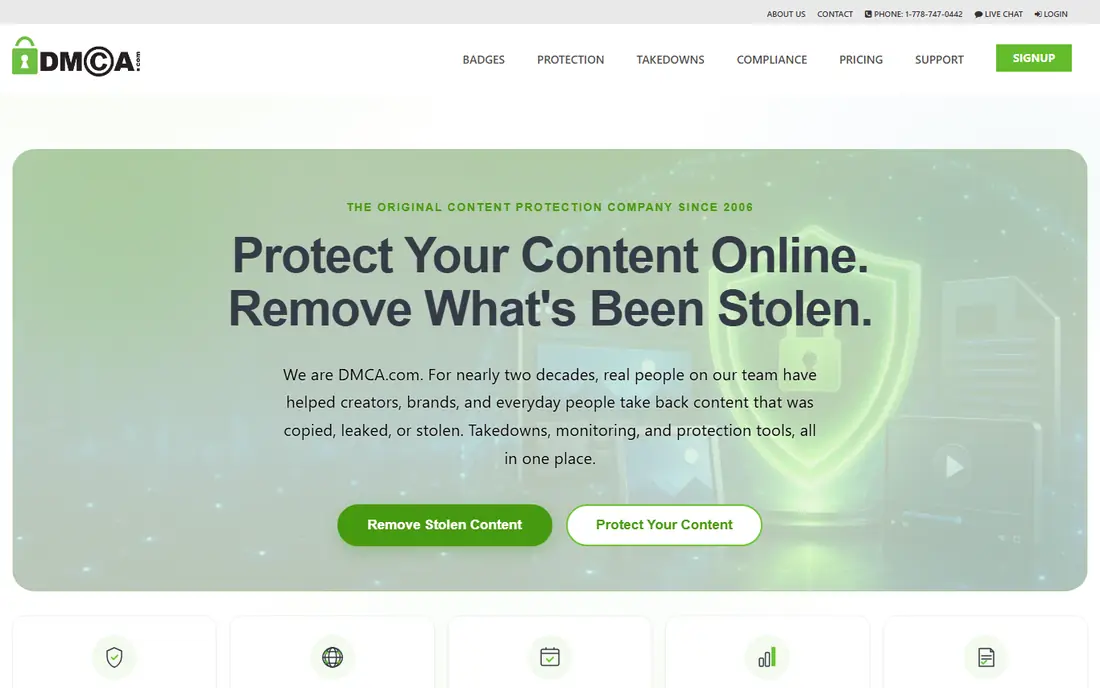
DMCA.com is our pick for most people with a single problem link. You submit the original and the copy, and its team prepares and sends the notice, which keeps the process simple when you do not want a monthly plan. The flat price makes budgeting easy, and there is no contract to cancel later.
The trade-off is discovery. DMCA.com does not search the web for copies of your work in its core takedown service, so repeat piracy means repeat submissions. That is fine for a stolen blog post or a copied product page, but it gets tedious if the same content reappears every week.
- Clear per-takedown pricing
- Human-written notices
- Free protection badge tier
- You must find the infringing link yourself in the core service
- No ongoing scanning included
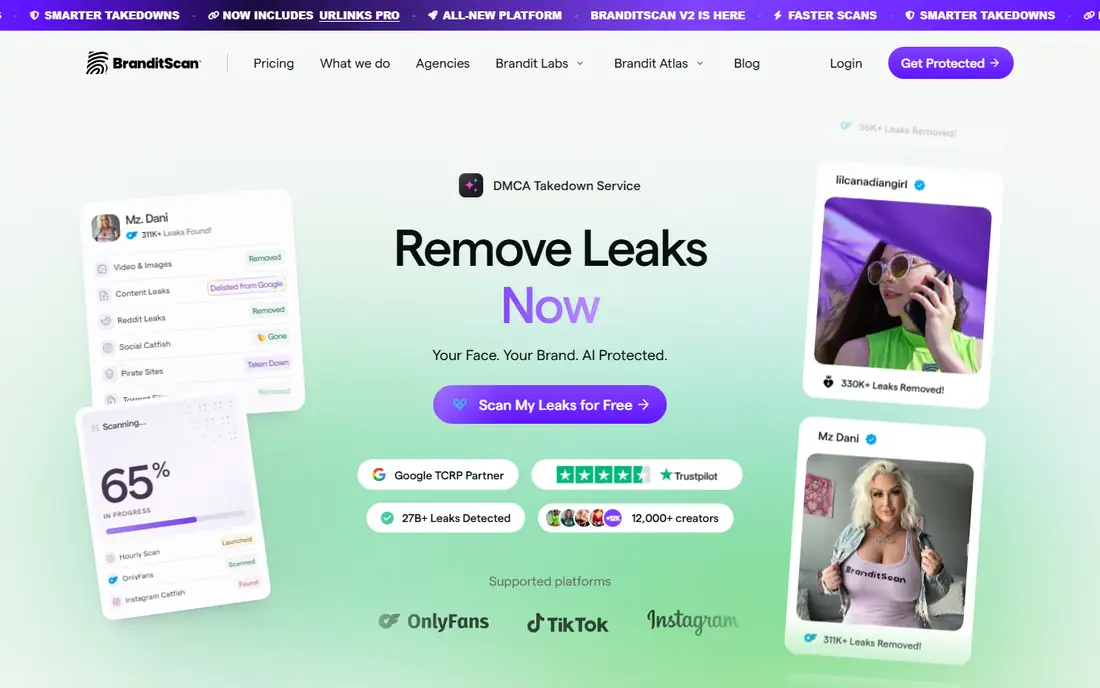
BranditScan stands out on value. For 69 dollars per month, its Premium plan scans hourly, files takedowns around the clock, and handles Google delisting, with unlimited self-submissions. That combination is hard to match at this price, and the lack of per-takedown fees matters when copies keep appearing.
The service was built mainly for creators, so a large brand with counterfeit listings across many marketplaces may need a broader tool. Still, for individual creators and small studios, the automated pipeline covers the most common leak sites, search results, and social reposts well.
- Hourly scanning
- Automated takedowns and Google delisting
- No per-takedown fees on its Premium plan
- Creator focused, so brand and marketplace coverage is narrower
- First-month discount can confuse the regular price
Rulta takes a more hands-on approach than fully automated tools. Its team reviews cases and files takedowns across search, social, file hosts, and messaging channels such as Telegram, which automated systems sometimes miss. That human layer helps when a case is borderline or when a host needs a stronger, well-documented notice.
The catch is cost and clarity. Rulta publishes tiered monthly pricing on its site, but the right tier depends on how much content you have and where it spreads. Small creators should check the plan limits before signing up, since heavy leak volumes push you toward the higher tiers.
- Human-reviewed takedowns
- Coverage includes Telegram and forums
- Clear monthly plans
- Pricing is not always published in full
- Higher tiers are needed for wide coverage
Ceartas focuses on finding copies that simple file matching would miss. Its visual matching can catch clips that have been re-encoded, cropped, or re-watermarked, which is exactly how much pirated content circulates. Once a match is confirmed, it files takedowns and works on search delisting, so the same copy does not keep surfacing in Google results.
The service is priced by plan, and creators should compare the entry tier against the volume of content they publish. It is a strong fit for performers and studios with a steady release schedule, and less necessary for someone with only a handful of works to protect.
- Visual matching for re-encoded and cropped copies
- Creator privacy protections
- Google delisting included on paid plans
- Pricing varies by plan and is best confirmed on its site
- Enterprise features may exceed a solo creator's needs
CopyrightShark has served creators for years, and its focus shows in its coverage. It scans tube sites, file hosts, and leak forums, then files takedowns and reports what was removed. For performers whose income depends on paid content staying behind a paywall, that steady monitoring is the core value.
The main drawback is that pricing depends on the plan and the amount of content protected, so two creators can pay different amounts. Check the current plan page and confirm what counts toward your limit before committing, especially if you publish under several names.
- Long track record with creators
- Scanning across tube sites and file hosts
- Takedown reporting dashboard
- Pricing is plan based and not fully transparent on every page
- Some plans are priced for working performers, not casual users
Red Points is built for brands, not solo creators. It finds infringing listings and copied content across marketplaces such as Amazon, eBay, Walmart, and Temu, and it handles the notice workflow at a scale that a small team cannot match by hand. Large companies also use it for counterfeit and trademark problems alongside copyright takedowns.
That breadth comes at a brand-level price, with a base monthly fee plus add-ons for each marketplace. A small store with a few copied listings will usually do better with DMCA.com or Knockoff, while a brand fighting fakes daily will get more from Red Points.
- Wide marketplace coverage
- Brand protection beyond copyright, including counterfeits
- Reporting for large teams
- Expensive for individuals
- Marketplace add-ons can raise the total well above the base price
Knockoff is the most store-focused service on this list. It scans daily for copycat stores and listings, then files notices as your authorized agent across Shopify stores, marketplaces, web hosts, and registrars for lookalike sites. For a store owner, that matters, because a fake store can steal sales and damage trust in a way a single copied image does not.
The 799 dollar monthly price puts it out of reach for most individuals, and it makes sense only when counterfeits are a recurring business problem. If fakes appear once or twice a year, a per-notice service will cost far less.
- Finds copies daily
- Acts as your authorized agent
- Covers stores, marketplaces, hosts, and lookalike domains
- High monthly price
- Overkill for a single takedown
Pixsy is the odd one out, and that is why we included it. It monitors your images with reverse image search and alerts you when they appear elsewhere, and it can pursue payment when a business uses your photo commercially without a license. The free tier covers a limited number of images, which is enough to test whether your work is being reused.
Pixsy is not a bulk takedown machine for video or text. On most cases you send the takedown yourself, and Pixsy steps in as your agent mainly on recovery cases. Photographers and illustrators will like it most, while video creators should pick a scanning service above.
- Free tier for image monitoring
- Reverse image search
- Recovery service for commercial misuse
- You handle many takedowns yourself
- Recovery cases involve a revenue share
How we picked these
We compared official pricing pages, published coverage, and public reviews, and we required each service to be currently operating with a working homepage. We favored services that publish prices, explain who signs the notice, and cover the places where copies actually appear, from search results to marketplaces. We excluded services that promise removals they cannot legally deliver, and we left out any tool that encourages filing claims on work you do not own.
What to check before you pay
Start by counting how often copies appear. A single stolen post calls for a per-notice service, while weekly leaks call for a subscription with scanning. Next, check coverage against your real problem: a photographer needs image matching, a store owner needs marketplace and domain coverage, and a video creator needs tube site and file host coverage.
Read the plan limits carefully, including how many works, names, or URLs are included, and whether Google delisting costs extra. Ask who signs the sworn statement in the notice, since a valid DMCA notice requires a good-faith statement and an accurate claim of ownership. Keep your own records too, with dates, URLs, and screenshots, because hosts and platforms sometimes ask for proof, and a counter-notice can restore content if your claim is disputed.
FAQ
What is the best dmca takedown service for a single stolen post?
DMCA.com is a strong choice for a one-off case, since you pay per takedown and do not need a subscription. You supply the original and the infringing link, and its team prepares and sends the notice. If the same content keeps reappearing, a subscription with scanning will save time and money over repeat per-notice fees.
How do the best dmca takedown services find copied content?
Subscription services scan the web, marketplaces, tube sites, file hosts, and search results using image, video, or text matching. Some use visual matching to catch copies that were cropped or re-encoded. Per-notice services usually skip this step, so you must find and submit each infringing link yourself.
How much does a DMCA takedown cost?
Costs range from 199 dollars per takedown at DMCA.com to 69 dollars per month at BranditScan, and up to 799 dollars per month at Knockoff for store-focused protection. Many brand tools are quote based, so the total depends on marketplaces and volume. Always confirm the current price on the vendor site before buying, since plans change.
Can I file a DMCA takedown myself for free?
Yes, you can send a notice directly to the platform or host, naming your original work, the infringing link, and the good-faith and accuracy statements the law requires. Free filing takes time and care, and a mistake can weaken your claim. Paid services help when volume is high or when hosts are slow to respond to individual filers.
What happens if I file a false DMCA claim?
False claims carry legal risk. Knowingly misrepresenting that content infringes can lead to liability for damages and costs, and the other party can file a counter-notice to restore the content. Only file for work you own or are authorized to represent, and get legal advice if ownership is unclear.