5 Digital PR Agencies for Toy Brands Worth Shortlisting in 2026
A practical guide to the best digital PR agencies for toy brands in 2026, compared from vendor documentation and public sources, with fit and limits.
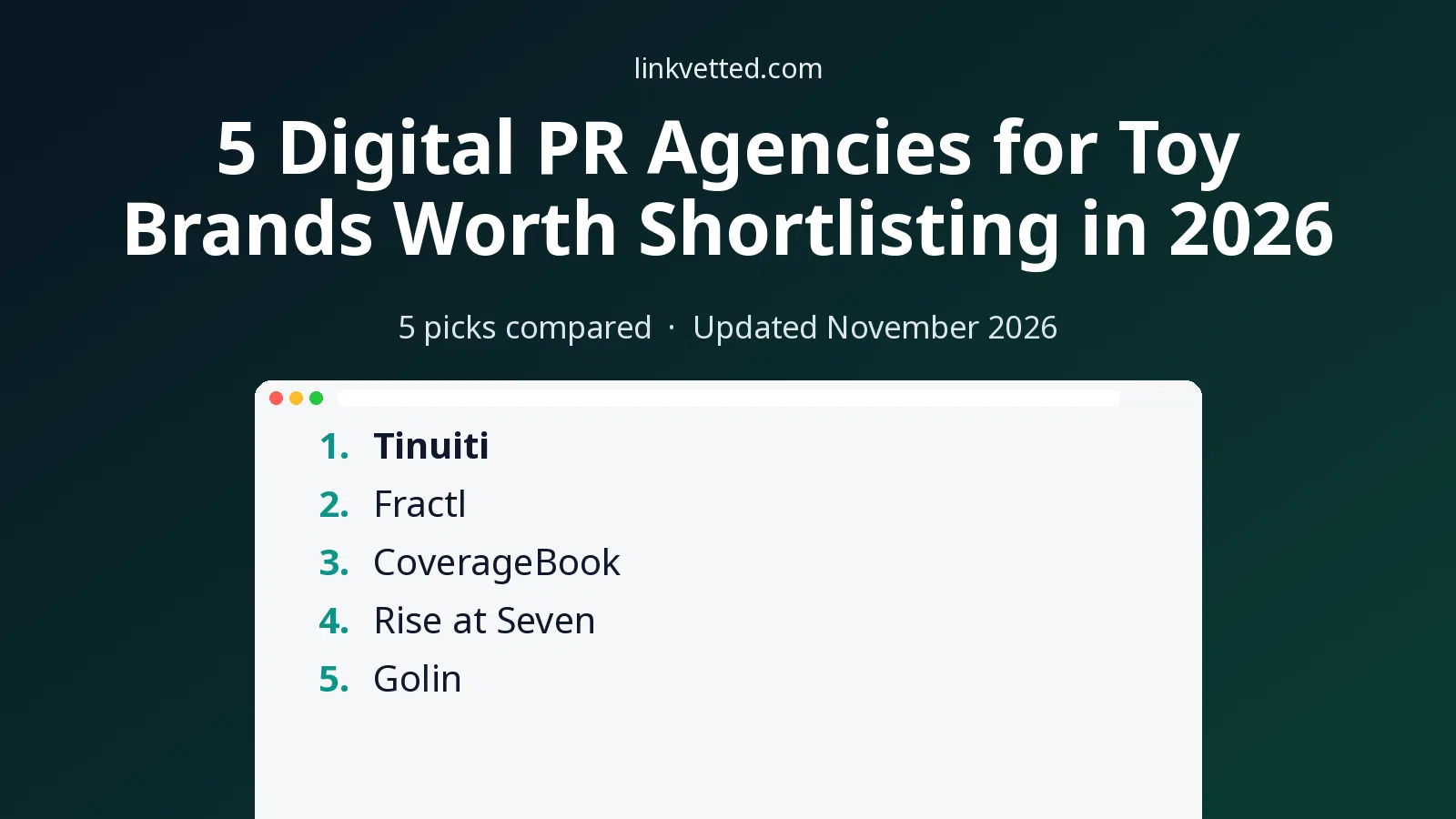
- Editor's choice
 Tinuiti
Retail-connected consumer PR and link earning
Starts atSee websiteVisit tinuiti.comFull review - Great alternative
 Fractl
Data-led campaigns that earn editorial links
Starts atSee websiteVisit frac.tlFull review - Also consider
 CoverageBook
Reporting and proving agency coverage value
Starts atSee websiteVisit coveragebook.comFull review
Direct answer
My first pick is Tinuiti, a large independent agency with a public consumer and retail practice. For tighter budgets and hands-on outreach, I would look at Fractl for data-led campaigns, plus CoverageBook if you need to track what coverage an agency delivers. Toy brands sit in a niche with seasonal news hooks, safety scrutiny and gift-guide cycles, so the right agency is the one that can place stories in parenting, retail and lifestyle media, not just link to a product page.
TL;DR:
- Toy brands need agencies that understand gift guides, product recall sensitivity and seasonal news cycles, not generic link sellers.
- Data-led campaigns built on play, development and family trends tend to earn the most durable editorial links.
- Ask any agency how it handles product safety questions and corrections before you sign.
- Coverage reporting matters more than a link count, because toy coverage often appears in roundups without a followed link.
- Small toy brands should start with a focused retainer and clear deliverables rather than a large annual contract.
Last checked November 2026. Plan prices are not quoted in this guide because they change often; see each vendor's own pricing page for current figures before you buy.
Quick comparison
| Tool | Best for | Starts at | Free plan? | |
|---|---|---|---|---|
| Tinuiti | Retail-connected consumer PR and link earning | See website | Not stated | Visit |
| Fractl | Data-led campaigns that earn editorial links | See website | Not stated | Visit |
| CoverageBook | Reporting and proving agency coverage value | See website | Free trial | Visit |
| Rise at Seven | Creative, social-first campaigns for consumer brands | See website | Not stated | Visit |
 Golin | Established brands needing broad consumer PR | See website | Not stated | Visit |
The best digital PR agencies for toy brands compared
I compared these agencies from their own service pages, published case studies and public sources such as trade press and company filings. I did not run hands-on tests or commission campaigns, and I have no client results to share. What follows is a fit-and-limits comparison, so treat it as a starting point for your own shortlist and questions.
Tinuiti is an independent performance marketing agency with a consumer practice that spans PR, content and search. For a toy brand, the appeal is that earned coverage and paid media sit under one roof, which matters when a gift-guide mention needs to be followed by retail and search support. It fits brands that already sell through major retailers and want coordinated campaigns rather than isolated outreach.
On the digital PR side, the work tends to start with audience and retail calendar planning, then move to story angles and media outreach. For toy brands, that means planning around holiday gifting, back-to-school and new product launches. The agency's public materials describe integrated teams, so you can ask for a plan that links coverage to product pages and retailer listings.
The limit is scale. A small toy brand with a modest budget may find the process and minimums hard to justify. If you want a single outreach specialist who will pitch 30 journalists a month, this is not that kind of shop.
- Public consumer and retail practice
- combines PR with search and media
- large team with documented process
- Process-heavy for small brands
- not toy-specific
Fractl is a digital PR agency known for building campaigns around original research and visual assets. Toy brands can use that model well: surveys on play habits, analysis of toy trends, or data on how families choose gifts give journalists a reason to cover you beyond the product itself. It suits brands that can commit to a few campaigns a year rather than monthly pitching.
The workflow usually starts with a concept and data collection, then design and outreach to relevant publishers. For a toy brand, the useful part is the focus on stories that stand alone, which reduces reliance on gift-guide placements that may not include a link. Ask how they would handle a sensitive topic like safety or age recommendations before approving a concept.
The main limit is cost and timing. Research-led campaigns take weeks to build and need a budget that supports design and promotion. Brands that need constant small placements should look elsewhere.
- Known for research-driven content
- strong publisher relationships
- clear campaign reporting
- Campaign model needs budget and lead time
- not a fit for quick product pitches
CoverageBook is a coverage reporting tool rather than an agency, and I include it because toy brands often need a way to check what an agency actually delivered. It collects coverage, estimates reach and builds shareable reports. If you are comparing two digital PR agencies, a tool like this helps you see whether placements are in relevant parenting, retail and lifestyle outlets.
For toy brands, the reporting angle matters because coverage often appears in roundups and gift guides where links are inconsistent. CoverageBook lets you document mentions, screenshots and context in one place. You can ask a prospective agency whether they use it or a similar tool, and how they report links versus mentions.
The limit is obvious: it does not pitch journalists or build links. Skip it if you want a done-for-you agency and have no interest in reporting.
- Clear coverage reports
- useful for agency and client reporting
- simple to share
- Not an outreach agency
- limited help with strategy
Rise at Seven
Best for: Creative, social-first campaigns for consumer brands
Rise at Seven is a creative agency with a strong consumer and retail focus, and its public work often blends social, search and PR. For a toy brand, the value is in campaign ideas that people share, which can lead to organic coverage and links. It suits brands that want a memorable launch or seasonal moment rather than steady monthly outreach.
The workflow is usually creative-led: concept, asset production, then media and social rollout. For toys, that could mean a play-focused stunt, a family challenge or a seasonal campaign tied to gifting. Ask how they measure success beyond impressions, and whether link earning is a stated goal or a byproduct.
The limit is measurement. Creative campaigns can produce coverage without followed links, and the agency's style may not suit a brand that needs a steady stream of product placements. Skip it if you want a pure link-building shop.
- Strong creative reputation
- social and search integration
- consumer brand focus
- Creative work can be hard to tie to links
- not toy-specific
Golin is a global PR agency with a consumer practice and experience in issues and crisis communications. For toy brands, that last part matters: product safety questions and recall situations need a team that knows how to respond. It fits established brands that want broad consumer PR plus digital coverage, not just link building.
The workflow is account-team based, with planning, media relations and reporting. For a toy brand, you can ask for a plan that covers launches, gift guides and issues preparedness. The agency's size means access to a wide media network, which helps when you need coverage in national and parenting outlets.
The limit is cost and fit. A small toy brand will likely be a small account, and the process may feel heavy. Skip it if you want a specialist outreach team with a narrow focus.
- Large consumer PR network
- media relationships
- crisis and issues experience
- Big-agency pricing
- slower for small brands
How I chose
I built this list from each agency's public service pages, published case studies and independent sources such as trade press. I looked for agencies that publicly describe consumer, retail or lifestyle work, because that is the media world toy brands need. I also checked whether the agency explains its process and reporting, since that is what you will rely on after signing.
I did not test these agencies, run campaigns or speak to their clients. I have no results to report and no relationship with any of them. The comparison is about fit: size, focus, workflow and limits. Where an agency is not toy-specific, I say so. Where a tool only reports coverage, I say that too. Use this as a shortlist and verify current services, team and terms directly with each agency.
What to check before you buy
- Ask for examples of coverage in parenting, retail or lifestyle media, not just links in generic blogs.
- Confirm how the agency handles gift-guide season and whether it charges extra for seasonal campaigns.
- Ask how they report mentions without links, since toy coverage often appears in roundups.
- Check their process for product safety questions, corrections and sensitive claims.
- Confirm who does the actual outreach and whether senior staff stay on the account.
- Ask for a clear scope: number of campaigns, deliverables, reporting cadence and exit terms.
FAQ
Do toy brands need a specialist digital PR agency?
Not always. A general consumer PR agency with retail and lifestyle experience can do well if it understands gift guides and family media. A specialist helps when your story depends on play, development or safety topics. Ask any agency for relevant examples before you decide.
How long before digital PR shows results for a toy brand?
Campaign timelines vary by agency and scope. Research-led campaigns usually take weeks to build before outreach starts, while product pitches can go out sooner. Ask each agency for a realistic schedule and how they report progress between campaigns.
Can digital PR help with gift-guide placements?
Yes, but gift guides are competitive and often editorial. A good agency will pitch early, provide clear product information and images, and accept that inclusion is not guaranteed. Ask how they handle follow-ups and whether they report mentions without links.
What should a small toy brand budget for?
I cannot quote prices, and agencies set their own terms. Instead, ask for a scoped proposal with deliverables, timeline and reporting. A smaller retainer with a clear campaign focus is usually easier to judge than a large annual contract you cannot measure.
How do I compare agencies fairly?
Use the same brief for each agency and ask for the same outputs: relevant examples, process, team, reporting and exit terms. Check whether they understand toy-specific issues like safety and seasonality. Compare the scope, not just the headline service.
Sources
- https://tinuiti.com
- https://www.frac.tl
- https://www.coveragebook.com
- https://riseatseven.com
- https://golinketchum.com